
Pull Cord Chopper for Salsa: How to Get the Perfect Chunky Texture

Quick Answer
A pull cord chopper for salsa is a manual kitchen tool that spins sharp blades when you pull its handle, chopping tomatoes, onions, peppers, and herbs without electricity. For the best fresh salsa, use small batches, drain excess tomato liquid when needed, and pull the cord a few times before checking the texture. A suitable model can make chunky salsa, finely chopped pico de gallo ingredients, or a softer salsa mixture.
What to look for when making salsa
- Sharp blades: Multiple stainless steel blades can help chop vegetables more evenly.
- Useful capacity: A bowl that accommodates small batches helps prevent overcrowding.
- Easy control: Short pulls let you check the texture before the tomatoes become too finely chopped.
- Stable base: A nonslip base helps keep the container steady during use.
- Simple cleaning: Removable blades and a washable bowl make cleanup easier.
One important tip
- Chop the onions and peppers first, then add the tomatoes and use fewer pulls to preserve a chunky texture.
Fresh salsa tastes best when the vegetables keep some of their texture instead of turning into a watery sauce. A pull cord chopper can make that preparation quicker, especially when you’re making a small bowl for tacos, nachos, or a family snack.
In this guide, I’ll explain how these choppers work, how to use one for better salsa, what features matter, and which alternatives make sense for different kitchens. I’ll also cover the common mistakes that can leave homemade salsa too wet or mushy.
What Is a Pull Cord Chopper for Salsa?
A pull cord chopper for salsa is a hand-operated food chopper with a cord-driven rotating blade assembly inside a covered bowl. Pulling the handle turns the blades, allowing you to chop ingredients without plugging in an appliance.
Unlike a knife, the chopper processes several small pieces together, although the final texture depends on the blade design, ingredient size, bowl capacity, and number of pulls.
Most models contain these parts:
- Chopping bowl: Holds the tomatoes, onions, peppers, and other ingredients.
- Blade assembly: Rotates to cut ingredients into smaller pieces.
- Lid and pull mechanism: Transfers the cord’s movement to the blades.
- Handle: Gives you a grip for pulling the cord.
- Base: Helps support the bowl on the countertop.
The key advantage is control over small batches. You can stop frequently to inspect the ingredients instead of running a motor continuously.
Can You Use a Pull Cord Chopper to Make Salsa?
Yes, a pull cord chopper can prepare fresh salsa from tomatoes, onions, jalapeños, bell peppers, cilantro, and garlic. Choose a model designed for moist vegetables, and follow its instructions for loading and operation.
However, not every chopper handles juicy tomatoes equally well. A small bowl can become crowded quickly, and repeated chopping can release enough liquid to make salsa thinner than you intended.
Which salsa styles work best?
- Chunky tomato salsa: Use a few pulls and check the pieces frequently.
- Pico de gallo: Chop the onion, pepper, and cilantro separately, then carefully chop or hand-dice the tomatoes.
- Restaurant-style salsa: Use additional pulls for a finer mixture, stopping before it becomes completely smooth.
- Mango or pineapple salsa: Use firm, manageable pieces and a light touch to avoid crushing soft fruit.
For a chunky result, I recommend treating each pull as a small adjustment rather than assuming more pulls will always improve the salsa.
How Do You Make Salsa With a Pull Cord Chopper?
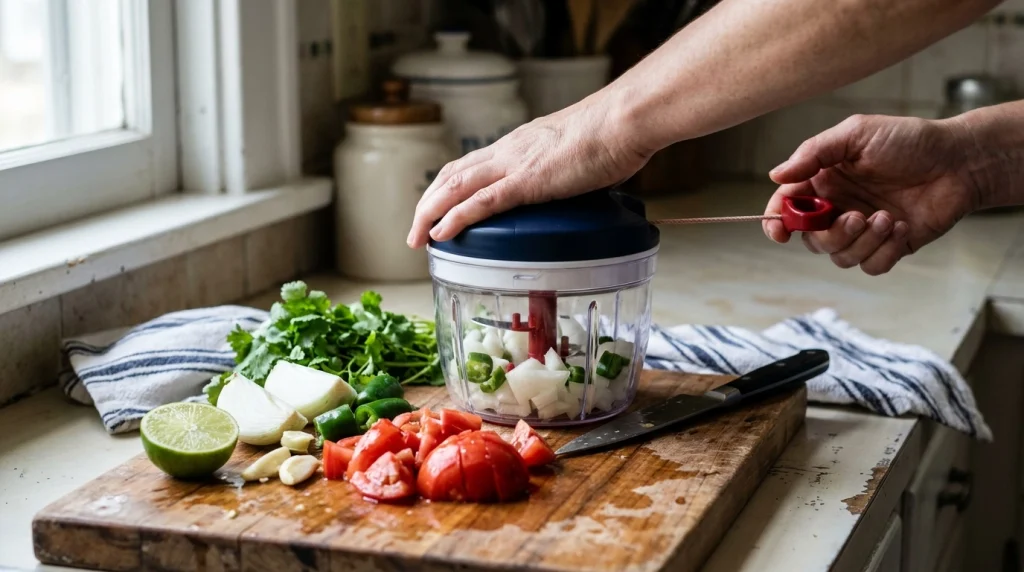
The easiest approach is to prepare the firmer ingredients first and add juicy tomatoes later. This gives you better control over the final texture and helps reduce excess liquid.
Step 1: Prepare the ingredients
Start with fresh, firm tomatoes, a small onion, a jalapeño or bell pepper, fresh cilantro, and garlic if desired. Rinse fresh produce under running water and dry it before cutting.
Remove tomato cores and cut the vegetables into manageable pieces that fit your chopper. Remove jalapeño seeds and inner membranes if you prefer less heat.
Step 2: Chop the onion, pepper, and garlic
Place the onion, pepper, and garlic in the bowl first, staying within the manufacturer’s fill limit. Secure the lid and set the chopper on a flat, stable surface.
Pull the handle several times, using controlled movements. Open the chopper only after the blades have stopped, and check whether the vegetables have reached your preferred size.
Step 3: Add the tomatoes carefully
Add the prepared tomatoes in a small batch, leaving enough room for the ingredients to move around the blades. If your tomatoes are exceptionally juicy, remove some seeds and excess liquid before chopping.
Use one or two pulls to start, then inspect the mixture. Continue only if you need smaller pieces.
Step 4: Mix in herbs and seasoning
Add chopped cilantro, lime juice, and salt according to your taste. A few gentle pulls can distribute the ingredients, but stirring by hand often preserves more texture.
Let the fresh salsa rest briefly in the refrigerator if you want the flavors to blend. Taste it before serving and adjust the seasoning as needed.
Step 5: Clean the chopper safely
Remove the lid and blade assembly according to the manufacturer’s instructions. Wash the food-contact parts promptly, taking particular care around sharp blades.
Never immerse a pull-cord lid in water unless the instructions explicitly permit it. Some models require wiping the lid rather than submerging its internal mechanism.
How Many Pulls Should You Use for Salsa?
There is no universal number of pulls because chopper blades, bowl sizes, and ingredient firmness vary. Start with a few pulls, inspect the vegetables, and continue in small increments until the mixture looks right.
As a practical starting point, use these estimates rather than treating them as guaranteed settings for every model.
| Ingredient or result | Starting approach | What to check |
|---|---|---|
| Onion and pepper | 3–5 pulls | Small, reasonably even pieces |
| Tomatoes for chunky salsa | 1–2 pulls initially | Visible tomato pieces and limited excess liquid |
| Medium-textured salsa | Add pulls gradually | A mix of small pieces and some texture |
| Fine salsa | Several additional pulls | A finer consistency without unwanted purée |
These are starting estimates, not manufacturer-tested settings. For example, Starfrit’s pull chopper manual suggests 7–12 pulls for a medium-to-fine cut in certain preparations, but your salsa may need fewer.
**The best rule is to inspect before pulling again.** You can always chop ingredients further, but you cannot restore the original texture once the tomatoes become mushy.
What Features Matter in a Salsa Chopper?
The best chopper for salsa is one that gives you control, handles moist vegetables, and cleans up without much effort. A large capacity or an elaborate design isn’t automatically better for this task.
Blade design and material
Look for corrosion-resistant stainless steel blades and a removable assembly that you can clean safely. Multiple blades may help process ingredients efficiently, but their arrangement and sharpness matter more than the blade count alone.
Check that the blade assembly locks securely into place. Loose or poorly fitted parts can interfere with operation and create a safety risk.
Bowl capacity
A bowl around 2–4 cups in usable capacity can be convenient for small salsa batches, although you should always follow its stated fill limit. Some manufacturers recommend filling their bowls only partway to allow ingredients to circulate properly.
For a large gathering, a small chopper may require several batches. A larger food processor or a knife can be more practical when you need a substantial quantity.
Pull cord and handle quality
A smooth-return cord and comfortable handle make repeated chopping less frustrating. Check the return action, lid fit, and manufacturer’s warranty information before buying.
Don’t force a cord that sticks or fails to retract normally. Stop using the device if the mechanism becomes damaged.
Stability and cleaning
A nonslip base helps keep the bowl in place while you pull the handle. A transparent bowl also lets you monitor the ingredients without repeatedly opening the lid.
Look for clear cleaning instructions. Some models have dishwasher-safe bowls and blades but require hand-cleaning for the lid.
Pull Cord Chopper vs. Food Processor vs. Knife
A pull cord chopper is a useful middle ground between hand-dicing and using an electric appliance. The right choice depends on the quantity of salsa, your desired texture, and how much cleanup you’re willing to do.
| Feature | Pull cord chopper | Food processor | Chef’s knife |
|---|---|---|---|
| Power source | Manual | Electric | Manual |
| Best batch size | Small | Medium to large, depending on capacity | Flexible |
| Texture control | Good with frequent checks | Good with short pulses | Very precise with practice |
| Electricity required | No | Yes | No |
| Main drawback | Limited bowl capacity | More parts and countertop space | Requires knife skills and time |
For a quick bowl of salsa for two or three people, a pull cord chopper is a sensible option. If you’re preparing salsa for a party, an electric food processor may save effort, while a knife remains a strong choice for precise, traditional pico de gallo.
How Do You Stop Salsa From Becoming Watery?
Watery salsa usually results from juicy tomatoes, excessive chopping, or too much liquid added during seasoning. A chopper can make the problem worse if you keep pulling after the ingredients have already reached the desired size.
- Choose firmer tomatoes: Roma tomatoes often produce a thicker salsa than large slicing tomatoes.
- Remove excess liquid: Scoop out some seeds and watery pulp when the recipe and desired texture allow it.
- Chop in stages: Process onions and peppers first, then add tomatoes for only a few pulls.
- Avoid overfilling: Work in smaller batches so the ingredients move around the blades.
- Season at the end: Add lime juice and salt gradually, then taste before adding more.
Don’t assume that a finer texture means better salsa. A little variation in the size of the tomato pieces often makes fresh salsa more enjoyable.
Can a Pull Cord Chopper Handle Every Salsa Ingredient?
Most pull choppers work well with appropriately sized onions, peppers, tomatoes, and herbs, but each model has limits. Read the manual before processing hard, frozen, fibrous, or unusually soft ingredients.
- Tomatoes: Use firm, cut pieces and avoid excessive pulls.
- Onions: Peel and quarter or roughly chop them first.
- Jalapeños: Remove the stem and handle hot peppers carefully; gloves can help prevent skin irritation.
- Cilantro: Use clean, dry sprigs with thick stems removed if necessary.
- Garlic: Peel the cloves and add them in a small quantity.
- Mango or pineapple: Use small, firm pieces and check the manual for approved ingredients.
Never put your fingers near the blade assembly, even when the chopper appears to be stopped. Remove the lid and handle the blades only as directed by the manufacturer.
How Should You Store and Serve Fresh Salsa?
Fresh salsa contains cut produce, so refrigerate it promptly in a clean, covered container. Keep it cold until serving and avoid leaving it at room temperature for extended periods.
For general food safety guidance, FoodSafety.gov’s food safety guidance explains proper produce handling, cleaning, and refrigeration practices.
Serve fresh salsa with tortilla chips, tacos, grilled vegetables, eggs, or roasted meat. If the salsa releases liquid while sitting, stir it before serving or carefully drain the excess.
Important: Fresh salsa preparation is different from salsa preservation. If you plan to can salsa for long-term storage, use a tested canning recipe and follow its ingredient proportions and processing instructions exactly.
The National Center for Home Food Preservation’s tested salsa guidance explains why changing ingredient ratios or acid quantities can make home-canned salsa unsafe.
Which Pull Cord Chopper Should You Choose?
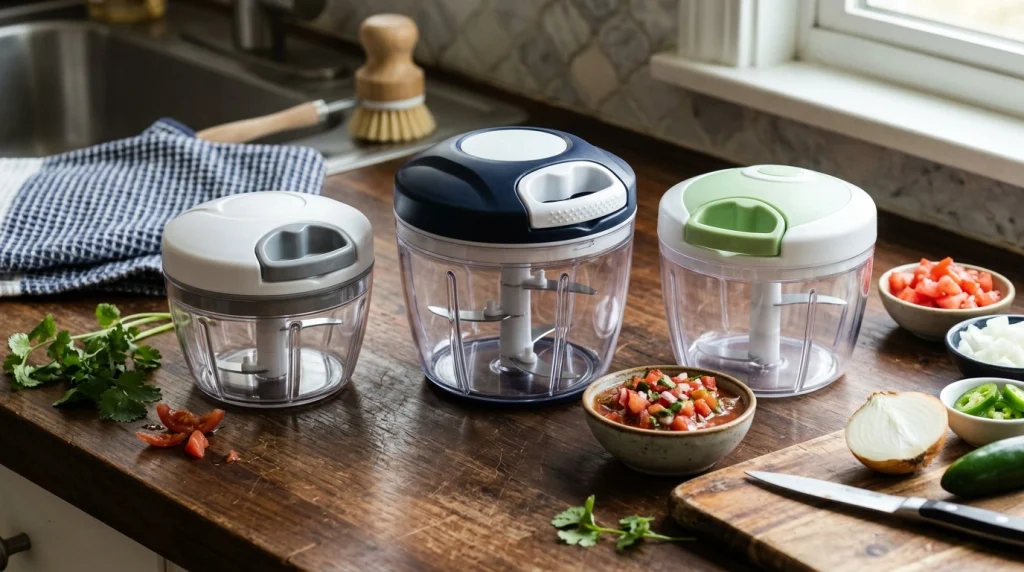
Choose a model based on its bowl size, blade arrangement, cord mechanism, cleaning requirements, and suitability for moist vegetables. The following options represent different priorities rather than independently tested performance rankings.
For most home cooks, I’d prioritize a model with a secure lid, a comfortable pull handle, and a bowl that’s easy to wash. These three options offer different ways to approach that choice.
🏆 FEATURE-RICH OPTION
Starfrit Pull Chopper
Rating: Not independently verified
This manual model features three cutting blades, a self-retracting cord, and a design intended for chopping vegetables, herbs, and salsa ingredients. I’d consider it when adjustable chopping texture is a priority; check the current model specifications and care instructions before buying.
💰 SIMPLE MANUAL OPTION
Salter Pull Chopper
Rating: Not independently verified
Salter offers a pull-cord design with a removable chopping blade and a hand-cleaning requirement for the lid. It’s worth considering for small quantities of vegetables, provided you cut larger ingredients into suitable pieces and follow the model-specific fill limit.
🧰 BUDGET-FOCUSED ALTERNATIVE
Manual Pull-Cord Vegetable Chopper
Rating: Not independently verified
A basic manual chopper may suit occasional salsa preparation without adding an electric appliance to your kitchen. Compare bowl capacity, blade construction, lid security, replacement-part availability, and cleaning instructions instead of choosing by price alone.
These are product suggestions based on published product descriptions, not hands-on test results or verified customer-rating comparisons. Confirm the current price, availability, and exact model specifications before ordering.
Frequently Asked Questions
Can a pull cord chopper make chunky salsa?
Yes, a pull cord chopper can make chunky salsa if you use small batches and check the texture frequently. Start with the onions and peppers, add the tomatoes afterward, and use just a few pulls. Stop as soon as the vegetables reach your preferred size.
Do you need to peel tomatoes before putting them in a chopper?
No, you generally don’t need to peel tomatoes for fresh salsa. Wash them under running water, remove the stems, and cut them into manageable pieces. Peeling is optional and depends on your texture preference, recipe, and the type of tomato you’re using.
Why does my pull cord chopper turn salsa into mush?
Excessive pulling, overripe tomatoes, and an overloaded bowl can create a mushy salsa. Process firmer ingredients first, add tomatoes later, and inspect the mixture after each short series of pulls. If you want precise tomato cubes, hand-dicing may produce better results.
Can you put cilantro and jalapeños in a pull cord chopper?
Most choppers designed for vegetables can handle small amounts of cilantro and jalapeños, but check the manufacturer’s instructions first. Remove jalapeño stems and handle hot peppers carefully. Add the cilantro near the end to preserve its texture and avoid overprocessing the herbs.
Is a pull cord chopper better than a food processor for salsa?
A pull cord chopper is convenient for small batches, manual operation, and kitchens without spare electrical outlets. A food processor is generally more practical for larger quantities. Both can overprocess tomatoes, so short chopping cycles and frequent texture checks matter whichever tool you choose.
Final Takeaway: Is a Pull Cord Chopper Worth It for Salsa?
A pull cord chopper is a practical choice if you regularly prepare small bowls of fresh salsa and want to save time on chopping. Its biggest advantage is convenience, while its main limitation is the need to monitor texture carefully when working with juicy ingredients.
For the best results, use firm tomatoes, chop the onions and peppers first, add tomatoes in a later stage, and stop before the mixture becomes watery. Choose a model with secure construction and straightforward cleaning instructions.
If you make salsa only occasionally, a sharp knife may be all you need. But if you frequently prepare dips, taco toppings, and chopped vegetables, a well-designed pull cord chopper can be a useful addition to your kitchen.