
Are Silicone and Wooden Cooking Utensils Safe?

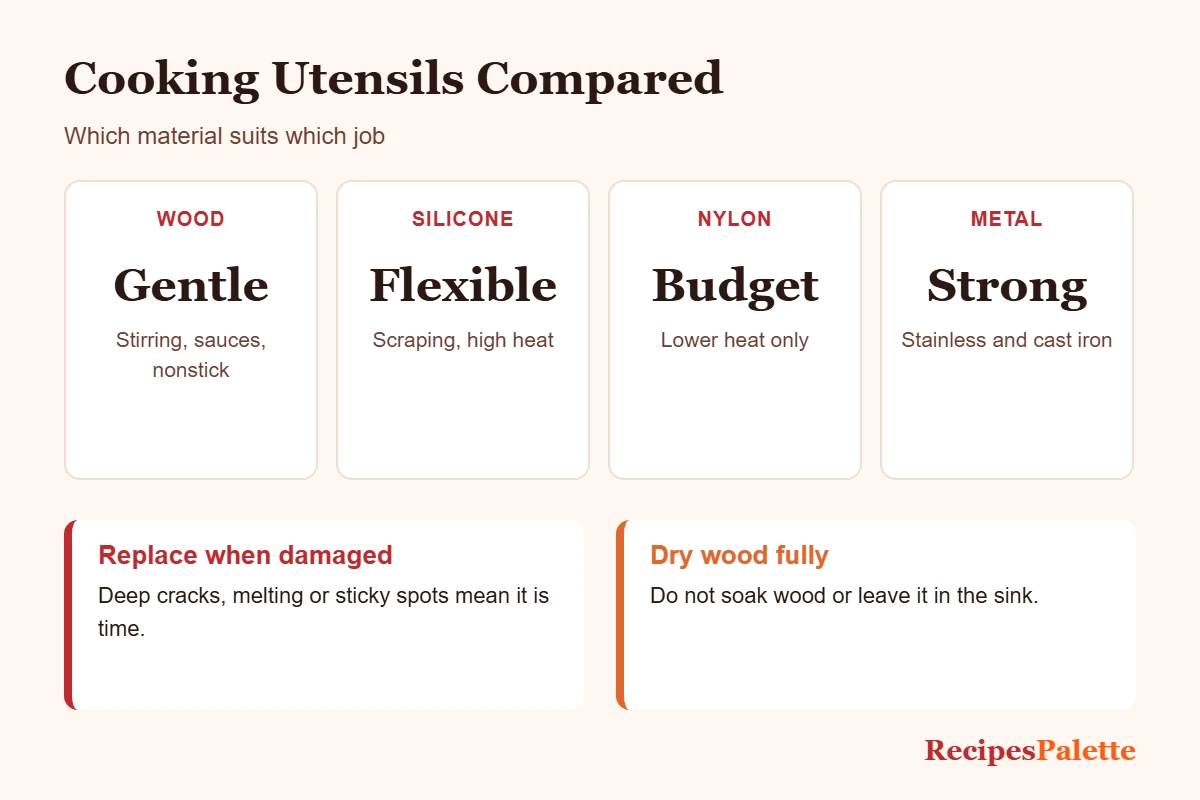
Wooden and silicone cooking utensils are both generally considered safe for everyday cooking when they are good quality, used within their heat limits, and cleaned and replaced properly. Each has strengths. Wood is gentle on cookware and lasts for years with simple care. Silicone is flexible, heat resistant and easy to clean.
This guide compares wood, silicone, nylon and metal utensils, explains how to choose good ones, and shows how to clean them and when to replace them.
Are Wooden Cooking Utensils Safe?
Wooden spoons and spatulas have been used in kitchens for centuries. Hardwoods such as maple, beech, cherry, walnut and olive wood have tight grain that resists absorbing liquid. Bamboo, which is technically a grass, is also common and is hard and lightweight.
Wood is a good choice because:
- It will not scratch nonstick, ceramic or enameled cookware.
- It does not conduct heat, so the handle stays cool.
- It does not melt.
- It does not react with acidic foods.
The main concern with wood is moisture. Wood that stays wet can crack, warp or grow mold. Proper drying solves most of this.
How to care for wooden utensils
- Wash by hand with warm, soapy water soon after use.
- Do not soak wooden utensils or leave them sitting in the sink.
- Avoid the dishwasher. High heat and long water exposure dry out and crack wood.
- Dry with a towel, then let them air dry standing upright.
- Rub them with food-grade mineral oil or a board cream every few weeks or when they look dry.
When to replace wooden utensils
Replace wooden tools that have deep cracks, splits, rough splintered edges, soft spots, or mold that does not come off with cleaning.

Are Silicone Cooking Utensils Safe?
Food-grade silicone is widely used in spatulas, spoons, tongs tips and baking mats. It is flexible, nonstick-friendly, and many products are heat resistant to around 400 to 600°F, depending on the maker.
Good silicone utensils:
- Are labeled food grade, and ideally say they meet relevant food-contact standards.
- List a clear maximum heat rating.
- Have a solid core or one-piece design, so food and water cannot get trapped between the head and handle.
- Do not have a strong chemical smell.
Some people use a “pinch test” on silicone: if the silicone turns white when twisted or pinched, it may contain fillers. It is not a lab test, but buying from reputable brands with clear specifications is a sensible step.
How to care for silicone utensils
- Most are dishwasher safe. Check the label.
- If silicone feels sticky or holds odors, wash it in hot soapy water, or bake it on a sheet pan in a low oven for a short time if the maker recommends it.
- Keep silicone away from direct flames and hot burners.
- Replace silicone tools that are torn, melted or permanently sticky.
What About Nylon and Plastic Utensils?
Nylon spatulas and spoons are inexpensive and gentle on nonstick pans, but they have lower heat limits than silicone. Many nylon tools are rated for around 400°F, and some lower. If left resting on the edge of a hot pan, they can soften, melt or warp. Melted plastic should not end up in food, so throw away nylon tools with melted or rough edges.
If you buy nylon, look for a clear heat rating and avoid leaving the utensil in a hot pan.
When to Use Metal Utensils
Stainless steel spatulas, tongs and whisks are durable and great for:
- Stainless steel and cast iron cookware
- Flipping burgers and scraping fond from stainless pans
- Grilling
Avoid metal tools on nonstick, ceramic-coated and enameled cookware. Read our guide on how to use and care for ceramic pans for more on protecting coatings.
Which Utensil Is Best for Each Pan?
| Cookware | Best utensils | Avoid |
|---|---|---|
| Nonstick and ceramic | Silicone, wood, nylon | Metal |
| Enameled cast iron | Wood, silicone | Sharp metal edges |
| Stainless steel | Metal, wood, silicone | Nothing in particular |
| Bare cast iron and carbon steel | Metal, wood | Nylon at very high heat |
| Rice cooker inner pots | Plastic rice paddle, silicone, wood | Metal |
Wood vs Silicone: Quick Comparison
| Feature | Wood | Silicone |
|---|---|---|
| Heat resistance | Does not melt; can scorch if left on a burner | High, within the listed rating |
| Dishwasher | No | Usually yes |
| Flexibility | Rigid | Flexible, scrapes bowls clean |
| Odors and stains | Can absorb strong colors like turmeric | Can hold oily odors |
| Lifespan | Years with oiling | Years if not torn or melted |
Many cooks keep both: a wooden spoon for stirring sauces and soups, and silicone spatulas for eggs, batters and scraping bowls.
A Simple Starter Set
- Two wooden spoons (one round, one flat-edged)
- One heat-resistant silicone spatula and one silicone turner
- Stainless steel tongs with silicone tips
- A thin metal fish spatula for stainless and cast iron
- A whisk (silicone-coated for nonstick pots)
Best Woods for Kitchen Utensils
| Wood | Features |
|---|---|
| Maple | Hard, tight grain, light color; a classic for spoons and boards |
| Beech | Hard, smooth and affordable; very common in European utensils |
| Cherry | Fine grain and a warm color that deepens with age |
| Walnut | Dark, durable and attractive |
| Olive wood | Very dense with a striking grain; benefits from regular oiling |
| Teak | Naturally oily and water resistant |
| Bamboo | Hard, light, fast-growing and affordable |
Avoid utensils made from soft, open-grained woods or with painted or varnished cooking ends, since coatings can wear off over time.
How to Deep Clean and Refresh Wooden Spoons
Wooden spoons can pick up stains and smells from foods like garlic, curry and tomato sauce. To refresh them:
- Baking soda scrub: Sprinkle baking soda on the spoon, add a few drops of water, and scrub with a brush. Rinse and dry.
- Lemon and salt: Rub with half a lemon dipped in coarse salt to lift stains and odors. Rinse and dry.
- Sand rough spots: If the surface is fuzzy or rough, lightly sand it with fine sandpaper once dry, then oil it.
- Re-oil: Rub with food-grade mineral oil or a spoon butter made from mineral oil and beeswax. Let it soak in overnight and wipe off the excess.
Avoid using cooking oils such as olive or vegetable oil to treat wood, as they can turn rancid and sticky over time.
Heat Limits: What Melts and What Does Not
| Material | Typical heat tolerance | Common problem |
|---|---|---|
| Wood and bamboo | Does not melt | Scorches if left on a burner or in a very hot pan |
| Silicone | Often 400 to 600°F depending on the product | Damage from direct flame or a hot burner |
| Nylon | Often around 400°F, some lower | Softens or melts if left in a hot pan |
| Stainless steel | Very high | Scratches nonstick and enamel |
Always check the heat rating printed on the packaging or the product page.
Habits That Keep Every Utensil Safe
- Do not leave any utensil resting in a pan on high heat.
- Use a spoon rest so utensils do not sit on hot burners or in puddles.
- Keep cooking utensils separate from those used for raw meat when possible, or wash them well between uses.
- Replace tools that are cracked, melted, frayed or sticky.
Frequently Asked Questions
Do wooden spoons hold bacteria?
Wooden utensils that are washed and dried well are suitable for kitchen use. Problems mainly come from cracked wood or utensils left wet. Replace damaged spoons.
Can silicone utensils melt?
Quality silicone has a high heat rating but can be damaged by direct flame or by being left on a very hot burner. Stay within the maker’s rating.
Is bamboo better than wood?
Bamboo is hard, light and affordable. Care is the same as for wood: hand wash, dry and oil occasionally.
Why does my silicone spatula feel sticky?
Oil residue can build up on silicone. Wash it in hot soapy water with a little baking soda. If it stays sticky, replace it.
Can I put wooden spoons in the dishwasher?
It is not recommended. Heat and long water exposure can crack and warp wood.
How often should I oil wooden utensils?
Every few weeks, or whenever they look dry or pale.
Are silicone utensils better than nylon?
Silicone usually has a higher heat rating and is more flexible. Nylon is cheaper but can melt if left in a hot pan.
How long do wooden spoons last?
With good care, many years. Replace them when they crack or split.
The Bottom Line
Good-quality wooden and silicone utensils are both suitable for everyday cooking. Wood is gentle, durable and heat-proof but needs hand washing and drying. Silicone is flexible and easy to clean but must stay within its heat rating. Keep both, use metal only on stainless and cast iron, and replace any utensil that cracks, melts or turns sticky.