
What Pans Do Professional Chefs Use?

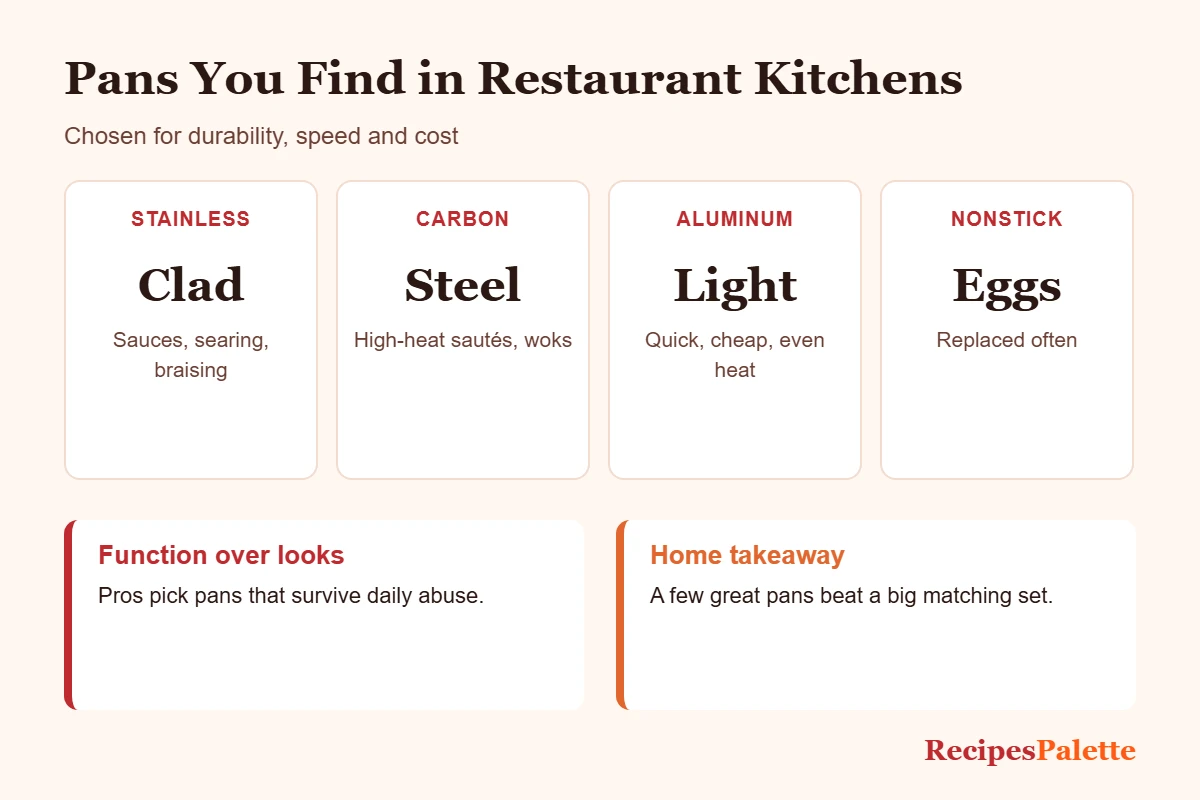
Most professional chefs use simple, tough, affordable pans rather than fancy matching sets. In restaurant kitchens you will mostly see stainless steel sauté pans and saucepans, carbon steel pans, thin aluminum pans, cast iron, and cheap nonstick pans for eggs that get replaced often. The goal is cookware that heats quickly, handles high heat, survives heavy use and is easy to replace.
Here is a look at the cookware chefs rely on, why they choose it, and what home cooks can learn from professional kitchens.
Why Restaurant Cookware Is Different
Restaurant kitchens are hard on pans. Cookware is used for hours every day, heated on powerful burners, scraped with metal tools, and washed in commercial dishwashers. Chefs and restaurant owners care about:
- Durability: Pans must survive drops, high heat and constant washing.
- Speed: Pans that heat quickly help get dishes out fast.
- Weight: Cooks toss food in pans all night, so very heavy pans are tiring.
- Cost: Kitchens need many pans and replace them regularly.
- Versatility: Pans that go from burner to oven save time.
Stainless Steel Pans
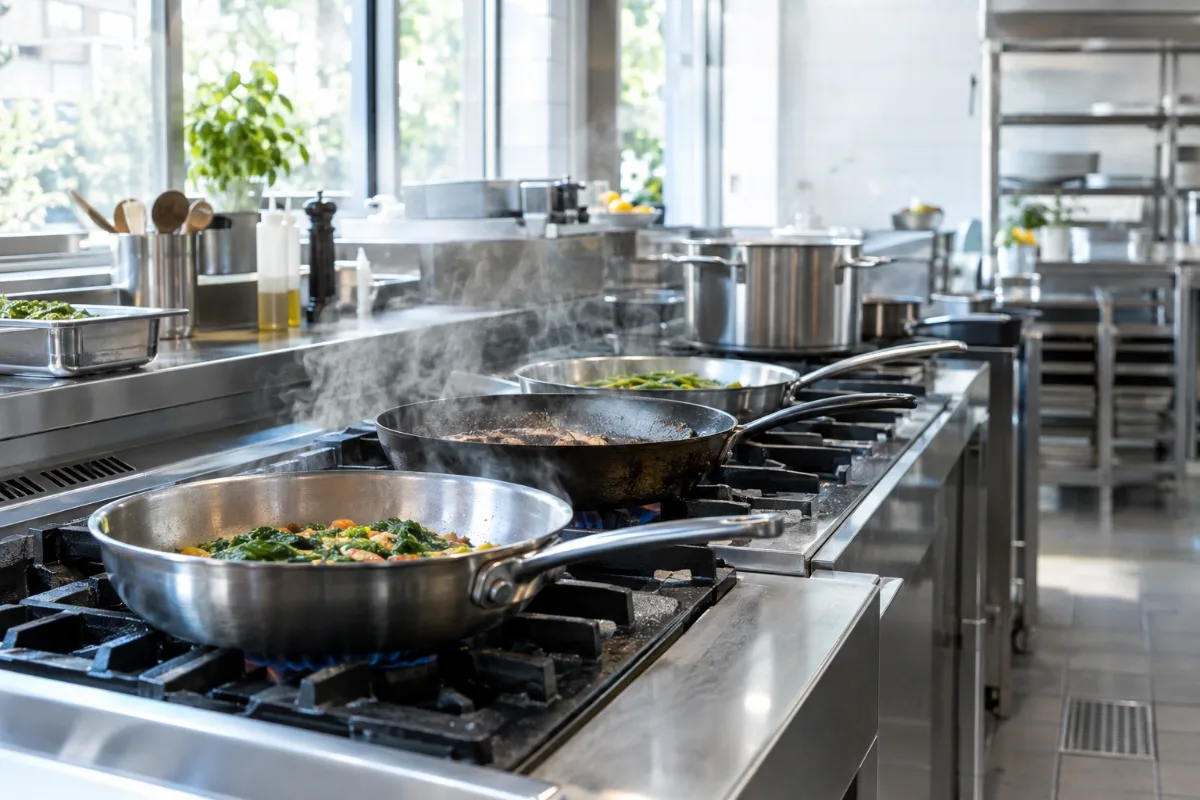
Clad stainless steel, with an aluminum or copper core, is a staple in many kitchens. Stainless steel does not react with acidic foods, so it is ideal for pan sauces, tomato dishes and wine reductions. It handles high heat, works in the oven and tolerates metal utensils.
Common pieces include sauté pans, saucepans, saucier pans and large stockpots. Fully clad pans are popular for sauce work, while disc-bottom stainless pots are common for stocks and boiling.
If you are shopping for stainless at home, our guide on what to look for in stainless steel cookware covers construction, steel grades and thickness.
Carbon Steel Pans
Carbon steel is one of the most common pan materials in professional kitchens, especially in French and Asian restaurants. Carbon steel pans are:
- Lighter than cast iron but able to take very high heat
- Naturally nonstick once seasoned
- Very durable and inexpensive
- Great for searing, sautéing, omelets and stir-frying
Woks are usually made of carbon steel for the same reasons. The trade-off is that carbon steel needs seasoning and must be dried and oiled to prevent rust, and it reacts with acidic foods.
Aluminum Pans
Plain aluminum sauté pans and sheet pans are everywhere in restaurant kitchens. Aluminum heats quickly and evenly, is light, and is cheap enough to buy in large numbers. Many line cooks use thin aluminum sauté pans for fast, high-heat cooking. Aluminum sheet pans and hotel pans are used for roasting, prepping and storing food.
Bare aluminum can react with acidic foods and discolor, so it is often used for quick cooking rather than long simmering of acidic sauces. Anodized and clad options solve that problem but cost more.
Nonstick Pans
Restaurants that serve eggs, crepes or delicate fish usually keep nonstick pans, often inexpensive aluminum pans with a nonstick coating. Because nonstick coatings wear out quickly in professional use, kitchens treat them as replaceable items and swap them out regularly.
Chefs often reserve nonstick for eggs and delicate foods, and use stainless or carbon steel for everything else.
Cast Iron
Cast iron skillets and griddles are popular in steakhouses, Southern restaurants and anywhere food is served in the pan. Cast iron holds heat very well, which helps with searing and baking cornbread. Its weight makes it less practical for constant tossing, so it is mainly used for searing, roasting and presentation.
Copper Pans
Copper heats and cools very quickly and evenly, which is useful for delicate sauces and sugar work. It is expensive and needs polishing, so you are more likely to see copper in pastry kitchens or fine-dining restaurants than on a busy line.
Other Cookware Found in Professional Kitchens
- Stockpots: Large, tall pots for stocks, soups and boiling pasta.
- Rondeaus and brasiers: Wide, shallow pots for braising and searing large batches.
- Sheet pans: Half and full sheets for roasting and baking. See sheet pan sizes explained.
- Hotel pans: Rectangular steel pans used for cooking, holding and storing food.
- Enameled Dutch ovens: For braises and stews, especially in smaller kitchens.
What Pans Do Chefs Use at Home?
Many chefs keep things simple at home too. A common home kit for professional cooks includes:
- A 10- or 12-inch clad stainless skillet
- A carbon steel or cast iron skillet
- A small nonstick pan for eggs
- A 3- to 4-quart saucepan
- A large stockpot
- An enameled Dutch oven
- Two or more half sheet pans
Some chefs choose premium brands at home, but the materials are the same as in restaurant kitchens: stainless steel, carbon steel, cast iron and a little nonstick. If you like oven-safe stainless, read is All-Clad oven safe?.
Lessons Home Cooks Can Learn From Chefs
- Buy pieces, not sets. Choose each pan for a job instead of buying a large matching set with pieces you rarely use.
- Treat nonstick as replaceable. Do not overspend on nonstick, since coatings wear out.
- Learn to cook with stainless steel. Preheat the pan and let food release on its own. It becomes one of the most useful pans in the kitchen.
- Get comfortable with carbon steel or cast iron. They are inexpensive and last for decades.
- Own plenty of sheet pans. They are some of the most used tools in any professional kitchen.
How Chefs Care for Their Pans
Professional kitchens rely on simple habits that home cooks can copy:
- Preheat properly. Chefs heat stainless and carbon steel pans before adding fat, which helps prevent sticking.
- Keep carbon steel dry and oiled. After rinsing, carbon steel pans are dried over heat and wiped with a thin film of oil.
- Use the right tool for each pan. Metal spatulas for stainless and carbon steel, and soft tools for nonstick.
- Deglaze instead of scrubbing. Adding liquid to a hot pan loosens browned bits for sauces and makes cleaning easier.
- Retire worn nonstick quickly. Once a nonstick pan starts sticking, it is replaced.
How to Season a Carbon Steel Pan
If you want to cook like a line cook, a carbon steel pan is a great place to start. A basic seasoning method:
- Wash the new pan with hot soapy water to remove any protective coating from the factory, as the maker instructs.
- Dry it completely over medium heat.
- Wipe a very thin layer of high-smoke-point oil, such as canola or flaxseed, all over the inside.
- Heat the pan on the stove until it smokes and darkens, or bake it upside down in a hot oven for about an hour.
- Let it cool, then repeat two or three times to build a base layer.
Cooking fatty foods such as bacon or shallow-fried potatoes in the first few uses helps build seasoning faster.
Pan Sizes Chefs Reach for Most
| Pan | Common size | Used for |
|---|---|---|
| Sauté pan (sloped sides) | 8 to 12 inches | Single portions, quick sautés, sauces |
| Carbon steel fry pan | 10 to 12 inches | Searing, eggs, potatoes |
| Saucepan | 2 to 4 quarts | Sauces, grains, blanching |
| Rondeau | Large, wide and shallow | Braises and big batches |
| Stockpot | Large, often 12 quarts and up | Stocks, soups, pasta |
At home, a 10-inch and a 12-inch skillet plus a 3-quart saucepan cover most of what a line cook does.
Cookware Brands vs Materials
Chefs talk more about materials and thickness than about brands. A thick, fully clad stainless pan from a store brand can perform much like an expensive one. When comparing brands, look at the construction, weight, handle comfort and warranty rather than the name. Our guide to whether Cuisinart is a good cookware brand shows how to judge a brand on these points.
Frequently Asked Questions
Do professional chefs use nonstick pans?
Yes, mainly for eggs, crepes and delicate fish. They are usually inexpensive and replaced often.
Why do chefs prefer carbon steel?
It is light, handles very high heat, becomes naturally nonstick when seasoned, and is cheap and nearly indestructible.
Do restaurants use cast iron?
Many do, especially for searing, griddling and serving sizzling dishes. Its weight makes it less common for fast sautéing.
Is restaurant cookware better than home cookware?
It is built for durability and value rather than looks. Many restaurant-style pans work very well at home and cost less than premium sets.
What is the best pan for a beginner cook?
A 12-inch clad stainless steel skillet is versatile and durable, and teaches good heat control. Add a nonstick pan for eggs.
Do chefs use stainless steel for eggs?
Some do, with enough fat and good heat control, but most kitchens keep nonstick or carbon steel pans for eggs.
Why are restaurant pans so cheap?
Many are simple aluminum or carbon steel pans built for function. Kitchens buy them in bulk and replace them often.
The Bottom Line
Professional chefs mainly use stainless steel, carbon steel, aluminum and cast iron, plus inexpensive nonstick pans for eggs. They choose pans for durability, speed and value rather than brand names. At home, a few well-chosen pans in the same materials will cover almost every recipe.