
How Long Does Fresh Juice Last? Fridge, Freezer and Storage Tips

Fresh homemade juice tastes best within 24 hours when kept in a sealed container in the fridge at 40°F (4°C) or colder. Juice from a slow (masticating) juicer, stored in a full, airtight glass jar, can often keep good flavor for up to 48 to 72 hours. At room temperature, do not leave fresh juice out for more than 2 hours. For longer storage, freeze it: frozen juice keeps good quality for several months.
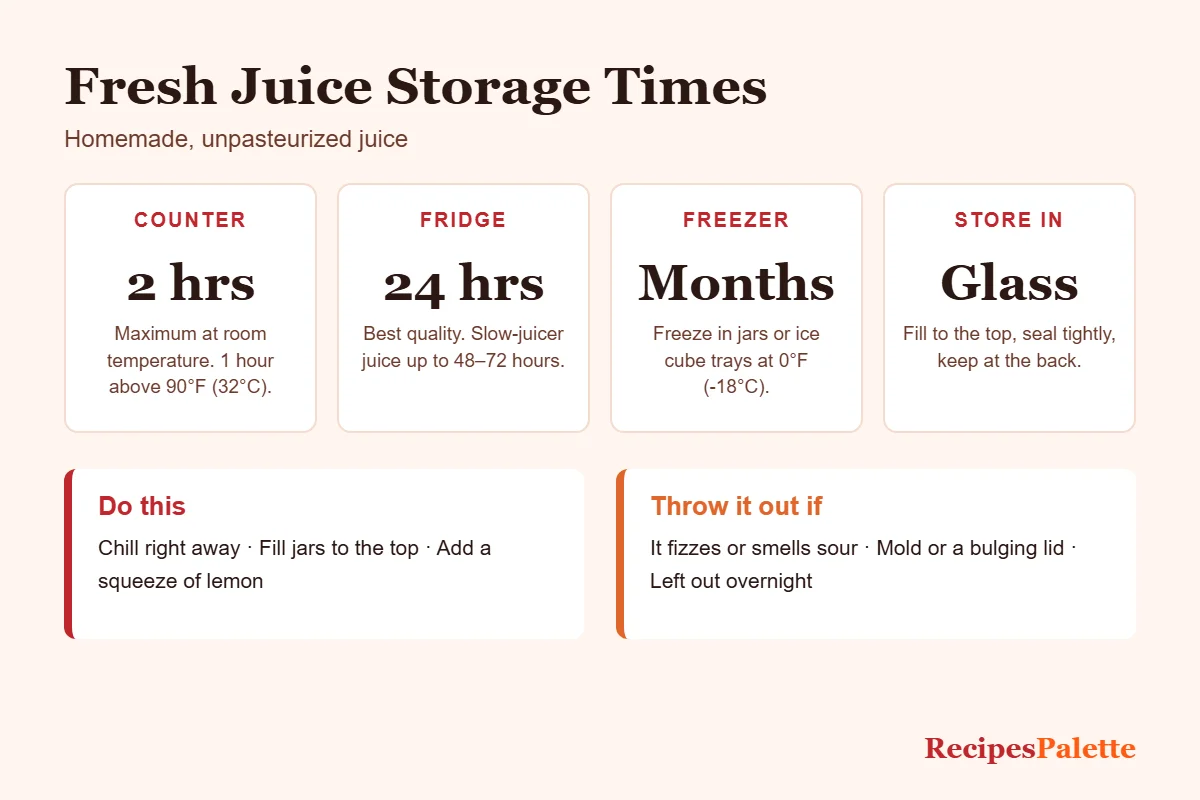
Homemade juice is not pasteurized, so it does not last like store-bought bottles. This guide explains how long each kind of juice keeps, the best containers to use, how to freeze juice, and how to tell when it has gone bad.
Fresh Juice Storage Times at a Glance
| Type of juice | Counter | Fridge (40°F / 4°C) | Freezer (0°F / -18°C) |
|---|---|---|---|
| Centrifugal juicer juice | Up to 2 hours | Best within 24 hours | Several months |
| Slow / masticating juicer juice | Up to 2 hours | Best within 24 hours, up to 48 to 72 hours | Several months |
| Blender juice (strained) | Up to 2 hours | Best within 24 hours | Several months |
| Fresh-squeezed orange or citrus juice | Up to 2 hours | 2 to 3 days | Several months |
| Green juice | Up to 2 hours | Best within 24 hours | Several months (texture changes) |
| Store-bought unpasteurized (cold-pressed) juice | Keep cold | Follow the use-by date; usually a few days | Check the label |
| Store-bought pasteurized juice, opened | Keep cold | About 7 to 10 days | Several months |
These are general guidelines for quality and safe handling. Always use the shorter time if the juice was left out, if your fridge runs warm, or if you are serving someone at higher risk.
Why Fresh Juice Does Not Last Long
Three things work against fresh juice the moment it leaves the juicer:
- Air (oxidation). Oxygen changes the color and flavor. Apple and pear juice turn brown, green juice turns dull olive, and flavors go flat.
- Microbes. Bacteria, yeasts and molds on produce end up in the juice. Homemade juice is not heated or pasteurized, so nothing kills them. Cold slows them down but does not stop them.
- Separation. Juice naturally separates into layers as pulp and water settle. This is not harmful, but it is a sign that the juice is aging.
That is why the US FDA requires a warning label on unpasteurized juice sold in stores, and why fresh juice is best treated like any other perishable food.
Does the Type of Juicer Matter?
Somewhat. A centrifugal juicer spins very fast and mixes more air into the juice, so it tends to separate and change flavor sooner. A slow or masticating juicer adds less air, so its juice usually looks and tastes fresh a little longer. This is mainly a quality difference, not a safety one. Clean produce, clean equipment and cold storage matter far more than the machine. We explain the two types in our masticating vs centrifugal juicer guide.
How to Store Fresh Juice in the Fridge
- Start clean. Wash produce well, and make sure your juicer, cutting board and jars are clean.
- Chill fast. Put the juice in the fridge right away. Do not let it sit on the counter while you clean up.
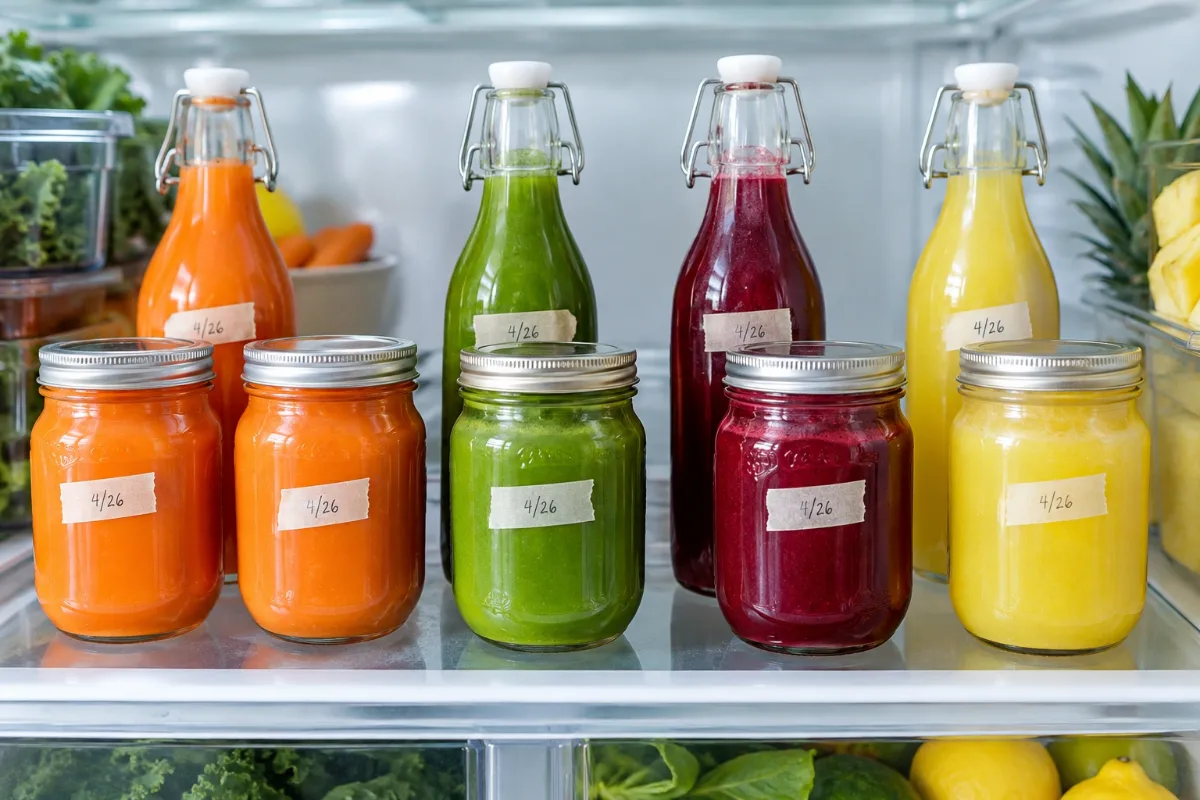
- Use glass. Glass does not hold odors or stains and is easy to sanitize.
- Fill to the top. The less air in the jar, the slower the juice changes color and flavor. Use small jars for small amounts.
- Seal tightly. An airtight lid keeps out air and fridge smells.
- Add citrus. A squeeze of lemon or lime juice slows browning, especially in apple and green juices.
- Label the time. Write the date and time on a piece of tape.
- Store in the back of the fridge, not the door, where temperatures are colder and more stable.
Best Containers for Juice Storage
- Mason jars with airtight lids. Cheap, sturdy and available in many sizes. 8 oz and 16 oz jars are perfect for single servings.
- Glass swing-top bottles. Good seal and easy to pour. Make sure the rubber gasket is clean.
- Vacuum-seal containers. A small pump removes air and can help juice keep its color longer.
- BPA-free plastic bottles. Fine for short-term storage or taking juice to work, but they can hold odors and stains over time.
Avoid storing juice in open pitchers or in the juicer’s own jug with no lid. If you freeze juice in glass, choose jars labeled freezer-safe and leave space at the top.
How to Freeze Fresh Juice
Freezing is the best option if you make a big batch or cannot drink it within a day.
- Pour juice into freezer-safe containers, ice cube trays or silicone molds.
- Leave about 1 inch (2.5 cm) of space at the top of jars; juice expands as it freezes.
- Seal and label with the date and type of juice.
- Freeze at 0°F (-18°C).
- Thaw in the fridge overnight, not on the counter. Shake or stir well, then drink within 24 hours of thawing.
Frozen juice keeps good quality for several months. The flavor stays close to fresh, but the texture can be a little thinner and it will separate more after thawing. Juice ice cubes are great dropped into sparkling water, lemonade or smoothies.
How to Tell If Fresh Juice Has Gone Bad
Throw juice away if you notice any of these:
- A sour, fermented or alcohol-like smell
- Fizzing or bubbles when you open the jar (a sign of fermentation)
- A bulging lid
- Mold on the surface or around the lid
- A slimy or thick texture
- A strange, off or vinegary taste
Color change and separation alone are not signs of spoilage. Browning or layering are normal. But if the juice is past the storage times above, throw it out even if it seems fine. When in doubt, throw it out.
Juice Left Out Overnight: Is It Safe?
No. Like other perishable food, fresh juice should not sit at room temperature for more than 2 hours, or 1 hour if the room is hot (above 90°F / 32°C). Juice left out overnight should be thrown away, even if it looks and smells normal.
Who Should Be Careful With Fresh Juice
Most healthy adults can enjoy fresh homemade juice if it is made and stored carefully. Health agencies advise that children, older adults, people who are pregnant and anyone with a weakened immune system choose pasteurized juice, or bring fresh juice to a boil and cool it before drinking. Our juicing safety tips cover hygiene in more detail.
Tips to Make Juice Last Longer
- Juice cold produce straight from the fridge.
- Use the freshest, firmest produce you can find. Bruised or soft spots spoil faster.
- Cut away damaged parts before juicing.
- Strain out extra pulp; it can speed up separation.
- Make only what you will drink within a day, and freeze the rest straight away.
- Keep your fridge at 40°F (4°C) or colder. A fridge thermometer helps.
If you are new to making juice, our juicing for beginners guide covers prep and equipment, and our green juice recipe is a good one to make fresh in the morning.
Frequently Asked Questions
How long does fresh-squeezed orange juice last in the fridge?
About 2 to 3 days in a sealed container at 40°F (4°C) or colder. It tastes best on the first day.
How long does cold-pressed juice last?
Homemade juice from a slow juicer tastes best within 24 hours and can often keep for up to 48 to 72 hours if stored well. Store-bought cold-pressed juice may be treated with high pressure processing, so follow the date on the bottle.
Can I make juice the night before?
Yes. Store it in a full, sealed glass jar in the fridge with a little lemon, and stir before drinking. It will taste slightly less fresh than juice made in the morning.
Can you freeze homemade juice?
Yes. Freeze it in freezer-safe containers with space at the top, or in ice cube trays. Thaw in the fridge.
Why does my juice separate?
Pulp and water naturally settle into layers over time. It is normal. Shake or stir the jar before drinking.
Does lemon juice make fresh juice last longer?
Lemon slows browning and helps the color and flavor stay fresh, but it does not make juice safe to keep for days longer. Follow the same storage times.
The simple rule: make what you will drink today, keep it cold in a full, sealed glass jar, and freeze anything extra. Fresh juice is at its best when it is, well, fresh.