Healthy Meal Planning Tips – Expert Strategies That Work

You want simple, practical steps to plan healthy meals that fit your life and save time. I show easy ways to set goals, pick balanced meals, and prep ahead so eating well feels doable, not overwhelming. Start with a short plan, a smart grocery list, and one big prep session each week to cut stress and eat better every day.
I’m Emma Reed, and I write from my own experience testing quick, budget-friendly strategies that actually work. I’ll walk you through clear tips on choosing nutrients, adding flavor, and adjusting plans when life gets busy so you can stick with healthy habits.
Key Takeaways
- Set clear, simple nutrition goals and make a repeatable meal plan.
- Prep a few staples once a week to save time and reduce waste.
- Use variety, flavor, and small adjustments to keep meals enjoyable.
Healthy Meal Planning Tips – Expert Strategies That Work
Understanding Healthy Meal Planning
I focus on simple, practical steps that make meals healthy, save time, and lower food costs. I break planning into clear actions: choosing a balance of foods, prepping smart, and using portion control.
What Is Healthy Meal Planning?
Healthy meal planning means choosing foods and portions in advance to meet nutrition needs and daily routines. I pick a mix of vegetables, fruits, whole grains, lean proteins, and healthy fats. I plan meals around family schedules and store sales so food gets used and costs stay lower.
I write a short weekly menu and a grocery list from that menu. I include at least one vegetable with each meal and aim for whole-grain or high-fiber options at least once a day. I also plan for snacks that combine protein and carbs, like yogurt and fruit, to keep energy steady.
Benefits of Organized Meal Prep
Organized meal prep saves time and reduces stress during busy days. I cook or chop ingredients once or twice a week, which cuts nightly cooking time and frees up evenings.
It helps me eat healthier and avoid impulse takeout. Prepped portions make it easier to control calories and servings. I also waste less food by using ingredients across multiple meals and tracking what’s in the fridge.
Organizing meals can save money too. I buy in-season produce, use bulk grains, and plan recipes around sale items. This reduces grocery trips and prevents buying extras I don’t need.
Key Principles for Balanced Diets
Balance means including protein, fiber, healthy fats, vitamins, and minerals each day. I aim for half my plate to be vegetables and fruits, a quarter lean protein, and a quarter whole grains. I add small amounts of healthy fats, like olive oil, nuts, or avocado.
Portion control matters. I measure servings until I learn visual cues: a palm-sized protein portion, a fist-sized grain portion, and two cupped hands of vegetables. I limit added sugars and choose lower-sodium options when possible.
Variety keeps meals nutritious and interesting. I rotate protein sources and colors of vegetables across the week. I also plan one flexible meal to use leftovers and reduce waste.
Setting Nutritional Goals
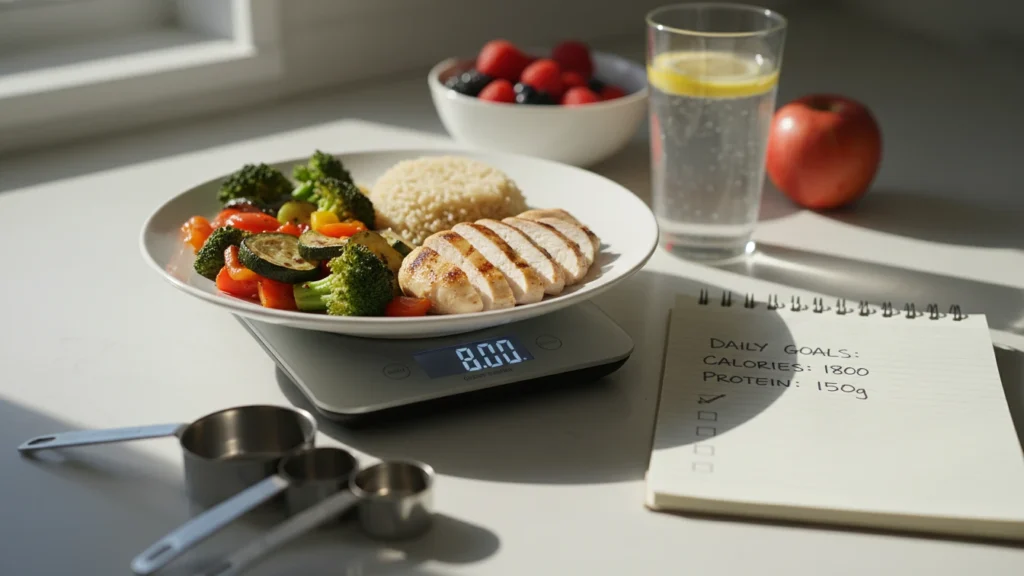
I set clear, measurable targets for calories, protein, fiber, vitamins, and water so my meals support energy, muscle repair, and digestion. I aim to balance macronutrients, hit key micronutrient needs, and keep portion sizes consistent to meet those goals.
Identifying Daily Nutrient Requirements
I calculate my calorie needs using my age, sex, weight, height, and activity level. Then I break calories into macronutrient targets—commonly 45–65% carbs, 10–35% protein, and 20–35% fat—adjusting those ranges if I train, lose weight, or manage a condition.
I track protein by aiming for 0.6–0.8 grams per pound of body weight for general health, more if I want muscle gain. For fiber, I target 25–35 grams per day from whole grains, beans, fruits, and vegetables.
I also watch key micronutrients like iron, calcium, vitamin D, and potassium. If I suspect gaps, I use a reputable source like the NIH fact sheets to check recommended intakes and consider a blood test or a registered dietitian for personalized advice.
Customizing Meals for Dietary Needs
I tailor meals to allergies, intolerances, religious choices, or health goals. For example, if I’m lactose intolerant, I swap dairy for fortified plant milk to keep calcium and vitamin D in my diet. If I follow a vegetarian plan, I pair beans or tofu with whole grains to ensure complete proteins.
I write sample menus that meet nutrient targets: a protein-rich breakfast, a fiber-forward lunch, balanced snacks, and a vegetable-heavy dinner. I use the USDA MyPlate or a dietitian’s guidance to build meals that hit my macro and micro goals. When needed, I consult a registered dietitian to adjust for chronic conditions like diabetes or celiac disease.
Portion Size Best Practices
I measure portions until I learn visual cues: a fist equals one cup, a palm equals a serving of protein, and a thumb equals about one tablespoon of fat. I use a kitchen scale for accuracy when starting out.
I plate meals with half vegetables, one-quarter lean protein, and one-quarter whole grains to keep portions balanced. For calorie-dense foods, I pre-portion snacks into small containers to avoid overeating. When dining out, I ask for a to-go box at the start and pack half before I begin eating to control serving size.
Building a Grocery List
I focus on simple, repeatable choices that keep meals healthy and shopping efficient. I list pantry staples, proteins, produce, and a few treats so I shop fast and cook more at home.
Stocking Up on Essential Ingredients
I keep a core set of ingredients that form the base of most meals. In my pantry I store whole grains (brown rice, quinoa, oats), canned beans, low-sodium broth, and canned tomatoes. These items last long and make quick meals like grain bowls or chili.
In my fridge and freezer I stock lean proteins (chicken breasts, canned tuna, frozen fish), eggs, and a block of cheese. I also buy frozen vegetables and fruit for smoothies and quick sides. Fresh produce I buy weekly: leafy greens, carrots, bell peppers, apples, and bananas.
I add flavor with olive oil, a vinegar (balsamic or apple cider), garlic, and a multispice blend. For meal ideas and portion guidance I check USDA MyPlate resources and Nutrition.gov for evidence-based tips.
Smart Shopping Strategies
I plan dinners for five nights and reuse ingredients across meals to cut cost and waste. For example, roasted chicken becomes tacos, salad, and soup. I write my list by store section—produce, meat, dairy, dry goods—so I move through aisles once.
I shop with a list and avoid browsing to reduce impulse buys. I compare unit prices and pick store or bulk brands for staples. I also check weekly ads and digital coupons for items I use regularly.
I keep a short “must-buy” column and a “maybe” column on my list. This helps me stay flexible if something is out of stock. For meal templates and planning tools I use printable grocery list templates to stay organized and save time.
Preparing Meals in Advance
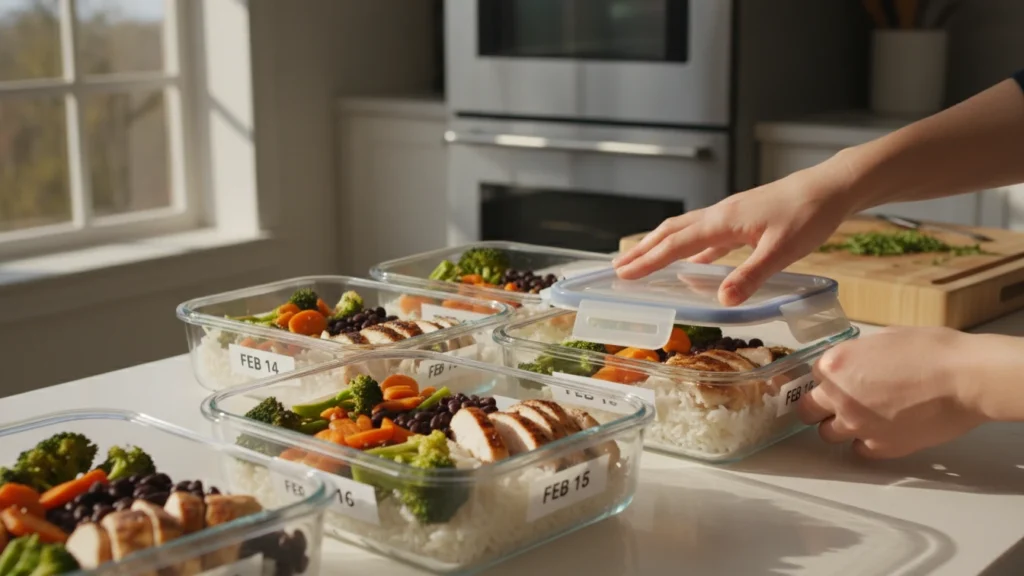
I plan meals so I save time, cut waste, and eat balanced food all week. I focus on cooking in batches, storing food safely, and organizing my prep to move fast on busy days.
Batch Cooking Techniques
I cook large portions of staples like brown rice, roasted vegetables, and lean proteins in one session. I use the oven for sheet-pan meals and a large pot or slow cooker for soups and stews to feed several meals at once.
I portion cooked food into single-meal containers right after cooling. This makes lunches grab-and-go and keeps portion sizes consistent. For variety, I cook one base (e.g., quinoa) and three toppings or sauces to mix and match across meals.
I also freeze portions of cooked beans, tomato sauce, and cooked grains in labeled freezer bags. Thawing in the fridge overnight or reheating from frozen saves me time without changing texture much. I rotate meals so older items get used first.
Effective Meal Storage Methods
I always cool hot food at room temperature for no more than two hours before refrigerating to prevent bacteria growth. I store meals in airtight containers made of glass or BPA-free plastic; glass works well for reheating and long-term freshness.
I label each container with the date and contents. For fridge storage, I follow a simple rule: cooked proteins and mixed meals last 3–4 days; most cooked grains and vegetables stay good for 3–5 days.
For the freezer, I freeze soup, cooked meat, and casseroles in flat, stackable bags or shallow containers to speed thawing. I use a freezer-safe label and plan to use frozen meals within 2–3 months for best quality.
Time-Saving Organization Tips
I create a weekly plan listing breakfasts, lunches, dinners, and two snack options before shopping. This prevents impulse buys and ensures I only prep what I will eat. I build a shopping list by ingredient, grouped by store section, which saves time in the supermarket.
I set aside one block of 1–3 hours for batch cooking and another 15–30 minutes for weekday prep like chopping veggies or portioning snacks. I keep a set of stackable containers and a dedicated cooling rack and always clean as I go to cut total cleanup time.
I also use simple labels, a meal calendar on my phone, and a staple list (grains, frozen veggies, proteins) so I can fill gaps quickly when plans change.
Incorporating Variety and Flavor
I focus on simple swaps and bold seasonings to keep meals interesting and nutritious. Small changes in protein, produce, and spices make a big difference at the plate.
Rotating Proteins and Vegetables
I rotate proteins weekly to cover different nutrients and keep dinners fresh. For example, I do chicken one night, salmon the next, then a plant-based option like lentils or tofu. That pattern gives me iron, omega-3s, and fiber across the week.
I pair vegetables by color and texture to boost vitamins and enjoyment. Bright choices—spinach, red peppers, carrots—go with flaky fish. Heartier veg—sweet potatoes, Brussels sprouts, beets—work well with roasted chicken or beans.
I use a simple plan: pick three proteins and four vegetables each week, then mix-and-match. This gives me 12 different meals from a small grocery list. I also freeze portions of cooked proteins and blanched veg to save time and avoid waste.
Exploring Global Cuisines
I borrow flavors from other cuisines to refresh familiar ingredients. A lemon-caper sauce or za’atar rub updates roasted fish. A quick curry powder or garam masala transforms chickpeas into a new meal in minutes.
I keep a spice drawer with staples: cumin, smoked paprika, turmeric, chili flakes, and dried herbs. Those five seasonings cover Mediterranean, Mexican, Indian, and Middle Eastern profiles without extra shopping.
I also use simple swaps for texture: add toasted nuts for crunch, yogurt for creaminess, or pickled onions for tang. Small additions change the whole dish and make leftovers feel new.
Adapting Plans for Busy Lifestyles
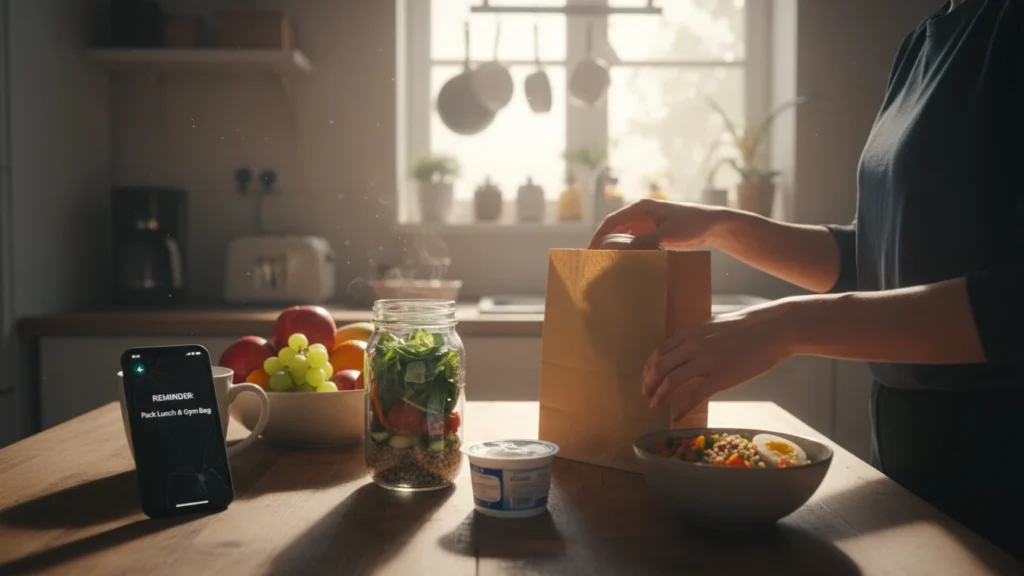
I focus on simple, repeatable tactics that save time and keep meals healthy. I pick a few go-to recipes, batch what I can, and choose portable options that travel well.
Quick Meal Solutions
I build a short list of fast recipes I can make in 20–30 minutes. I keep staples like canned beans, frozen vegetables, whole-grain pasta, and rotisserie chicken on hand. These items let me toss together meals such as bean-and-veggie bowls, pasta with sautéed greens, or chicken grain bowls in minutes.
I cook larger batches twice a week and store portions in clear containers. Labeling with dates helps me rotate meals before they spoil. I use a slow cooker or Instant Pot for hands-off dinners like stews and chili, which free up evenings.
To save time shopping, I make a shopping list tied to two base menus and stick to the store perimeter for fresh produce and proteins. For balanced meals, I aim to include: protein + fiber (whole grains or beans) + a vegetable. For more meal-prep ideas and recipes, I use resources like the USDA’s MyPlate site for portion guidance.
Healthy On-the-Go Options
I keep a few portable meals ready when I know I’ll be out. Mason jar salads, whole fruit, nut butter packets, and pre-cooked quinoa or lentils travel well. I pack a small cooler bag for yogurt, cheese sticks, or cooked chicken to keep perishables safe.
When I eat out, I pick grilled proteins, steamed vegetables, and whole-grain sides. I avoid sugary drinks and choose water or unsweetened tea. I also prep snack packs of mixed nuts, sliced bell peppers, and hummus to prevent impulse buys.
I use apps to track simple staples and set a weekly reminder to prep or buy replacements. For food safety and storage tips, I reference the CDC’s guidance on safe food handling.
Monitoring Progress and Adjusting Plans
I track weight, energy, and meal habits regularly and change plans based on real results. I focus on measurable signs—weight, hunger, mood, and how well meals fit my week—so adjustments stay practical and simple.
Tracking Success and Making Changes
I record weight once a week and note how my clothes fit and my energy after meals. I keep a simple food log for two weeks to spot patterns: skipped meals, late-night snacks, or low-veg days. If I miss fiber or protein targets, I add a high-fiber breakfast or a lean-protein snack.
I set one clear goal at a time, like “eat two vegetable servings at dinner,” and test it for two weeks. If the goal fails, I ask why and tweak the plan—swap recipes, change prep time, or move a meal earlier. I use trusted tools for guidance, such as MyPlate and CDC tips, to check portion sizes and nutrient balance.
Small changes add up, so I adjust portion size by 10–20% instead of overhauling meals. I also track non-scale wins: better sleep, fewer cravings, and easier grocery trips.
Overcoming Common Meal Planning Challenges
When time is tight, I batch-cook two versatile proteins (chicken and beans) and three quick sides (roasted veg, rice, salad) to mix across meals. I make a 30-minute shopping list to avoid extra trips and save money.
If boredom hits, I rotate international spices or swap one recipe per week. I plan one “flex meal” for nights out to keep the plan realistic. For food waste, I freeze leftovers and label containers with dates.
If motivation drops, I simplify: choose three go-to breakfasts and four dinners I enjoy. I check evidence-based resources like the Academy of Nutrition and Dietetics for safe tips when I need deeper help.
Sustainable and Budget-Friendly Tips
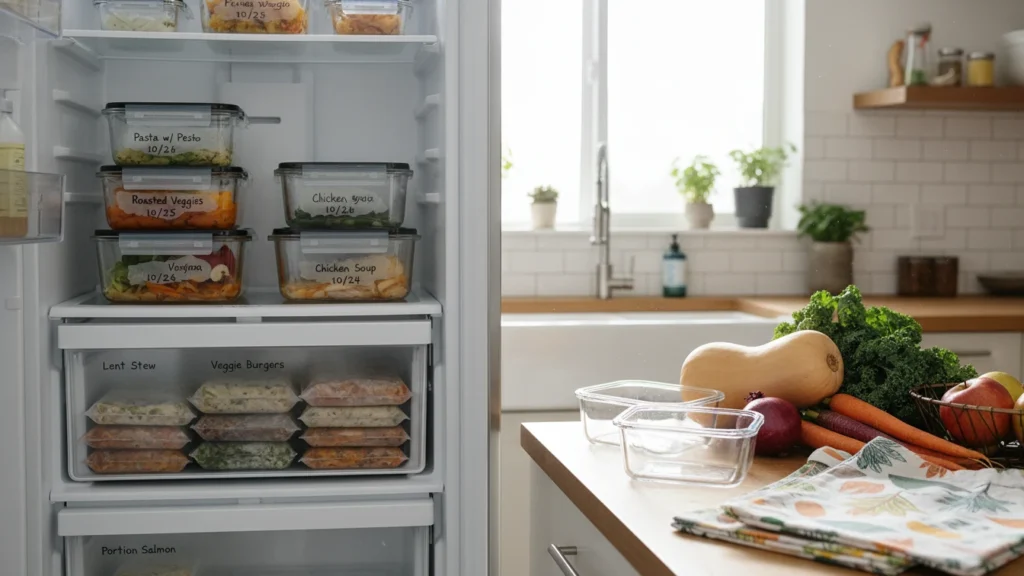
I focus on ways to cut waste, save money, and keep meals healthy. Small changes in planning and shopping often give the biggest results.
Minimizing Food Waste
I plan meals around what I already have. I keep a running list on my phone of perishable items and use them in the next two meals. I also freeze leftovers in portion-sized containers so nothing goes bad.
I use “root-to-stem” cooking for vegetables—stems and leaves get sautéed or added to soups. For fruit, I make smoothies or baked oatmeal when pieces get soft. I label containers with dates so I rotate older food first.
I compost scraps when possible or use them to make vegetable stock. For large batches, I repurpose dinner into lunch bowls and wraps to avoid repeat cooking. These moves reduce trips to the grocery store and cut food costs.
Cost-Effective Ingredient Choices
I build meals on affordable staples: brown rice, dry beans, frozen vegetables, oats, and canned tomatoes. These items store long and form the base for many dishes. I buy whole chicken or larger cuts and break them down, freezing parts for later use.
I shop seasonal produce for better price and flavor, and I check store apps for digital coupons and weekly sales. I compare unit prices and buy in bulk only for items I use regularly. When I want variety, I swap an expensive protein for lentils or eggs to lower the cost without losing nutrition.
I use simple recipes that share ingredients across the week to cut waste and save prep time. For recipes and seasonal guides, I consult USDA seasonal produce lists and storage tips from trusted sources like the USDA and Mayo Clinic.
FAQs
I get asked common questions about meal planning all the time. Below I answer the ones I hear most.
How often should I plan meals?
I suggest a weekly plan. It matches most shopping cycles and fits changing schedules. You can plan twice a month if you prefer larger grocery trips.
What if I don’t like strict plans?
I keep plans flexible. I pick 3-5 go-to dinners, one leftover day, and one “no-plan” day. This makes planning simple and reduces stress.
How do I save time?
I batch-cook staples like grains and roasted vegetables. I also chop and store ingredients once, so meals take less time later.
Can meal planning save money?
Yes. I buy items on sale and use leftovers in new meals. A simple shopping list keeps me from impulse buys.
How do I make healthy choices?
I aim for half the plate to be vegetables, include a lean protein, and add whole grains. I swap sugary drinks for water or unsweetened tea.
Any tips for picky eaters?
I involve them in choosing meals and offer one new item alongside familiar favorites. Small changes over time work best.
What tools help me plan?
I use a simple checklist, a running meal list, and batch-prep containers. Apps can help, but a paper list works well too.
Conclusion
I used simple, steady steps to help you make meal planning fit your life. Small habits add up, so start with one change this week and build from there.
I focus on balance, variety, and ease. That means mixing proteins, veggies, and grains, and planning meals that match your schedule and budget.
I recommend batch cooking and a short weekly plan to save time and reduce waste. A quick grocery list keeps shopping focused and cuts impulse buys.
I know it can feel hard at first, but most people find it easier after a few tries. Track what works, drop what doesn’t, and keep meals flexible.
If you want a quick reference, use this checklist:
- Plan 2–3 main meals and 2 snacks per day.
- Pick one day for batch cooking.
- Use leftovers for one extra meal.
- Keep a running grocery list.
I’ll help you stay realistic and consistent. With steady practice, meal planning becomes a simple tool that saves time, money, and stress.