
Are Aluminum Baking Sheets Safe?

Aluminum baking sheets are among the most widely used bakeware in home and professional kitchens, and they are generally considered safe for normal baking and roasting. Aluminum heats quickly and evenly, does not rust and is lightweight. The main thing to know is that bare aluminum can react with acidic and very salty foods, which can discolor the pan and add a slight metallic taste. Lining the sheet with parchment paper and avoiding storing food on it solves most concerns.
Here is what to know about aluminum bakeware, when to line it, the difference between natural and anodized aluminum, and how to keep your sheets in good shape.
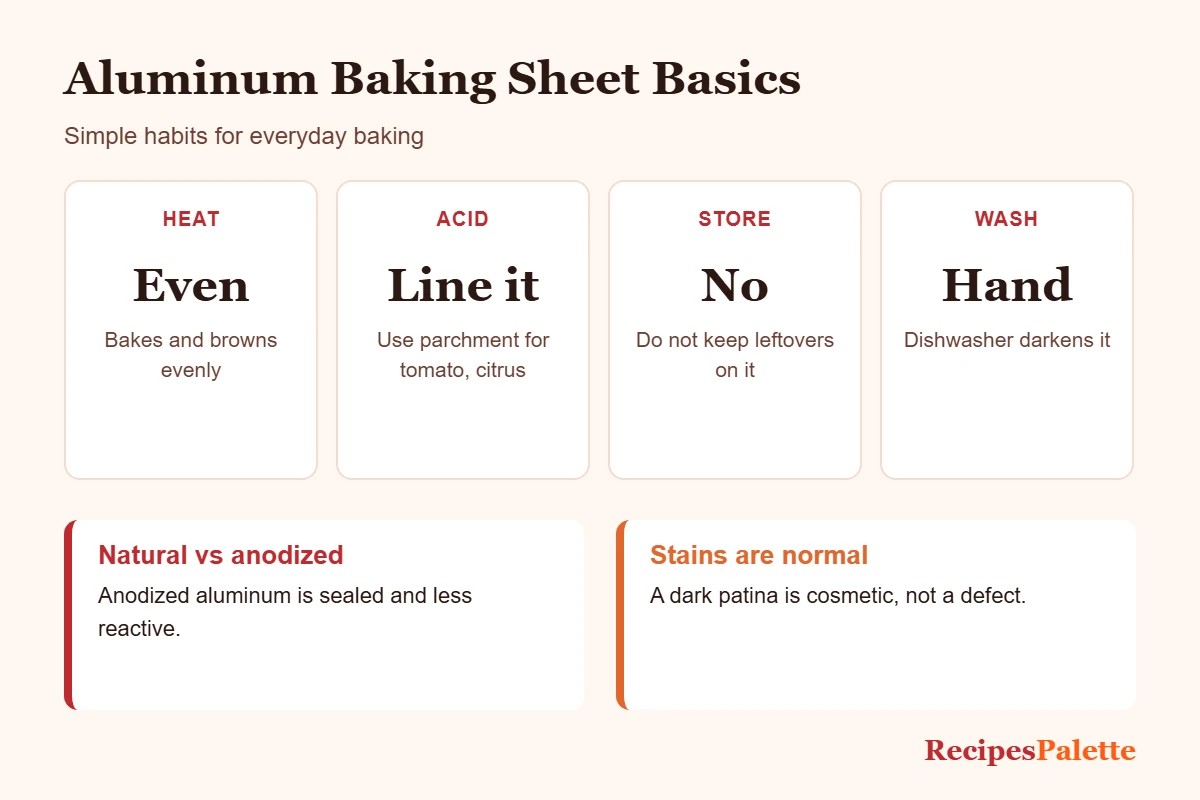
Why Bakers Like Aluminum Sheets
Aluminum is a favorite material for baking sheets for several reasons:
- Even heat: Aluminum spreads heat quickly across the whole pan, which helps cookies and roasted vegetables brown evenly.
- Light weight: Even a heavy-gauge half sheet is easy to lift in and out of the oven.
- Rust-free: Unlike carbon steel, aluminum does not rust.
- Affordable: Good aluminum sheets cost less than most other bakeware materials.
- Light color: Natural aluminum reflects some heat, so baked goods brown more gently than on dark pans.
These are the same reasons bakeries and restaurants use aluminum sheet pans in large numbers. Learn more about common sizes in our guide to sheet pan sizes.
Is Aluminum Bakeware Safe?
Aluminum is found naturally in many foods, water and the environment. When you bake on an aluminum sheet, a small amount of aluminum can move into food, especially with acidic or salty foods and long cooking times. Health authorities generally consider everyday use of aluminum cookware and bakeware acceptable for most people.
If you want to minimize contact between food and bare aluminum, the simple solutions are:
- Line sheets with parchment paper or a silicone baking mat
- Choose anodized or coated aluminum bakeware
- Avoid storing leftovers on bare aluminum
If you have specific health concerns, talk to a doctor or a registered dietitian for advice tailored to you.
Acidic and Salty Foods on Aluminum
Bare aluminum reacts with acids and salt. You may notice:
- Dark or dull spots where tomato, citrus or vinegar touched the pan
- A slightly metallic taste in very acidic foods
- Small pits in the surface after salty foods sit on the pan
Foods that are best cooked on a lined sheet include tomato-based dishes, citrus-marinated meats and fish, vinegar-glazed vegetables, and anything heavily salted, such as salt-crusted potatoes. A layer of parchment paper prevents direct contact and keeps the pan cleaner.
Natural vs Anodized vs Coated Aluminum
| Type | Surface | Reacts with acid? | Care |
|---|---|---|---|
| Natural (bare) aluminum | Plain metal | Yes | Hand wash; darkens over time |
| Anodized aluminum | Hard, sealed oxide layer | Much less | Hand wash usually recommended |
| Nonstick-coated aluminum | Nonstick coating | No direct contact | Soft tools, hand wash, moderate heat |
| Aluminized steel | Steel coated with aluminum | Similar to bare aluminum | Often coated; check care guide |
Anodizing is an electrochemical process that thickens the natural oxide layer on aluminum, making it harder and less reactive. Anodized sheets are a good choice if you often roast acidic foods.
Is Aluminum Foil on a Baking Sheet Safe?
Many cooks line sheets with foil for easy cleanup. Foil is also aluminum, so the same reaction with acidic foods applies. For acidic or salty foods, parchment paper is the better liner. Foil works well for dry foods and for wrapping items you want to steam or keep moist.
Never line the bottom of the oven with foil unless your oven manual allows it, as it can block airflow and damage some ovens.
Why Aluminum Sheets Turn Dark
Over time, aluminum baking sheets develop a brown or dark gray patina. This comes from baked-on oils and natural oxidation of the metal. It is cosmetic and does not stop the pan from working. Many bakers consider a seasoned sheet a sign of good use.
Very dark sheets do absorb a little more heat, so cookies may brown slightly faster on the bottom. If you notice this, lower the oven temperature by about 25°F or use parchment.
How to Clean Aluminum Baking Sheets
- Let the sheet cool before washing.
- Wash in warm water with mild dish soap and a soft sponge.
- For baked-on grease, sprinkle baking soda, add a splash of hydrogen peroxide or water, let it sit for a while, then scrub with a nonabrasive pad.
- For light gray marks, a paste of cream of tartar and water can brighten bare aluminum.
- Rinse and dry completely.
Avoid oven cleaners, bleach and harsh abrasive powders. They can pit and discolor aluminum.
Can Aluminum Baking Sheets Go in the Dishwasher?
Most makers recommend hand washing. Dishwasher detergent is alkaline and can react with bare aluminum, leaving it dull, chalky or dark gray. This damage is cosmetic but hard to reverse. Some anodized and coated sheets are labeled dishwasher safe, but hand washing still keeps them looking better. Our guide to Nordic Ware bakeware explains this in more detail.
Tips for Getting the Most From Aluminum Sheets
- Choose heavy gauge. Thicker sheets resist warping and bake more evenly.
- Look for reinforced rims. A rolled rim with a steel wire inside adds strength.
- Use parchment for sticky foods. Sugary glazes and cheese can weld onto bare aluminum.
- Do not cut on the sheet. Knives scratch the surface. Move food to a cutting board.
- Store dry. Make sure sheets are fully dry before stacking.
Aluminum vs Stainless Steel Baking Sheets
| Feature | Aluminum | Stainless steel |
|---|---|---|
| Heat spread | Very even | Less even; can have hot spots |
| Weight | Light | Heavier |
| Reacts with acid | Bare aluminum does | No |
| Dishwasher | Usually hand wash | Often dishwasher safe |
| Browning | Even, golden | Can be patchy |
Many kitchens use aluminum for most baking and roasting, and keep a stainless sheet for acidic foods or dishwasher convenience. For a wider look at materials, see pan materials compared.
Best Uses for Aluminum Baking Sheets
Aluminum sheets shine with dry or lightly oiled foods that benefit from even heat:
- Cookies, biscuits and scones
- Roasted vegetables such as potatoes, carrots, broccoli and squash
- Sheet pan chicken and sausages
- Toasting nuts, seeds and breadcrumbs
- Sheet cakes, focaccia and pizza
- Reheating fries and frozen snacks
For tomato sauces, lemon-heavy marinades or salt-crusted dishes, line the sheet with parchment or use a stainless steel or glass dish.
How to Tell What Your Sheet Is Made Of
- Bare aluminum: Light silver-gray, dull or satin finish, lightweight, not magnetic.
- Anodized aluminum: Darker gray or gold, smooth and hard surface, not magnetic.
- Aluminized steel: Heavier, and a magnet will stick to it.
- Stainless steel: Shiny, heavier, may or may not be magnetic depending on grade.
- Coated nonstick: Dark gray or black coating on the cooking surface.
Check the label or product page when in doubt.
Common Myths About Aluminum Bakeware
“Shiny side vs dull side of foil matters”
For regular foil, the two sides differ only because of how foil is made. The difference in cooking is negligible. Non-stick foil is the exception: its dull side is coated and should face the food.
“Dark stains mean the pan is unsafe”
Stains and patina are mostly baked-on oil and oxidation. They are cosmetic. Replace a pan only if it is pitted, badly warped or flaking.
“Aluminum pans cannot go above 400°F”
Bare aluminum sheet pans handle normal oven temperatures used for roasting and baking. Coated or nonstick sheets may have lower limits, so check the label.
How Long Do Aluminum Baking Sheets Last?
A heavy-gauge aluminum sheet can last for many years, often decades, with basic care. Thin sheets may warp sooner. Nonstick-coated aluminum sheets last until the coating wears, which is usually a few years with regular use. Signs it is time to replace a sheet include deep pitting, a permanent wobble that makes food slide to one side, or a flaking coating.
A Quick Checklist Before You Bake
- Is the food acidic or very salty? Line the sheet with parchment.
- Is it sticky or sugary? Use parchment or a silicone mat.
- Is the sheet dark from years of use? Check cookies a few minutes early.
- Will leftovers sit on it? Move them to a container instead.
Frequently Asked Questions
Is it safe to bake cookies on an aluminum sheet?
Yes. Cookies are one of the most common uses for aluminum sheets. Parchment paper makes cleanup easier.
Should I throw away a stained aluminum baking sheet?
No. Stains and dark patina are cosmetic. Replace the sheet only if it is badly warped, pitted or damaged.
Can I store food on an aluminum sheet in the fridge?
For short periods with dry foods it is fine, but avoid storing acidic or salty foods on bare aluminum. Move leftovers to a storage container.
Are anodized aluminum sheets safer?
Anodized aluminum has a hard, sealed surface that is much less reactive than bare aluminum, so it is a good option if you often cook acidic foods.
Do aluminum baking sheets warp?
Thin sheets can warp at high heat. Heavy-gauge sheets with reinforced rims resist warping better.
Can I use metal spatulas on aluminum sheets?
Yes on bare aluminum, though they may leave light scratches. Use soft tools on nonstick-coated sheets.
The Bottom Line
Aluminum baking sheets are widely used and generally considered safe for everyday baking and roasting. They heat evenly, are light and do not rust. Line them with parchment for acidic or salty foods, do not store leftovers on them, and hand wash them to keep them looking their best.