
Best Pan Materials Compared: Stainless, Cast Iron, Carbon Steel, Nonstick and More

There is no single best pan material. Stainless steel is the best all-rounder, cast iron is best for searing and holding heat, carbon steel is best for very high-heat cooking, and nonstick (PTFE or ceramic) is best for eggs and delicate foods. Aluminum and copper heat the fastest and most evenly, so they are usually used as a core inside steel pans. Most kitchens are best served by a mix of two or three materials.
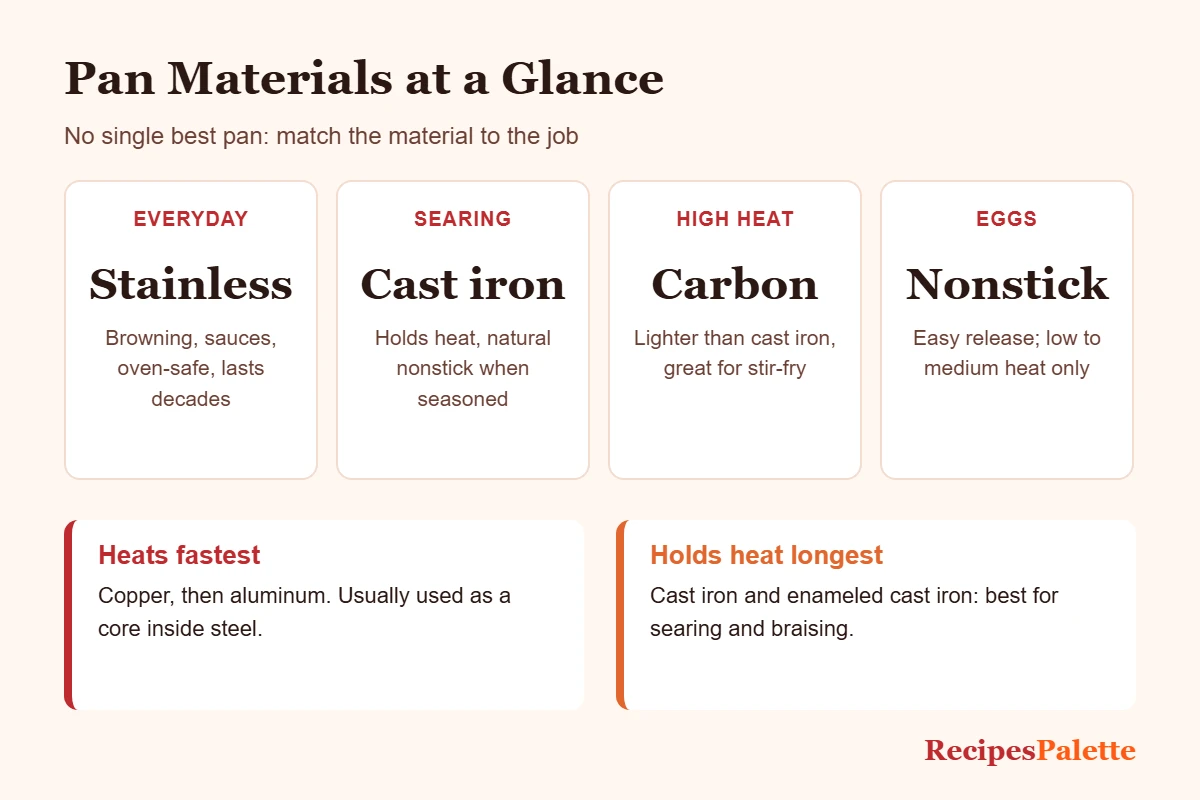
Choosing cookware gets confusing quickly, with every brand claiming its material is the one you need. This guide compares the eight common materials side by side: how they heat, how much care they need, which foods they suit, how safe they are, and roughly what they cost, so you can pick the right pan for the way you cook.
Pan Materials Compared
| Material | Heats up | Holds heat | Max heat | Care | Induction | Best for |
|---|---|---|---|---|---|---|
| Stainless steel (clad) | Medium-fast | Medium | Very high | Easy, dishwasher-safe (usually) | Most clad, yes | Everyday cooking, sauces, browning |
| Cast iron | Slow | Excellent | Very high | Season, hand wash, dry | Yes | Searing, frying, baking, campfire |
| Enameled cast iron | Slow | Excellent | High | Hand wash, no seasoning | Yes | Braising, stews, soups, bread |
| Carbon steel | Fast | Good | Very high | Season, hand wash, dry | Yes | Stir-fry, searing, crepes, eggs once seasoned |
| Nonstick (PTFE) | Fast | Low | Low to medium | Easy, but coating wears out | Only with magnetic base | Eggs, pancakes, fish |
| Ceramic nonstick | Fast | Low | Medium | Gentle, coating wears faster | Only with magnetic base | Eggs, low-fat cooking |
| Aluminum (hard-anodized) | Very fast | Low | Medium-high | Hand wash usually | Only with magnetic base | Even everyday cooking, sheet pans |
| Copper (lined) | Fastest | Low-medium | Medium-high | Polish, hand wash | Rarely | Sauces, candy, precise control |
Stainless Steel
Best for: everyday sautéing, browning meat, pan sauces, boiling, and anything that goes from stove to oven.
Good stainless steel cookware is “clad,” meaning layers of metal are bonded together. Stainless steel on the inside and outside protects the food and the pan, while an aluminum or copper core spreads heat evenly. Cheaper “disc-bottom” pans have the conductive layer only on the base, so the sides heat less evenly.
- Pros: very durable, non-reactive with acidic foods like tomatoes, oven- and broiler-safe, usually dishwasher-safe, works on most induction cooktops.
- Cons: food sticks unless you preheat properly and use enough fat; good clad sets cost more.
Not all stainless steel works on induction. See does stainless steel work on induction for how to check.
Cast Iron
Best for: searing steak, frying chicken, cornbread, roasting vegetables, and cooking over a campfire.
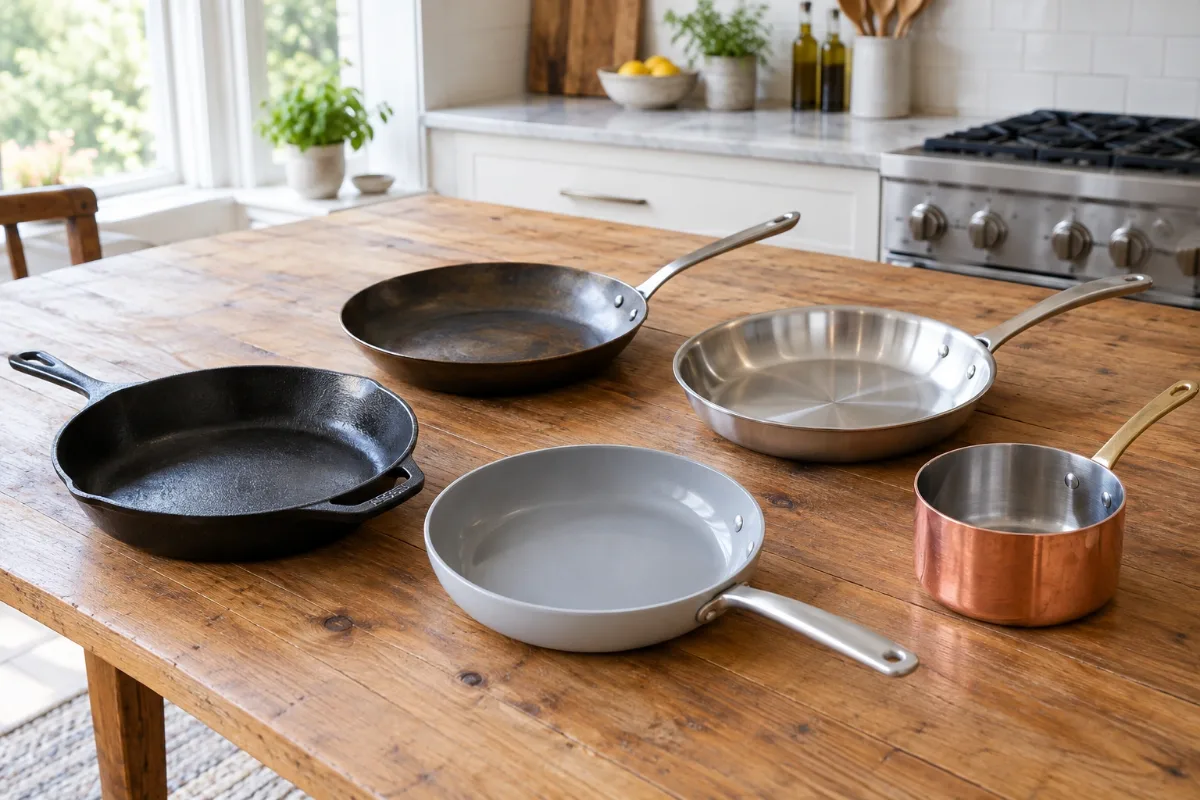
Cast iron is heavy and slow to heat, but once it is hot, it stays hot. That heat retention is what gives you a deep crust on meat. A well-seasoned cast iron pan becomes naturally slick over time.
- Pros: inexpensive, lasts generations, holds heat superbly, works on every cooktop including induction, safe at very high heat.
- Cons: heavy, heats unevenly on small burners, needs seasoning and must be dried to prevent rust, can react with long-simmered acidic foods.
For problems like rust or smoking, see why cast iron rusts and why cast iron smokes.
Enameled Cast Iron
Best for: braises, stews, chili, soups, sauces and no-knead bread.
This is cast iron coated in a layer of glass-like enamel. You get the heat retention of cast iron without seasoning or worries about acidic foods. It is the material most Dutch ovens are made from.
- Pros: no seasoning, non-reactive, beautiful colors, great for slow cooking, induction-friendly.
- Cons: heavy and pricey; enamel can chip if dropped or heated empty; not ideal for very high-heat searing.
Carbon Steel
Best for: stir-fries, searing, crepes, omelets once well seasoned, and anyone who wants cast iron performance at half the weight.
Carbon steel is mostly iron with a little carbon, rolled into thinner, lighter pans. Woks and French omelet pans are classic carbon steel. It heats faster than cast iron and becomes very slick when seasoned.
- Pros: lighter than cast iron, very high heat tolerance, fast response, lasts a lifetime, works on induction.
- Cons: needs seasoning, rusts if left wet, can warp if heated empty on high or plunged into cold water, reacts with acidic foods until well seasoned.
Nonstick (PTFE)
Best for: eggs, pancakes, delicate fish and quick low-fat cooking.
Traditional nonstick pans have a PTFE coating (often known by the brand name Teflon) over an aluminum body. Nothing beats it for easy release when the coating is new.
- Pros: very easy release, easy to clean, needs little oil, light and affordable.
- Cons: coating wears out in a few years; not for high heat or the broiler; metal utensils scratch it; many need a magnetic base for induction.
PTFE pans should not be heated empty or above about 500°F (260°C), because the coating can start to break down and release fumes. Use low to medium heat. Modern PTFE coatings are made without PFOA, a chemical that was phased out in the US. For more, see are all non-stick frying pans bad for you.
Ceramic Nonstick
Best for: eggs and low-to-medium heat cooking for people who prefer to avoid PTFE.
Ceramic nonstick is a sol-gel coating, a silica-based layer applied over an aluminum or steel body. It is not the same as solid ceramic or stoneware.
- Pros: PTFE-free, very slick when new, often brightly colored.
- Cons: loses its nonstick quality faster than PTFE, especially with high heat, cooking sprays or the dishwasher.
Read more in are ceramic frying pans good and is GreenPan non-toxic.
Aluminum
Best for: even everyday cooking, sheet pans and lightweight stock pots.
Aluminum is an excellent heat conductor, second only to copper among common cookware metals, and it is light and cheap. Bare aluminum reacts with acidic and alkaline foods and can discolor, so most aluminum cookware is hard-anodized (an electrochemical process that makes the surface harder and less reactive) or coated with nonstick.
- Pros: heats quickly and evenly, light, affordable.
- Cons: bare aluminum reacts with acidic foods; dents and warps more easily; does not work on induction without a magnetic base.
Copper
Best for: sauces, caramel, chocolate and any cooking that needs precise, quick temperature changes.
Copper conducts heat better than any other common cookware metal, so it heats and cools almost instantly. Copper pans are lined with stainless steel or tin, because bare copper reacts with food.
- Pros: unmatched responsiveness and evenness, beautiful.
- Cons: expensive, needs polishing, tin linings need re-tinning over time, usually does not work on induction.
Some pans sold as “copper” are actually aluminum with a copper-colored ceramic coating. Check the description.
Which Pan Material Gets the Hottest?
Cast iron, carbon steel and stainless steel can all handle the highest heat on a home stove and in a hot oven. Cast iron holds the most heat once hot, which is why it is the favorite for searing. Carbon steel heats faster and is the go-to for wok cooking. Nonstick coatings, both PTFE and ceramic, are the least heat-tolerant and should stay at low to medium heat.
What Is a Heavy-Bottom Pot?
A heavy-bottom (or heavy-gauge) pot has a thick base, usually because of multiple bonded layers or a thick disc of aluminum or copper under the steel. The extra thickness spreads heat evenly and prevents hot spots, which helps with rice, sauces, caramel and anything that scorches easily. Clad stainless, enameled cast iron and cast iron all count as heavy-bottomed.
What Are Pots and Pans Made Of?
Most cookware is made from one of the eight materials above or a combination. A typical “stainless steel” pan might be three or five layers: stainless steel, aluminum (or copper), and stainless steel. A typical nonstick pan is aluminum with a PTFE or ceramic coating. Cast iron and carbon steel pans are made of one piece of iron-based metal.
Is There Cookware Made in the USA?
Yes, though it is less common than imported cookware. Some well-known examples include cast iron from Lodge (made in Tennessee) and several smaller cast iron makers, and certain clad stainless lines from All-Clad (bonded in Pennsylvania). Many brands make some lines in the US and others overseas, so always check the specific product listing.
How to Choose: A Simple Starter Kit
- A 10 to 12-inch clad stainless steel skillet for everyday cooking.
- A 10 to 12-inch cast iron or carbon steel skillet for searing and high heat.
- An 8 to 10-inch nonstick or ceramic skillet just for eggs.
- A 3-quart stainless saucepan for rice, grains and sauces.
- A 5 to 7-quart enameled cast iron Dutch oven for soups, stews and bread.
If health and safety are your top concern, see what is the safest cookware, and if you are cooking on induction, see what cookware works on induction.
Frequently Asked Questions
What is the most versatile pan material?
Clad stainless steel. It handles high heat, acidic foods, the oven and the dishwasher, and it lasts for decades.
Is cast iron better than stainless steel?
Neither is better overall. Cast iron is better at holding heat and searing; stainless steel is lighter, non-reactive and easier to care for.
Is carbon steel better than cast iron?
Carbon steel is lighter and heats faster, which makes it better for stir-frying and quick cooking. Cast iron holds more heat, which is better for searing thick steaks and baking.
What pan material is healthiest?
Stainless steel, cast iron, carbon steel, enameled cast iron and glass are all considered stable and safe when used properly. Nonstick coatings are safe at low to medium heat but should be replaced when they are damaged.
Which pans last the longest?
Cast iron, carbon steel and good clad stainless steel can last a lifetime. Nonstick coatings, both PTFE and ceramic, usually need replacing every few years.
The Bottom Line
The best pan material depends on what you cook. Choose clad stainless steel as your everyday workhorse, cast iron or carbon steel for high-heat searing, enameled cast iron for slow cooking, and a nonstick or ceramic pan just for eggs. Aluminum and copper make excellent cores for even heating. With two or three well-chosen materials, you can cook almost anything well.