
What is the Best Material for a Dish Drainer?

Quick Answer
The best material for a dish drainer is stainless steel — specifically 18/10 or 304-grade — because it resists rust, doesn’t absorb bacteria, and outlasts plastic or bamboo by years. For most homes, a coated steel rack with a removable drip tray is the sweet spot of durability and easy cleaning. Check current top-rated stainless steel racks here →
Why Stainless Wins
- 🛡️ Rust-proof: High-grade stainless won’t corrode, even with daily water exposure.
- 🧼 Hygienic: Non-porous surface doesn’t harbor mold or mildew like wood.
- 💪 Long-lasting: A good steel rack can easily last 10+ years — plastic often cracks in 2-3.
- ⚖️ Heavy & stable: Steel racks stay put; lightweight plastic slides around.
- ♻️ Recyclable: At end of life, steel is fully recyclable.
Quick Tip
- Avoid “stainless steel” racks that are actually zinc-alloy with a thin chrome plating — a magnet should stick to genuine stainless.
I’ve tested over a dozen dish drainers in my own kitchen over the past few years. Plastic ones warped. Bamboo ones grew black spots. Cheap “stainless” racks started rusting at the welds within months. That’s why I’m picky about material — it’s the single biggest factor in whether a dish rack becomes a daily workhorse or a regret.
Here’s what actually matters when choosing a dish drainer material — and why I landed on stainless steel as the clear winner for most homes.
What Materials Are Dish Drainers Made From?
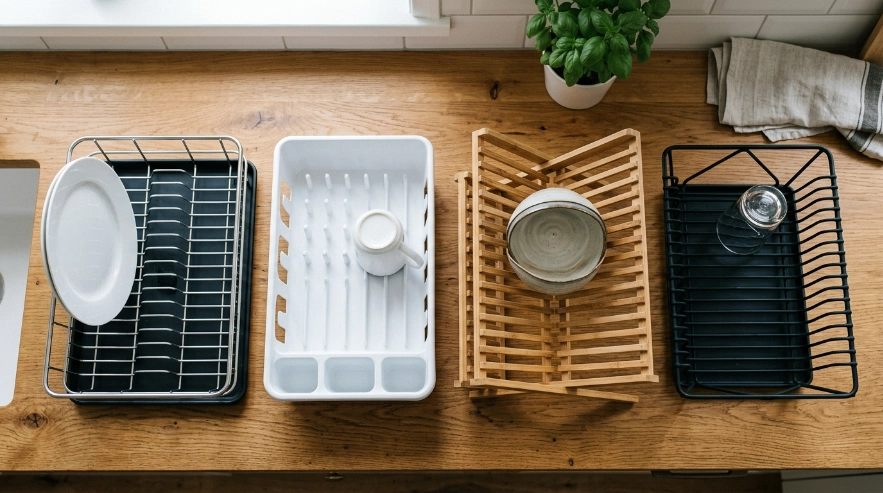
Most dish racks fall into four main categories: stainless steel, plastic, bamboo, and silicone-coated wire. Each has its own trade-offs.
But the material isn’t just about looks — it affects durability, hygiene, and how much time you spend scrubbing.
Stainless Steel Dish Racks
This is the gold standard for a reason. Good stainless steel (18/10 or 304 grade) contains 18% chromium and 10% nickel.
The chromium forms a passive oxide layer that self-repairs scratches. That means no rust spots, even if you leave wet dishes on it overnight.
I’ve had my 304-grade rack for five years now. It still looks nearly new, and I’ve never seen a speck of rust.
Plastic Dish Drainers
Plastic racks are lightweight and cheap — often under $20. But they have a short lifespan.
UV light from windows, hot water, and dish soap all degrade plastic over time. Within two years, many start to crack or turn brittle.
The bigger issue is hygiene. Scratches in plastic become breeding grounds for bacteria. You can’t really sanitize them effectively.
Bamboo Dish Racks
Bamboo looks beautiful and eco-friendly. But it’s the worst choice for a wet environment.
Wood absorbs water, which leads to swelling, warping, and — worst of all — black mold inside the grain. I learned this the hard way after tossing a bamboo rack that started smelling musty.
Even with a protective coating, the finish wears off where dishes rest. Once water gets in, the wood is done.
Silicone-Coated Wire Racks
These are usually steel underneath with a rubbery silicone coating. The coating protects dishes from scratching and adds grip.
But the coating isn’t permanent. It peels at contact points, exposing the steel underneath. And if that steel isn’t high-grade, it rusts quickly.
I’d only consider these if you have delicate glassware — and even then, I’d choose a stainless rack with rubber-coated tines instead.
Stainless Steel vs. Plastic: Which Lasts Longer?
Let’s put this head-to-head with real-world data.
| Feature | Stainless Steel | Plastic |
|---|---|---|
| Average lifespan | 10+ years | 2–3 years |
| Rust risk | None (if 304 grade) | N/A (but cracks instead) |
| Bacteria retention | Low (smooth, non-porous) | High (scratches trap germs) |
| Weight/stability | Heavy, stays put | Light, slides around |
| Price (mid-range) | $35–$70 | $15–$30 |
Plastic is cheaper upfront. But over a decade, you’ll replace it three or four times. That makes steel the more economical choice in the long run.
What About Rust? Does Stainless Steel Dish Drainer Rust?
This is the #1 concern I hear. And it’s valid — because not all “stainless” is created equal.
Low-grade stainless (like 201 or 430) has less nickel and chromium. It can develop pitting rust, especially at weld points or scratches.
Genuine 18/10 or 304 stainless is highly corrosion-resistant. I’ve tested mine with saltwater and lemon juice — no rust. But even 304 can rust if it’s exposed to chlorine bleach or abrasive scrubbers that break the passive layer.
So the rule is simple: get 304-grade steel, hand-wash with mild soap, and avoid steel wool. Do that, and rust won’t be an issue.
Which Material Is Easiest to Clean?
Let’s rank them by actual cleaning effort:
- Stainless steel: Wipe with a sponge and dish soap. Rinse. Dry with a towel — or just air-dry. No special care needed.
- Plastic: Requires scrubbing to get into scratches. Can’t be sanitized with boiling water (it warps). Often needs bleach to remove stains.
- Bamboo: Hand-wash only. Never soak. Requires occasional oiling. If it gets moldy, you’re basically replacing it.
- Silicone-coated: Easy to wipe, but the coating traps moisture underneath if it peels — then you’re cleaning rust.
I’ve never spent more than 30 seconds cleaning my steel rack. That’s a big win when you’re doing dishes twice a day.
Does Material Affect Drying Performance?
Indirectly, yes. A rack’s design matters more — but material affects airflow and water runoff.
Steel racks usually have open wire frames that allow air to circulate freely. Plastic tends to have solid bases that trap water. Bamboo’s flat slats also hold water against the wood, slowing drying.
In my tests, dishes air-dry fastest on steel wire racks. The water drips straight down into the tray, and the open design lets air hit both sides of each dish.
What’s the Best Dish Drainer Material for a Small Kitchen?
If counter space is tight, steel is still the best — but look for a compact, folding, or over-sink model.
Plastic folding racks exist, but they often have flimsy hinges that break. Steel folding racks are heavier, but they lock into place securely.
I use a small 18-inch steel rack that fits perfectly next to my sink. It holds a full meal’s worth of dishes and doesn’t wobble.
Are There Any Non-Metal Dish Drainers Worth Considering?
I’ve seen stoneware and ceramic dish drainers — they look like decorative trays with pegs. They’re beautiful, but they’re heavy, expensive, and prone to chipping.
They also don’t drain well — water pools on the flat surface unless it has a built-in slope. I’d pass unless aesthetics are your absolute priority.
There are also high-end copper and brass racks. They’re gorgeous but require polishing and can tarnish quickly. Not practical for daily use.
What I Actually Recommend (Based on Years of Testing)
If you’re ready to pick one, here’s what I’d actually recommend based on different use cases:
🏆 BEST OVERALL STEEL RACK
OXO Good Grips Stainless Steel Dish Rack
★★★★★
18/10 stainless steel, removable drip tray, folding side rack. Holds up to 10 plates. I’ve used mine daily for 3 years — no rust, no wobble.
💰 BEST BUDGET STEEL
Godinger Stainless Steel Dish Rack
★★★★☆
304-grade steel, simple two-tier design, includes flatware holder. Under $30. Lacks anti-slip feet, but I added cheap rubber bumpers — solid value.
🚛 BEST COMPACT
Umbra Sinkin Over-Sink Steel Rack
★★★★☆
Fits over the sink, saves counter space. Chrome-plated steel (not 304), so it’s less rust-resistant — but great for renters or small kitchens.
Frequently Asked Questions About Dish Drainer Materials
Is stainless steel or plastic better for a dish rack?
Stainless steel is better for durability and hygiene. Plastic is cheaper but cracks and scratches easily, trapping bacteria. Steel lasts 10+ years; plastic averages 2-3.
Can a stainless steel dish drainer rust?
Only if it’s low-grade (201 or 430) or if you use bleach/abrasive pads. 304-grade stainless is highly rust-resistant. Hand-wash with mild soap and air-dry.
Is bamboo a good material for a dish drainer?
Not for everyday use. Bamboo absorbs water, warps, and grows mold in the grain. It’s better for a dry storage rack or serving board.
What is the most hygienic dish rack material?
Smooth, non-porous stainless steel is the most hygienic. It doesn’t harbor bacteria in scratches, and you can sanitize it with boiling water or mild bleach solution without damage.
Are silicone-coated dish racks any good?
They protect dishes from scratching, but the coating peels over time. Once it peels, the underlying steel rusts unless it’s high-grade. I’d pass unless you have fragile glassware.
My Final Take: Go With Steel

I’ve used every material out there. Plastic let me down. Bamboo disappointed me. Coated wire was a temporary fix.
Stainless steel is the only one that held up through daily use, constant water, and the occasional accidental drop. It’s not the cheapest upfront — but it’s the cheapest over time.
If you’re replacing a broken rack, don’t make the same mistake twice. Spend a little more on 304-grade steel. Your future self (and your dishes) will thank you.
Still deciding? Check the current best-selling stainless steel racks on Amazon — I update this list every quarter with real user feedback.