
What Is the Best Stainless Steel Dish Rack? 2026 Buying Guide

Quick Answer
For most kitchens, my pick for the best stainless steel dish rack in 2026 is the Simplehuman Steel Frame Dishrack. It combines a sturdy steel frame with smart drainage, generous capacity, dedicated glassware storage, and a design that keeps water moving toward the sink instead of pooling on the counter.
What matters most
- Effective drainage: Water should flow away instead of sitting underneath clean dishes.
- Strong frame: The rack should stay stable under plates, bowls, cookware, and utensils.
- Useful capacity: Choose enough drying space without sacrificing most of your counter.
- Easy cleaning: Removable trays and utensil holders make routine maintenance simpler.
- Rust resistance: Quality materials still need regular drying and cleaning to stay attractive.
A dish rack looks like a simple kitchen accessory until you live with a bad one. Poor drainage, wobbling plates, trapped water, and rusty joints can turn daily cleanup into an annoying routine.
For this 2026 guide, I focus on the details that matter during everyday hand washing: drainage, usable space, stability, cleaning, material quality, and counter footprint.
What makes a stainless steel dish rack the best?

The best stainless steel dish rack is one that holds your normal load securely, drains water away quickly, fits your counter, and can be cleaned without dismantling half the kitchen.
Stainless steel helps because it provides a strong, attractive structure for a rack that spends most of its life around water.
Don’t assume every product labeled “steel” is completely stainless. Many excellent racks combine stainless steel with plastic drainboards, silicone feet, coated supports, or removable utensil cups.
Five features I prioritize
- Drainage direction: A sloped tray or adjustable spout should send water toward the sink.
- Plate support: Tines need enough spacing and height to keep plates upright without crowding them.
- Open airflow: Bowls and cups need space around them so moisture can escape.
- Counter protection: Rubber or silicone feet reduce sliding and help protect stone, laminate, and wood surfaces.
- Removable components: Drainboards and utensil cups are much easier to scrub when they come apart.
My practical rule is simple: I judge the drainage system before the number of accessories. A rack with clever holders but standing water underneath becomes frustrating fast.
Which stainless steel dish rack is best overall?
The Simplehuman Steel Frame Dishrack is my best overall choice because its layout solves the problems that make large countertop racks irritating.
The swivel drainage spout is especially useful because you have more freedom in how you position the rack beside the sink.
- Best strength: Large, stable drying area for mixed loads.
- Drainage: Integrated tray with a movable sink-directed spout.
- Glassware: Dedicated holder for stemware.
- Organization: Separate spaces for plates, utensils, cups, and larger items.
- Main drawback: Its generous footprint can overwhelm a narrow countertop.
That last point matters. A premium rack isn’t the best rack for you if it permanently consumes the only prep space beside your sink.
How do the top stainless steel dish racks compare?
There isn’t one perfect design for every kitchen. Some people need maximum capacity, while others care more about compact storage or an all-metal construction.
| Dish Rack | Key Material | Size / Design | Best Feature | Best For |
|---|---|---|---|---|
| Simplehuman Steel Frame | Stainless steel with plastic and silicone components | About 22.3 × 20.2 × 11.5 in. fully expanded | Swivel drainage system | Large everyday loads |
| Zojila Rohan | Fully stainless steel | Elevated, self-draining design | Plastic-free construction | All-metal buyers |
| OXO Good Grips Foldaway | Stainless steel | 19.4 × 15.5 × 5.125 in. open | Folds for storage | Small kitchens |
| Joseph Joseph Extend Steel | Steel with molded draining components | Expandable two-part design | Adjustable drying area | Changing load sizes |
If cookware storage is also creating clutter, these frying pan rack options can help separate dry cookware from your everyday dish-drying area.
What should you look for before buying a stainless steel dish rack?
Measure first. Counter space is the most common detail shoppers underestimate when comparing racks online.
- Measure width: Leave enough room for food preparation and appliances.
- Measure depth: Check how far the rack extends from the wall toward the front edge.
- Check sink position: Make sure a drainage spout can actually reach the sink.
- Think about height: Tall racks can interfere with cabinets, windowsills, or faucets.
- Match capacity: A couple washing four plates needs far less space than a family hand-washing cookware.
Choose drainage before decoration
A flat drip tray can collect water if it has no slope or outlet. That means more wiping, mineral marks, and regular tray emptying.
Look for an angled board, drain channel, or movable spout whenever the rack will sit directly beside a sink.
Think about what you wash most
- Lots of plates: Prioritize strong, evenly spaced tines.
- Pots and pans: Look for an open center with fewer fixed dividers.
- Wine glasses: A dedicated stemware holder reduces crowding.
- Sharp knives: Choose a separated holder that keeps blades controlled.
- Heavy cookware: Stability matters more than folding capability.
If heavy pans are a major part of your kitchen, a dedicated cast iron skillet storage rack can prevent your drying rack from becoming permanent cookware storage.
Is 304 stainless steel necessary for a dish rack?
No. You don’t need to reject a dish rack simply because the manufacturer doesn’t advertise “304 stainless steel.”
What matters is whether the manufacturer clearly identifies the material, protects welds and joints, and gives sensible cleaning instructions.
- Material disclosure: Prefer brands that state what the frame and accessories are made from.
- Protected joints: Welds, screws, and cut edges deserve attention because water can linger there.
- Surface finish: Smooth surfaces are easier to wipe and less likely to trap residue.
- Warranty: A meaningful warranty can add confidence with a product exposed to moisture every day.
Also remember that “rust resistant” doesn’t mean “impossible to stain.” Minerals, salty residue, harsh cleaners, damaged coatings, and constant standing water can leave marks on many metal surfaces.
How do you keep a stainless steel dish rack from rusting?
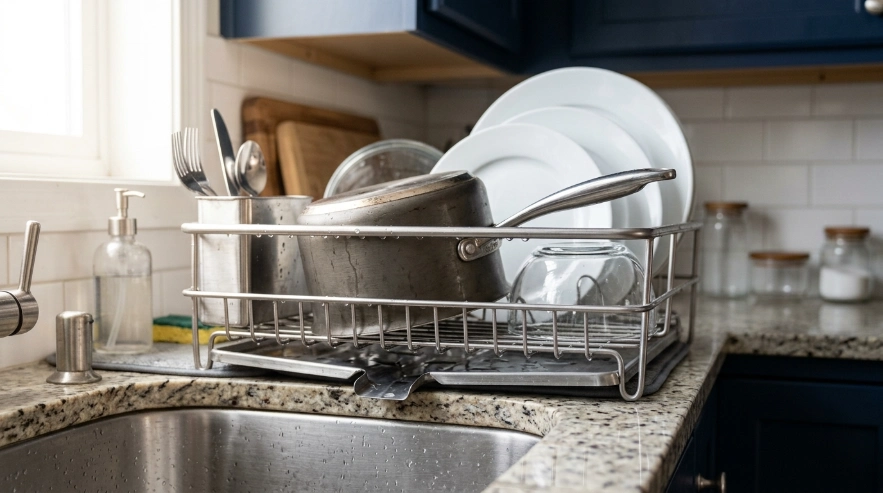
Regular cleaning and complete drying are more useful than aggressive scrubbing. The goal is to remove residue before it builds up around joints, trays, and feet.
The CDC’s cleaning guidance notes that ordinary cleaning uses water, soap, and scrubbing to remove dirt and many germs from surfaces.
- Empty the rack: Remove dishes, cutlery cups, drainboards, and detachable holders.
- Wash residue away: Use warm water, mild dish soap, and a soft sponge or brush.
- Clean joints: Pay extra attention to corners, feet, wire intersections, and drainage channels.
- Rinse thoroughly: Don’t leave concentrated soap or cleaning chemicals on metal surfaces.
- Dry the rack: Wipe excess moisture and allow components to air dry before reassembly.
Avoid attacking small stains with the harshest chemical in your cabinet. The EPA Safer Choice program provides a useful resource when you’re comparing household cleaning products with safer ingredient profiles.
If you’re troubleshooting rust elsewhere in the kitchen, this guide explaining why cast iron rusts covers the same basic moisture problem from a cookware perspective.
Which type of dish rack fits your kitchen best?
Your kitchen layout should choose the rack almost as much as your budget does. Buying purely by appearance often leads to a rack that’s too large or awkwardly positioned.
- Large counter: Choose the Simplehuman Steel Frame Dishrack for capacity and organized drainage.
- Minimal plastic: Consider the Zojila Rohan for its fully stainless steel construction.
- Small kitchen: The OXO Foldaway makes sense when you need to reclaim counter space.
- Changing loads: Joseph Joseph Extend Steel gives you more drying area only when you need it.
- Heavy cookware: Choose a wide, low rack with a stable base instead of a lightweight folding model.
One more detail matters: don’t overcrowd the rack. Leaving space between wet dishes improves airflow and makes it easier for water to drain away.
My top stainless steel dish rack recommendations
If you’re ready to choose one, these are the three models I’d put at the top of the shortlist based on material, drainage, capacity, and everyday practicality.
🏆 Best Overall
Simplehuman Steel Frame Dishrack
★★★★★ 4.8/5 editorial fit
A large steel-frame rack with a sink-directed swivel spout and dedicated glassware storage. I like it most for households that hand-wash mixed loads and want one organized drying station.
🔩 Best All-Metal Pick
Zojila Rohan Stainless Steel Dish Drainer
★★★★★ 4.7/5 editorial fit
The Rohan uses an all-stainless construction and a self-draining design. It’s my pick when plastic-free construction and long-term simplicity matter more than folding or compact storage.
🏠 Best for Small Kitchens
OXO Good Grips Foldaway Dish Rack
★★★★☆ 4.6/5 editorial fit
This stainless steel rack folds down when you need more cabinet or counter flexibility. I prefer it for apartments, small kitchens, and households that don’t leave a rack permanently on display.
Frequently asked questions
What is the best material for a dish drying rack?
Stainless steel is one of the best choices when you want strength, a clean appearance, and good moisture resistance. Plastic can be lighter and cheaper, while bamboo offers a warmer look but normally needs more attention to drying and maintenance.
Can a stainless steel dish rack still rust?
Yes. Stainless steel is corrosion resistant, not completely immune to staining or corrosion under every condition. Standing water, salts, harsh cleaners, damaged surfaces, and neglected joints can all contribute to discoloration or rust-like spots.
Is a two-tier dish rack better than a single-tier rack?
A two-tier rack gives you more drying capacity per square inch of counter, so it can help in smaller kitchens. A wide single-tier rack is often easier to load with pots, pans, mixing bowls, and unusually shaped cookware.
How often should I clean a dish rack?
Give the tray and visibly dirty areas a quick clean whenever residue appears, rather than waiting for heavy buildup. A more complete wash every week or two works well in many kitchens, though frequent hand washing may require more regular cleaning.
Should dishes air dry or be towel dried?
Air drying on a clean rack avoids the need to repeatedly handle wet dishes with a towel. The FDA’s consumer food-safety resources are useful for broader guidance on keeping kitchen preparation and serving practices clean.
Final verdict: what is the best stainless steel dish rack?
For most households, I would choose the Simplehuman Steel Frame Dishrack. Its drainage system, sturdy structure, large capacity, and specialized holders make it the strongest all-around option for regular hand washing.
Choose differently when your kitchen demands it. The Zojila Rohan is compelling for all-stainless construction, while the OXO Foldaway earns its place when counter space matters more than maximum capacity.
Measure your counter, look carefully at the drainage path, and buy for the dishes you wash most often. Those three decisions matter more than choosing the rack with the longest feature list.
