
How Do You Choose the Right Dish Rack?

Quick Answer
To choose the right dish rack, focus on your space, the materials used, and your daily dish load. You want a rack that fits your countertop, resists rust, and handles all your pots and pans. For a deeper look into kitchen organization, see our guide on kitchen organization ideas.
The Right Rack, For You
- Small Kitchen: Over-the-sink or compact, tiered designs save precious counter space.
- Large Families: A two-tier rack with a dedicated pot and pan holder is a game-changer.
- Quick-Dry Setup: Stainless steel offers the best rust resistance and durability.
- Preventing Water Spots: A sloped draining board directs water straight into the sink.
- Keeping it Clean: Removable utensil holders and easy-to-clean trays are a must.
Pro Tip
- Measure your counter space before you buy. There’s nothing worse than a rack that doesn’t fit.
I’ve tested more dish racks than I can count over the years. From tiny apartment sinks to busy family kitchens, choosing the right one always comes down to a few key decisions. This guide breaks down everything you need to know to find a rack that truly works for you.
What Are the Most Important Things to Look For in a Dish Rack?
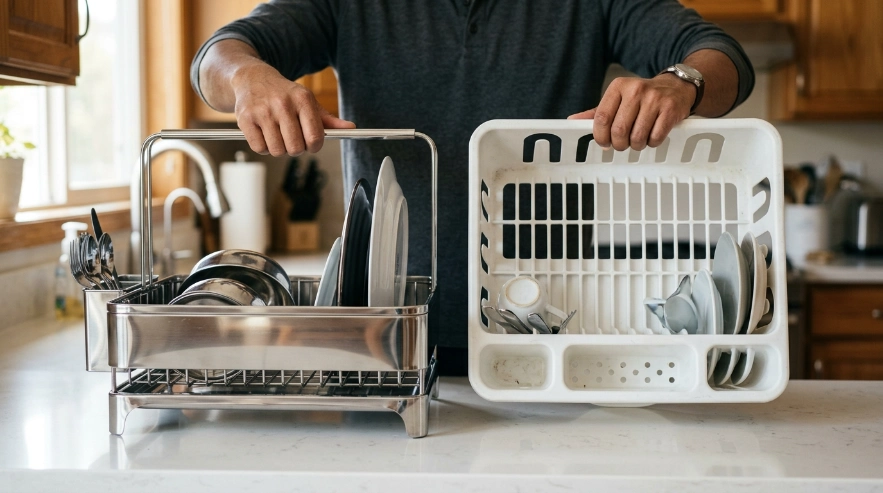
Before you get lost in the style options, start with the essentials.
Think about the size of your household. A single person has different needs than a family of five.
The material dictates how long it will last and how it will look in your kitchen.
The design needs to match your workflow.
Size and Capacity: How Much Dish Rack Do You Need?
This is the first question I ask every time.
A rack that’s too small is a constant frustration. You’ll be stacking plates precariously or leaving things on the counter to dry.
A rack that’s too large will dominate your countertop and feel wasteful.
Take a mental inventory of your daily dishes. Are we talking a few plates and mugs, or an entire cookware set?
Material Matters: The Rust-Resistance Factor
Stainless steel is the undisputed champion for modern kitchens. It’s durable, doesn’t rust, and looks sleek.
I’ve had cheap wire racks that started showing rust spots within weeks. It’s a total letdown.
Plastic racks are budget-friendly and lightweight, but they can stain and aren’t as durable. They are better suited for a dorm or a vacation home.
Should I Choose a Single-Tier or Two-Tier Dish Rack?
The choice between a single and two-tier rack is often about vertical space.
A two-tier rack is fantastic if you have a small counter footprint but need to air-dry a lot of items. The upper tier is perfect for bowls and cups.
A single-tier rack is simpler, easier to access, and works well for smaller loads.
I prefer a two-tier for my own kitchen. It takes up the same floor space but doubles my drying capacity.
How Do I Match a Dish Rack to My Kitchen Layout?
A dish rack should feel like a natural part of your kitchen, not an eyesore.
If you have a farmhouse sink, a classic wooden rack can complement the aesthetic.
For modern, minimalist kitchens, a sleek stainless steel or matte black rack is often the perfect fit.
Think about the finish of your faucet and hardware. Matching the material or color creates a cohesive look.
Over-the-Sink Racks: A Space-Saving Marvel
This is my favorite option for tiny kitchens.
It sits on top of the sink, freeing up all your counter space for food prep.
Water drips directly into the sink, eliminating the need for a draining tray.
Many come with a side shelf for a sponge, soap, or a small cutting board. It’s an incredibly smart use of space.
Wood vs. Metal: Which Looks Better in Your Home?
Wooden racks have a warm, natural look. They’re often made from bamboo, which is sustainable and naturally anti-bacterial.
However, they require a bit more care. You need to ensure they don’t sit in water for extended periods to prevent warping.
Metal racks are more “set it and forget it.” They’re durable, easy to clean, and don’t react with moisture.
What Features Are Actually Useful on a Dish Rack?
Manufacturers love to add bells and whistles.
But only a few features genuinely make your life easier.
Focus on features that solve real problems.
The Drainage System: Sloped Boards and Spouts
A good draining board is non-negotiable.
It should have a slight slope to guide all the water directly into your sink.
Some racks have a convenient spout at the end, which helps direct the flow of water.
This prevents that annoying puddle of water from forming on your countertop.
Utensil Holders: Are They Worth It?
Yes, but they need to be designed well.
A removable utensil holder with good ventilation is ideal. It allows water to drain quickly, preventing mold and mildew.
Look for one with multiple compartments so you can separate spoons from forks or knives.
This is a small detail that makes unloading the dishwasher way easier.
Comparison Table: Three Top Dish Rack Types
Here’s a quick look at how the main styles stack up against each other.
| Feature | Stainless Steel (Two-Tier) | Over-the-Sink Rack | Bamboo Rack |
|---|---|---|---|
| Durability | ⭐⭐⭐⭐⭐ (Very High) | ⭐⭐⭐⭐ (High) | ⭐⭐⭐ (Medium) |
| Space Efficiency | ⭐⭐⭐⭐ (Uses Vertical Space) | ⭐⭐⭐⭐⭐ (Frees Counter Space) | ⭐⭐⭐ (Fits Sink Well) |
| Maintenance | Easy to wipe clean | Requires occasional attention | Needs oiling and careful drying |
| Price Range | $30 – $70 | $25 – $60 | $15 – $45 |
Now, let’s talk about the racks I’ve actually put to the test in my own kitchen.
🏆 BEST OVERALL
OXO Good Grips Stainless Steel Rack
★★★★★
A 2-tier rack with rustproof steel and a removable drip tray. It fits a ton of dishes for a family of four. I love how stable and easy to clean this rack is. It’s the one I use every day.
📏 BEST FOR SMALL SPACES
mDesign Over-the-Sink Rack
★★★★
A sturdy, expandable rack that sits over your sink to free up counter space. It comes with a handy side shelf for soap. This rack was a total lifesaver in my last apartment with a tiny kitchen.
🌿 BEST ECO-FRIENDLY
Kitsure Bamboo Dish Rack
★★★★
A durable bamboo rack with a sleek, minimalist look. It includes a deep draining tray and a separate utensil holder. I love how sustainable bamboo is, and it adds a warm touch to any kitchen.
Frequently Asked Questions About Dish Racks
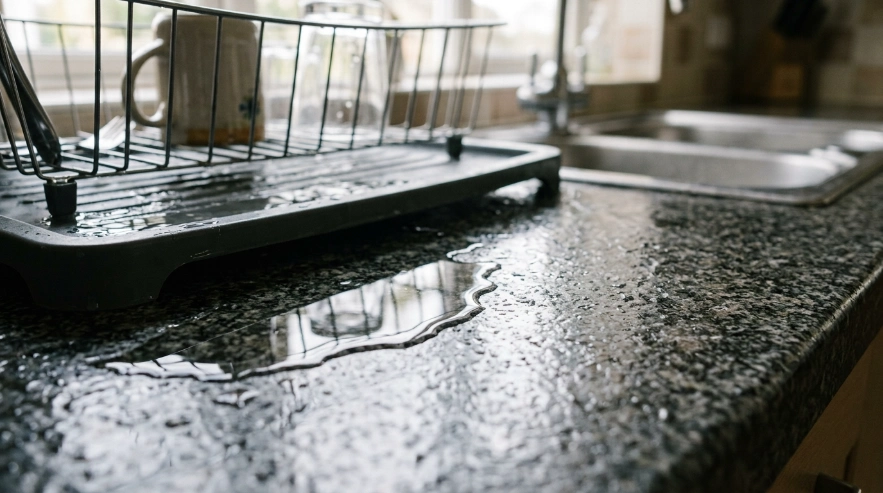
Avoid water damage by ensuring your dish rack’s draining board directs water away.
Can a dish rack damage my countertops?
Yes, if water pools underneath it for a long time. A good rack with a well-designed draining board prevents this. Always check that the water is directed into the sink.
How do I clean a dish rack?
I wash mine weekly with warm soapy water and a sponge. For stubborn grime, a mixture of white vinegar and water works wonders to break down mineral deposits.
What if I have a large family and a lot of pots?
You’ll want a rack with a dedicated pot holder or a very large two-tier design. Some racks have fold-down arms that can hold oversized items like cutting boards.
My Final Takeaway on Choosing the Right Rack
Your dish rack is a workhorse, not just a decoration.
Take the time to measure your space and think about your daily routine.
Choose durable materials that will stand up to constant moisture.
Once you find the perfect match, you’ll wonder how you ever managed without it.
Ready to upgrade your dish drying game? Check out the options above or explore more of our kitchen guides.