
You will notice I mix practical tips with simple science to help you keep more vitamins and minerals when you cook. I wrote this because Emma Reed asked me to share clear, hands-on ways to cook smarter, not harder. Use steaming, microwaving, short high-heat sautéing, and pressure cooking to keep the most nutrients in your food.
I’ll show quick swaps and simple steps you can use today to make meals that taste great and stay nutritious. Expect short explanations, easy methods, and real examples you can try in your kitchen.
Key Takeways
- Choose quick, low-water, or sealed methods to preserve vitamins.
- Use short cooking times and proper heat to keep texture and nutrients.
- Small technique changes can boost the nutrition of everyday meals.
Contents
- 1 Cooking Methods That Preserve Nutrition – Expert Guide
- 2 Understanding Nutrient Retention in Cooking
- 3 Steaming: Gentle Cooking for Maximum Nutrition
- 4 Microwaving: Fast and Efficient Nutrient Preservation
- 5 Sautéing and Stir-Frying for Nutrient-Rich Meals
- 6 Blanching: Quick Cooking to Lock in Nutrients
- 7 Pressure Cooking: Rapid Cooking with Minimal Nutrient Loss
- 8 Sous Vide: Precision Cooking for Optimal Nutrition
- 9 Grilling and Roasting: Balancing Flavor and Nutrition
- 10 Boiling and Poaching: Techniques to Reduce Nutrient Loss
- 11 Raw Foods: When No Cooking Is the Best Option
- 12 Practical Tips for Everyday Cooking
- 13 FAQs
- 14 Conclusion
Cooking Methods That Preserve Nutrition – Expert Guide
Understanding Nutrient Retention in Cooking
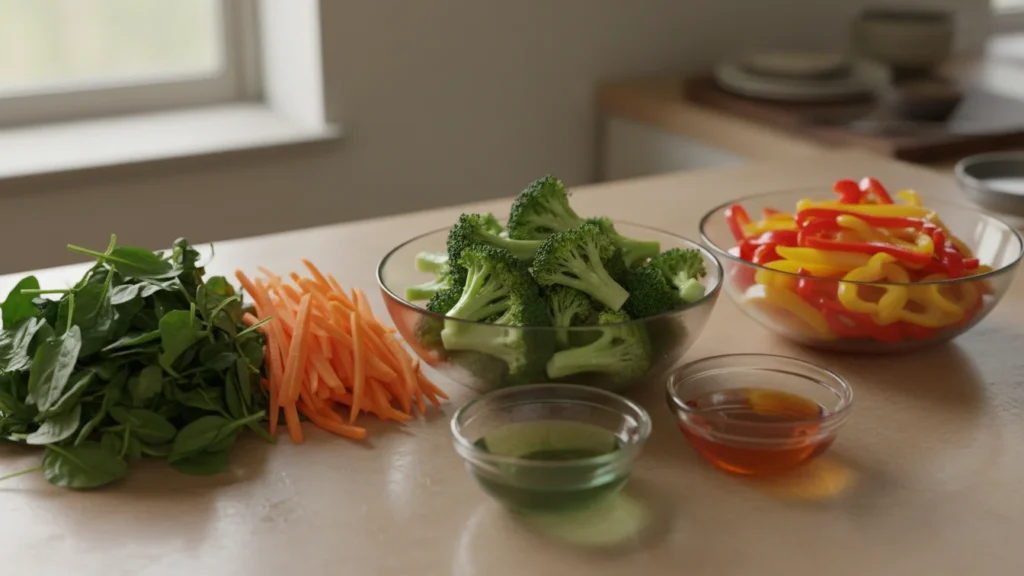
I explain how heat and water change vitamins and minerals, what factors speed nutrient loss, and which common beliefs about preservation are wrong. Read the specifics below to pick cooking methods that keep the most nutrition in your food.
How Cooking Affects Vitamins and Minerals
Cooking changes nutrient structure and availability. Water-soluble vitamins, like vitamin C and many B vitamins, leach into cooking water and break down with heat. Fat-soluble vitamins (A, D, E, K) hold up better to heat but can be lost if fats drip away during grilling or roasting.
Minerals are more stable than vitamins but can move into cooking liquids. I recommend using those liquids in soups or sauces to retain minerals. Some cooking makes nutrients easier to absorb: for example, cooking tomatoes increases available lycopene, and light steaming can free up iron and zinc in legumes.
For reliable guidance on vitamin stability and food safety, I consult government resources like the USDA FoodData Central and academic reviews on nutrient changes during cooking.
Factors Influencing Nutrient Loss
Three main factors drive nutrient loss: temperature, time, and the cooking medium. Higher temperatures and longer cooking times break down sensitive vitamins faster. Boiling in lots of water causes the most loss for water-soluble vitamins because they dissolve and are discarded.
The surface area matters too. Chopping vegetables into small pieces speeds nutrient loss because more surface contacts heat and water. pH and presence of oxygen also matter: alkaline conditions and prolonged exposure to air speed vitamin C breakdown. Fat content affects fat-soluble vitamin retention: cooking in some oil helps preserve those vitamins, but deep-frying at very high heat can still degrade them.
I suggest short cooking times, low-to-moderate heat, minimal water, and using lids to trap steam when you want to preserve nutrients.
Common Myths About Nutrient Preservation
Myth: Raw always means more nutritious. Not always. Some foods release more nutrients when cooked, and cooking can deactivate antinutrients—like phytic acid in grains—that block mineral absorption. I eat cooked legumes and whole grains to improve mineral uptake.
Myth: Boiling always destroys everything. Boiling causes losses mainly for water-soluble vitamins, but using the cooking liquid in soups or sauces recaptures nutrients. Microwaving and steaming often keep more vitamins than long boiling.
Myth: Longer cooking equals more nutrients. Extended heat usually reduces vitamin levels. I focus on quick methods—steaming, sautéing, or sous-vide at low temperatures—to keep vitamins and minerals intact. For further reading on cooking effects and best practices, the Harvard T.H. Chan School of Public Health offers clear, evidence-based advice.
Steaming: Gentle Cooking for Maximum Nutrition
I use steam because it cooks food with hot vapor, keeps water-soluble vitamins in place, and needs no added fat. Steam works well for vegetables, fish, and delicate foods that lose nutrients with harsh heat.
Benefits of Steaming Vegetables
Steaming preserves vitamin C, B vitamins, and folate better than many other methods. I keep vegetables above boiling water so nutrients don’t leach out into the liquid. This method also keeps colors bright and textures tender-crisp, which helps vegetables stay appealing and easier to digest.
Steaming cuts the need for oil or butter, lowering calories and saturated fat in a meal. I find minerals like potassium and magnesium remain more available because steam uses lower temperatures for shorter times. For leafy greens and broccoli, brief steaming (3–5 minutes) yields the best nutrient retention.
Best Practices for Steaming
I trim vegetables to uniform sizes so they cook evenly. I preheat the steamer and avoid overfilling the basket; overcrowding traps steam and leads to uneven results.
I time cooking precisely: thin greens 2–4 minutes, root vegetables 8–12 minutes, fish 6–10 minutes depending on thickness. I season after steaming or finish with a small splash of olive oil or lemon juice to add flavor without much fat. I also reserve any liquid under the steamer for soups or sauces since it contains soluble nutrients.
Steaming Versus Boiling
Steaming keeps food out of direct contact with water, so it reduces nutrient loss compared with boiling. I’ve seen boiling cut water-soluble vitamins by a larger margin because nutrients dissolve into the cooking water.
Energy and time vary: boiling can be faster for large volumes, but steaming usually uses less water and yields better texture. For vegetables and delicate proteins, I choose steaming to keep flavor, color, and vitamins intact.
Microwaving: Fast and Efficient Nutrient Preservation
I explain why microwaving often keeps more vitamins than slow, high-heat methods, and I give clear tips for cooking vegetables, proteins, and leftovers to retain nutrients and texture.
How Microwaving Preserves Nutrients
Microwaving uses quick, even heating and needs little or no added water. That reduces the time vitamins like vitamin C and B vitamins spend in heat or liquid, so more of them stay in the food.
I focus on three key factors: short cook time, low water use, and targeted heating. Shorter times mean less breakdown of heat-sensitive nutrients. Using a microwave-safe lid or cover traps steam and speeds cooking without extra water. Targeted heating prevents overcooking edges while the center reaches a safe temperature.
For reliable guidance on nutrient retention and safe microwaving practices, I refer to resources like the USDA and peer-reviewed food science summaries for specifics on time and power settings.
Tips for Microwaving Different Foods
Vegetables: I cut pieces evenly and use a microwave-safe bowl with a tight lid or vented plastic wrap. I add 1–2 tablespoons of water for a cup of chopped vegetables, then microwave in 1–2 minute bursts, stirring between bursts to finish quickly and keep color and crispness.
Proteins: I choose microwave-safe dishes with a flat layer and cover loosely. I cook on medium power for thicker pieces to avoid dry edges, and use a thermometer to reach safe internal temperatures (e.g., 165°F/74°C for poultry). Resting for a minute or two evens out heat.
Leftovers and sauces: I stir halfway through and cover to retain moisture. For rice or pasta, I add a splash of water or broth before reheating. When reheating soups or stews, I heat until steaming and rotate the container to avoid cold spots.
Useful links: USDA guidelines on safe microwave reheating and Mayo Clinic tips on microwave cooking provide practical settings and safety checks.
Sautéing and Stir-Frying for Nutrient-Rich Meals
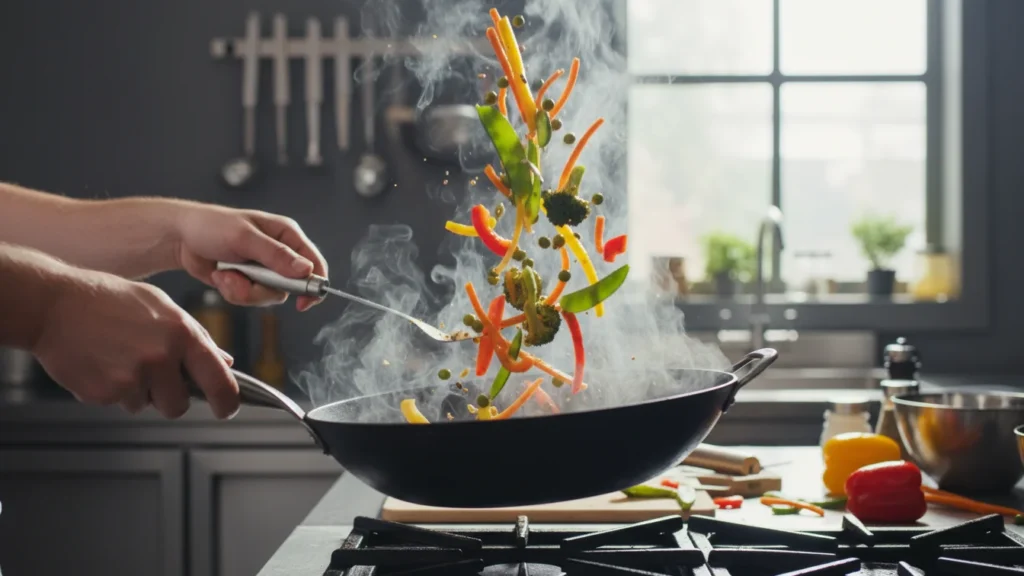
I use quick, high-heat cooking to keep vitamins and color. I pick oils that tolerate heat, cut vegetables evenly, and cook in short bursts to lock in nutrients and flavor.
Choosing Healthy Oils
I choose oils with higher smoke points to prevent burning and nutrient loss. Good choices include avocado oil (smoke point ~520°F / 271°C), refined olive oil (~465°F / 240°C), and light sesame oil (~410°F / 210°C). I avoid extra-virgin olive oil for very high heat since it smokes sooner.
I measure oil to control calories and fat. I typically use 1–2 teaspoons per serving for a stir-fry and add more only if needed. I also sometimes combine oils: a teaspoon of neutral oil for heat plus a small splash of toasted sesame for flavor at the end.
I watch the pan temperature. If oil smokes, I lower the heat, discard burned oil, and start fresh. Burned oil tastes bitter and can destroy sensitive nutrients.
Short Cooking Times and High Heat
I cook on medium-high to high heat and keep the hands moving. Quick searing (2–6 minutes total depending on ingredients) preserves vitamin C and many B vitamins that break down with long heat exposure.
I add ingredients in stages by cook time: aromatics first (garlic, ginger) for 30–60 seconds, then proteins, then firmer vegetables, and soft vegetables last. This prevents overcooking and keeps textures firm.
I use a hot pan and a small amount of liquid (broth or a splash of water) when needed to finish cooking. This reduces the time vegetables spend in water, which helps retain water-soluble nutrients.
Vegetable Preparation Techniques
I cut vegetables into uniform pieces to ensure even cooking. Thinner slices and small dice cook faster, which reduces nutrient loss and keeps crunch.
I blanch dense vegetables like broccoli for 30–60 seconds, then shock in ice water when I need bright color and shorter final stir-fry time. This preserves color and some heat-sensitive nutrients.
I keep skins on when edible (peppers, eggplant, some squash) because skins hold fiber and micronutrients. I also avoid soaking vegetables for long periods to stop vitamins from leaching into water.
Blanching: Quick Cooking to Lock in Nutrients
I use blanching to keep bright color, firm texture, and more vitamins in vegetables while making them safe and easier to peel. The method is fast: a brief boil then an immediate ice bath stops cooking and locks in quality.
Blanching Versus Boiling
Blanching uses high heat for a short time, usually 30 seconds to a few minutes, then plunges food into ice water. Boiling cooks food fully and longer, which leaches water-soluble vitamins like vitamin C and some B vitamins into the cooking water.
I prefer blanching when I want to preserve nutrients and color. For example, green beans often need 2–3 minutes; broccoli florets 1–2 minutes. These short times soften cell walls enough to stop enzyme activity that destroys nutrients, without forcing vitamins into the water.
If you plan to freeze vegetables, blanching reduces enzyme activity that causes loss of flavor and nutrients in storage. For safety, always use fresh boiling water and an ice bath; discard blanching water or reuse it only in soups where nutrients will return to the meal. For more on timing and science, I trust guidance from the USDA and this blanching overview at the National Center for Home Food Preservation.
Blanching Techniques for Different Foods
I adjust blanching technique by food type and piece size. Leafy greens like spinach need only 15–30 seconds in boiling water because leaves are thin. Root vegetables (carrots, beets) require 3–5 minutes depending on dice size. Cut vegetables uniformly so all pieces finish together.
Follow these steps I use: 1) Bring a large pot of salted water to a rolling boil; 2) Add food and time precisely; 3) Transfer immediately to an ice bath to stop cooking; 4) Drain and dry before freezing or finishing the recipe. For fruits used in baking, I blanch to loosen skins—tomatoes get 15–30 seconds, then peel easily.
I find steaming blanching works well for delicate items and preserves more water-soluble nutrients than full immersion. For details on safe home practices and exact timings, the USDA and FDA food safety pages offer reliable charts and tips.
Pressure Cooking: Rapid Cooking with Minimal Nutrient Loss
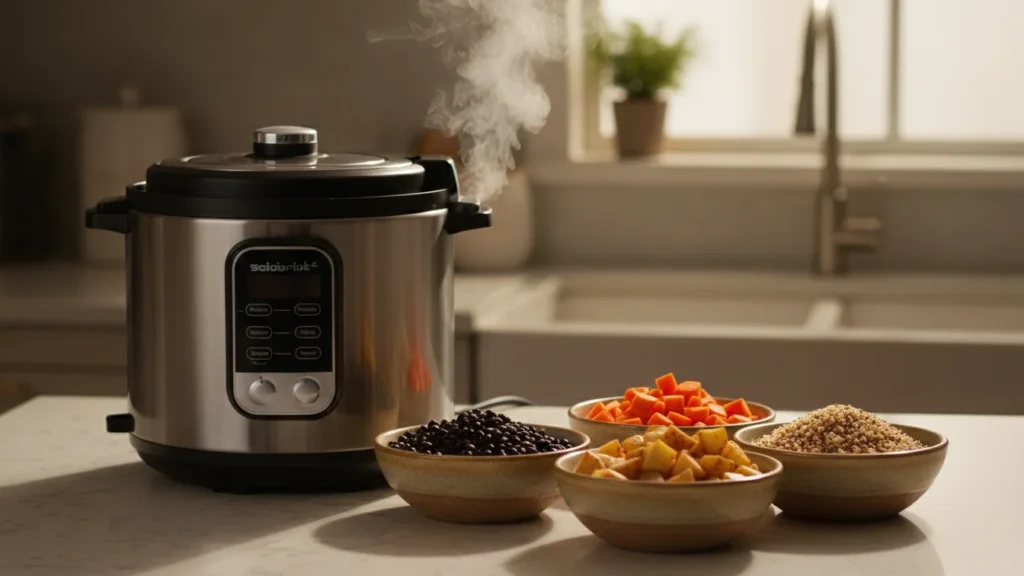
I find pressure cooking useful because it cooks food fast and uses little water, which helps keep vitamins and minerals inside the food. It raises temperature and pressure to shorten cook time, so heat-sensitive nutrients lose less time exposed to high heat.
Pros and Cons of Pressure Cooking
Pros
- Saves nutrients: Shorter cook times and minimal water reduce loss of vitamin C and B vitamins compared with long boiling.
- Saves time and energy: Meals that take hours on a stove or oven finish in a fraction of the time.
- Improves digestibility: Beans and whole grains break down faster, making nutrients more available and reducing anti-nutrients.
- Locks in flavors: Sealed environment keeps juices and soluble nutrients from leaching out.
Cons
- Some nutrient loss still occurs: High temperature and pressure can degrade heat-sensitive vitamins if overcooked.
- Not ideal for delicate foods: Leafy greens and quick-cook vegetables can become mushy.
- Requires care: I must follow recommended times and release methods to avoid overcooking or splattering.
For lab-based summaries on nutrient retention and cooking methods, I often check resources like the USDA and NutritionFacts.org for specific nutrient data.
Recommended Foods for Pressure Cooking
I use the pressure cooker for sturdy foods that benefit from fast, even heat.
- Legumes and dried beans: Cook quickly and become tender without long soaking or boiling.
- Tough cuts of meat: Chuck roast, brisket, and shanks become tender while keeping minerals and collagen.
- Whole grains and brown rice: Shorter times reduce nutrient loss compared with long simmering.
- Root vegetables and winter squash: They soften fast and retain more vitamins than if boiled in lots of water.
I avoid pressure-cooking very leafy greens and quick-steam vegetables; instead I steam them briefly or use a stove-top steamer to preserve texture and color. For technical details on pressure and temperature effects, I consult science-based guides such as the USDA’s cooking resources.
Sous Vide: Precision Cooking for Optimal Nutrition
I cook foods sealed in bags at exact temperatures to keep vitamins and minerals from breaking down. I also control time and moisture so proteins and vegetables retain texture and nutrients.
How Sous Vide Maintains Nutrient Integrity
I keep water at precise temperatures, usually between 54°C and 90°C (130°F–194°F), which prevents overheating that destroys heat‑sensitive vitamins like vitamin C and some B vitamins. Lower, steady heat means less denaturation and fewer nutrients lost to evaporation.
Vacuum sealing cuts oxygen exposure. That limits oxidation of sensitive nutrients and stops vitamins from leaching into cooking liquid. For vegetables, I set shorter times and lower temps to protect water‑soluble vitamins while still making them tender.
I watch time as closely as temperature. Extended cooking at moderate temps preserves collagen and minerals in meats but avoids long high‑heat exposure that breaks down vitamins. I also avoid overfilling bags so heat transfers evenly.
Safe Practices for Sous Vide Cooking
I always use a reliable immersion circulator and a waterproof thermometer to verify actual water temperature. I check that the bag seals fully; any air pocket can raise risk of uneven cooking and oxidation.
I follow time‑and‑temperature pasteurization guidelines for meats. For example, cooking chicken at 60°C (140°F) for 27.5 minutes achieves significant pathogen reduction when thickness and starting temperature are accounted for. When in doubt, increase time or finish with a quick sear to both flavor and surface safety.
I cool and store cooked items rapidly in an ice bath before refrigerating, then label with date. Reheat to service temperature or hold at safe hot‑hold temps. I use food‑grade vacuum bags and avoid prolonged cooking above recommended temperatures to limit chemical transfer from plastic.
Grilling and Roasting: Balancing Flavor and Nutrition
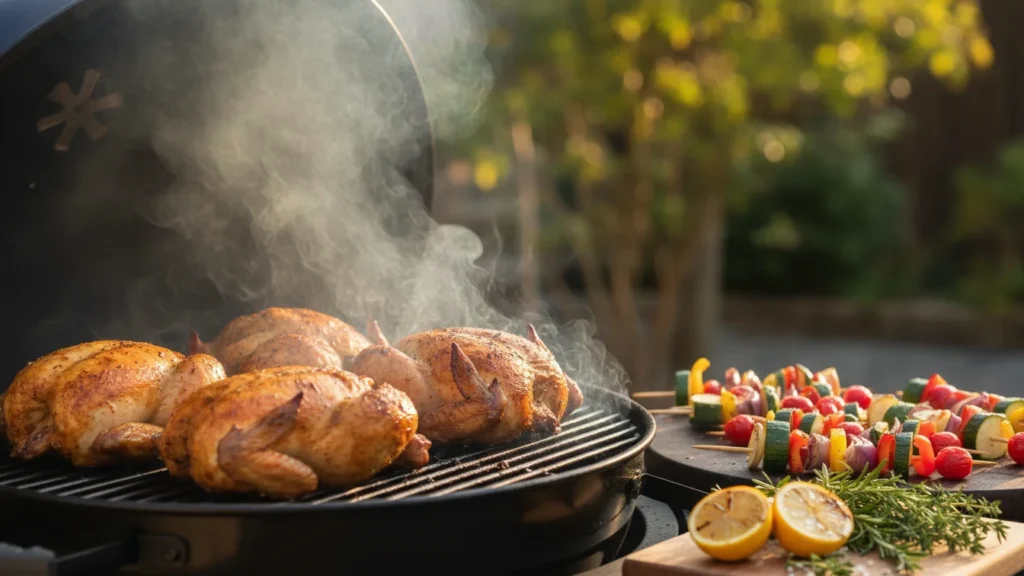
I explain how dry-heat cooking affects vitamins and how to keep food tasty while cutting harmful compounds. You’ll learn which nutrients drop, where flavors come from, and simple steps to protect both health and taste.
Impact of Dry Heat on Nutrients
Dry heat at high temperatures breaks down some vitamins, especially vitamin C and several B vitamins. I find that foods rich in these nutrients—like bell peppers, broccoli, and leafy greens—lose more when exposed to long, hot roasting or direct grilling.
Minerals and fiber stay mostly intact, so the structure and minerals in meat, root vegetables, and whole grains remain valuable. Fat-soluble vitamins (A, D, E, K) resist heat better than water-soluble ones.
High heat also creates browning compounds that boost flavor. But it can form harmful chemicals such as heterocyclic amines (HCAs) and polycyclic aromatic hydrocarbons (PAHs) on charred meat. I recommend watching time and temperature to lower those risks.
Healthy Grilling and Roasting Tips
Use these practical steps to keep nutrients and cut harmful compounds:
- Marinate proteins for 30 minutes to 2 hours. I use vinegar-, lemon-, or herb-based marinades to reduce HCA formation.
- Cook at moderate heat. Roast at 325–375°F (160–190°C) and grill over indirect heat when possible.
- Flip and move food often. Shorter direct heat exposure lowers charring and nutrient loss.
- Trim fat and avoid flare-ups. Less dripping reduces smoke and PAH formation.
- Add moisture or cover. Foil or a lid preserves water-soluble vitamins during roasting.
- Start with thicker cuts or whole vegetables. They retain juice and nutrients better than thin slices.
I also suggest combining methods: briefly sear for flavor, then finish in the oven. This keeps texture and lowers time at extreme heat.
Boiling and Poaching: Techniques to Reduce Nutrient Loss
I focus on using the right water, temperature, and timing to keep vitamins and minerals in your food. Small changes—like using less water or a gentler temperature—make a big difference for vegetables, fish, and eggs.
When to Use Boiling versus Poaching
I choose boiling for dense foods that need strong heat to cook through, such as potatoes, pasta, and tough root vegetables. Boiling at a rolling simmer (100°C/212°F) cooks quickly but can leach water-soluble vitamins. To limit loss, I cut items into larger pieces and add them to boiling water only when needed.
I use poaching for delicate foods like eggs, fish, and fruit. Poaching keeps liquid at 70–85°C (160–185°F), which cooks gently and helps fragile proteins hold shape. It also reduces thermal damage to heat-sensitive nutrients. When I poach, I often add aromatics to the poaching liquid and cook just until done.
- Boiling: best for starchy, dense items; faster cook, higher nutrient loss risk.
- Poaching: best for delicate proteins and fruits; lower temperature, better retention.
Water-Soluble Nutrient Considerations
Water-soluble vitamins—especially vitamin C and B vitamins—dissolve into cooking water. I limit nutrient loss by using minimal water, cooking for a short time, and keeping pieces large. Steaming or microwaving can often save more vitamins than boiling.
If a recipe calls for the cooking liquid (soups, stews, pasta sauces), I use it to recover lost nutrients and flavor. For example, reserve vegetable cooking water to thin sauces or add to soups. For more guidance on nutrient retention and safe temperatures, I consult resources like the USDA and Harvard T.H. Chan School of Public Health.
Raw Foods: When No Cooking Is the Best Option
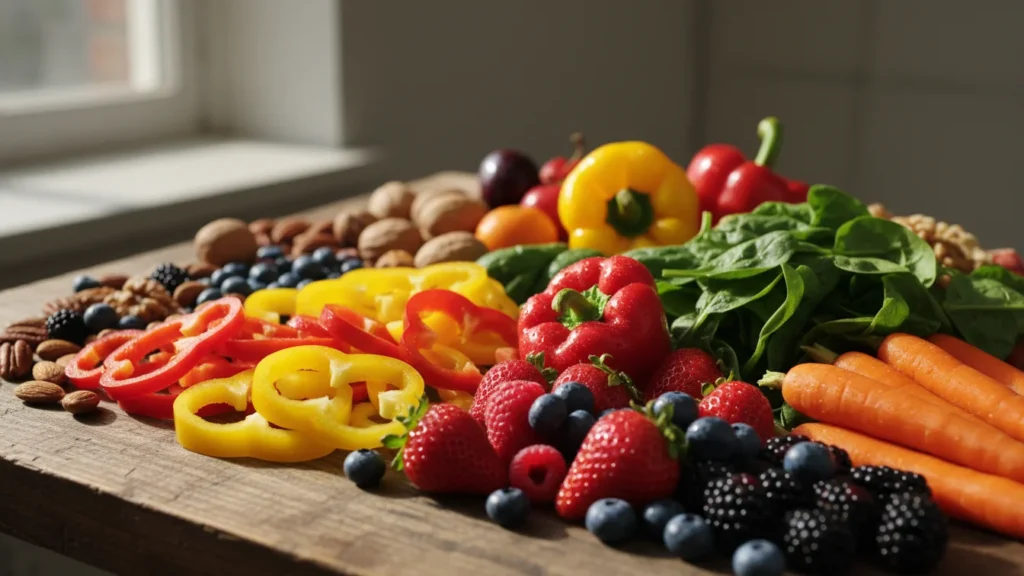
I choose raw foods when I want maximum vitamin C, B vitamins, and enzymes that heat can damage. Raw fruits, vegetables, nuts, seeds, and some fish can give strong flavor and nutrient density when handled safely.
Nutrient Bioavailability in Raw Foods
I favor raw when the food contains heat-sensitive nutrients like vitamin C and some B vitamins. These vitamins break down with high heat or long cook times, so eating raw bell peppers, strawberries, or spinach keeps more of them intact.
However, some nutrients become easier to absorb after cooking. For example, lycopene in tomatoes and beta-carotene in carrots increase in availability with gentle heating. I balance raw and cooked choices depending on the nutrient I want.
I also pay attention to food form. Chopping, blending, or lightly soaking can help release nutrients in raw foods. For instance, crushing garlic releases allicin, and soaking nuts can reduce phytic acid to aid mineral absorption.
Food Safety and Digestibility Concerns
I take safety seriously with raw foods. Raw animal products (meat, eggs, fish) carry bacteria, parasites, and viruses. I only eat sushi-grade fish from trusted sources and avoid raw eggs when risk is high.
Vegetables and fruits can hold dirt and microbes. I wash them under running water and peel when needed. For sprouts and pre-cut salad mixes, I choose brands with strict safety checks or cook them briefly because they have higher risk.
Raw beans, potatoes, and certain grains contain natural toxins or anti-nutrients. I soak and cook beans and whole grains to neutralize those compounds. When I eat raw, I do so selectively and use safe handling to reduce health risks.
Practical Tips for Everyday Cooking
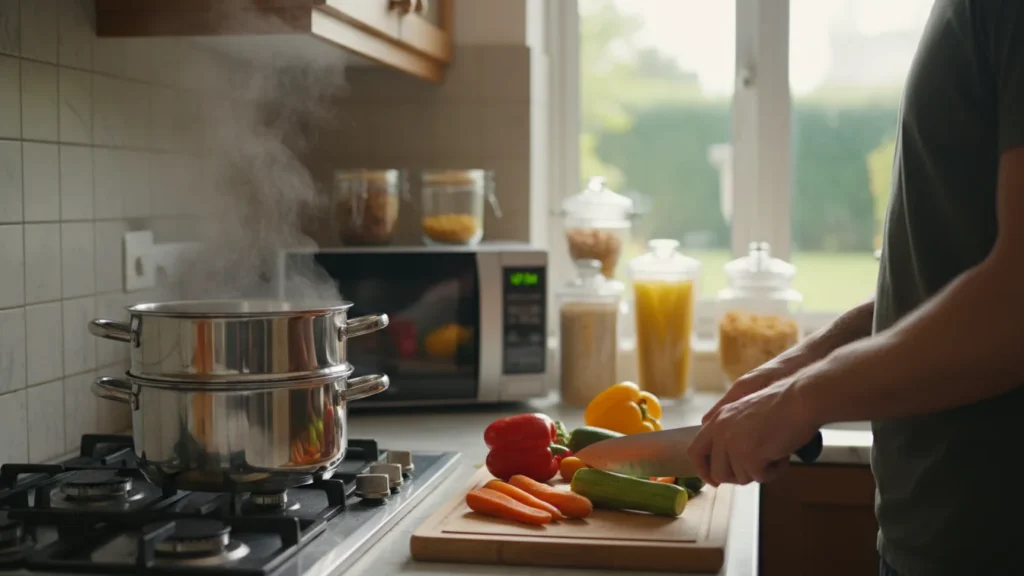
I focus on small actions that save nutrients: shorter cook times, smart cutting and peeling, and proper cooling and storage. These steps help keep vitamins and minerals in your food while keeping meals simple.
Minimizing Cooking Times
I choose quick methods like steaming, microwaving, or stir-frying when I can. These methods use less water and less heat time, which helps preserve vitamin C and B vitamins that break down with long cooking. For vegetables, I steam for 3–6 minutes until just tender, or microwave with a splash of water for 1–3 minutes, covered.
I also preheat pans so food cooks fast and avoid boiling unless I plan to use the cooking liquid. For soups or stews, I add delicate veggies near the end of cooking. For meats, I use a meat thermometer to avoid overcooking while ensuring safety.
Cutting and Peeling for Maximum Nutrition
I cut vegetables into larger pieces when possible to reduce surface area and nutrient loss. Smaller pieces and thin slices lose water-soluble vitamins faster during cooking and storage. I peel only when needed — many nutrients sit just under the skin of potatoes, carrots, and apples.
When I do peel, I do it just before cooking to limit air exposure. I also keep vegetable skins and peels for stocks or purees to reclaim nutrients. For herbs and leafy greens, I tear rather than finely chop to protect oils and flavor.
Storing Cooked Foods Properly
I cool cooked food quickly to stop nutrient loss and bacterial growth. I divide large batches into shallow containers and refrigerate within two hours. For longer storage, I freeze portions in airtight containers; blanching vegetables briefly before freezing preserves color and vitamins.
I label containers with dates and use refrigerated leftovers within 3–4 days. When reheating, I use a microwave or stovetop and keep heating time short to limit additional nutrient loss. For soups, I reheat just to a simmer rather than a rolling boil.
External resources: for safe cooling and storage guidelines I follow USDA food safety advice and use blanching tips from the FDA when freezing vegetables.
FAQs
Do any methods improve nutrient availability?
Yes. I note that cooking can increase access to some nutrients, like lycopene in tomatoes and beta-carotene in carrots. Gentle heat can break cell walls and make these compounds easier to absorb.
What should I avoid when I want to save vitamins?
I avoid long boiling and very high heat when cooking sensitive vegetables. These practices cause water loss and heat damage to vitamins like C and some B vitamins.
Can I use oil or seasoning without losing nutrients?
You can. I suggest using small amounts of healthy oils to help absorb fat-soluble vitamins (A, D, E, K). Seasoning doesn’t reduce vitamin levels, so flavor freely.
How do cooking time and temperature affect nutrition?
Shorter times and lower temperatures usually preserve more nutrients. I choose quick, covered cooking or methods that limit oxygen exposure.
| Tip | Why it helps |
|---|---|
| Use a steamer basket | Keeps food out of boiling water |
| Cook with the lid on | Reduces time and heat loss |
| Slice just before cooking | Limits nutrient exposure to air |
| Save cooking liquid | It holds leached vitamins for soups or sauces |
Conclusion
I recommend choosing cooking methods that limit heat and water exposure whenever possible. Steaming, microwaving, and pressure cooking often keep more vitamins and minerals intact. They work well for vegetables and lean proteins.
I suggest using quick, moderate heat for most meals. Searing or quick-roasting can lock in flavor without long nutrient loss. When you boil, try to use the cooking water in soups or sauces to keep soluble nutrients.
I advise cutting foods into larger pieces and cooking with the skin on when appropriate. That reduces surface area and limits nutrient leaching. Simple practices like minimal peeling and shorter cook times help a lot.
I find that combining methods can be useful. For example, blanch then sauté to preserve color and reduce cooking time. You can also use marinades and acids to protect certain nutrients and improve taste.
Bold, simple rules I follow:
- Steam or microwave for vegetables.
- Use pressure cookers for legumes and whole grains.
- Save boiling water for stocks and sauces.
I encourage you to balance nutrient preservation with food safety and enjoyment. Taste and texture matter for long-term healthy eating, so pick methods you like and can keep using.
