
How Much Is a Dish Rack? 2026 Price Guide

Quick Answer
A dish rack usually costs about $5 to $100 or more in the U.S. Basic plastic racks often cost $5–$20, while larger stainless steel and expandable models commonly fall between $25 and $75. Premium racks can cost $75–$120 or more, so it helps to choose the right dish rack before paying for features you may not need.
Dish rack prices at a glance
- Basic plastic: Expect roughly $5–$20 for simple countertop designs.
- Standard metal: Many practical steel racks cost about $15–$40.
- Expandable models: Better drainage and adjustable capacity often push prices to $30–$75.
- Premium steel: Well-designed stainless racks commonly reach $75–$120.
- Specialty designs: Oversized, multi-tier, or unusual over-sink systems can cost $100–$300 or more.
My simple spending rule
- For most kitchens, I would start around $20–$60 and pay more only for better materials, drainage, or space-saving features.
Dish racks look simple, but their prices vary more than many kitchen tools. A compact plastic rack can cost less than lunch, while a premium stainless system may cost around $100.
I compare the price with capacity, drainage, material, and countertop space. That gives a much clearer picture of whether a rack is genuinely good value.
A dish rack is a ventilated kitchen organizer that holds washed plates, bowls, cups, cookware, and utensils while water drains and the items air-dry.
How Much Is a Dish Rack in 2026?
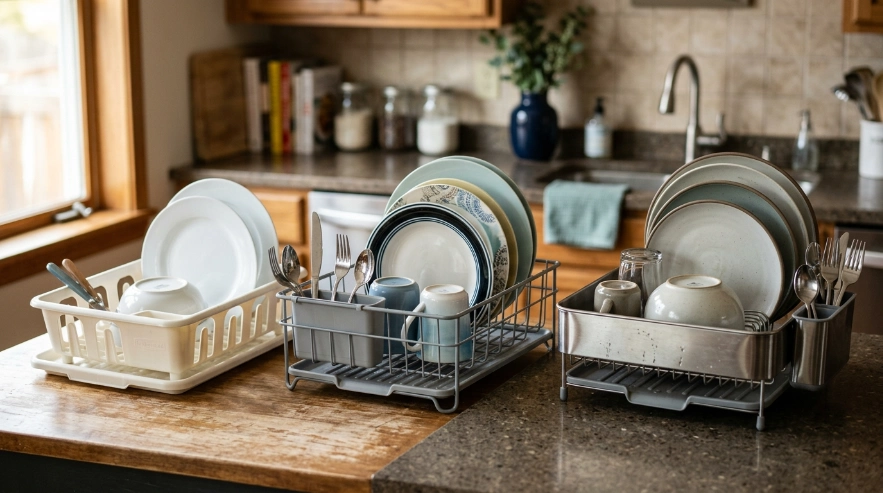
As of August 2026, a realistic shopping budget is about $5 to $100+. The amount you should spend depends more on design and material than on the basic drying function.
Current listings show inexpensive plastic racks near the bottom of that range. Stainless steel, expandable, and premium drainage systems move the price upward.
| Current Example | Observed Price | Price Level | Best Fit |
|---|---|---|---|
| Brightroom plastic dish drainer at Target | About $5 | Budget | Dorms, apartments, light use |
| Mainstays expandable rack at Walmart | About $10 | Budget | Everyday basic drying |
| Kitchen Details metal rack at Home Depot | About $18 | Budget to mid-range | Regular household dishes |
| KitchenAid compact stainless rack | About $60 | Mid-range | Compact premium setup |
| Joseph Joseph Extend Steel rack | About $75 | Upper mid-range | Expandable capacity |
| simplehuman Standard Dish Rack | About $100 | Premium | Drainage and finish quality |
Prices change with sales, colors, sellers, and availability. I use these figures as shopping benchmarks rather than permanent price tags.
Why Do Dish Rack Prices Vary So Much?
The biggest price differences come from material, size, drainage, capacity, and construction quality. A basic rack only needs to hold dishes, but premium designs solve several sink-area problems at once.
- Material: Plastic and coated wire usually cost less than quality stainless steel.
- Capacity: Larger racks need stronger frames and more material.
- Drainage: Swivel spouts and sloped drainboards add complexity.
- Adjustability: Expandable racks cost more than fixed-size designs.
- Accessories: Cup holders, knife slots, utensil baskets, and cutting-board holders can raise the price.
- Finish: Fingerprint-resistant coatings and premium finishes often add cost.
I would pay for features that fix a problem in my kitchen. I would not pay extra just because a rack has more attachments.
Does material make a big difference?
Yes. Material affects both purchase price and how well the rack handles years of moisture.
For a detailed breakdown, see my guide to the best material for a dish rack. Stainless steel is usually the strongest all-around choice, while plastic works well when keeping the initial cost low matters most.
- Plastic: Low cost, lightweight, and unable to rust.
- Coated steel: Affordable and strong, but damaged coatings can expose metal.
- Stainless steel: More expensive, durable, and well suited to wet areas.
- Aluminum: Lightweight and corrosion resistant, depending on construction.
- Bamboo: Attractive and warm-looking but needs careful drying.
Is a $10 Dish Rack Good Enough?
A $10 dish rack can be perfectly adequate for light everyday use. You do not need a premium rack simply to dry a few plates, cups, and utensils.
The trade-off is usually capacity or convenience. Budget racks may have simpler drainage, thinner frames, fewer accessories, or less countertop protection.
A cheap rack makes sense when:
- You live alone or wash small loads.
- You rent and do not want to invest in kitchen accessories.
- You need a temporary rack for a dorm, RV, or vacation home.
- Your sink area already drains well.
- You prefer replacing an inexpensive rack rather than maintaining a premium one.
Check stability before everything else. A low price stops being a bargain if dishes lean, glasses tip, or water constantly collects underneath.
How Much Should You Spend for a Small Kitchen?
For a small kitchen, I would usually budget $20–$60. That range opens the door to compact steel, roll-up, expandable, and over-sink designs without automatically moving into premium pricing.
Measure before buying. Width, depth, faucet clearance, cabinet height, and sink dimensions matter more than the product photo.
- Very limited counter: Consider a roll-up or over-sink rack.
- Narrow counter: Look for a compact single-tier design.
- High dish volume: Consider a two-tier rack that uses vertical space.
- Variable loads: An expandable rack lets you shrink the footprint after dishes dry.
My value test is simple: calculate how much usable counter space the design gives back. In a tiny kitchen, that benefit can matter more than saving $10 at checkout.
When Is a Premium Dish Rack Worth the Money?
A $75–$120 rack makes sense when you use it heavily and premium features solve daily frustrations. Better drainage and stronger construction can justify the higher price.
I would look closely at premium models when the rack stays on the counter every day. At that point, durability, appearance, and cleanup become more important.
Premium features worth considering
- Directed drainage: A spout sends water toward the sink instead of the counter.
- Stable stainless frame: Helpful for heavier plates, bowls, and cookware.
- Removable parts: Trays and utensil holders are easier to wash separately.
- Expandable capacity: Useful when dish loads change throughout the week.
- Protected contact points: Softer surfaces can help reduce scratches on dishes and counters.
The premium price is harder to justify if you rarely hand-wash dishes. A basic rack may deliver the same practical result for occasional use.
How Much Does Keeping a Dish Rack Clean Cost?
Routine maintenance costs little, but it can influence how long the rack remains pleasant to use. Warm water, dish soap, a soft brush, and thorough drying handle most regular cleaning.
The FDA advises keeping dishes, utensils, counters, and kitchen tools clean as part of safe home food handling. You can review its food safety at home guidance for broader kitchen-cleaning principles.
USDA guidance also emphasizes cleaning kitchen surfaces and tools with hot, soapy water. Its cleanliness and food-safety guidance explains why regular kitchen cleaning matters.
NSF provides similar advice about maintaining a clean food-preparation area. Its food preparation guidance also discusses cleaning and sanitizing kitchen surfaces.
For rack-specific maintenance, follow my guide on the best way to clean a dish rack. Always check the rack manufacturer’s instructions before using strong cleaners.
Should You Replace a Cheap Dish Rack or Buy a Better One?
Replacement makes sense when a rack becomes unstable, damaged, difficult to clean, or badly corroded. Cosmetic wear alone does not always mean the rack has reached the end of its useful life.
If you keep replacing the same weak design, spending more once may provide better value. Start by checking the common signs that a dish rack needs replacing.
Think about cost per year
A $20 rack used for two years costs about $10 per year. A $90 rack used for nine years also works out to about $10 per year.
That does not mean expensive automatically equals durable. Construction, care, moisture exposure, and materials still determine how well a rack ages.
How Do You Avoid Overpaying for a Dish Rack?
Start with your actual dish load and available space. Then pay only for the features that improve that specific setup.
- Measure first: Record the usable counter or sink dimensions.
- Set a capacity target: Think about one normal hand-washing session.
- Choose your material: Decide whether price, weight, or corrosion resistance matters most.
- Check drainage: Make sure water has a clear route toward the sink.
- Compare useful features: Ignore attachments you are unlikely to use.
- Check the final price: Shipping and seller differences can change the value.
I also compare the rack’s footprint in both empty and full positions. Expandable designs can look compact online but become surprisingly large when opened.
Dish Racks I Would Consider at Different Price Levels
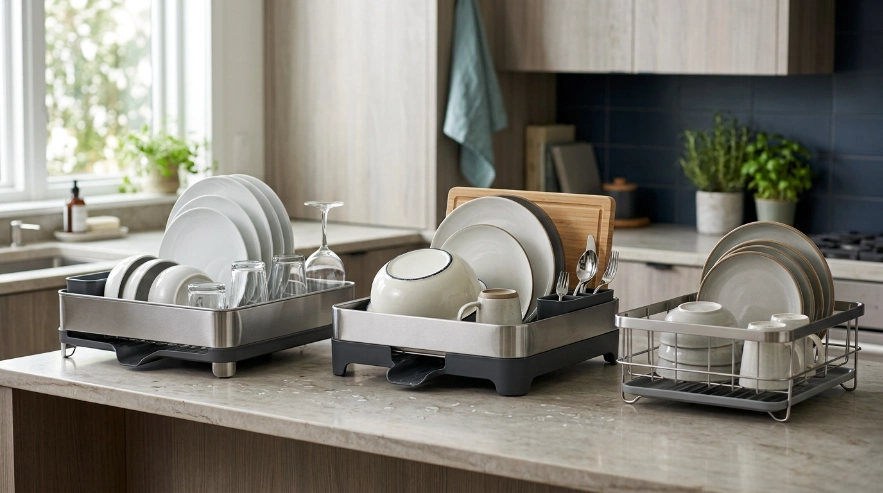
If you’re ready to buy, these are three recognizable models I would compare for different priorities. I would still check dimensions and current seller information before ordering.
🏆 Best Overall
simplehuman Standard Dish Rack
★★★★☆
This premium rack focuses on sturdy construction and controlled drainage. It is the model I would compare first when the rack stays on the counter full-time and drainage quality matters.
↔️ Best Expandable
Joseph Joseph Extend Steel Dish Rack
★★★★☆
Its expandable layout is useful when drying loads change from day to day. I would shortlist it for kitchens where saving counter space matters between larger washing sessions.
📏 Best Compact
KitchenAid Compact Dish Rack
★★★★☆
This is the style I would compare for a smaller counter when a basic plastic rack feels too light. Its compact format offers a middle ground between low-cost racks and large premium systems.
Frequently Asked Questions
How much is a cheap dish rack?
A cheap dish rack can cost about $5–$20. Plastic and simple wire designs dominate this range, and they can work well for light dish loads if the rack is stable and drains properly.
How much does a stainless steel dish rack cost?
Stainless steel dish racks commonly start around $20–$30 and can exceed $100 for premium designs. Size, steel construction, drainage systems, expandable sections, and brand positioning all affect the final price.
Is an expensive dish rack worth it?
An expensive dish rack can be worth it when you hand-wash dishes often and need better drainage, capacity, stability, or corrosion resistance. For occasional use, a simple $10–$30 rack may provide better value.
What is a reasonable price for a dish rack?
For most households, about $20–$60 is a practical starting budget. That range includes many metal, compact, and expandable designs without forcing you into the premium end of the market.
Why are some dish racks over $100?
Dish racks over $100 may use premium stainless construction, larger frames, specialized drainage, multiple tiers, adjustable sections, or distinctive finishes. Oversized specialty systems can cost even more because they use more material and complex hardware.
Final Takeaway: How Much Should You Pay?
A dish rack can cost anywhere from about $5 to well over $100, but most shoppers do not need the most expensive option. Start with your available space, usual dish load, preferred material, and drainage needs.
For general household use, I would begin in the $20–$60 range. Move higher only when a premium material or feature solves a problem you deal with every day.
Measure carefully, compare current prices, and choose function before appearance. A dish rack earns its value when it makes your sink area easier to use every single day.