
How to Make Juice Without a Juicer (Blender and Strainer Method)

You can make juice without a juicer by blending chopped fruit or vegetables with a little cold water, then straining the puree through a nut milk bag, fine sieve or cheesecloth. Squeeze the pulp to get the last of the liquid out, and you have smooth, fresh juice in about 10 minutes. For citrus, you need even less: a fork, a reamer or your hands will do the job.
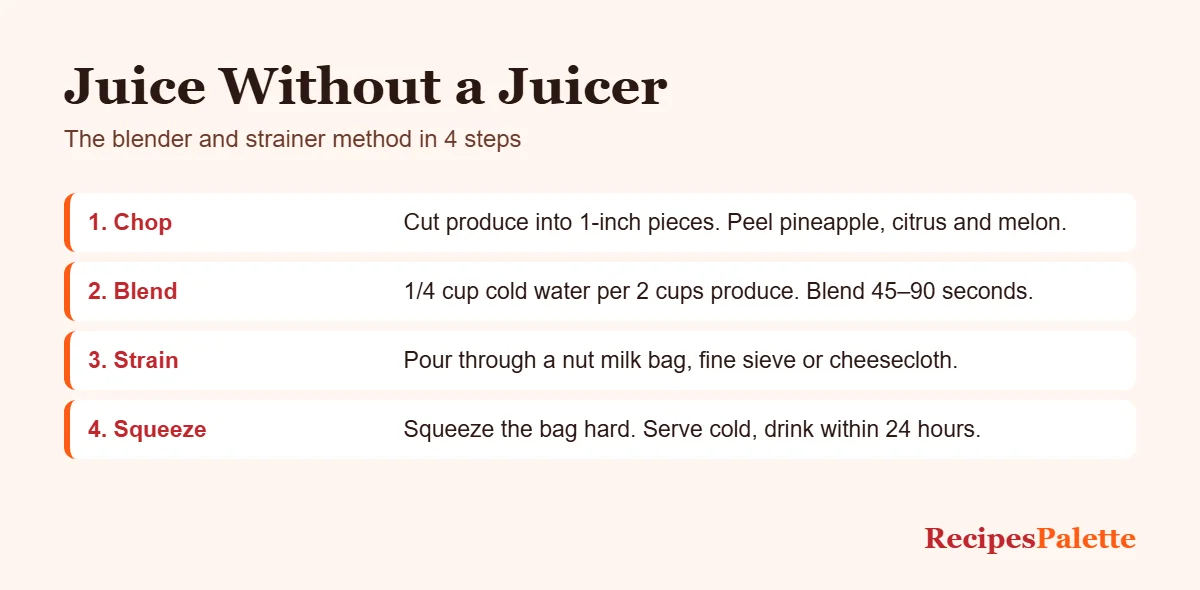
This guide walks through the blender method step by step, the best produce to use, how much you need per glass, and simple no-blender methods for oranges, lemons, pomegranates and watermelon. If you are still deciding whether to buy a machine, our comparison of juicer vs blender explains the differences.
What You Need
- A blender. Any countertop blender works. A personal bullet-style blender is fine for one glass at a time.
- A strainer. A nut milk bag gives the smoothest juice. A fine-mesh sieve, a double layer of cheesecloth, a clean thin kitchen towel or even a coffee filter (for small amounts, it is slow) also work.
- A large bowl or jug to catch the juice.
- A sharp knife and cutting board. Smaller pieces blend faster and more evenly.
- Cold water or ice, about 1/4 to 1/2 cup per batch.
Nut milk bags are cheap, washable and reusable, and they make the biggest difference to the final texture. If you plan to make juice this way more than once, they are worth buying.
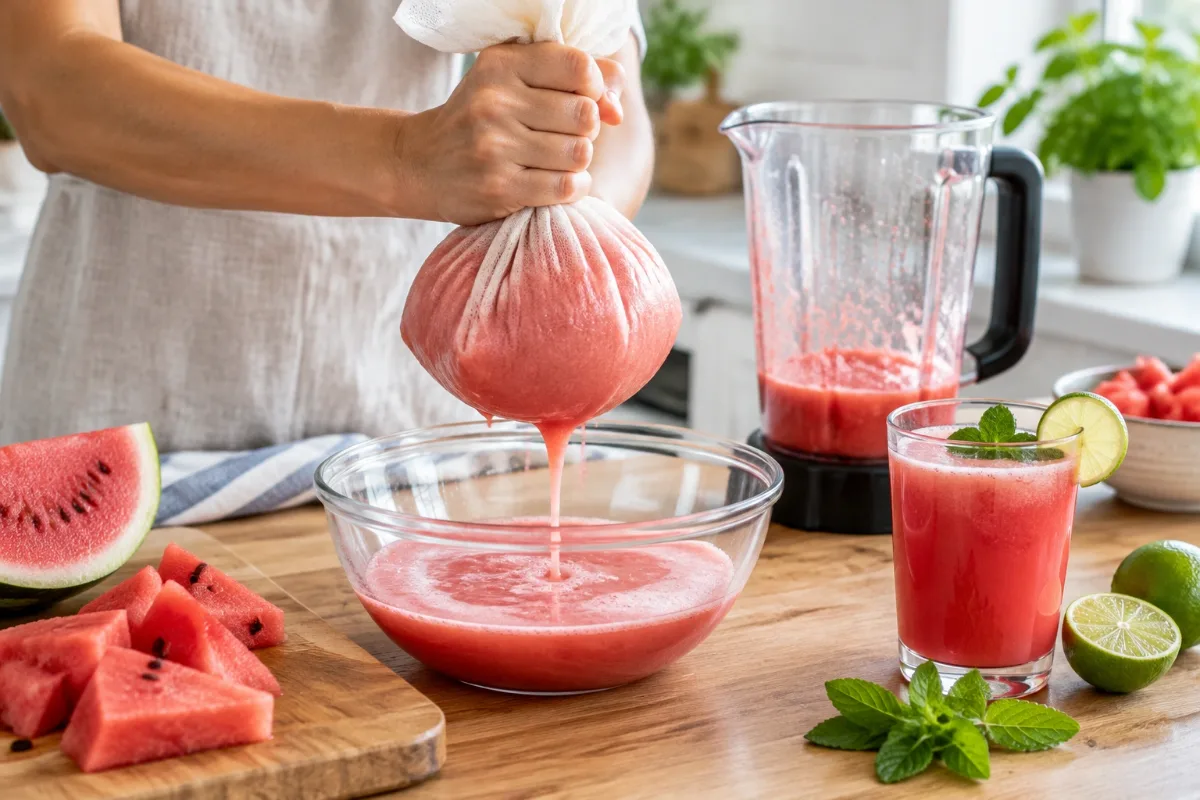
How to Make Juice in a Blender: Step by Step
- Wash the produce well. Scrub firm produce like carrots and apples under running water. Fresh juice is not heated, so clean produce matters.
- Prep and chop. Remove tough peels (pineapple, mango, melon rind), pits and hard cores. Cut everything into pieces about 1 inch (2.5 cm) across. Thin-skinned produce like cucumbers, apples and carrots can stay unpeeled.
- Add liquid to the blender first. Pour in about 1/4 cup of cold water for every 2 cups of produce. Juicy fruits like watermelon or oranges may need none at all.
- Add soft produce, then firm produce. Soft items near the blade help everything move.
- Blend on high for 45 to 90 seconds, until completely smooth. If the blender struggles, stop and add a splash more water or stir with a spatula.
- Strain. Set the nut milk bag or sieve over a bowl and pour in the puree. Let it drain for a minute.
- Squeeze or press. Twist the top of the bag and squeeze firmly, or press the pulp in the sieve with the back of a spoon. A lot of juice is still held in the pulp, so do not skip this step.
- Taste and adjust. Add a squeeze of lemon or lime for brightness, or a little more water if it is too strong.
- Serve over ice or chill it in a sealed glass jar.
The whole process takes about 10 minutes, including cleanup. Rinse the bag and blender right away while the pulp is still wet.
How Much Produce Do You Need?
Yield depends on how watery the produce is. These are rough amounts for one 8-ounce (240 ml) glass using the blender and strainer method.
| Produce | Amount for 1 glass | Water to add |
|---|---|---|
| Watermelon | About 3 cups cubed | None |
| Pineapple | About 2 1/2 cups chunks | 2 to 4 tbsp |
| Oranges | 3 to 4 medium (peeled) | None |
| Apples | 3 medium, cored | 1/4 cup |
| Cucumber | 1 large | None to 2 tbsp |
| Carrots | About 1 pound (450 g) | 1/2 cup |
| Celery | 1 bunch | 1/4 cup |
| Beets | 2 medium, peeled | 1/2 cup |
Firm, dry produce like carrots and beets needs more water and gives a slightly milder juice than a juicer would. Watery produce like watermelon and cucumber gives almost pure juice with no water at all.
Best Produce for Blender Juice
Easiest (high water, soft texture)
- Watermelon, cantaloupe and honeydew
- Pineapple
- Oranges and grapefruit (peeled, seeds removed)
- Cucumber
- Grapes
- Strawberries
Works well with a little water
- Apples and pears
- Celery
- Spinach, kale and other leafy greens (mix with a juicy fruit)
- Ginger (use a small piece, about 1 inch per batch)
Harder but doable
- Carrots and beets: chop small, add more water and blend longer.
- Fresh turmeric: grate it first.
Not great for juice
Bananas, avocados and mangoes turn into thick puree that barely passes through a strainer. Use them in smoothies instead, or add a little mango to another juice for flavor.
Easy Blender Juice Recipes to Start With
Watermelon lime juice
Blend 3 cups of seedless watermelon with the juice of half a lime and 4 to 5 mint leaves. Strain through a sieve. No water needed.
Green apple cucumber juice
Blend 1 cucumber, 1 green apple, 1 cup of spinach, a squeeze of lemon and 1/4 cup of cold water. Strain through a nut milk bag.
Carrot orange ginger juice
Blend 4 carrots, 2 peeled oranges, a 1/2-inch piece of ginger and 1/2 cup of cold water for a full 90 seconds. Strain and squeeze well.
Pineapple mint juice
Blend 2 1/2 cups of pineapple with a few mint leaves and 2 tablespoons of water. Strain through a sieve for a light, foamy juice.
How to Juice Without a Juicer or a Blender
Some fruits do not need any machine at all.
Oranges, lemons and limes
Roll the fruit firmly on the counter to soften it, then cut it in half across the middle. Push a fork into the flesh and twist while squeezing the fruit around it. A wooden reamer or a simple handheld citrus press makes the job faster. Microwaving a cold lemon for 10 to 15 seconds also helps it release more juice.
Pomegranates
Remove the seeds (arils) into a bowl of water so the white pith floats away. Put the seeds in a zip-top bag, squeeze out the air and seal it. Press and roll the bag with a rolling pin until the seeds burst, then snip a corner and pour the juice through a sieve.
Watermelon
Mash cubed watermelon with a potato masher in a large bowl, then pour it through a sieve. Watermelon is so juicy that this works almost as well as a blender.
Grapes and soft berries
Mash them in a bowl or press them through a sieve with a spoon. For larger amounts of grapes, gently simmering them with a little water and then straining is the traditional way to make homemade grape juice.
Ginger
Grate peeled ginger on a fine grater, wrap it in cheesecloth and squeeze. One thumb-sized piece gives about 1 teaspoon of strong juice, enough to flavor a whole jug.
Tips for Better Juice Without a Juicer
- Use cold produce. Chilled fruit makes juice that tastes fresher and needs no ice.
- Do not over-water. Start with less water than you think. You can always thin the juice later.
- Squeeze hard. Most of the juice is still in the pulp after it drains. Wear clean kitchen gloves if the bag is cold.
- Strain twice for a clearer juice. Pour it through the bag, then through a fine sieve.
- Skim the foam. Blending adds air. Let the juice sit for a minute and spoon off the foam on top.
- Add acid. A little lemon or lime juice brightens flavor and slows browning in apple and pear juices.
- Save the pulp. It works in muffins, quick breads, soups, veggie burgers and crackers.
How Long Does Blender Juice Last?
Juice made in a blender is fresh, unpasteurized juice, just like juice from a juicer. It tastes best right away and should be kept cold. Store it in a sealed glass jar filled to the top (less air means less browning) and drink it within 24 hours for the best flavor. For general food safety advice, see our juicing safety tips.
You can also freeze fresh juice in ice cube trays and add the cubes to water or smoothies later.
Blender Juice vs Juicer Juice
Juice made with a blender and strainer is very close to juicer juice. The main differences:
- Flavor: slightly milder, because you usually add a little water.
- Yield: a little lower from very firm produce like carrots and beets.
- Time: a few minutes longer because of straining.
- Cost: much lower, because you use equipment you already own.
If you start making juice several times a week, a dedicated juicer can save time. Until then, the blender method is a great way to learn which flavors you like.
Frequently Asked Questions
Can I make juice in a blender without straining it?
Yes, but you will get a thick drink closer to a smoothie, with all the pulp. Add more water and blend longer to thin it, or strain it for a true juice texture.
What can I use instead of a nut milk bag?
A fine-mesh sieve, two layers of cheesecloth, a thin clean kitchen towel or a jelly bag. A sieve is the fastest; cloth gives the smoothest juice.
Can you juice carrots without a juicer?
Yes. Chop them small, blend them with about 1/2 cup of cold water per pound for 90 seconds, then strain and squeeze well. Adding an orange or apple improves both flavor and yield.
Can you juice celery without a juicer?
Yes. Cut the celery into 1-inch pieces, blend with about 1/4 cup of water until very smooth, then strain through a nut milk bag. Squeeze firmly, because celery holds a lot of juice in its fibers.
Can I use a food processor instead of a blender?
You can, but a food processor chops rather than purees, so the yield is lower. Process the produce as finely as possible, then squeeze it hard in a cloth.
Is blender juice the same as a smoothie?
No. A smoothie keeps all the blended fruit in the glass. Blender juice is strained, so the pulp is removed and the drink is thin and smooth.
Start with watermelon or pineapple for an easy first batch, then work up to carrots and greens once you have the straining routine down.