
How to Clean Discolored Dutch Oven

Cleaning a discolored Dutch oven is easier than you think! This guide walks you through simple, safe steps to remove stains and restore your Dutch oven’s original beauty. Whether it’s baked-on food, rust, or discoloration, you’ll find practical tips to keep your cookware looking great and performing well.
Key Takeaways
- Identify discoloration types: Understanding the cause helps choose the best cleaning method.
- Use gentle cleaning agents: Avoid harsh chemicals that can damage enamel or cast iron.
- Apply natural remedies: Baking soda, vinegar, and lemon are effective and safe for cleaning.
- Follow step-by-step cleaning: Proper techniques ensure thorough stain removal without harming your Dutch oven.
- Prevent future discoloration: Regular maintenance and correct cooking practices keep your Dutch oven looking new.
- Troubleshoot stubborn stains: Learn what to do if discoloration won’t come off easily.
- Maintain seasoning (for cast iron): Proper care preserves the non-stick surface and prevents rust.
How to Clean Discolored Dutch Oven
If you love cooking with a Dutch oven, you know how versatile and durable it is. But over time, your Dutch oven might develop stains or discoloration from heat, food, or minerals in water. This can be frustrating, especially when you want your cookware to look as good as it performs. Don’t worry — in this guide, you will learn how to clean discolored Dutch ovens safely and effectively. We cover everything from enamel-coated to traditional cast iron Dutch ovens.
Understanding Dutch Oven Discoloration
Before cleaning, it helps to know the type of discoloration you’re dealing with. Dutch ovens come mainly in two types:
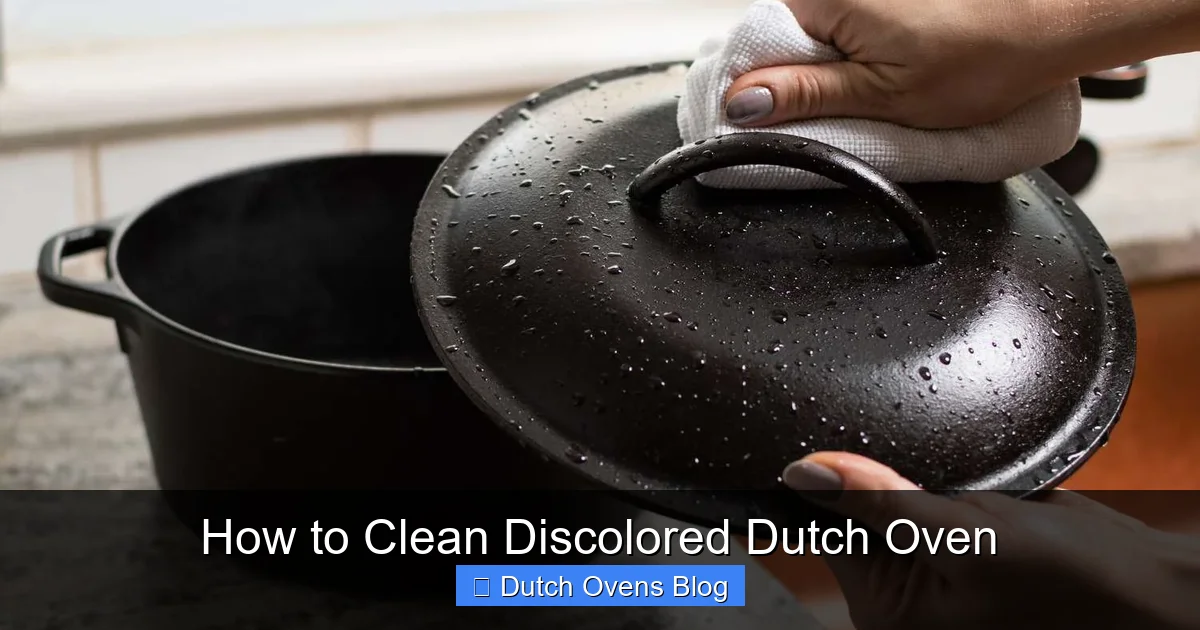
Visual guide about How to Clean Discolored Dutch Oven
Image source: thespruce.com
- Enamel-coated Dutch ovens: These have a smooth, glass-like surface that can stain or dull from burnt food, rust, or mineral buildup.
- Traditional cast iron Dutch ovens: These develop a seasoning layer that can darken or get rusty if not maintained properly.
Common causes of discoloration include burnt food residue, rust, hard water mineral deposits, and general wear.
What You’ll Need
- Mild dish soap
- Baking soda
- White vinegar
- Lemon juice (optional)
- Non-abrasive sponge or soft brush
- Plastic or wooden scraper
- Soft cloth or microfiber towel
- Water
- Olive oil or cooking oil (for cast iron maintenance)
Step 1: Prepare Your Dutch Oven for Cleaning
Remove Loose Debris
Start by scraping off any loose food particles using a plastic or wooden scraper. Avoid metal tools that can scratch the surface.
Soak in Warm, Soapy Water
Fill your sink or a basin with warm water and add a few drops of mild dish soap. Submerge the Dutch oven and let it soak for 15-20 minutes to loosen stuck-on food.
Rinse and Dry
After soaking, rinse the Dutch oven thoroughly with warm water and dry it with a soft towel.
Step 2: Clean Enamel-Coated Dutch Oven Stains
For enamel-coated Dutch ovens, stains often come from burnt food or mineral deposits. Here’s how to clean them:
Use Baking Soda Paste
- Mix baking soda with a little water to create a thick paste.
- Apply the paste over the stained areas.
- Let it sit for 15-20 minutes.
- Gently scrub with a non-abrasive sponge or soft brush.
- Rinse well and dry.
Apply Vinegar for Mineral Deposits
- Fill the Dutch oven with equal parts water and white vinegar.
- Heat it on the stove until the mixture simmers.
- Turn off the heat and let it cool.
- Rinse thoroughly and wipe dry.
Lemon Juice for Extra Brightness
If stains persist, rub lemon juice on the discolored spots and let it sit for 10-15 minutes before rinsing. The natural acid helps break down stains.
Step 3: Clean Cast Iron Dutch Oven Discoloration
Cast iron Dutch ovens require special care to avoid damaging the seasoning. Here’s how to clean discoloration safely:
Use Coarse Salt Scrub
- Sprinkle coarse kosher salt into the Dutch oven.
- Add a little warm water to form a paste.
- Scrub gently with a soft sponge or cloth.
- Rinse with warm water (avoid soap if possible).
- Dry immediately to prevent rust.
Remove Rust Spots
- Use fine steel wool or a rust eraser to gently rub the rusted areas.
- Rinse and dry thoroughly.
- Re-season the Dutch oven by applying a thin coat of cooking oil and heating it in the oven at 350°F (175°C) for an hour.
General Cleaning Tips for Cast Iron
- Never soak cast iron for long periods.
- Avoid harsh detergents that strip seasoning.
- Always dry and oil after cleaning.
Step 4: Prevent Future Discoloration
Maintaining your Dutch oven helps avoid stubborn stains and discoloration:
- Clean soon after use: Don’t let food sit and dry on the surface.
- Avoid high heat: Excessive heat can damage enamel and seasoning.
- Use proper utensils: Wooden or silicone tools prevent scratches.
- Store dry: Moisture causes rust on cast iron.
- Regularly re-season cast iron: Keep the protective layer intact.
Troubleshooting Common Issues
Stains Won’t Come Off the Enamel
If baking soda and vinegar don’t work, try a commercial enamel cleaner designed for Dutch ovens. Always test on a small area first.
Rust Returns Quickly on Cast Iron
This usually means the Dutch oven wasn’t dried or oiled properly. Dry it immediately after washing and apply a thin layer of oil before storing.
Discoloration After Cooking Acidic Foods
Acidic foods like tomato sauce can dull enamel or strip seasoning. Rinse and clean promptly after use to minimize damage.
Conclusion
Cleaning a discolored Dutch oven doesn’t have to be a chore. By understanding the type of Dutch oven you have and using gentle, natural cleaning methods, you can restore its appearance and extend its life. Regular maintenance is key to keeping your Dutch oven looking and performing its best. Follow these easy steps, and your Dutch oven will be ready for many more delicious meals!
