
Juicer vs Blender: Which Is Better for Making Juice at Home?

A juicer separates the liquid from the pulp, so you get thin, smooth juice. A blender keeps the whole fruit or vegetable, so you get a thick drink with all the fiber. If you want clear, glass-style juice from carrots, celery or greens every day, a juicer is the better tool. If you want one machine that makes smoothies, sauces and the occasional juice, a blender is the better buy. You can even make juice in a blender by straining it, which we explain below.
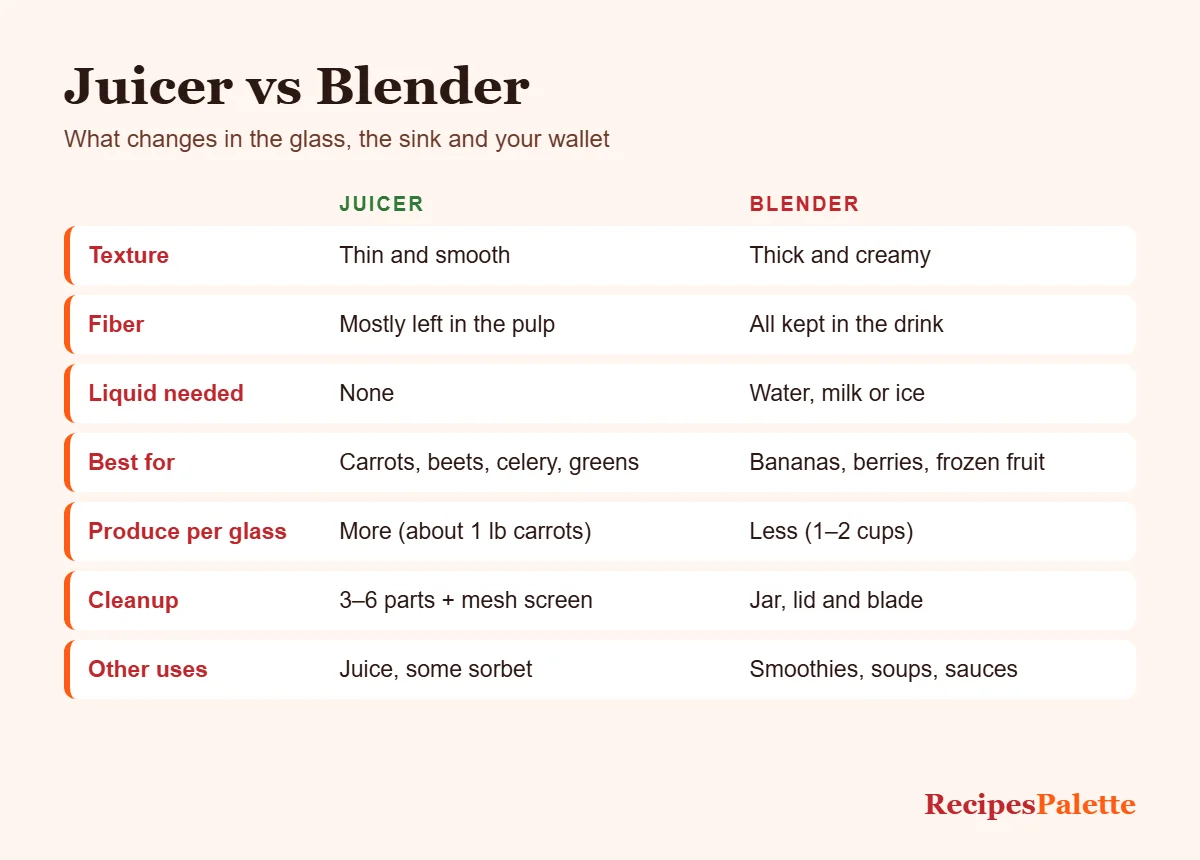
Juicer vs Blender at a Glance
| Juicer | Blender | |
|---|---|---|
| What it does | Pushes produce against a screen and splits juice from pulp | Spins blades to puree everything together |
| Texture | Thin, smooth, no bits | Thick, creamy, smoothie-like |
| Fiber | Most of it stays in the pulp bin | All of it stays in the drink |
| Liquid needed | None | Usually water, juice or ice to get it moving |
| Best produce | Carrots, beets, celery, apples, ginger, leafy greens | Bananas, berries, mango, avocado, frozen fruit |
| Cleanup | 3 to 6 parts, including a mesh screen | Jar, lid and blade, often dishwasher safe |
| Typical price | About $50 to $500+ | About $30 to $500+ |
| Other uses | Some make sorbet or nut milk | Smoothies, soups, sauces, dips, nut butter, crushed ice |
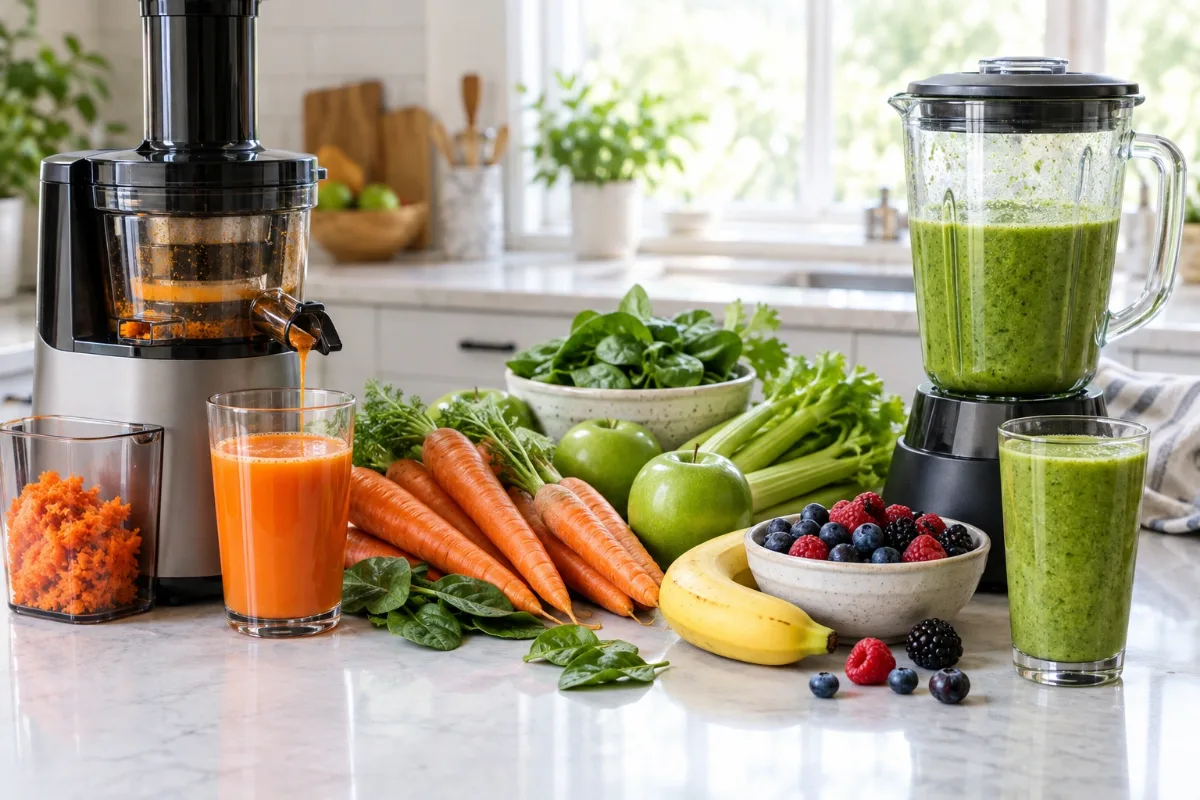
How a Juicer Works
A juicer is built to do one job: get liquid out of produce and leave the solids behind. There are two main types you will see in stores.
Centrifugal juicers
A centrifugal juicer has a flat cutting disc that spins very fast, usually several thousand rotations per minute. You push whole or halved produce down a wide feed chute, the disc shreds it, and the spinning force throws the juice through a fine mesh basket. The pulp shoots into a separate bin. These machines are quick, often finishing a glass in under a minute, and they tend to be cheaper. The trade-off is noise, more foam on top of the juice, and lower yield from soft leafy greens.
Masticating (slow or cold press) juicers
A masticating juicer uses a slow-turning auger, a thick screw that crushes and presses produce against a screen. It runs at a low speed, so it is quieter and makes less foam. It is much better with kale, spinach, wheatgrass and herbs, and it usually squeezes more juice from the same bag of produce. It is also slower to use and costs more.
A third, simpler group is the citrus juicer: a reamer cone, either manual or electric, that only works for oranges, lemons, limes and grapefruit.
How a Blender Works
A blender has a jar with a fast blade at the bottom. The blade pulls food down into a vortex and chops it into smaller and smaller pieces until it turns into a puree. Nothing gets removed. Peel you leave on, seeds, pulp and fiber all end up in the glass.
Because nothing drains away, a blender needs liquid to work. A blender full of chopped carrots and nothing else will just spin and stall. You add water, coconut water, milk, yogurt or ready-made juice so the blade can move the food around. That is why blender drinks are thicker and why they taste a little milder: the fruit is diluted with whatever liquid you added.
A good blender is one of the most flexible appliances in a kitchen. The same jar that makes a breakfast smoothie can blend a soup, whip up a salsa or crush ice.
Texture, Taste and Fiber: The Real Difference
The biggest difference between juicer and blender drinks is not taste. It is texture.
- Juicer drinks are thin and clear. They taste bright and strong because nothing is added. A glass of carrot juice from a juicer tastes like pure carrot.
- Blender drinks are thick and filling. They taste rounder and milder, and you notice the body of the fruit. A blended carrot drink is closer to a cold soup unless you strain it.
Fiber is the other key difference. A juicer sends most of the fiber into the pulp bin. A blender keeps all of it in the drink. Some people prefer the lighter feel of juice, others want the fuller drink a blender gives. Neither is right or wrong; it depends on what you want in the glass. If you are wondering whether juice can stand in for a meal, our guide on whether juicing can replace meals covers that question.
Which Produce Works Best in Each Machine
Each machine has foods it handles well and foods it struggles with. This is often the deciding factor.
Best in a juicer
- Hard vegetables: carrots, beets, celery, cucumber, fennel
- Firm fruit: apples, pears, pineapple
- Roots: ginger and fresh turmeric
- Leafy greens and wheatgrass (best in a masticating juicer)
Best in a blender
- Soft fruit: bananas, mango, ripe peaches, berries
- Creamy foods: avocado, yogurt, nut butter, oats
- Frozen fruit and ice
- Anything you want to keep thick, like a smoothie bowl
Poor matches
Bananas and avocados give almost no juice in a juicer and can clog the screen. On the other side, very fibrous foods like celery and ginger leave stringy bits in a blender drink unless you strain them. Sugarcane is a special case that needs its own method; see our guide on how to juice sugarcane at home.
Yield and Cost per Glass
A juicer needs more produce per glass. As a rough guide, one 8-ounce glass of carrot juice takes about 1 pound of carrots, and a glass of green juice can take a full bunch of celery or a large handful of greens. The rest becomes pulp. If you juice every day, that produce bill adds up.
A blender uses less produce per glass because nothing is thrown away and you add liquid. One banana, a cup of berries and a cup of milk or water make a full glass. So a blender is usually the cheaper way to make a fruit drink day to day.
The machines themselves overlap in price. Basic centrifugal juicers and basic blenders both start around $30 to $60. Good masticating juicers usually start near $150 and premium models go well past $400. High-power blenders sit in a similar top range.
Cleanup and Everyday Convenience
This is where many people decide. A blender has a jar, a lid and a blade. Rinse it right away, or blend warm water with a drop of dish soap for 30 seconds, and it is mostly clean. Many jars are dishwasher safe.
A juicer has more parts: the feed chute, the cutting disc or auger, the mesh screen, the bowl, and the pulp and juice containers. The mesh screen is the slow part. Fibers stick in the tiny holes and need a stiff brush. If you let it dry, it becomes much harder to clean. For many home cooks, cleanup is what decides whether a juicer gets used every week or ends up in a cupboard.
Clean produce matters as much as clean equipment. Because fresh juice is not cooked or pasteurized, wash everything well and drink it soon. Our juicing safety tips explain how long fresh juice keeps and how to store it.
Can You Make Juice in a Blender?
Yes. You can get juicer-style juice from a blender with one extra step: straining. It works well for most fruits and softer vegetables.
- Chop the produce into 1-inch pieces. Peel tough skins like pineapple and remove hard pits.
- Add a little liquid, about 1/2 cup of cold water per 2 cups of produce. Use less if you want a stronger juice.
- Blend on high for 45 to 60 seconds until completely smooth.
- Strain through a nut milk bag, a fine-mesh sieve or a double layer of cheesecloth set over a bowl.
- Squeeze the bag or press the pulp with a spoon to get the last of the juice out.
- Serve cold or store in a sealed glass jar in the fridge and drink within 24 hours for the best flavor.
The result is close to juicer juice, slightly lighter in flavor because of the added water. It is a great way to try juicing before you spend money on a juicer. Keep the pulp: it can go into muffins, crackers, soups or veggie burgers.
Juicer and Blender Combos: Worth It?
Some brands sell 2-in-1 machines with a juicer attachment and a blender jar on one motor base. They save counter space and cost less than buying two machines. The catch is that each function is usually weaker than a dedicated machine. The juicing part is almost always centrifugal, so it does a poor job with leafy greens, and the blender part often has a smaller motor. A combo makes sense for a small kitchen and occasional use. If you plan to juice greens daily or blend frozen fruit often, two separate machines will serve you better.
Which One Should You Buy?
Choose a juicer if:
- You want thin, smooth juice from carrots, beets, celery or greens
- You plan to make fresh juice several times a week
- You do not mind 5 to 10 minutes of cleanup each time
- You already own a blender for smoothies
Choose a blender if:
- You prefer thick smoothies and like a drink that feels like a snack
- You want one appliance that also does soups, sauces and ice
- You want faster cleanup and lower produce costs
- You only want juice now and then, and can strain it
Get both if:
You enjoy both drinks and have the space. Many home cooks use a blender on busy mornings and a juicer on weekends when they have time to prep and clean.
Tips for Better Results With Either Machine
- Chill the produce first. Cold fruit makes colder, fresher-tasting juice and smoothies without extra ice.
- Balance sweet and green. A good starting ratio is about 2 parts vegetables to 1 part fruit. One green apple or a squeeze of lemon makes greens taste far better.
- Alternate soft and hard produce in a juicer. Feeding a handful of spinach between two carrot pieces pushes the leaves through and raises yield.
- Put liquid in the blender first. Liquid at the bottom, soft food in the middle and frozen items or ice on top helps the blade catch everything.
- Rinse right away. Whether you use a juicer or blender, a 30-second rinse right after use saves 10 minutes of scrubbing later.
- Drink fresh juice soon. Fresh juice tastes best within a few hours and should be kept cold.
Frequently Asked Questions
Is a juicer better than a blender?
Not overall. A juicer is better for clear, smooth juice from vegetables and greens. A blender is better for smoothies and is more useful for everyday cooking. The right one depends on which drink you want most.
Can a blender replace a juicer?
For occasional juice, yes. Blend the produce with a little water and strain it through a nut milk bag or fine sieve. For daily green juice or large batches, a juicer is faster and gives a stronger, smoother result.
Is blending or juicing better for fiber?
Blending keeps all the fiber in the drink because nothing is removed. Juicing leaves most of the fiber behind in the pulp. If you want to keep it, add some pulp back into the juice or use it in baking.
What is the difference between a cold press juicer and a blender?
A cold press (masticating) juicer slowly crushes produce and separates juice from pulp. A blender spins fast and blends everything together. Cold press juice is thin and smooth; blender drinks are thick unless strained.
Can you put a whole apple in a blender?
You can, but core it first and cut it into chunks. Apple seeds and the hard core make a gritty drink. In most juicers you can feed apple halves or quarters straight in, depending on the chute size.
Which is easier to clean, a juicer or a blender?
A blender. It has fewer parts and no fine mesh screen. A juicer takes longer because pulp sticks to the screen, so rinse it right after each use.
Still deciding? Start with the blender you already have and the straining method above. If you find yourself making juice several times a week, that is the sign a dedicated juicer will be worth the counter space.