
Is GreenPan Dishwasher Safe?

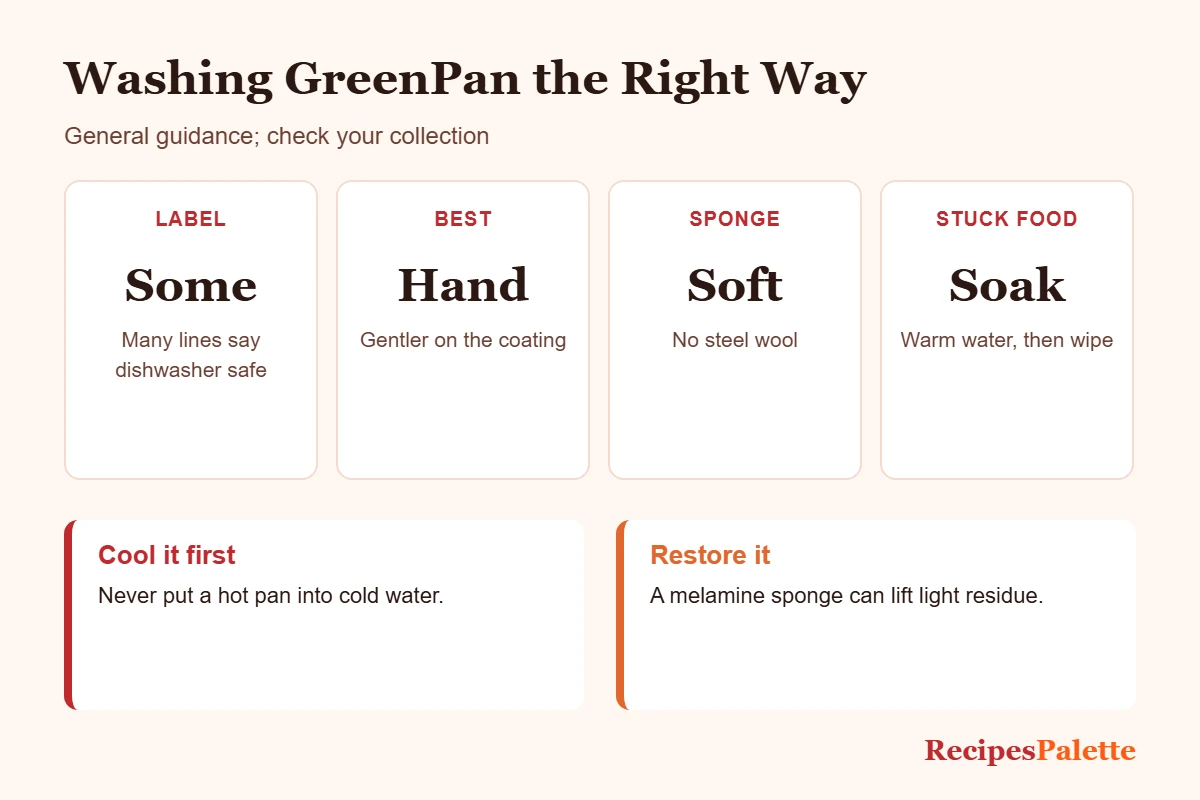
Many GreenPan collections are labeled dishwasher safe, but GreenPan and most cookware experts still recommend hand washing to help the ceramic nonstick coating last longer. Dishwasher detergents are abrasive and alkaline, and the long hot cycles can slowly dull the coating and the outside finish. Some lines, such as those with special exterior finishes or wooden handles, should always be hand washed.
Here is what to know about putting GreenPan in the dishwasher, the best way to wash it by hand, and how to remove stuck-on food and stains.
What GreenPan Says About the Dishwasher
GreenPan makes a large number of collections, and care instructions vary between them. In general:
- Many stainless steel and hard-anodized GreenPan lines are listed as dishwasher safe.
- The brand’s care guidance generally favors hand washing to keep the Thermolon ceramic coating in its best condition.
- Pans with wooden handles, special colored exteriors or other delicate details may be hand wash only.
Check the box, the product page or the care leaflet for your specific collection. When in doubt, hand wash.
Why Hand Washing Is Better for Ceramic Coatings
GreenPan uses a ceramic nonstick coating made with a sol-gel process. Like other ceramic coatings, it is slick when new but more sensitive to wear than bare metal. In the dishwasher:
- Detergent is abrasive. Small particles and strong alkaline chemicals can wear down the surface over time.
- High heat and long cycles add stress. Repeated hot washes and drying can affect the coating and exterior finish.
- Pans knock against other items. Contact with forks, racks and other pans can scratch or chip the coating.
- Exterior colors can fade. Painted and colored outsides may dull or discolor.
The result is not instant damage, but a coating that loses its slickness sooner. Since GreenPan pans are quick to clean by hand, hand washing is usually worth the extra minute.
How to Hand Wash GreenPan
- Let the pan cool. Wait until it is warm or at room temperature. Putting a hot pan into cold water can warp it and stress the coating.
- Rinse off loose food. Use warm water.
- Wash with mild soap. Use a soft sponge or dishcloth and regular dish soap.
- Rinse well. Leftover soap can leave a film that affects cooking.
- Dry right away. Use a towel, especially on stainless steel and hard-anodized exteriors, to avoid water spots.
Avoid steel wool, scouring powders and harsh scrub pads. These can scratch the ceramic surface.
How to Remove Stuck-On Food
- Soak: Fill the cooled pan with warm, soapy water and let it sit for 15 to 30 minutes. Most residue will then wipe away.
- Simmer water: For burnt bits, add a little water to the pan, bring it to a gentle simmer for a few minutes, let it cool, and wipe clean.
- Baking soda paste: Mix baking soda and water, spread it on the spot, wait a few minutes, then rub gently with a soft sponge.
How to Remove Carbonized Residue
Over time, a thin layer of burnt oil can build up on ceramic pans. It looks like brown or dark patches and makes food stick. To remove it:
- Make sure the pan is cool.
- Use a melamine foam sponge (often sold as a “magic eraser”) with a little water. GreenPan has recommended this type of sponge for removing residue.
- Rub gently over the stained area.
- Wash with soap and water and dry.
Our full guide on how to clean a GreenPan frying pan goes into more detail on stains and restoration.
Habits That Keep GreenPan Nonstick for Longer
- Use low to medium heat. Ceramic coatings do not need high heat, and overheating shortens their life.
- Skip aerosol cooking sprays. They leave a sticky film that builds up. Use a little oil or butter.
- Use wooden, silicone or nylon utensils. Avoid metal tools, even if a line is labeled metal-utensil safe.
- Do not cut food in the pan.
- Store with protectors. Place a cloth or pan protector between stacked pans.
For more on ceramic cookware care, see our guide on how to use and care for ceramic pans.
Is GreenPan Safe?
GreenPan markets its Thermolon coating as made without PFAS, PFOA, lead and cadmium. Like any nonstick pan, it should be used within its recommended heat range and replaced once the coating is chipped or peeling. Read more in is GreenPan non-toxic?.
Dishwasher vs Hand Washing at a Glance
| Dishwasher | Hand washing | |
|---|---|---|
| Convenience | High | A minute or two per pan |
| Coating wear | Faster | Slower |
| Exterior finish | Can dull or fade | Stays brighter |
| Risk of scratches | Higher (contact with other items) | Lower |
| Allowed? | Only if your collection says so | Always |
If You Do Use the Dishwasher
If your GreenPan line is dishwasher safe and you prefer the convenience, these steps reduce wear:
- Scrape off food first so the pan does not need a heavy cycle.
- Place the pan so it does not touch other items.
- Use a gentle or eco cycle rather than a heavy-duty or sanitizing cycle.
- Skip heated drying if your dishwasher allows it.
- Remove the pan promptly and dry any water spots.
When to Replace a GreenPan
Replace the pan if the coating is chipped, peeling or flaking, or if food sticks across the whole surface even after a careful clean. A badly warped base that rocks on the stove is another sign it is time.
How to Clean the Outside of a GreenPan
Exteriors pick up grease splatters and heat stains, especially on gas stoves. The cleaning method depends on the finish:
- Hard-anodized exteriors: Wash with warm soapy water and a soft sponge. A paste of baking soda and water helps with brown spots. Avoid harsh powders that can dull the finish.
- Stainless steel exteriors: A stainless steel cleanser or a little white vinegar removes rainbow heat tint. Wipe in the direction of the grain.
- Colored or painted exteriors: Use only mild soap and a soft cloth. Avoid abrasives and the dishwasher if possible.
Keeping gas flames under the base, not licking up the sides, prevents most exterior stains.
A Simple Weekly Routine
- After each use: let it cool, wash with mild soap and a soft sponge, dry.
- Once a week or when food starts to cling: give it a gentle baking soda or melamine sponge clean.
- Before storing: make sure the pan is dry and place a protector between stacked pans.
This short routine prevents the residue buildup that makes ceramic pans seem worn before their time. A little care each week adds noticeably to how long a ceramic pan stays slick.
GreenPan Care by Material
| Part | Care |
|---|---|
| Ceramic cooking surface | Soft sponge, mild soap, no abrasives; melamine sponge for residue |
| Hard-anodized body | Hand wash; baking soda paste for brown marks |
| Stainless steel body | Hand wash; stainless cleanser for heat tint |
| Glass lids | Often dishwasher safe; avoid sudden temperature changes |
| Wooden handles | Hand wash only; dry right away |
Cooking Habits That Make Cleaning Easier
- Use medium heat. Lower heat means less burnt-on residue.
- Add a little fat. A teaspoon of oil or butter prevents sticking without building up like spray.
- Deglaze while warm. A splash of water in the warm pan after cooking loosens bits so the pan wipes clean.
- Do not let sugary sauces burn. Caramelized sugar is one of the hardest residues to remove from ceramic.
These habits reduce scrubbing and help the coating stay slick for longer.
Frequently Asked Questions
Can GreenPan lids go in the dishwasher?
Glass lids with stainless rims are often dishwasher safe. Check the care guide for your set.
Why is my GreenPan sticking after the dishwasher?
Detergent wear and residue buildup can reduce nonstick performance. Clean it with a soft sponge and baking soda, and switch to hand washing.
Can I use Bar Keepers Friend on GreenPan?
Some people use it on stainless exteriors. Avoid using abrasive cleansers on the ceramic cooking surface.
How often should I deep clean a GreenPan?
Whenever you notice brown residue or food starts to stick. Regular gentle cleaning prevents buildup.
Can I soak a GreenPan overnight?
A few hours of soaking in warm soapy water is fine. Avoid leaving it soaking for days.
The Bottom Line
Many GreenPan collections are labeled dishwasher safe, but hand washing is the better choice for keeping the ceramic coating slick. Let the pan cool, wash it with mild soap and a soft sponge, dry it right away, and use low to medium heat with soft utensils. Always check the care guide for your collection.