Is GreenPan Non-Toxic? An Honest Look at the Brand

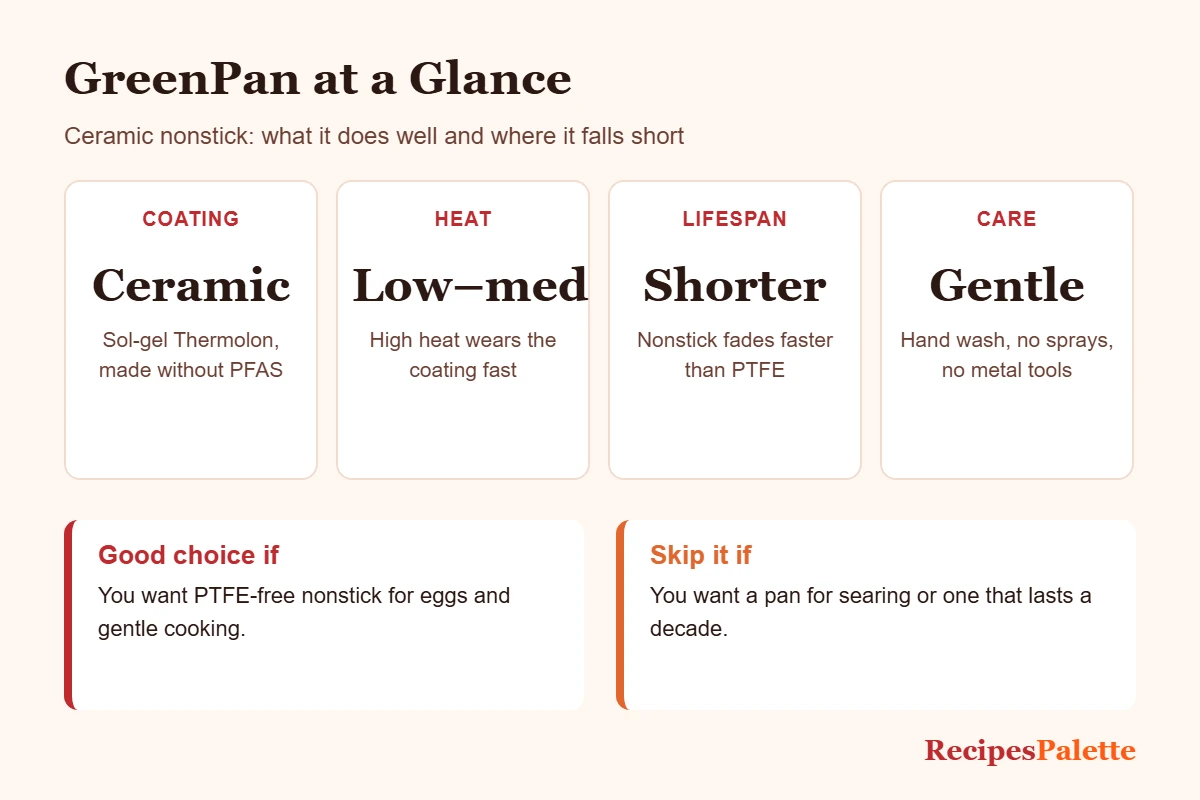
GreenPan is generally considered a safe, non-toxic option for everyday cooking. Its pans use a ceramic nonstick coating (which the brand calls Thermolon) that is made without PFAS, including PTFE (the material in traditional “Teflon” nonstick) and PFOA. The tradeoff is durability: ceramic coatings lose their nonstick quality faster than PTFE, especially with high heat, cooking sprays or the dishwasher. Used on low to medium heat and cared for gently, GreenPan is a reasonable choice for people who want to avoid PTFE.
“Non-toxic” is a marketing word, not a regulated term, so it is fair to ask what it actually means for GreenPan. This guide explains what the coating is made of, how it compares to traditional nonstick, what the honest downsides are, and how to get the longest life out of a ceramic pan.
What Is GreenPan?
GreenPan is a cookware brand founded in Belgium in 2007. It was one of the first companies to sell ceramic nonstick pans widely as an alternative to PTFE nonstick. Today it sells many lines, with bodies made from aluminum, hard-anodized aluminum or stainless steel, all with a ceramic nonstick cooking surface.
The brand also makes pans for other companies and lines sold under different names, so you may see similar ceramic coatings on other cookware too.
What Is GreenPan’s Coating Made Of?
GreenPan’s Thermolon coating is a sol-gel ceramic. In simple terms, a liquid mixture based on silica (the main component of sand and glass) is sprayed onto the pan and cured with heat, forming a thin, hard, glassy layer. It is not solid ceramic like a stoneware dish; it is a coating on top of metal.
According to the company, the coating is made without PFAS, PFOA, lead or cadmium. That is the main reason people choose it.
Ceramic Nonstick vs PTFE Nonstick
| Ceramic (GreenPan, others) | PTFE (“Teflon”-type) | |
|---|---|---|
| Main material | Silica-based sol-gel coating | Polytetrafluoroethylene, a fluoropolymer (PFAS) |
| Contains PFAS | No (per manufacturers) | Yes, PTFE is a type of PFAS |
| Heat concern | Coating wears faster at high heat | Can release fumes if overheated above about 500°F (260°C) |
| Nonstick performance when new | Very good | Excellent |
| How long the nonstick lasts | Often 1–3 years of regular use | Often 3–5 years of regular use |
| Oven-safe | Often higher than PTFE; check the line | Usually lower; check the line |
The key safety difference is what happens when a pan is overheated. PTFE can start to break down and release fumes at very high temperatures, which is why PTFE pans should never be heated empty on high. Ceramic coatings do not release those fluorinated fumes, but they do lose their slickness when overheated. For a broader look at nonstick safety, see are all non-stick frying pans bad for you.
Is GreenPan Really Non-Toxic?
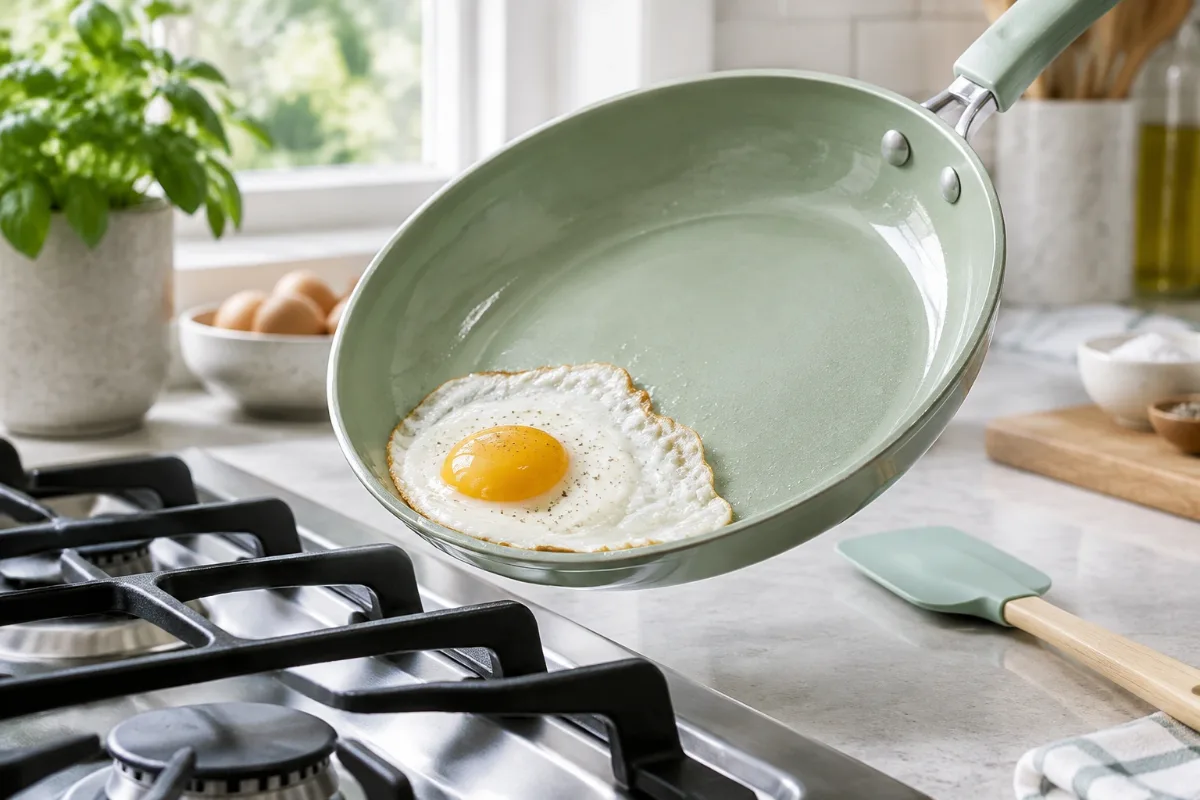
Based on what is publicly known, GreenPan’s ceramic coating is considered safe for normal home cooking. It avoids the PFAS chemicals that worry many shoppers, and it does not produce fluorinated fumes if overheated.
A few honest caveats:
- “Non-toxic” is not a regulated label. Any brand can use it. It usually means “made without certain chemicals,” not that every ingredient has been studied in depth.
- Sol-gel recipes are proprietary. Companies do not publish the full list of ingredients in their coatings, so independent researchers have limited data on long-term wear.
- Damaged coatings should be replaced. Once any nonstick coating is badly scratched, flaking or worn through, it is time for a new pan.
- Marketing claims have been questioned. Ceramic cookware brands, GreenPan included, have faced criticism and legal challenges in the US over how their “non-toxic” marketing is worded. That does not mean the pans are unsafe, but it is a reminder to read claims carefully.
If you want cookware with no coating at all, consider stainless steel, cast iron, carbon steel or enameled cast iron. Our guide on what is the safest cookware compares them.
Is GreenPan a Good Brand?
GreenPan is a popular, widely available brand with many price points, from budget sets to premium lines with stainless steel or hard-anodized bodies and induction-ready bases. Whether it is good for you depends on what you expect from a nonstick pan.
What owners tend to like
- Very easy release when the pan is new, especially for eggs and pancakes.
- PTFE-free coating for people who want to avoid PFAS.
- Many lines are oven-safe to higher temperatures than typical PTFE pans.
- Attractive designs and colors, and many sizes and sets.
Common complaints
- The nonstick effect fades, sometimes within a year of daily use, especially if the pan is used on high heat.
- Food can start to stick in the center first, where heat is strongest.
- Coatings can stain or discolor over time.
- Cheaper lines with thin aluminum bodies can warp.
These issues are not unique to GreenPan. They are typical of ceramic nonstick in general, and most come down to heat and care.
How to Make a GreenPan Last Longer
- Use low to medium heat. This is the single biggest factor. Ceramic pans heat efficiently, so you rarely need high heat.
- Skip cooking sprays. Aerosol sprays leave a sticky residue that builds up and ruins the nonstick surface. Use a little butter or oil instead.
- Do not preheat empty for long. Add oil or food soon after you turn on the heat.
- Use wooden, silicone or nylon utensils. Metal can scratch the coating.
- Let it cool before washing. Plunging a hot pan into cold water can stress the coating and warp the pan.
- Hand wash with a soft sponge. Even if a line is labeled dishwasher-safe, hand washing helps the coating last longer.
- Stack carefully. Place a paper towel or pan protector between stacked pans.
For step-by-step cleaning, including how to remove sticky residue, see how to clean a GreenPan frying pan. For oven use, see can a GreenPan frying pan go in the oven.
Does GreenPan Work on Induction?
Some lines do and some do not. GreenPan pans with stainless steel bodies or a magnetic base plate work on induction; plain aluminum bodies do not. Check the product listing or the base for an induction symbol, or do the magnet test: if a fridge magnet sticks firmly to the bottom, it will work. See what cookware works on induction for more.
GreenPan vs Other Cookware Choices
| If you want… | Consider |
|---|---|
| PTFE-free nonstick for eggs | GreenPan or another ceramic nonstick pan |
| A pan that lasts decades | Clad stainless steel, cast iron or carbon steel |
| High-heat searing | Cast iron or carbon steel |
| The longest-lasting nonstick | A good PTFE pan used on low to medium heat |
| No coating at all | Stainless steel, cast iron, carbon steel, enameled cast iron or glass |
For a full comparison, see best pan materials compared.
Frequently Asked Questions
Does GreenPan contain PFAS?
According to GreenPan, its Thermolon ceramic coating is made without PFAS, including PTFE and PFOA.
Is GreenPan safe at high heat?
It will not release fluorinated fumes like overheated PTFE, but high heat damages the ceramic coating and shortens the pan’s nonstick life. Use low to medium heat.
Why is my GreenPan sticking?
Usually because of high heat, cooking spray residue or general wear. A thorough clean to remove residue sometimes helps; if the coating is worn, the pan has reached the end of its nonstick life.
How long does a GreenPan last?
It varies with use and care. Many people get one to a few years of good nonstick performance. Gentle heat and hand washing help it last longer.
Is GreenPan better than Teflon?
It depends on your priorities. GreenPan avoids PFAS, which many people prefer. Traditional PTFE pans usually stay nonstick longer. Both are safe for normal cooking when used correctly.
Is a scratched GreenPan safe to use?
Light surface marks are mostly a performance issue. If the coating is chipping, flaking or worn through to the metal, replace the pan.
The Bottom Line
GreenPan is a sensible choice if you want nonstick cookware without PTFE or other PFAS. Its ceramic coating is considered safe for everyday cooking, but it is less durable than traditional nonstick and needs gentle care: low to medium heat, no cooking sprays and hand washing. If you want a pan that lasts for decades, pair a GreenPan for eggs with stainless steel or cast iron for everything else.