
Manual Vegetable Chopper Maintenance: Cleaning, Blade Care, and Storage

Quick Answer
Proper manual vegetable chopper maintenance means cleaning the bowl and blades after every use, protecting the pull-cord mechanism from water, and drying all components before storage. Use warm, soapy water and a soft brush rather than scrubbing sharp edges with your fingers. Follow the manufacturer’s instructions for dishwasher safety and the FDA food safety guidance for cleaning kitchen utensils.
Essential Maintenance Steps
- Disassemble carefully: Remove the lid and lift the blade assembly by its plastic stem.
- Wash after use: Clean removable food-contact components with warm, soapy water.
- Protect sharp blades: Remove food residue with a soft cleaning brush.
- Protect the mechanism: Never immerse a pull-cord lid unless its manufacturer specifically permits it.
- Dry completely: Allow components to dry before assembling or storing them.
- Inspect regularly: Check for blade damage, cracked plastic, or a fraying pull cord.
Before the Next Use
- Check assembly: Make sure the blade rotates freely and the lid locks securely.
- Check cleanliness: Confirm that no residue or moisture remains in the bowl.
A manual vegetable chopper makes everyday food preparation easier, but its small moving parts need regular care. Onion residue, moisture, and incorrect cleaning can affect performance long before the tool looks worn out.
I’m Daniel Hartman, and in this guide, I’ll explain how to care for the blades, container, lid, and pull-cord system. You’ll also learn how to recognize problems before they make the chopper unsafe.
What Is Manual Vegetable Chopper Maintenance?
Manual vegetable chopper maintenance is the routine cleaning, inspection, and storage of a hand-operated food-chopping tool. It helps maintain cutting performance, food hygiene, and the condition of its moving components.
Most manual choppers contain several parts that need different kinds of care.
- Cutting blades: Stainless steel edges that chop vegetables as they rotate or move downward.
- Blade holder: A plastic or metal support that connects the blades to the operating mechanism.
- Collection bowl: A container that holds ingredients during chopping.
- Pull-cord or push mechanism: The component that transfers manual force to the blades.
- Lid and seals: Parts that secure the container and reduce ingredient leakage.
Not every vegetable chopper has a pull cord. Push-down choppers and hinged dicing-grid models require slightly different cleaning procedures.
The principle remains the same: clean food-contact parts, protect sharp edges, and keep the operating mechanism working smoothly.
How Do You Clean a Manual Vegetable Chopper After Each Use?
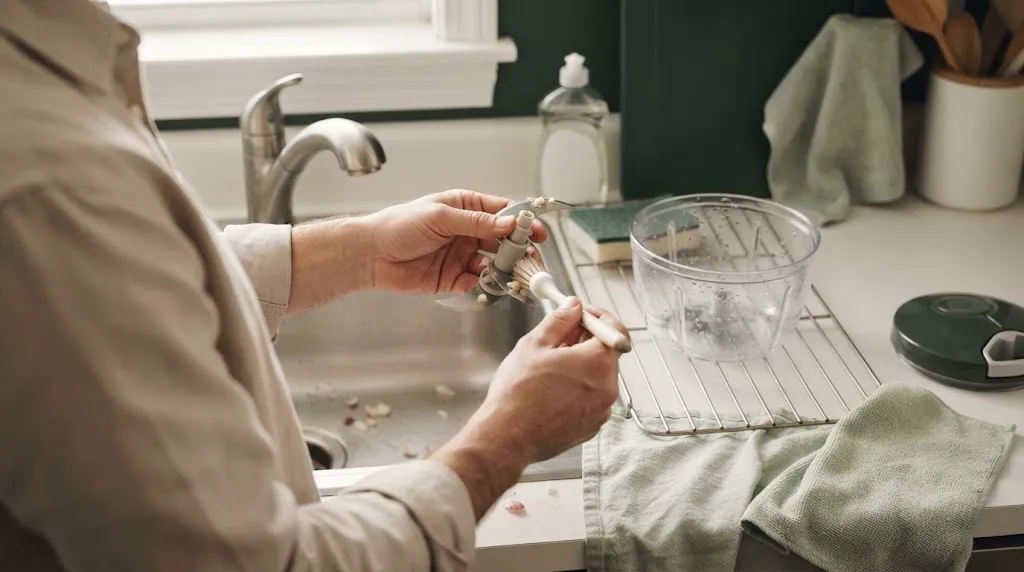
Disassemble the chopper, remove food particles, wash permitted components, and dry everything before storage. Cleaning immediately after chopping prevents food residue from hardening around the blades.
Step 1: Empty and Disassemble the Chopper
Place the chopper on a stable countertop and remove the lid. Empty the chopped ingredients before taking out the blade assembly.
Hold the removable blade unit by its designated handle or plastic stem. Never grip the sharpened metal edges.
- Remove detachable attachments according to the product instructions.
- Keep exposed blades separate from other dishes.
- Check the bowl corners for trapped ingredients.
- Set the lid aside to clean separately.
Step 2: Wash the Bowl With Mild Dish Soap
Use warm water, mild dishwashing liquid, and a nonabrasive sponge. Clean the bottom corners, rim, and any grooves where chopped vegetables collect.
A soft sponge is generally suitable for clear plastic bowls. Avoid steel wool and harsh abrasive powders that can scratch the surface.
Rinse thoroughly with clean running water. Check the bowl for remaining grease or residue before drying.
Step 3: Clean the Stainless Steel Blades
Hold the blade assembly by its safe gripping point and rinse away loose vegetables. Use a soft cleaning brush to remove pieces caught near the center shaft.
Brush away from exposed cutting edges whenever possible. Do not run your fingers along a blade to check whether it is clean.
- Clean between curved blade sections.
- Remove food around the central blade holder.
- Rinse until no soap or food particles remain.
- Place the blade assembly somewhere secure to dry.
Safety tip: Never leave loose chopper blades hidden beneath soapy sink water. An unseen sharp edge can cause serious cuts.
Step 4: Clean the Lid Without Damaging the Mechanism
Pull-cord lids need particular attention because their internal components may not be waterproof. Many manufacturers recommend wiping these lids instead of immersing them.
Clean the accessible lid surfaces with a lightly dampened, soapy cloth. Follow with a clean damp cloth to remove detergent.
Keep water away from the pull-cord opening and internal spring housing. Don’t attempt to open a sealed mechanism unless the manufacturer provides instructions.
For example, Tefal’s 5 Second Chopper guidance recommends cleaning the lid with a sponge without immersing it in water.
Step 5: Dry Every Component Before Storage
Place washed components on a clean drying rack with adequate airflow. Keep sharp blades positioned so nobody can accidentally touch them.
Check hidden areas around the blade holder and bowl rim. Moisture left in these areas can encourage unpleasant odors and corrosion.
Only reassemble the chopper once its components are completely dry.
Which Chopper Parts Can Go in the Dishwasher?
Dishwasher compatibility depends on the exact manufacturer and component. Never assume the entire vegetable chopper is dishwasher-safe because its bowl can handle machine washing.
Some Tefal models permit dishwasher cleaning for their bowls and blades. Other products, including the Salter Pull Chopper, specify hand washing only.
| Component | Preferred Care | Dishwasher Guidance |
|---|---|---|
| Plastic bowl | Warm, soapy water | Only when approved |
| Stainless steel blades | Careful hand washing | Model-specific |
| Pull-cord lid | Damp cloth or sponge | Avoid unless approved |
| Blade holder | Soft brush and soap | Check manufacturer |
| Rubber seals | Gentle cleaning | Only when approved |
As of 2026, dishwasher instructions still vary across manual chopper designs. The care manual supplied with your individual product should take priority over general advice.
How Do You Keep Vegetable Chopper Blades Sharp?
The simplest way to preserve sharp blades is to avoid excessive force, abrasive cleaning, and unsuitable ingredients. Regular inspection matters more than attempting frequent sharpening.
Avoid Ingredients That Overload the Blades
Manual choppers are generally intended for ingredients that their blades and operating systems can handle comfortably. Hard, frozen, or oversized pieces can strain the blade assembly.
- Carrots: Cut into smaller chunks before processing.
- Onions: Quarter large onions instead of forcing them into a small bowl.
- Herbs: Remove tough stems when the model cannot process them.
- Frozen ingredients: Avoid unless the manufacturer explicitly allows them.
- Bones and hard pits: Never process unless the equipment is specifically designed for that purpose.
Inspect Blade Condition Regularly
Look for bent sections, loose connections, chipped edges, and corrosion. These problems can affect both cutting performance and safety.
If the blade assembly appears damaged, stop using it. Obtain a manufacturer-approved replacement rather than attempting to straighten or modify the metal.
Should You Sharpen Manual Chopper Blades?
Most small removable chopper blades aren’t designed for routine home sharpening. Their curved shapes and compact mounting systems make consistent sharpening difficult.
Avoid using powered grinders or improvised sharpening methods on delicate blade assemblies. Contact the manufacturer about replacement parts when cutting performance declines despite proper cleaning and use.
A useful diagnostic distinction is whether the blades rotate freely but cut poorly. If rotation is difficult, investigate overloading or mechanical resistance before assuming the edges are dull.
How Can You Maintain a Pull-Cord Vegetable Chopper?
Protect the pull cord from moisture, avoid abrupt force, and keep the blade assembly free from obstructions. Never continue pulling when the mechanism feels jammed.
Prevent Pull-Cord Wear
Use smooth, controlled pulls rather than aggressive jerking. Let the cord retract naturally without releasing the handle so abruptly that it snaps back.
Secure the lid properly before operating the mechanism. A loose lid can interfere with alignment and create unnecessary resistance.
- Never pull beyond the cord’s designed extension.
- Avoid twisting the handle while pulling.
- Reduce the ingredient load if the cord feels unusually tight.
- Check for visible fraying or uneven cord retraction.
- Stop using the mechanism if it becomes damaged.
What if Water Gets Inside the Pull-Cord Lid?
Stop using the chopper until the problem has been assessed. Do not pull the mechanism repeatedly to force water out or attempt to dismantle a sealed spring housing.
Follow the manufacturer’s drying or service instructions. Replace the lid if internal moisture, corrosion, or mechanical malfunction cannot be safely resolved.
Should You Lubricate the Pull Mechanism?
Do not apply household cooking oil, general-purpose lubricants, or sprays to a sealed food chopper mechanism. These products can attract residue or enter food-contact areas.
Only lubricate a component when the manufacturer specifically instructs you to do so. A damaged or sticking sealed mechanism may require replacement instead.
How Do You Remove Vegetable Stains and Odors?
First remove all trapped food, then wash the affected components thoroughly with mild detergent. Persistent odors often come from residue hidden around rims, joints, or blade holders.
Removing Onion and Garlic Smells
Onion and garlic aromas can remain in plastic containers even after a quick rinse. Thorough washing and complete air-drying often help reduce these odors.
- Remove visible residue from the blade hub and bowl corners.
- Wash the bowl with mild dish soap.
- Rinse thoroughly and allow the bowl to dry uncovered.
- Repeat cleaning if odors remain.
If the product’s material instructions allow it, a mild baking soda paste may help with lingering smells. Test a small area first and avoid abrasive scrubbing.
Removing Carrot and Tomato Stains
Carrots and tomatoes contain pigments that can discolor some plastic bowls. Staining does not automatically mean the surface is unhygienic.
Wash the container first and inspect it for scratches or embedded residue. Avoid strong solvents and concentrated bleaching products unless the manufacturer permits their use.
Important: Do not mix cleaning chemicals. Rinse away one cleaning product completely before using another.
How Often Should You Maintain a Manual Vegetable Chopper?
Clean food-contact components after every use. Perform additional checks periodically, especially when the chopper receives frequent use.
| Frequency | Maintenance Task |
|---|---|
| After every use | Wash food-contact parts, clean accessible lid surfaces, rinse, and dry. |
| Weekly, if used daily | Inspect hard-to-reach grooves, removable seals, and blade-holder connections. |
| Monthly, if used frequently | Examine blades, hinges, pull cord, and housing for wear or cracks. |
| Before extended storage | Clean, dry, protect the blade assembly, and store in a dry location. |
The weekly and monthly checks are practical suggested routines, not universal manufacturer requirements. Increase inspection frequency when the chopper experiences heavy use.
The FoodSafety.gov cleaning recommendations emphasize washing kitchen utensils after each use, particularly when working with raw foods.
Why Is My Manual Vegetable Chopper Not Working Properly?
Poor chopping usually results from overloaded ingredients, incorrect assembly, food obstructions, worn blades, or a damaged operating mechanism. Identify the cause before applying additional force.
The Blades Are Not Cutting Evenly
First check whether the bowl contains too many ingredients. Oversized pieces can prevent vegetables from moving freely around the blades.
- Reduce the amount of food in the bowl.
- Cut larger vegetables into smaller pieces.
- Confirm the blade assembly sits correctly.
- Inspect cutting edges for damage.
If the chopper rotates smoothly but repeatedly produces poor results, a replacement blade assembly may be necessary.
The Pull Cord Is Stuck
A jammed cord may indicate mechanical resistance or an incorrectly seated blade. Stop immediately rather than pulling harder.
Empty the bowl and check accessible components according to the manufacturer’s instructions. Never reach into the closed blade housing while the mechanism is under tension.
The Chopper Makes Unusual Noises
Grinding, scraping, or clicking sounds may indicate loose parts or incorrect alignment. Stop and inspect the removable components for visible damage.
Do not continue using a chopper that makes persistent abnormal noises. Contact the manufacturer if careful reassembly does not resolve the issue.
The Container Leaks or the Lid Will Not Close
Check for food stuck around the rim or a removable seal that is out of position. Inspect the container for cracks and warped edges.
Never force the lid shut. Replace damaged components with compatible manufacturer-approved parts.
What Maintenance Mistakes Should You Avoid?
Many chopper problems are preventable. The following mistakes can shorten product life or create avoidable safety risks.
- Leaving food overnight: Dried ingredients become harder to remove and may harbor contamination.
- Submerging the pull-cord lid: Water can enter mechanisms that aren’t designed for immersion.
- Cleaning blades with bare fingers: Sharp edges can cause cuts even when the tool is not operating.
- Overfilling the bowl: Excessive resistance can strain the cutting system.
- Using abrasive cleaners: Rough pads may scratch plastic and damage finishes.
- Storing wet parts: Trapped moisture can contribute to corrosion and odors.
- Using damaged blades: Cracks or loose metal components create a safety hazard.
For additional guidance on kitchen contamination prevention, consult the USDA cleanliness recommendations.
How Should You Store a Manual Vegetable Chopper?
Store the chopper clean, completely dry, and away from excess humidity. Keep removable cutting edges secured inside an approved protective cover or storage compartment.
Some manufacturers recommend storing the blade assembly inside its matching bowl. Follow that guidance only when the blade is properly positioned and cannot be touched accidentally.
- Use a clean, dry kitchen cabinet.
- Protect the blades from contact with other utensils.
- Keep the chopper out of children’s reach.
- Avoid stacking heavy cookware on plastic components.
- Store detachable accessories together when safe.
Before returning a stored chopper to service, examine the blades and operating mechanism. Wash food-contact parts again if they have gathered dust or become contaminated.
When Should You Replace a Manual Vegetable Chopper?
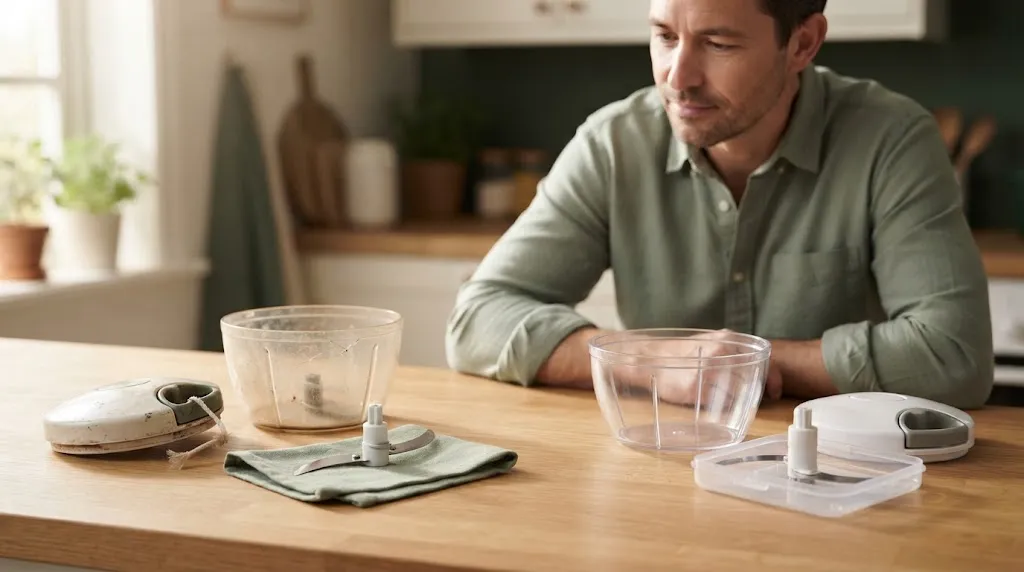
Replace a chopper when essential components are cracked, damaged, or no longer operate safely. Some models support replacement blades or lids, which may make replacing the entire unit unnecessary.
Look for these warning signs:
- Frayed or broken pull cord.
- Damaged or detached stainless steel blades.
- Cracked bowl or blade-holder components.
- Persistent mechanical jamming.
- Loose lid that cannot secure properly.
- Corrosion or inaccessible contamination that cannot be safely corrected.
Check replacement-part availability before purchasing another chopper. Compatible components can sometimes extend a tool’s useful life without replacing its undamaged parts.
Manual Vegetable Choppers Worth Considering
If your existing chopper cannot be repaired safely, consider a replacement with accessible cleaning instructions and removable components. These established models illustrate different maintenance priorities.
Affiliate disclosure: As an Amazon Associate, this website may earn from qualifying purchases at no additional cost to you.
Easy-Care Option
Tefal 5 Second Chopper
This manual pull-cord chopper features a removable blade assembly and bowl. Its manufacturer provides clear washing instructions and specifically warns against immersing the pull-cord lid. I favor that clarity when evaluating maintenance requirements.
Hand-Wash Option
Salter Pull Chopper
Salter’s pull chopper uses a manual cord mechanism and removable stainless steel blade attachment. Its instructions specify hand washing, careful blade cleaning, and dry storage. It’s worth considering if you prefer a straightforward hand-cleaning routine.
Dicing-Grid Alternative
RüK Vegetable Chopper
RüK offers vegetable choppers with interchangeable cutting attachments and collection containers. Its cleaning guidance covers blade grids, food-trapping grooves, and model-specific dishwasher requirements. Consider this style if you need dicing attachments rather than a pull cord.
These are product options, not hands-on tested rankings. Verify the exact model, seller, availability, and current customer reviews before purchasing.
Frequently Asked Questions
Can I wash a manual vegetable chopper in the dishwasher?
Some manual vegetable choppers have dishwasher-safe bowls and blade assemblies, while others require complete hand washing. Pull-cord lids often need sponge cleaning because their internal mechanisms are not waterproof. Check the care instructions for each component before using a dishwasher.
How do I prevent rust on vegetable chopper blades?
Wash blade assemblies promptly, rinse away detergent, and dry thoroughly before storage. Avoid leaving metal blades soaking in water. Inspect the blades regularly for corrosion, and replace visibly damaged components according to manufacturer guidance rather than attempting unsafe repairs.
Why is my manual vegetable chopper pull cord hard to pull?
The bowl may be overloaded, a vegetable piece may be blocking the blades, or the mechanism may be misaligned. Stop pulling and inspect accessible components safely. If the cord remains difficult to operate after proper reassembly, discontinue use and seek manufacturer support.
How often should I clean my vegetable chopper?
Clean food-contact parts after every use, including between different ingredients when necessary to prevent cross-contamination. Inspect the blade assembly and operating mechanism regularly. Allow cleaned components to dry completely before putting the chopper away.
Can I sharpen the blades of a manual vegetable chopper?
Some blades may be serviceable, but many compact chopper assemblies aren’t designed for home sharpening. Their curved edges can be difficult to sharpen safely and evenly. Check the manufacturer’s instructions and look for approved replacement blades if performance becomes noticeably worse.
Final Takeaway: Keep Your Chopper Clean, Dry, and Safe
Good manual vegetable chopper maintenance doesn’t require complicated tools. Careful cleaning, proper drying, gentle operation, and regular inspection handle most everyday maintenance needs.
Pay special attention to sharp blades and enclosed pull-cord mechanisms. If a component becomes damaged or unsafe, replace it rather than forcing the chopper to continue working.
Build these habits into your kitchen cleanup routine, and your chopper will have a better chance of staying reliable for future meal preparation.
