Vegetable Chopper With Container: How to Choose the Right One

Quick Answer
A vegetable chopper with container is a manual kitchen tool that cuts vegetables directly into a removable collection bowl. For most home cooks, I recommend a sturdy, non-slip chopper with stainless steel blades, a 4–5 cup container, and removable parts for cleaning. The Fullstar Pro Original is a strong everyday option, while Mueller offers more cutting functions. For food preparation, follow the FDA food safety guidance.
What matters most when buying
- Sharp cutting blades: Stainless steel grids help produce consistent cubes with less repeated cutting.
- Useful container size: A 4–5 cup bowl suits many everyday cooking tasks.
- Stable base: Non-slip feet help keep the tool steady during pressing.
- Simple cleanup: Removable grids and cleaning brushes make trapped food easier to remove.
- Comfortable operation: A broad handle and secure lid make repeated chopping more manageable.
My quick buying advice
- Daily cooking: Choose a straightforward push-down dicer with a medium collection container.
- Multiple cutting styles: Look for interchangeable slicing, grating, and dicing inserts.
- Small kitchens: A compact chopper with fewer parts is often easier to store.
Chopping onions, carrots, and peppers can take more time than the actual cooking. A vegetable chopper with container can make that part of dinner preparation easier and keep loose pieces off the counter.
I’m especially interested in tools that solve everyday problems without adding another difficult cleanup job. This guide explains which designs work best, which features matter, and where a regular knife still wins.
What Is a Vegetable Chopper With Container?
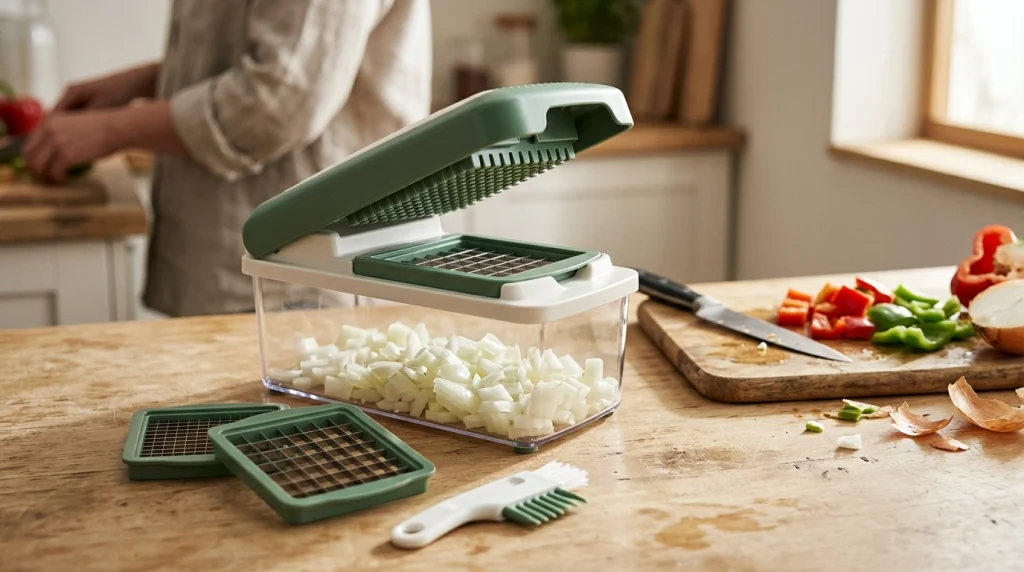
A vegetable chopper with container is a kitchen cutting tool with a built-in collection bowl. Most models push food through a sharp blade grid, allowing the chopped pieces to fall into the container below.
Some versions use a plunger or rotating blade instead. The main benefit is simple: you cut and collect ingredients using one compact tool.
How does a manual vegetable chopper work?
A push-down chopper uses hand pressure to move vegetables through a fixed cutting grid. The blades divide the food into smaller pieces, which drop into the lower container.
Here is the typical process:
- Wash and prepare the vegetables.
- Cut large vegetables into pieces that fit the blade area.
- Attach the desired cutting insert securely.
- Place the vegetable over the blade grid.
- Close the lid with controlled pressure.
- Remove the collection bowl when it becomes full.
This process works well with many onions, cucumbers, peppers, and potatoes. Harder vegetables may need smaller starting pieces or greater pressure.
What are the main parts?
- Cutting grid: Determines the size and shape of the chopped pieces.
- Pressing lid: Pushes the ingredients through the blades.
- Collection container: Catches chopped vegetables underneath.
- Non-slip base: Helps prevent movement on the counter.
- Cleaning accessories: Help remove food lodged between blade openings.
Not every model includes the same parts. Check the exact configuration before buying, especially when several versions share a product name.
Why Choose a Vegetable Chopper With a Container?
The biggest advantage is keeping repetitive cutting tasks organized. Instead of spreading ingredients across a cutting board, the tool catches them as you work.
There are several practical reasons to consider one.
Less mess during preparation
Chopped onion pieces tend to scatter when transferred from a cutting board. A container chopper collects them directly beneath the blades.
I think this is particularly useful when preparing several vegetables for soup, salsa, or stir-fry. You can empty each batch into a mixing bowl and continue working.
More consistent vegetable pieces
A fixed cutting grid produces pieces with similar dimensions when vegetables pass through properly. Consistent cuts can help ingredients cook more evenly.
However, it does not guarantee identical results with every ingredient. Soft tomatoes may squash, while very hard vegetables can resist the blades.
Potentially faster batch preparation
A manual chopper can reduce repeated knife movements when you need large amounts of diced vegetables. That advantage becomes more noticeable during batch cooking.
But speed depends on the job. If you’re cutting only half an onion, washing several chopper parts may take longer than using a knife.
More organized meal preparation
The collection bowl creates a temporary holding space for ingredients. This can help when preparing different components for a recipe.
It is still important to move perishable chopped vegetables into appropriate refrigerated storage promptly. The collection bowl is not automatically an airtight storage container.
What Features Should You Look for in a Vegetable Chopper?
Good chopping performance matters more than the number of accessories. I would prioritize blade quality, stability, and cleanup before considering extra attachments.
1. Blade material and cutting options
Stainless steel blades are common because they resist corrosion when properly maintained. Look for a secure blade assembly that stays firmly positioned during use.
The most useful cutting styles include:
- Fine dicing: Suitable for onions, salsa ingredients, and small vegetable pieces.
- Medium dicing: Useful for soups, stews, and everyday cooking.
- Slicing: Helpful for cucumbers, potatoes, and zucchini.
- Julienne cutting: Creates thin strips for salads and stir-fries.
- Grating: Useful for cheese or vegetables when the model supports it.
A basic two-grid model may be enough for regular cooking. More attachments only add value when you use those cutting styles often.
2. Container capacity
Container size affects how frequently you need to stop and empty the chopper. A larger container can make repeated chopping more convenient.
Here is a practical capacity guide:
| Container capacity | Typical use | Main consideration |
|---|---|---|
| 1–2 cups | Garlic, herbs, small portions | Compact, but needs frequent emptying |
| 2.5–3 cups | Small meals and basic vegetable prep | Balances storage and usefulness |
| 4–5 cups | Routine family cooking | Room for several chopping batches |
| 6–7 cups | Larger batch preparation | Takes more cabinet space |
These are practical capacity categories, not guarantees about how much food can be chopped at once. Actual working space depends on the chopper’s design.
3. Non-slip base and lid design
A stable base matters when you apply downward pressure. Rubber feet or textured grips can help reduce unwanted movement.
The lid should close smoothly and provide enough leverage for controlled cutting. Avoid any model that flexes excessively or has loose blade attachments.
4. Ease of cleaning
Small blade openings can trap onion skins, potato starch, and vegetable fibers. A removable cleaning grid or included brush can make a noticeable difference.
I would check these points before choosing a model:
- Can the blade insert be removed without touching its sharp edge?
- Does the container have difficult corners?
- Is a cleaning brush included?
- Which parts are dishwasher-safe?
- Can the parts dry fully before storage?
Dishwasher compatibility varies between models and components. Always use the manufacturer’s cleaning instructions rather than assuming every blade is dishwasher-safe.
Which Vegetables Can You Cut With a Container Chopper?
Most manual grid choppers work best with firm vegetables that hold their shape. Ingredient size, moisture, and blade sharpness influence the result.
| Vegetable | Suitability | Preparation tip |
|---|---|---|
| Onions | Very good | Peel and cut into manageable sections |
| Bell peppers | Very good | Remove seeds and flatten large sections |
| Cucumbers | Good | Cut into shorter lengths |
| Potatoes | Good, with effort | Use manageable slices and firm pressure |
| Raw carrots | Model-dependent | Use thinner sections; avoid excessive force |
| Tomatoes | Variable | Choose firm tomatoes to reduce crushing |
I would avoid forcing frozen food, bones, or extremely hard ingredients through a manual chopper. These can damage the blades or tool frame.
How Do You Use a Vegetable Chopper Safely?
A vegetable chopper may reduce direct knife work, but its cutting grids remain sharp. Safe operation depends on a stable surface and careful blade handling.
Follow these practical steps
- Prepare the counter: Use a flat, dry surface and check that the base grips securely.
- Check the assembly: Confirm the blade grid and container are properly attached.
- Wash produce: Rinse fresh vegetables under running water before cutting.
- Pre-cut oversized food: Make ingredients small enough to fit without jamming.
- Keep fingers clear: Hold the designated handle or pressing area only.
- Use controlled pressure: Stop if the vegetable resists rather than forcing the lid.
- Clean after use: Follow the manufacturer’s disassembly and washing directions.
Food safety is just as important as blade safety. The USDA food safety resources explain why clean utensils and preparation surfaces matter.
Can you use the container to store chopped vegetables?
Some models allow short-term food storage, particularly when a secure lid is included. However, a chopping collection bowl is not always designed for sealed refrigeration.
For make-ahead ingredients, I prefer transferring the chopped vegetables into clean, food-safe storage containers. This also frees the chopper for the next ingredient.
Vegetable Chopper vs Knife vs Food Processor
No single tool is the best choice for every cutting task. A chopper works well for repeatable dicing, while a knife gives you more control over shape and size.
| Feature | Container chopper | Chef’s knife | Food processor |
|---|---|---|---|
| Power | Usually manual | Manual | Usually electric |
| Cut consistency | Grid-sized cubes | Depends on skill | Can vary with processing time |
| Best use | Repeated dicing | Flexible cutting | Larger-volume processing |
| Cleanup | Several parts | Knife and board | Bowl, lid, and blade |
| Storage | Moderate | Minimal | Usually larger |
My practical rule is to match the tool to the volume. A knife works well for one small ingredient, while a grid chopper becomes more attractive for repetitive dicing.
An electric food processor makes more sense when preparing large quantities or mixtures that do not require neat cubes.
Common Vegetable Chopper Problems and How to Avoid Them
Most frustrations come from oversized ingredients, trapped food, or mismatched cutting grids. Choosing the right cutting approach can prevent unnecessary effort.
The lid is difficult to press
Large pieces of raw carrot or potato can resist the cutting grid. Cut them into smaller sections and check that the blades are properly seated.
Do not strike the lid or use body weight to force it shut. Excessive pressure could damage the chopper.
Vegetables become crushed instead of diced
Soft produce may compress before passing through the grid. Firmer vegetables generally give better results in push-down choppers.
For delicate tomatoes, a sharp kitchen knife can provide cleaner slices. A pull-string chopper may also be useful when finely chopped texture is acceptable.
Food becomes trapped in the blades
Onion fibers and potato pieces can remain inside narrow cutting openings. Remove them with the provided cleaning tool after disassembling the chopper safely.
Never push your fingertips into the exposed cutting grid. The edges can cause serious cuts even when the tool is not moving.
The container moves during chopping
A wet counter or poorly attached base can reduce stability. Dry the working surface and make sure all parts lock together correctly.
If the base remains unstable, stop using the tool until the problem is resolved.
How Do You Clean a Vegetable Chopper With Container?
Cleaning the tool immediately after use prevents food from drying inside the blade openings. This makes the next cleaning session much easier.
- Remove the collection bowl and discard remaining scraps.
- Carefully detach removable blade inserts following the manual.
- Rinse away loose vegetable pieces.
- Wash approved components with warm water and dish soap.
- Use a cleaning brush to reach narrow blade openings.
- Rinse thoroughly and allow every component to dry.
- Store blades with their protective covers when provided.
The CDC food safety guidance provides broader advice about keeping food preparation areas clean.
Check which parts are dishwasher-safe before using the machine. Hand-washing sharp inserts may be required for some models.
Is a Vegetable Chopper With Container Worth Buying in 2026?
Yes, if you regularly dice several vegetables and dislike repetitive knife work. A well-designed manual chopper offers a convenient way to collect ingredients during preparation.
However, it is not automatically the best choice for every household.
It is worth considering if:
- You prepare onions and peppers several times a week.
- You make soups, stews, stir-fries, or chopped salads regularly.
- You prefer consistent, grid-sized vegetable pieces.
- You want to collect chopped food without transferring it from a cutting board.
- You have cabinet space for the container and accessories.
You might prefer a knife if:
- You usually chop only one small ingredient.
- You need precise cuts of different shapes and sizes.
- You dislike washing blade grids and attachments.
- Your kitchen has very little storage space.
- You already work comfortably and efficiently with a chef’s knife.
As of 2026, shoppers can find everything from simple one-grid choppers to larger multifunction systems. I would focus on the design you will use each week, not the biggest advertised attachment count.
Recommended Vegetable Choppers With Containers
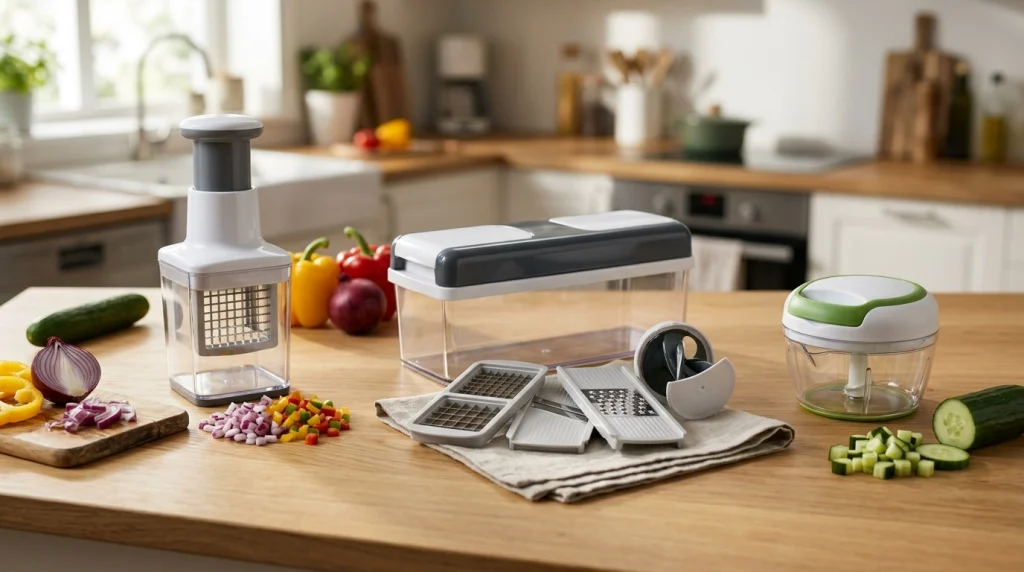
For most kitchens, I would narrow the choice to three types: a practical everyday dicer, a multifunction preparation system, and a compact model. The options below match those priorities.
The star scores are editorial feature-fit estimates, not customer ratings or claims of hands-on testing. Confirm current specifications and availability before purchasing.
🏆 Best for Everyday Dicing
Fullstar Pro Original 4-in-1 Vegetable Chopper & Spiralizer
★★★★☆ 4.5/5 editorial fit
This model combines a push-down cutting system with a collection container and interchangeable cutting functions. Its non-slip base and practical design make it my first choice to consider for routine onion, pepper, and vegetable preparation, although the cutting grid still needs careful cleaning.
🥕 Best for Multiple Cutting Styles
Mueller Pro-Series 12-Blade Ultimate Vegetable Chopper & Spiralizer
★★★★☆ 4.4/5 editorial fit
Mueller lists nine interchangeable cutting blades, three spiralizer options, and a seven-cup pull-out container. I would favor this configuration for cooks who want dicing, slicing, grating, and spiralizing from one system, provided they have space to store the accessories.
🏠 Best Compact Grid Chopper
OXO Good Grips Vegetable Chopper With Easy-Pour Opening
★★★★☆ 4.3/5 editorial fit
This OXO model uses a stainless steel cutting grid, an easy-pour opening, and a roughly 2.5-cup collection container. I would consider it for smaller kitchens and modest vegetable portions, especially where easy pouring matters more than having many interchangeable blades.
Frequently Asked Questions
Are vegetable choppers with containers easy to clean?
Most are manageable to clean when the blade inserts and collection bowl are removable. The cutting grids usually need the most attention because vegetable pieces become trapped between openings.
Wash components soon after use and follow the manufacturer’s cleaning instructions. Dishwasher-safe labeling may apply to only certain parts.
Can a vegetable chopper cut raw carrots and potatoes?
Some manual choppers can cut raw carrots and potatoes, but these firm vegetables require more pressure. Smaller pieces are generally easier to work with.
Check the manufacturer’s approved ingredients and avoid forcing hard pieces through the blades. A sharp knife may be more suitable for especially tough vegetables.
What size vegetable chopper container is best?
A container around four to five cups is a practical starting point for regular home cooking. Smaller containers work well for occasional chopping and compact kitchens.
Larger six-to-seven-cup models offer more collection space for batch preparation, but they also require more storage room.
Is a manual vegetable chopper better than an electric food processor?
A manual container chopper is often better for making consistent cubes from onions, peppers, and similar vegetables. An electric food processor is more useful for processing larger amounts or finely chopping ingredients.
The better choice depends on the cut you need, preparation volume, available space, and cleanup preferences.
Can I store chopped onions in the chopper container overnight?
You can refrigerate chopped onions in a food-safe container with a suitable lid. However, not every chopper collection bowl is designed for airtight storage.
For overnight storage, transfer onions into a clean, covered container unless the manufacturer specifically approves the chopper bowl for this purpose.
Final Thoughts: Choosing the Right Vegetable Chopper
A vegetable chopper with container can be a useful kitchen shortcut when you regularly prepare diced vegetables. Its real value comes from repeatable cuts, convenient collection, and a design that is easy to maintain.
For everyday dicing, I would start by considering the Fullstar Pro Original. The Mueller Pro-Series is more appealing for varied cutting jobs, while the OXO Easy-Pour design suits smaller portions.
Choose the model that matches your weekly cooking habits, available storage, and preferred cleanup routine. The most useful kitchen tool is the one you will reach for regularly.