What Can You Make With a Vegetable Chopper? Easy Ideas

Quick Answer
You can make salsa, chopped salads, soups, stews, stir-fries, tacos, omelets, pasta sauces, relishes, grain bowls, casseroles, and meal-prep vegetable mixes with a vegetable chopper. I find it most useful for dishes that need several vegetables cut into similar-size pieces, especially when I want to speed up everyday kitchen prep.
Easy things to make
- Fresh salsa: Dice tomatoes, onions, peppers, and cucumber for a quick chunky salsa.
- Chopped salads: Cut cucumber, peppers, celery, carrots, and other firm vegetables into even pieces.
- Soups and stews: Prepare onion, carrot, celery, potato, and zucchini faster.
- Stir-fries: Prep peppers, onions, zucchini, mushrooms, and other quick-cooking vegetables.
- Taco fillings: Chop onions, peppers, tomatoes, lettuce, and toppings in batches.
- Breakfast dishes: Prepare vegetables for omelets, scrambled eggs, breakfast potatoes, and frittatas.
Best results
- Cut oversized vegetables into manageable chunks first, then choose a blade or chopping method that matches the final dish.
A vegetable chopper earns its space in my kitchen when dinner needs plenty of onions, peppers, carrots, or potatoes. Instead of treating it as a gadget for one task, I use it as a shortcut for whole meals.
The biggest advantage is consistency. Similar-size vegetables look neater and usually cook more evenly than a bowl filled with random large and small pieces.
Definition: A vegetable chopper is a manual or powered kitchen tool designed to cut produce into smaller pieces through chopping, dicing, slicing, grating, or similar actions. The exact cuts depend on the blades and design of the model.
What Foods Can You Make With a Vegetable Chopper?
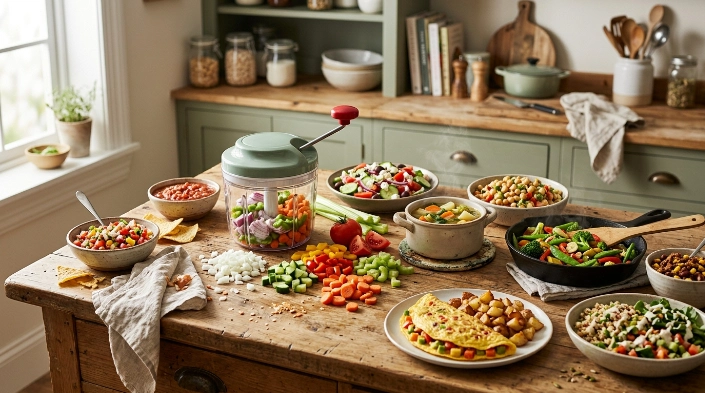
You can use a vegetable chopper for far more than plain diced onions. I get the most value from mine when a recipe needs several vegetables prepared before the pan even gets hot.
Here are some of the easiest dishes to build around chopped vegetables.
- Pico de gallo: Tomato, white onion, jalapeño, cilantro, lime, and salt.
- Chunky salsa: Tomato, pepper, onion, chili, herbs, and seasonings.
- Greek-style salad: Cucumber, bell pepper, tomato, red onion, olives, and feta.
- Chickpea salad: Chickpeas mixed with chopped cucumber, tomato, onion, pepper, and herbs.
- Vegetable soup: Onion, celery, carrot, potato, zucchini, and other seasonal vegetables.
- Chili: Onion, peppers, tomatoes, and optional chopped vegetables added to beans or meat.
- Stir-fry: Bell peppers, onions, zucchini, cabbage, carrots, mushrooms, and broccoli stems.
- Taco filling: Chopped onions, peppers, tomatoes, avocado toppings, and fresh garnish.
- Omelets: Small-cut peppers, onion, mushrooms, tomatoes, and spinach.
- Breakfast potatoes: Diced potatoes with peppers and onions.
- Pasta sauce: Finely chopped onion, carrot, celery, zucchini, and peppers.
- Rice bowls: Chopped fresh or cooked vegetables served over rice with protein and sauce.
- Grain bowls: Cucumber, tomato, peppers, radish, celery, and herbs with quinoa or farro.
- Casseroles: Evenly diced vegetables that mix easily through rice, pasta, potatoes, or protein.
- Vegetable relish: Finely chopped cucumber, onion, pepper, and other firm produce.
Which Vegetables Work Best in a Vegetable Chopper?
Firm vegetables usually give the cleanest results because they hold their shape against the blade. Softer produce can work too, but pressure matters.
I normally think about texture before size. A crisp onion behaves differently from an overripe tomato even when both fit into the same chopping chamber.
| Ingredient | Useful Cut | Good For | Prep Tip |
|---|---|---|---|
| Onion | Fine or medium dice | Salsa, soup, chili, tacos | Quarter large onions first |
| Bell pepper | Medium dice | Stir-fry, omelets, salads | Remove stem and seeds first |
| Cucumber | Medium dice | Salads, salsa, grain bowls | Use firm cucumbers for cleaner cuts |
| Carrot | Small dice or slices | Soup, fried rice, stir-fry | Cut thick carrots into shorter pieces |
| Potato | Medium or large dice | Breakfast potatoes, soups, roasting | Pre-cut large potatoes before chopping |
| Tomato | Large dice | Salsa, salad, toppings | Choose firm tomatoes and avoid excess pressure |
Can You Make Salsa With a Vegetable Chopper?
Yes. Salsa is one of the easiest things to make because most versions need several ingredients chopped to a similar size.
For a chunky salsa, I like keeping tomatoes slightly larger while chopping onion and peppers more finely. That gives the finished bowl more texture instead of turning everything watery.
- Firm tomatoes
- White or red onion
- Jalapeño or another chili
- Bell pepper, if desired
- Fresh cilantro, chopped separately if the machine bruises herbs
- Lime juice and salt added after chopping
Add the wet seasonings after the vegetables leave the chopper. This gives you better control over texture and keeps liquid away from models that aren’t designed for mixing sauces.
Can You Make Salads With a Vegetable Chopper?
A vegetable chopper is excellent for chopped salads, especially when you want cucumber, peppers, onion, celery, and carrots in bite-size pieces. It also makes batch lunch prep much less tedious.
One of my favorite combinations is chickpeas with cucumber, peppers, tomato, red onion, parsley, lemon, and olive oil. The vegetables can be chopped first, then everything gets tossed together in a bowl.
- Mediterranean salad: Cucumber, tomato, pepper, onion, feta, and olives.
- Chickpea salad: Chickpeas, cucumber, tomato, onion, herbs, and lemon.
- Crunchy garden salad: Carrot, cucumber, celery, radish, and pepper.
- Taco salad: Tomato, onion, pepper, lettuce, beans, corn, and avocado.
For family meals, chopped vegetables are also useful because everyone can build their own plate. That flexibility fits nicely with these healthy cooking tips for families.
How Do You Use a Vegetable Chopper for Soup?
For soup, use the chopper to prepare vegetables that need to cook at roughly the same rate. Onion, carrot, and celery are the classic starting point for many soups and stews.
I usually chop the firmest vegetables first. Softer ingredients go through later so I don’t crush them while pushing hard enough for potatoes or carrots.
- Prepare the vegetables: Wash, peel when needed, and cut oversized pieces so they fit the chopper safely.
- Chop firm ingredients: Start with carrots, potatoes, celery, or similar vegetables.
- Chop softer vegetables: Follow with onions, zucchini, peppers, or tomatoes.
- Keep sizes consistent: Choose smaller pieces for quick soups and larger pieces for long-simmered stews.
- Cook in the right order: Add dense vegetables earlier and quick-cooking vegetables later.
Is a Vegetable Chopper Good for Stir-Fry?
Yes, especially for onions, bell peppers, zucchini, carrots, mushrooms, and other vegetables that benefit from consistent sizing. Uniform pieces make it easier to manage a fast pan.
A chopper doesn’t replace good cooking technique, though. If the pan is overcrowded, chopped vegetables can release moisture and steam instead of browning.
If you don’t have a wok, my guide on whether you can use a frying pan instead of a wok explains how smaller batches and proper preheating help.
- Keep watery vegetables separate from dense ones.
- Cook carrots and other firm pieces earlier.
- Add zucchini and mushrooms later.
- Don’t fill the pan so deeply that the vegetables steam.
- Add sauces near the end when appropriate for the recipe.
What Breakfast Foods Can You Prep With a Vegetable Chopper?
Breakfast is an underrated use for a vegetable chopper. A container of diced peppers and onions can turn eggs, potatoes, or breakfast wraps into a much faster meal.
- Omelets: Pepper, onion, tomato, mushroom, and spinach.
- Scrambled eggs: Small pieces of onion, pepper, tomato, and herbs.
- Breakfast potatoes: Potato cubes with onion and bell pepper.
- Frittatas: Chopped vegetables mixed with eggs and cheese.
- Breakfast burritos: Potatoes, peppers, onions, tomato, and toppings.
If I’m chopping potatoes, I avoid forcing an oversized piece through a small grid. Cutting it into manageable sections first takes only a few seconds and puts less strain on the tool.
What Can You Meal Prep With a Vegetable Chopper?
Meal prep is where a chopper can save the most repetitive work. I prefer prepping versatile vegetables rather than locking every container into one specific recipe.
For example, chopped onion and peppers can move between eggs, tacos, rice bowls, pasta, and stir-fry during the week.
- Soup starter: Onion, carrot, and celery.
- Stir-fry mix: Pepper, onion, carrot, zucchini, and broccoli stems.
- Breakfast mix: Onion, pepper, mushroom, and potato.
- Salad base: Cucumber, celery, carrot, pepper, and radish.
- Taco prep: Onion, peppers, tomato, and fresh toppings.
Green vegetables can also become quick sides after prep. For one simple example, see my method for cooking green beans in a frying pan.
What Should You Not Put in a Vegetable Chopper?
The answer depends on your model, so the manufacturer’s instructions always come first. A manual dicing grid and a pull-cord blade chopper aren’t interchangeable tools.
- Hard bones: Vegetable choppers aren’t designed for them.
- Large frozen foods: They can put unnecessary stress on blades and plastic parts.
- Oversized hard vegetables: Cut them down before applying pressure.
- Hot food: Avoid it unless the manufacturer specifically says the container can handle the temperature.
- Meat or cheese: Don’t assume your model supports them; some manufacturers specifically exclude these foods.
- Very ripe produce: Soft tomatoes or fruit may crush rather than dice cleanly.
How Do You Use a Vegetable Chopper Safely?
Wash fresh produce before you cut it, and keep your chopping equipment clean. The FDA recommends rinsing produce under running water rather than using soap or detergent.
You can review the FDA’s fresh produce safety guidance for more detail.
- Wash first: Clean produce before peeling, chopping, or dicing it.
- Protect your fingers: Never reach toward exposed blades while clearing trapped food.
- Use a stable surface: Keep the chopper flat while pressing or pulling.
- Clean between foods: Wash components thoroughly after use.
- Avoid cross-contamination: Keep produce preparation separate from raw meat, poultry, and seafood.
The USDA also recommends separate cutting surfaces for produce and raw meat when possible. Its cutting-board safety guidance explains cleaning and cross-contamination precautions.
For broader kitchen hygiene, the FDA’s safe food-handling guidance follows the familiar clean, separate, cook, and chill approach.
Vegetable Chopper vs Knife: Which Is Better?
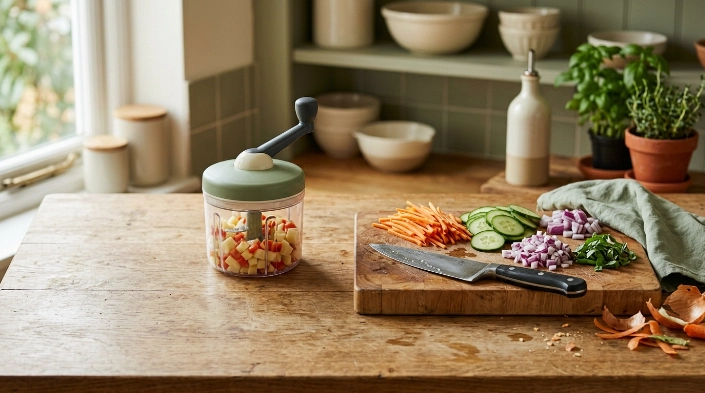
Neither tool wins every job. I use a chopper when repetition matters and a knife when precision matters.
| Task | Vegetable Chopper | Chef’s Knife |
|---|---|---|
| Batch dicing | Fast and consistent | More repetitive work |
| Custom shapes | Limited by attachments | Highly flexible |
| Small quantity | May create extra cleanup | Usually quicker |
| Large meal prep | Very convenient | Requires more knife work |
| Precise slicing | Depends on attachments | Better manual control |
If you’re ready to pick one, these are three useful styles I’d consider based on how you cook.
🏆 Best for batch prep
Fullstar The Original Pro Chopper 9-in-1
★★★★☆
This multi-function model combines a 1.2-liter catch tray with interchangeable prep attachments. I’d choose this style when chopping several cups of onions, potatoes, peppers, or salad vegetables at once.
🥗 Best for small batches
OXO Good Grips Vegetable Chopper
★★★★½
OXO’s compact chopper uses a rotating stainless-steel blade and a catcher cup with measurement markings. I like this style for herbs, nuts, salsa ingredients, and smaller quantities where a large dicing station feels unnecessary.
🔪 Best multi-blade option
Mueller Pro-Series 10-in-1 Vegetable Chopper
★★★★☆
This Mueller model uses eight interchangeable stainless-steel blades and a stainless-steel collection container. I’d look at it when dicing, slicing, grating, and julienning all matter more than having the smallest possible tool.
Frequently Asked Questions
Can you make pico de gallo with a vegetable chopper?
Yes. A vegetable chopper works well for pico de gallo when you use firm tomatoes, onion, and jalapeño. Keep the tomato pieces slightly larger if possible, then mix in cilantro, lime juice, and salt after chopping so you can control the final texture.
Can you chop potatoes in a vegetable chopper?
Many grid-style vegetable choppers can handle potatoes, but large potatoes should be cut into smaller sections first. Avoid forcing a piece through the blades if it needs excessive pressure, and always follow the capacity and food restrictions supplied with your specific model.
Can you use a vegetable chopper for onions?
Yes. Onions are one of the most practical foods for a vegetable chopper because you can create a fairly even dice quickly. Quarter larger onions before chopping, and choose a fine grid for salsa or sauces and a larger grid for soups or chili.
Can a vegetable chopper replace a food processor?
Not completely. A vegetable chopper is useful for dicing and small prep jobs, while a food processor can usually puree, shred, slice, mix, and process larger quantities. I prefer the chopper when I want distinct vegetable pieces rather than a finely processed texture.
Is a vegetable chopper worth using for meal prep?
It can be, especially if your weekly meals use repeated ingredients such as onions, peppers, carrots, cucumbers, or potatoes. The advantage becomes more noticeable when you prepare several vegetables at once, while a knife may be quicker for one small ingredient.
Final Takeaway
So, what can you make with a vegetable chopper? Think beyond diced onions: salsa, salads, soups, stir-fries, tacos, breakfast potatoes, omelets, pasta sauces, grain bowls, relishes, and complete meal-prep vegetable mixes all fit the tool well.
I get the most value from a chopper when a recipe has several vegetables and consistency matters. Match the blade to the dish, pre-cut oversized produce, keep the blades clean, and let the chopper handle the repetitive part of dinner prep.
“`
