
What Is a Potato Ricer and How Do You Use It?

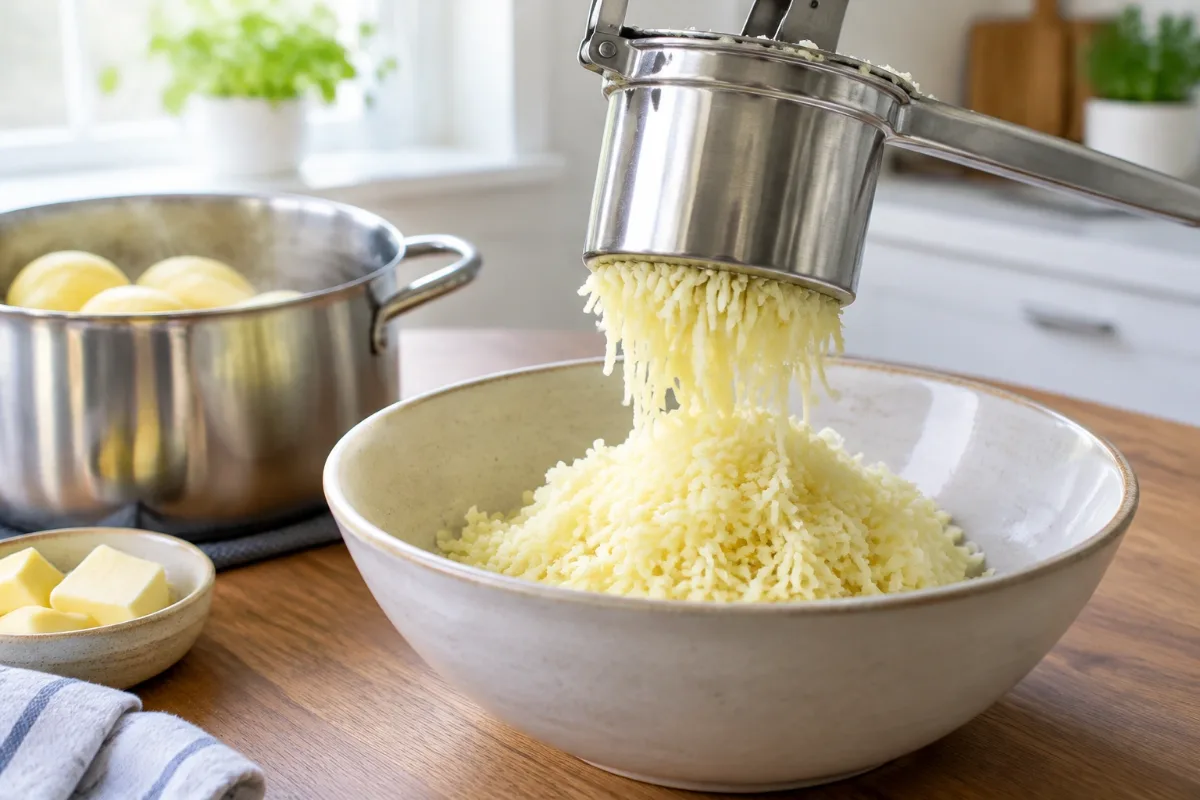
A potato ricer is a kitchen tool that presses cooked food through a plate with small holes, turning it into fine, rice-sized strands. It looks like a giant garlic press: a hopper (basket) with holes in the bottom and a plunger attached to two long handles. It is best known for making smooth, fluffy mashed potatoes with no lumps, because it breaks the potatoes apart without overworking the starch.
If your mashed potatoes ever turn out lumpy or gluey, a ricer is the simplest fix. Here is how a ricer works, how to use it step by step, what else you can do with it, and how it compares with a masher and a food mill.
How a Potato Ricer Works
Potatoes are full of starch-filled cells. When you mash them hard, beat them or blend them, many of those cells burst and release sticky starch, which makes potatoes gluey. A ricer gently pushes the cooked potato through small holes in one pass, breaking it into light strands while keeping most cells intact. The result is airy and smooth, with no lumps, and it absorbs butter and milk easily.
Parts of a Potato Ricer
- Hopper (basket): holds the cooked food. The bottom is a perforated plate.
- Plunger: a flat disc that presses the food down through the holes.
- Handles: two long arms that give you leverage.
- Interchangeable discs (on some models): fine, medium and coarse plates for different textures.
- Pot hook or rest: a small lip that helps the ricer sit on the rim of a bowl or pot.
How to Use a Potato Ricer for Mashed Potatoes
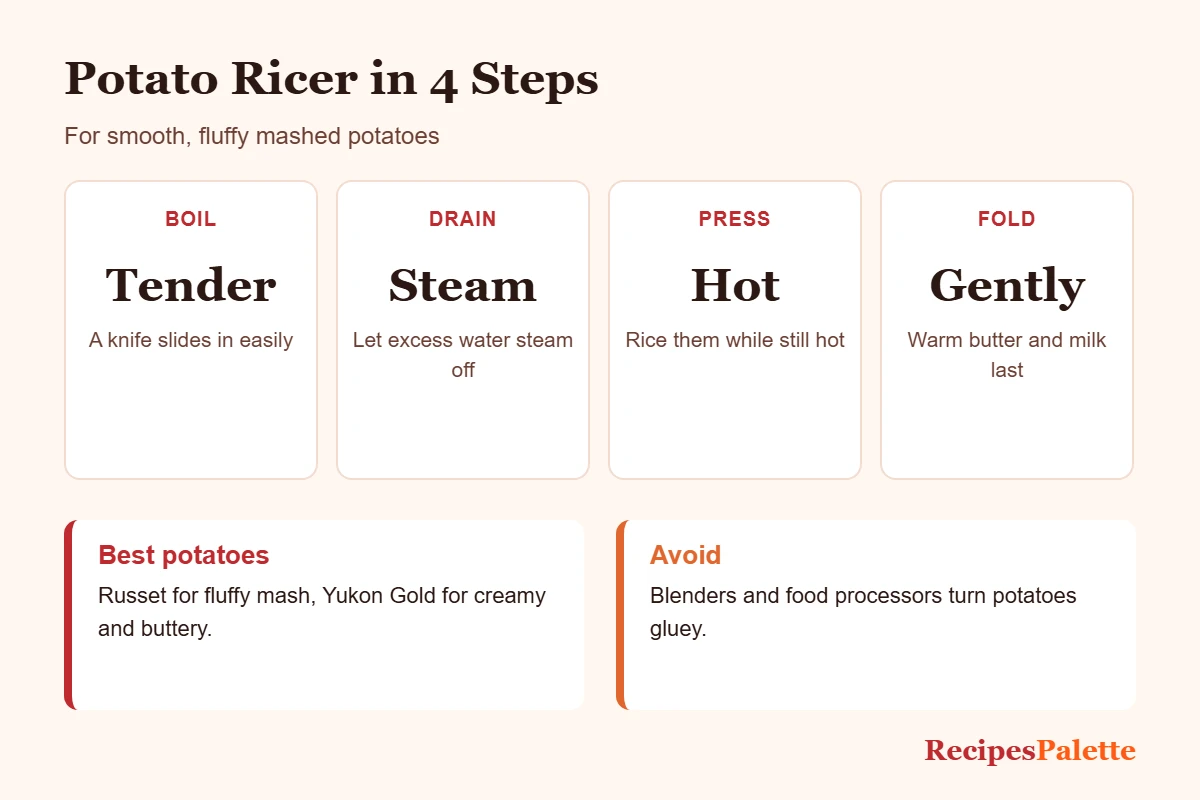
- Choose your potatoes. Russets give the fluffiest mash; Yukon Golds give a creamy, buttery mash.
- Cut and cook. Cut potatoes into even chunks, put them in a pot of cold salted water, bring to a boil and simmer until a knife slides in easily, usually 15 to 20 minutes.
- Drain and steam dry. Drain well and let the potatoes sit in the colander or the warm pot for a minute or two so excess water steams off.
- Rice them while hot. Fill the hopper about two-thirds full, set the ricer over a bowl or the empty pot, and squeeze the handles together. Scrape off any potato on the bottom of the plate and repeat. Hot potatoes rice much more easily than cold ones.
- Fold in dairy. Warm the butter and milk or cream, then fold them in gently with a spatula. Season with salt and pepper.
Tip: You can rice unpeeled potato chunks. The skins usually stay behind in the hopper, so just remove them between batches. Some cooks find this easier than peeling.
Other Uses for a Potato Ricer
- Other root vegetables: sweet potatoes, parsnips, celery root, carrots and turnips.
- Cauliflower mash: for a smooth, lighter side dish.
- Gnocchi: riced potatoes make light, tender gnocchi dough.
- Squeezing water out of food: thawed frozen spinach, grated zucchini or shredded potatoes for hash browns and latkes.
- Baby food: soft-cooked vegetables and fruit, pressed smooth.
- Pressing citrus: halved lemons or limes, in a pinch.
- Hard-boiled eggs: for egg salad or as a fine garnish.
- Pasta-like strands: some recipes use a ricer to make spaetzle-style dumplings or chestnut “vermicelli” desserts.
Ricer vs Masher vs Food Mill
| Tool | Texture | Speed | Removes skins? | Best for |
|---|---|---|---|---|
| Potato ricer | Very smooth and fluffy | Medium (small batches) | Usually yes | Smooth mash, gnocchi, squeezing water |
| Potato masher | Rustic, some lumps | Fast | No | Chunky, rustic mash |
| Food mill | Very smooth | Fast for big batches | Yes, also seeds | Large batches, tomato sauce, applesauce |
| Hand mixer | Creamy, can turn gluey | Fast | No | Whipped potatoes, with care |
| Blender or food processor | Gluey | Fast | No | Not recommended for potatoes |
How to Rice Potatoes Without a Ricer
- Fine-mesh sieve: push hot potatoes through with the back of a sturdy spoon or spatula. Slow, but very smooth.
- Box grater: grate hot, peeled potatoes on the large holes (use a towel to hold them).
- Food mill: the closest alternative, and better for big batches.
- Masher plus a fork: mash well, then whisk lightly with a fork for a fluffier texture.
What to Look for When Buying a Potato Ricer
- Sturdy material: stainless steel lasts longest; heavy-duty plastic is lighter and cheaper but can flex.
- Hopper size: a larger basket means fewer batches.
- Comfortable handles: long, padded handles reduce hand strain.
- Interchangeable discs: useful if you want different textures.
- Easy to clean: parts that separate and are dishwasher-safe save time.
If you are building up your prep tools, see our guides to types of vegetable choppers and whether vegetable choppers are worth it.
How to Clean a Potato Ricer
Rinse it right after use, before the starch dries in the holes. Soak it in warm water if needed, then scrub the plate with a small brush. Many stainless steel ricers are dishwasher-safe; check the manufacturer’s instructions.
The Best Potatoes for Ricing
The type of potato you use matters as much as the tool.
- Russet potatoes: High in starch and low in moisture. They rice into light, fluffy shreds and make classic airy mashed potatoes.
- Yukon Gold potatoes: Medium starch with a naturally buttery flavor. They give a creamy, rich mash and are many cooks’ favorite for ricing.
- Red and other waxy potatoes: Lower in starch and firmer. They can be riced, but the result is denser. Many people prefer to smash them with the skins on instead.
- Sweet potatoes: Rice well once fully tender. Their fibers stay in the hopper, giving a smooth puree.
Cut potatoes into even chunks so they cook at the same rate. They are ready when a knife slides into the center with no resistance. Undercooked pieces are hard to press and leave lumps.
Common Potato Ricer Mistakes
- Letting the potatoes cool. Hot potatoes rice easily. Once they cool, the starch firms up and they are much harder to press.
- Overfilling the hopper. Packing it to the top makes pressing harder and can bend the handles. Fill it about two-thirds full.
- Adding cold dairy. Cold milk and butter cool the mash and make it stiff. Warm the milk and soften the butter before folding them in.
- Stirring too hard afterwards. Ricing keeps the starch cells intact. Beating the riced potatoes with a mixer undoes this and can make them gluey. Fold gently with a spatula.
- Waterlogged potatoes. Drain well and let the potatoes steam dry in the pot for a minute or two before ricing, so the mash is not watery.
Potato Ricer vs Food Processor
A food processor or blender may seem like a faster way to get smooth potatoes, but the fast blades break open starch cells. That releases a lot of starch and turns mashed potatoes sticky and glue-like. A ricer presses the potatoes through small holes instead of cutting them, so the starch stays where it is and the mash stays light. For smooth mashed potatoes, a ricer or a food mill is the better choice.
Making Mashed Potatoes Ahead
Riced mashed potatoes hold up well, which makes them handy for holidays and meal prep.
- Rice and season the potatoes as usual, adding a little extra milk or butter because they firm up as they rest.
- Cool them in a shallow dish and refrigerate within 2 hours. Use them within 3 to 4 days.
- To reheat, warm them gently on the stove with a splash of milk, in a covered dish in the oven, or in a slow cooker on Low, stirring now and then.
- Heat until steaming hot throughout, then adjust the seasoning before serving.
Potato Ricer Recipes to Try
Classic buttery mashed potatoes
Rice 2 pounds of hot Yukon Gold potatoes into a warm pot. Fold in 4 tablespoons of softened butter, then about 3/4 cup of warm milk a little at a time until creamy. Season with salt and white or black pepper.
Garlic and herb mash
Simmer a few peeled garlic cloves with the potatoes and press them through the ricer together. Finish with chopped chives, parsley and a spoonful of sour cream.
Light potato gnocchi
Ricing baked russets gives dry, fluffy potato that needs less flour, which helps make tender gnocchi. Rice the potatoes while hot, let the steam escape, then gently mix in flour, egg and salt until a soft dough forms.
Smooth sweet potato puree
Rice roasted sweet potatoes and stir in a little butter, salt and a pinch of cinnamon or smoked paprika. The ricer holds back the stringy fibers.
Squeezing out spinach
Put thawed frozen spinach in the hopper and press over the sink. It removes water quickly for dips, quiches and fillings.
Frequently Asked Questions
Is a potato ricer worth it?
If you make mashed potatoes, gnocchi or need to squeeze water from vegetables often, yes. It is an inexpensive tool that makes a noticeable difference to texture.
Do you peel potatoes before using a ricer?
You do not have to. Most ricers hold back the skins, though peeled potatoes are a little easier to press.
Can you rice cold potatoes?
It is much harder, and the texture is not as fluffy. Rice potatoes while they are hot.
What is the difference between a ricer and a garlic press?
They work the same way, but a ricer is much larger and designed for cooked foods. A garlic press is for raw garlic cloves.
Can you use a potato ricer for cauliflower?
Yes. Cook it until very tender, drain well, and press it for a smooth cauliflower mash.
Do you need to peel potatoes before using a ricer?
Not always. Many ricers hold back the skins as you press, and you can scrape them out between batches. Peel first if you want to work faster or your ricer has large holes.
Can you rice cold potatoes?
You can, but it is harder and the texture is less fluffy. For the best results, rice potatoes while they are hot.
Is a potato ricer dishwasher safe?
Many stainless steel ricers are, but some parts or coatings are not. Check the maker’s instructions, and rinse it right away so starch does not dry in the holes.
The Bottom Line
A potato ricer is a simple hand-press tool that turns cooked potatoes into fine, fluffy strands, giving you smooth, lump-free mashed potatoes without the gluey texture of over-mixing. It also works for other root vegetables, gnocchi and squeezing water out of spinach. Rice potatoes while hot, fold in warm butter and milk gently, and you will get your best mash yet.