Juicing Safety Tips: How to Make Fresh Juice Safely at Home

Safe juicing starts with clean produce, clean equipment, and fast refrigeration. Wash everything well, use fresh ingredients, keep juice cold at 40°F or below, and drink it within 24 to 72 hours. If someone in your home is high risk, pasteurized juice is the safer choice.
I’m Emma Reed, and I love testing recipes, kitchen tips, and cooking methods in a real home kitchen so I can explain everything in a simple, practical way. Juicing looks easy, but a few small mistakes can affect both flavor and food safety.
If your homemade juice tastes off, turns brown too fast, separates, or makes you wonder if it is still safe to drink, this guide will help. I’ll walk you through how to prep produce, clean your juicer, store juice properly, and fix the most common beginner problems.
Quick Answer: The Safest Way to Juice at Home
Featured Snippet Target
- Wash your hands, fruits, vegetables, knives, cutting boards, and juicer parts before you start.
- Use fresh produce that is firm, clean, and free from mold or bad bruising.
- Avoid cross-contamination from dirty sinks, raw meat, or unclean counters.
- Refrigerate homemade juice right away at 40°F or below.
- Drink fresh juice within 24 to 72 hours for best quality and safety.
- If you are serving juice to pregnant women, small children, older adults, or anyone with a weak immune system, pasteurized juice is the safer option.
What Juicing Safety Means and Why It Matters
What Is Juicing Safety?
Juicing safety means handling fresh produce and juice in a way that lowers the risk of bacteria, mold, spoilage, and cross-contamination. It covers everything from washing your apples and spinach to cleaning the juicer filter and storing the finished juice at the right temperature.
In a home kitchen, this matters because homemade juice is usually raw and unpasteurized. That gives you fresh flavor and bright color, but it also means there is no heat step to kill harmful germs.
Why Homemade Juice Can Be Risky if Done Incorrectly
Fresh produce can carry dirt and bacteria even if it looks clean. The outside of melons, cucumbers, carrots, celery, apples, and leafy greens can all transfer that contamination into your juice during prep.
Juicers also have lots of tight spaces where wet pulp likes to hide. If old residue stays in the screen, blade area, spout, or rubber seals, it can affect the next batch. This is one reason homemade juice safety is really about good habits, not just good ingredients.
Who Should Be Extra Careful with Raw Juice
Raw juice is not the best choice for everyone. According to the FDA food safety guidance, unpasteurized juice can be riskier for certain groups.
- Pregnant women
- Young children
- Older adults
- People with weakened immune systems
If you are making juice for one of these groups, store-bought pasteurized juice is usually the safer call.
How Juicing Safety Works from Prep to Storage
Where Contamination Usually Happens
Most juicing safety problems do not happen during the actual juicing step. They happen before or after. Common trouble spots include dirty produce, unwashed hands, reused cutting boards, a juicer that was only rinsed instead of properly washed, and juice left on the counter while breakfast or dinner is still being made.
I treat juicing the same way I treat other raw food prep. If you already follow kitchen food safety basics, you are already halfway there.
Why Time and Temperature Matter
Once produce is cut and juiced, it becomes more perishable. The juice has more exposed surface area, more air contact, and no protective peel. That means quality drops fast and bacteria can multiply more quickly if the juice sits warm.
For safe storage, keep fresh juice at 40°F or below. The USDA recommends refrigeration at 40°F or colder. I like to move juice into the fridge as soon as the bottle is filled instead of waiting until the full batch is done.
Key Safety Factors Before You Start Juicing
Choose Fresh, Good-Quality Produce
Good juice starts with produce that is fresh, crisp, and free from spoilage. Soft spots, sliminess, mold, and deep bruises are signs to skip that ingredient. One bad cucumber, handful of spinach, or apple can affect the whole batch.
Flavor matters here too. Fresh produce gives cleaner taste, better texture, and more balanced sweetness. Old greens can taste bitter, tired carrots can taste flat, and overripe fruit can ferment faster.
Wash Produce the Right Way
Rinse fruits and vegetables under running water, even if you plan to peel them. That step helps prevent dirt and germs on the outside from moving to the knife or cutting board.
For firm produce like apples, carrots, beets, cucumbers, and celery, a produce brush helps a lot. For leafy greens, separate the leaves and rinse well. The CDC’s produce safety advice is a helpful reminder to wash produce before cutting or eating.
Know When Peeling Helps
Peeling is not always required, but it can improve both safety and taste in some cases. Thick-skinned produce with lots of surface dirt may be easier to prep after peeling. Citrus peel and pith can also make juice taste bitter, especially in a beginner juice blend.
If you are working with conventionally waxed cucumbers or citrus, peeling can improve texture and flavor. It is also useful when you want a smoother consistency in lighter juices.
Use Clean Surfaces and Tools
Before I juice, I make sure the cutting board, knife, countertop, and juicer parts are all clean. This is especially important on busy weeknights when the kitchen may already have crumbs, raw meat packaging, or lunch prep mess on the counter.
Pay close attention to the juicer feed chute, screen, blade area, spout, pulp bin, and any rubber gaskets. Those are the places where old pulp tends to hide.
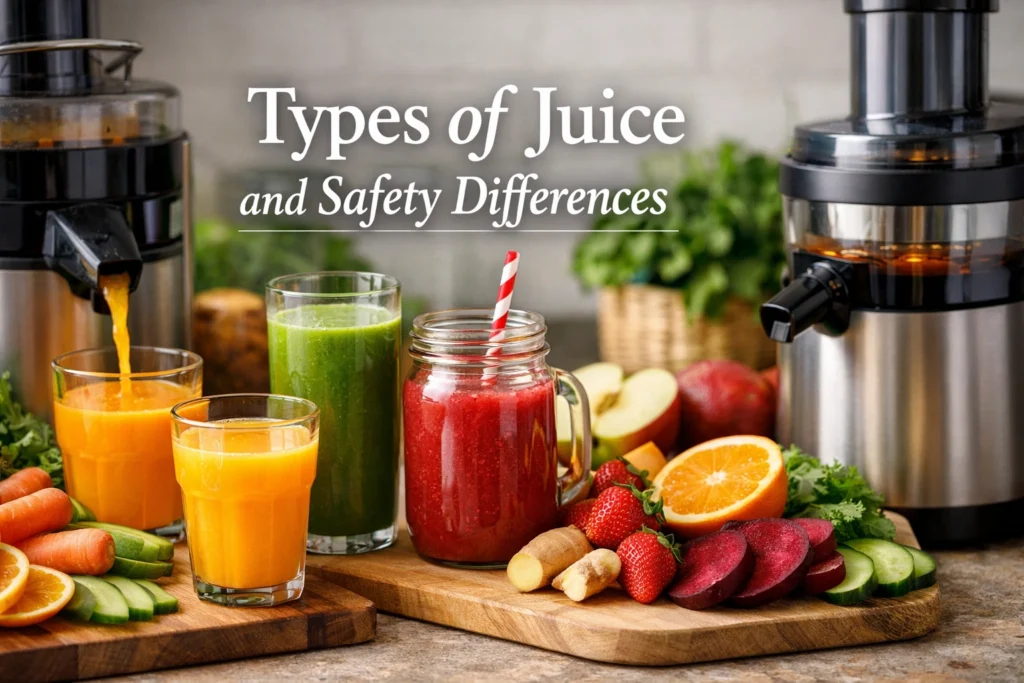
Types of Juice and Safety Differences
Raw Homemade Juice
Raw homemade juice has the freshest taste and the brightest flavor. It also has the shortest shelf life because there is no pasteurization step. If it is handled well, it can be a great option for healthy meal prep or a quick breakfast, but it should be consumed fairly quickly.
Store-Bought Pasteurized Juice
Pasteurized juice is heated to reduce harmful bacteria. It usually lasts much longer and is the safer option for high-risk groups. The trade-off is that the flavor can taste less fresh than juice you make at home.
Cold-Pressed vs Centrifugal Juice
Cold-pressed and centrifugal juicers produce different textures, but safety still comes down to cleaning and storage. Cold-pressed juice often has less foam and a smoother body. Centrifugal juice is faster to make and great for busy mornings, but it can separate faster and sometimes warms slightly during processing.
If you are still choosing ingredients, my guide to best fruits and vegetables for juicing can help you build blends that taste balanced and stay beginner-friendly.
Homemade Raw Juice vs Pasteurized Juice: Full Comparison
| Option | Safety Level | Shelf Life | Flavor | Best For |
|---|---|---|---|---|
| Homemade raw juice | Lower if mishandled | 1 to 3 days refrigerated | Freshest and brightest | Drinking soon after juicing |
| Store-bought pasteurized juice | Higher | Longer, check label | More stable, less fresh | Convenience and lower risk |
| Cold-pressed bottled juice | Varies by brand and pasteurization | Varies | Smooth and fresh tasting | Premium ready-to-drink options |
Best Option for Safety, Flavor, and Convenience
If your top priority is safety, pasteurized juice wins. If your top priority is flavor, homemade juice is hard to beat. For many home cooks, the best balance is making small batches of homemade juice, drinking some right away, and refrigerating the rest immediately in airtight bottles.
Step-by-Step Guide: How to Juice Safely at Home
Step 1: Wash Your Hands First
Wash with soap and warm water for at least 20 seconds. Do this before touching produce, after handling trash, and again if you touch your phone, pet, or anything dirty during prep.
Step 2: Inspect and Sort Your Produce
Check every ingredient before it goes near the juicer. Toss anything moldy or slimy. Trim small bruises if the rest of the produce is still good. For roots like carrots and beets, cut away damaged spots completely.
Step 3: Wash Fruits and Vegetables Thoroughly
Rinse under cool running water. Scrub firm produce and separate leafy greens so hidden grit does not end up in the juice. I do not recommend washing produce in a sink full of standing water unless the sink was freshly cleaned first.
Step 4: Clean and Assemble the Juicer Correctly
Make sure every part is fully clean before assembly. If you see dried pulp or sticky film, wash it again. A dirty screen can affect safety and performance, and it also changes texture by making juice thicker, foamier, or slower to strain.
Step 5: Prep Produce Safely
Peel, trim, and cut produce according to your machine. Remove pits from stone fruit, thick citrus peel, very hard rinds, and any large seeds your juicer manual warns against. Use a clean knife and board.
If you want a simple place to start after the safety basics, you can follow my how to make green juice guide for an easy beginner blend.
Step 6: Juice in Small Batches
Small batches are easier to chill quickly and easier to finish before quality drops. This is one of my favorite meal prep tips because it reduces waste too. You can still prep the produce ahead and juice just what you need for breakfast or snack time.
Step 7: Refrigerate Immediately
Pour the juice into airtight containers right away. Fill as close to the top as you can to reduce air exposure, then refrigerate immediately. Glass bottles work especially well because they do not hold odor and are easy to clean.
Step 8: Clean the Juicer Right After Use
This is the step that saves the most trouble later. Rinse parts right away so pulp does not dry and harden. Then wash with hot, soapy water and let the parts dry fully before storing.
If you wait until later, the cleanup gets harder, and old residue becomes much more likely. That is when people start skipping details, and that is when safety problems creep in.
Why Your Homemade Juice May Not Be Safe to Drink
It Sat Out Too Long
If juice has been sitting on the counter during a long breakfast, holiday brunch, or meal prep session, its safety becomes questionable fast. Fresh juice is not like a baked dish that can cool for a while. It needs cold storage quickly.
The Produce Was Not Washed Well Enough
Unwashed apples, celery, cucumbers, spinach, kale, and herbs can all carry dirt and bacteria into the juice. Even produce that looks clean can still need a proper rinse.
The Juicer Was Not Fully Clean
A juicer that was only lightly rinsed may still have trapped pulp. That old residue can make a fresh batch smell sour, taste off, or spoil faster than it should.
You Used Spoiled or Damaged Ingredients
Produce with soft rot, mold, or deep bruising can affect both safety and flavor. Juice made from tired ingredients often tastes muddy, bitter, or overly fermented.
You Stored It in the Wrong Container
If the lid does not seal well or the container is only half full, extra air gets in and the juice browns faster. Plastic containers can be fine if they are food safe and seal tightly, but airtight glass usually gives better long-term freshness.
Most Common Juicing Safety Problems and Solutions
| Problem | Likely Cause | How to Fix It |
|---|---|---|
| Juice smells sour quickly | It sat out too long or old produce was used | Discard it and refrigerate future batches immediately |
| Juice separates fast | Natural settling or high-water produce | Shake before drinking; separation alone does not always mean spoilage |
| Juice turns brown | Oxidation from air exposure | Use airtight containers, fill them nearly full, and drink sooner |
| Bitter flavor | Too much peel, pith, beet greens, or strong greens | Peel citrus, use milder greens, and balance with apple or cucumber |
| Foamy texture | High-speed juicing or watery ingredients | Let the foam settle, skim it off, or strain the juice |
| Moldy smell from juicer | Residue trapped in parts | Deep-clean screens, blades, seals, and the pulp bin |
| Stomach upset after juice | Spoiled juice, dirty equipment, or risky raw ingredients | Stop drinking it, discard the batch, and sanitize your tools thoroughly |
How to Fix Juicing Safety Issues Step-by-Step
If You Forgot to Refrigerate the Juice
My rule is simple: when in doubt, throw it out. Fresh juice is not something I try to rescue once it has sat warm too long. Chilling it later does not undo the risk.
If Your Juicer Has Stuck-On Pulp
Take the machine apart and soak removable pieces in warm, soapy water. Use a small cleaning brush to scrub the screen and spout. If the manufacturer allows it, sanitize the parts after washing.
Do not forget the rubber ring or gasket. That small piece is one of the easiest places for old pulp to hide.
If Your Juice Tastes Off but Looks Fine
Looks can be misleading. If the smell is sour, the flavor is fizzy, or the juice seems slimy, do not drink it. A strange taste is enough reason to discard it.
If You Need Safer Juice for High-Risk Family Members
Choose pasteurized juice instead of homemade raw juice. This is especially helpful for family breakfasts, school mornings, and holiday meals when juice may sit out longer than planned.
Common Juicing Mistakes to Avoid
Using Produce That Is Too Old
Even if it is not fully spoiled, old produce gives worse flavor and shorter shelf life. Fresh ingredients taste cleaner and hold up better in the fridge.
Skipping a Full Juicer Cleaning Between Uses
A quick rinse is not the same as cleaning. Screens, blades, and spouts all need attention. This is one of the biggest beginner juicing mistakes.
Letting Juice Sit on the Counter During Meal Prep
This happens a lot during busy mornings. You juice first, then pack lunches, scramble eggs, make toast, and the bottles stay out. Try refrigerating each bottle as you fill it instead.
Overfilling the Fridge with Poor Airflow Around Containers
If the fridge is packed too tightly, it may not cool evenly. Keep juice in the coldest safe zone of the fridge and avoid the warmest spots in the door if possible.
Assuming Separation Means Spoilage Every Time
Fresh juice often separates naturally, especially homemade juice from a centrifugal juicer. That is a texture issue, not always a safety issue. Shake first, then smell and taste carefully if it is still within the safe storage window.
Ignoring Expiration Signs Like Sour Smell, Fizzing, or Slime
These are clear warning signs. If you notice them, discard the juice. Do not try to fix it with lemon juice, ice, or extra straining.
Practical Juicing Safety Tips for Better Results Every Time
Best Practices for Beginners
- Start with small batches until you know what your household will actually drink.
- Label bottles with the date and time if you make more than one serving.
- Use simple combinations first, such as apple, cucumber, celery, and lemon.
- Keep a cleaning brush near the sink so juicer cleanup feels easier.
Best Practices for Weeknight Meal Prep
On busy nights, I like to wash and cut produce ahead, then juice it the next morning. That saves time without leaving finished juice sitting too long. You can also portion ingredients into containers so breakfast goes faster.
Best Practices for Family Use
Serve juice cold and in small portions so less is wasted. If kids are slow drinkers, give them a smaller glass and keep the rest refrigerated instead of leaving the full batch on the table.
Best Practices for Flavor and Freshness
Balance strong ingredients with watery ones. Cucumber and celery lighten texture. Apples and pears add sweetness. Lemon brightens flavor and can slow browning a bit, but it does not make unsafe juice safe.
If browning is a recurring issue, my guide on how to keep apples from browning can help with a few practical prep tricks.
Optional Tools and Kitchen Equipment That Help with Juice Safety
Helpful but Not Required
- Produce brush for carrots, cucumbers, potatoes, and apples
- Fine mesh strainer if you want a smoother texture
- Bottle brush for narrow glass jars
- Airtight glass bottles for short-term storage
- Small labels or date stickers for meal prep
- Refrigerator thermometer to confirm your fridge stays cold enough
Juicer Parts That Need Extra Attention
- Mesh screen
- Blade area
- Pulp container
- Spout
- Rubber seals or gaskets
You do not need a lot of gear to juice safely. In my experience, the most helpful extra tool is simply a refrigerator thermometer. It tells you whether your storage temperature is actually safe instead of letting you guess.
Storage, Make-Ahead, and Freezing Tips
How Long Fresh Juice Lasts in the Fridge
For best quality, drink fresh juice within 24 hours. Many homemade juices are still acceptable for up to 72 hours if the produce was clean, the juicer was sanitized, and the juice was refrigerated right away.
Greens-heavy juice usually fades faster in flavor than fruit-forward juice. Juice with a lot of apple, carrot, or beet often holds up a bit better, though the safe window is still short.
Best Containers for Storing Juice
Airtight glass bottles are my favorite because they are easy to wash and they do not hold old smells. Fill containers close to the top to limit air exposure. This helps with freshness, color, and flavor.
Plastic can work too, but make sure it is food safe, very clean, and seals tightly.
Can You Freeze Homemade Juice?
Yes, you can freeze fresh juice. This is useful if you batch juice for the week or have extra from a large produce haul. Leave a little room at the top because liquid expands as it freezes.
Thaw frozen juice in the refrigerator, not on the counter. Shake well after thawing because separation is common.
How to Make Juice Ahead Without Losing Quality
The best make-ahead strategy is often prepping ingredients, not fully juicing days in advance. Wash, dry, peel, and cut sturdy produce ahead, then juice closer to serving time for better flavor and safer storage.
If you do batch juice, keep the bottles cold immediately and rotate them so the oldest batch gets used first.
Fresh Juice Storage Options: Which One Is Best?
| Storage Method | Safety | Freshness | How Long It Works Best |
|---|---|---|---|
| Room temperature | Low | Quality drops fast | Avoid for storage |
| Refrigerator in airtight bottle | Good | Best short-term option | 1 to 3 days |
| Freezer-safe container | Good if handled properly | Good for longer storage | Longer than fridge storage |
Advanced Safety Tips for Experienced Home Juicers
How to Batch Juice More Safely
If you like to make multiple bottles at once, chill the bottles first, work in smaller rounds, and put each filled bottle into the fridge right away. This is especially useful during holiday prep or when you are making juice for more than one person.
How to Reduce Oxidation Without Overcomplicating the Process
Use airtight bottles, fill them almost to the top, and keep them cold. That is the easiest low-effort way to reduce oxidation. It helps preserve color and keeps the juice from tasting flat too soon.
How to Build a Safe Juicing Routine
A good routine matters more than a fancy machine. Buy produce in amounts you will use quickly, clean your juicer fully every time, date every batch, and discard leftovers on schedule. Once that routine becomes a habit, safe juicing gets much easier.
FAQ: Juicing Safety Tips
How long can homemade juice sit out at room temperature?
As little as possible. Homemade juice should be refrigerated soon after juicing. If it has been sitting out for a long stretch and you are unsure, it is safest to discard it.
How long does fresh juice last in the fridge?
Best quality is within 24 hours, but many homemade juices keep for up to 72 hours if they were made and stored properly at 40°F or below.
Do I need to wash produce even if I plan to peel it?
Yes. Dirt and germs on the outside can transfer to your knife and cutting board during peeling and slicing.
Is homemade raw juice safe for pregnant women and children?
Pasteurized juice is the safer choice for pregnant women, young children, older adults, and anyone with a weakened immune system.
Can I freeze fresh juice without ruining it?
Yes. Freeze it in clean, freezer-safe containers, leave headspace, and thaw in the refrigerator. The texture may separate, but a good shake usually fixes that.
Why does my juice separate, and is it still safe to drink?
Separation is normal in fresh juice, especially homemade juice without additives. If it still smells and tastes normal and has been stored properly, a quick shake is usually enough.
What are the signs that homemade juice has gone bad?
Look for a sour smell, fizzy taste, slimy texture, strange cloudiness, or any sign of mold. If anything seems off, do not drink it.
Safe juicing is really about a few steady habits: start with clean produce, keep your equipment clean, chill the juice fast, and do not keep it too long. Once those basics are in place, homemade juice can fit easily into weeknight routines, family breakfasts, and simple meal prep.
I’m Emma Reed, and my goal is always to make kitchen tips feel clear and doable in a real home kitchen. If you keep it clean, keep it cold, and trust your senses when something seems off, you will be in a much better place every time you juice.