
What Is the Best Dish Rack for My Kitchen? 2026 Buying Guide

Quick Answer
For most kitchens, my pick is the KitchenAid Full-Size Dish Rack because it combines generous capacity, an angled drain board, and a removable flatware caddy without getting overly complicated. If counter space is tight, consider a folding or expandable model instead; independent dish rack testing from Serious Eats also highlights capacity, drainage, stability, and utensil organization as key buying factors.
What I Would Prioritize
- Counter space: Measure the area beside your sink before comparing features.
- Daily capacity: Large households need room for bowls, plates, mugs, and cookware.
- Good drainage: Look for an angled tray or spout that prevents standing water.
- Easy cleaning: Removable trays and utensil holders make routine washing simpler.
- Stable construction: A rack should remain secure when loaded with heavy plates or pans.
Fastest Decision
- Choose KitchenAid for everyday capacity, OXO for easy storage, or Simplehuman if premium drainage matters most.
Choosing a dish rack sounds simple until you start comparing sizes, trays, spouts, materials, and folding designs. I’ve found that the best choice usually comes down to one question: how much permanent counter space are you willing to give it?
This guide breaks the decision into practical factors. You’ll see which designs suit small kitchens, busy households, frequent hand-washing, and cooks who regularly wash large pots.
Dish rack definition: A dish rack is an elevated kitchen organizer designed to hold washed dishes apart so water can drain and air can circulate around them while they dry.
What Is the Best Dish Rack for Most Kitchens?
The KitchenAid Full-Size Dish Rack is my best all-around choice for most kitchens. Its roughly 20-by-15-inch footprint provides useful capacity without reaching the massive size of some premium racks.
The angled drain board directs runoff instead of letting water sit beneath your dishes. You also get a removable flatware caddy, which makes cleaning and reorganizing easier.
- Best for: Couples, families, and regular home cooks
- Approximate size: 20 x 14.96 x 7 inches
- Material: Rust-resistant metal construction with plastic components
- Drainage: Angled removable drain board
- Storage style: Permanent countertop rack
A 2026 Food & Wine dish-rack test compared 26 options from brands including KitchenAid, OXO, Simplehuman, and Yamazaki. That reinforces why I would compare proven designs rather than choosing a rack by appearance alone.
How Do the Best Dish Racks Compare?
The biggest differences are footprint, adjustability, drainage, and storage. A full-size rack works well for large loads, while folding and expandable designs make more sense when counter space changes throughout the day.
| Dish Rack | Approx. Dimensions | Design | Best For | My Verdict |
|---|---|---|---|---|
| KitchenAid Full-Size | 20 x 14.96 x 7 in. | Full-size countertop | Most households | Best overall balance |
| OXO Aluminum Fold Flat | 16.4 x 14.6 x 9.5 in. open | Foldable | Small kitchens | Best for storage flexibility |
| Yamazaki Tosca | 13.19 x 18.5 x 7.87 in. | Steel-and-wood basket | Design-focused kitchens | Most stylish |
| Joseph Joseph Extend Slim | 12.2 in. closed; 20.5 in. extended | Expandable | Changing load sizes | Best adjustable option |
What Size Dish Rack Should I Buy?
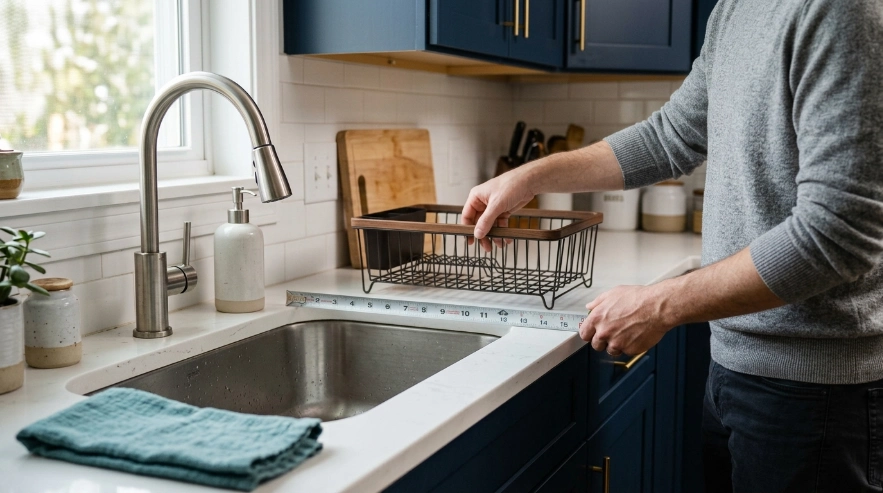
Measure your usable counter before you shop. Leave enough room to use the faucet, soap dispenser, and sink without constantly moving the rack.
I recommend measuring both the rack footprint and the clear space above it. Two-tier racks can save counter width, but cabinets above the sink may limit their usefulness.
Choose a Compact Rack If:
- You wash only a few dishes after each meal.
- Your kitchen has less than about 18 inches of open counter space beside the sink.
- You want to store the rack between uses.
- You already use a dishwasher for most plates and bowls.
Choose a Full-Size Rack If:
- You regularly hand-wash dinner plates and bowls.
- You wash pots, pans, cutting boards, or mixing bowls by hand.
- Several people share the kitchen.
- You want dishes to remain organized while drying overnight.
If heavy cookware creates most of your storage problems, a dedicated cast iron skillet storage rack can keep those pieces out of your everyday dish rack.
Which Dish Rack Material Is Best?
Stainless or coated steel is my first choice for a permanent countertop rack. It provides the stiffness needed to support plates and cookware without the bulky feel of thick plastic.
Plastic racks can still work well, especially in compact designs. Their main advantages are low weight, easy washing, and resistance to conventional metal corrosion.
Stainless and Coated Steel
- Pros: Strong, stable, slim frame, premium appearance
- Cons: Usually costs more and still needs regular cleaning
Plastic
- Pros: Lightweight, affordable, and easy to rinse
- Cons: Can stain or look worn sooner
Bamboo and Wood Accents
- Pros: Warm appearance and less utilitarian styling
- Cons: Natural components should not remain wet continuously
Moisture deserves extra attention around iron cookware. Our guide explaining why cast iron skillets rust covers why thorough drying matters before storage.
Does Drainage Matter on a Dish Rack?
Yes. Drainage is one of the features I would prioritize most. A good rack should move water away from freshly washed dishes instead of creating a shallow puddle underneath them.
Look for one of these drainage systems:
- Angled drain board: Uses gravity to move water toward the sink.
- Swivel spout: Lets you position the rack in different directions.
- Removable tray: Captures water so you can empty and clean it manually.
- Over-sink design: Allows water to drip directly into the sink.
Simplehuman’s premium rack is especially useful when placement is awkward because its drainage spout can be positioned toward the sink. Yamazaki takes a simpler approach with a removable tray beneath its steel basket.
Is a Folding or Expandable Dish Rack Better?
Choose folding if storage is your priority and expandable if capacity changes frequently. These two designs solve different versions of the same counter-space problem.
The OXO Aluminum Fold Flat Dish Rack can transform from a raised rack into a flatter drying surface. Its approximately 16.4-by-14.6-inch footprint makes it appealing when you want useful capacity without committing to a permanent rack.
- Folding rack: Best when you want to put the rack away.
- Expandable rack: Best when some washing loads are much larger than others.
- Fixed rack: Best when you hand-wash dishes every day.
- Over-sink rack: Best when your countertop is extremely limited.
Joseph Joseph’s Extend Slim illustrates the expandable approach well. It measures about 12.2 inches long when closed and extends to roughly 20.5 inches when extra drying room is needed.
How Do I Keep a Dish Rack Clean?
Remove trapped food, soap residue, and standing water regularly. A dish rack handles clean dishes, but the rack itself stays exposed to moisture, kitchen splashes, and debris.
The CDC’s household cleaning guidance notes that ordinary cleaning with soap and water removes most germs from surfaces in typical situations. Follow your rack manufacturer’s care instructions for removable trays, coated metal, wood, and dishwasher-safe parts.
- Empty the rack completely. Remove the utensil cup and drainage tray.
- Wash removable parts. Use warm water and mild dish soap unless the manufacturer says otherwise.
- Clean corners and joints. A small soft brush helps reach narrow spaces.
- Rinse thoroughly. Remove soap and loosened residue.
- Dry before reassembly. Avoid trapping moisture beneath removable parts.
The same gentle-cleaning mindset helps protect other kitchen equipment. See our guide on cleaning a white enamel Dutch oven for cookware-specific care.
Can I Dry Pots and Cast Iron in a Dish Rack?

Heavy pots can use a sturdy rack, but bare cast iron should be dried thoroughly before storage. A strong rack is useful as a temporary draining surface, yet air drying alone may leave moisture on iron longer than you want.
For bare cast iron, towel-dry it and follow the cookware maker’s recommended drying routine. Our Lodge Dutch oven care guide explains the importance of removing moisture before storage.
- Place heavy cookware on the strongest part of the rack.
- Avoid balancing large pans on lightweight plate dividers.
- Keep sharp knives in a protected holder rather than loose between dishes.
- Do not overload a rack beyond its stable footprint.
Which Dish Rack Should You Buy in 2026?
My shortlist is KitchenAid for most kitchens, OXO for compact storage, and Simplehuman for premium drainage. Each solves a different problem without relying on unnecessary extras.
If you are ready to choose one, these are the three models I would compare first:
🏆 Best Overall
KitchenAid Full-Size Dish Rack
★★★★☆ My rating: 4.8/5
Its approximately 20 x 14.96 x 7-inch frame combines large-load capacity with an angled drain board and removable flatware caddy. I like it for buyers who want one straightforward rack that works for everyday plates, bowls, glasses, and occasional cookware.
🏠 Best for Small Kitchens
OXO Aluminum Fold Flat Dish Rack
★★★★☆ My rating: 4.7/5
The folding aluminum-and-plastic design gives you a raised rack when needed and a flatter drying surface when that works better. I would choose it for an apartment or smaller kitchen where permanent counter clutter matters.
💧 Best Premium Drainage
Simplehuman Steel Frame Dishrack
★★★★☆ My rating: 4.6/5
Simplehuman focuses on drainage with a swivel spout and a sturdy steel frame. I would spend the extra money here if you hand-wash frequently, have room for a larger rack, and dislike emptying standing water from drainage trays.
Frequently Asked Questions
What type of dish rack is best for a small kitchen?
A folding, compact, expandable, or over-the-sink dish rack is usually best for a small kitchen. I prefer designs that can disappear between uses rather than a permanently large two-tier rack. Measure the available counter and cabinet clearance before buying.
Is stainless steel or plastic better for a dish rack?
Stainless or coated steel is better when strength and long-term stability are priorities. Plastic is lighter and often cheaper, making it useful for compact or portable racks. Whichever material you choose, drainage and easy cleaning matter more than material alone.
Should a dish rack have a drain board?
Yes, unless the rack sits directly over your sink. A drain board protects the counter and keeps runoff controlled. I prefer angled boards or adjustable spouts because they direct water back toward the sink instead of requiring frequent manual emptying.
How big should a dish rack be for a family?
A family that hand-washes most dishes should usually choose a full-size rack around 18 to 22 inches wide, depending on available counter space. Prioritize stable plate slots, a large utensil holder, and room for bowls, mugs, and occasional cookware.
Is an expensive dish rack worth it?
A premium rack can be worthwhile if you hand-wash dishes every day and value better drainage, sturdy construction, and specialized storage. If you mainly use a dishwasher and wash only a few items by hand, a simple compact rack will usually do the job.
Final Takeaway
The best dish rack is the one that fits your sink area before anything else. Measure first, then choose enough capacity for your normal washing load and a drainage system you will not hate cleaning.
For a typical kitchen, I would start with the KitchenAid Full-Size Dish Rack. Choose the OXO Fold Flat when storage space is tight, or move up to Simplehuman when premium drainage and heavy daily use justify the larger investment.
Pick for your routine, not the longest feature list. A well-sized rack with reliable drainage will make everyday cleanup simpler for years.