
What Are Dish Rack Alternatives? 10 Practical Ways to Dry Dishes

Quick Answer
The best dish rack alternatives include silicone drying mats, microfiber mats, roll-up over-sink racks, clean drying towels, in-sink drainers, fold-flat platforms, and your dishwasher. The right option depends on your counter space, dish load, and how you want water handled. If moisture is your main concern, choosing a waterproof dish-drying surface can make cleanup much easier.
Best alternatives at a glance
- Silicone drying mat: Best when you want a simple, washable surface without a permanent rack.
- Microfiber mat: Good for small loads and easy storage after the dishes dry.
- Roll-up sink rack: Saves counter space and lets water drip directly into the sink.
- Clean drying towel: Works for occasional dishes when you use a fresh, clean surface.
- Dishwasher: The easiest choice when your dishes are dishwasher-safe and you have enough capacity.
- Wall-mounted solution: Useful when counter space matters more than portability.
My simple rule
- Choose a setup that keeps dishes separated, lets air circulate, and does not leave water trapped underneath.
A traditional dish rack works, but it is not the only way to dry dishes. I often prefer alternatives when a permanent rack takes up too much counter space or creates another wet item to clean.
The best choice depends on what you normally wash. A couple of mugs needs a different solution than a sink full of plates, pans, and cooking tools.
What Is a Dish Rack Alternative?
A dish rack alternative is any setup that lets washed dishes drain and dry without relying on a traditional rigid countertop rack. It may use a flat mat, the sink, a dishwasher, a wall-mounted system, or another ventilated surface.
Simple definition: A dish rack alternative gives wet dishes a clean, stable place to drain and air-dry while solving a space, storage, or cleanup problem.
Some alternatives still use bars or supports, but they behave differently from a permanent countertop drainer. A roll-up rack, for example, disappears into a drawer when you finish using it.
If the terminology feels confusing, my guide to different dish rack and dish drainer names explains how these designs overlap.
What Can I Use Instead of a Dish Rack?
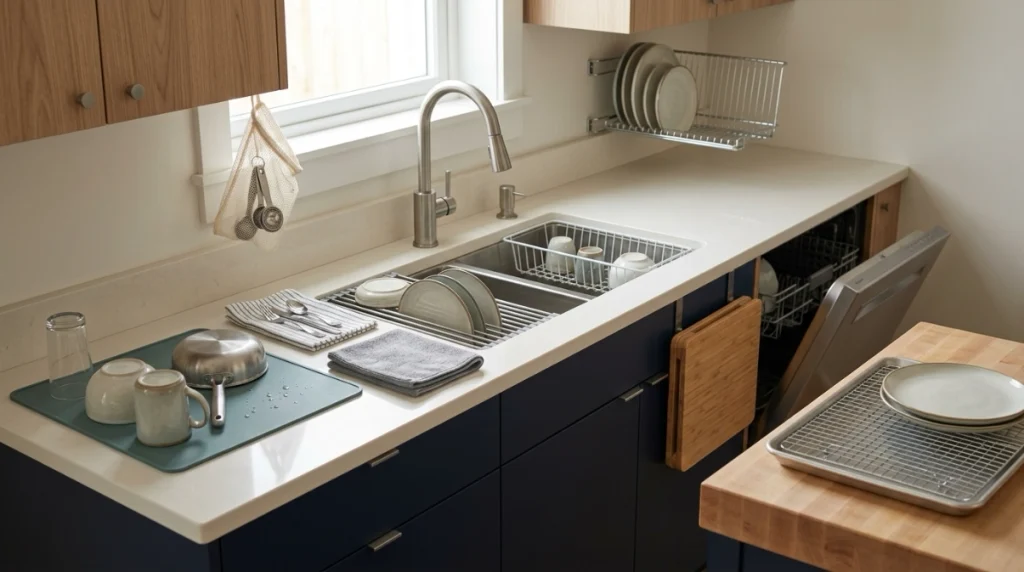
You can replace a traditional dish rack with several practical drying methods. I would choose from these based on space, dish volume, and how often you hand-wash.
- Silicone drying mat: A washable, non-absorbent surface for plates, cups, pans, and utensils.
- Microfiber drying mat: An absorbent option that folds away easily.
- Clean dish towel or paper towel: A temporary drying surface for light or occasional loads.
- Roll-up over-sink rack: A flexible platform that drains directly into the sink.
- In-sink drainer: Keeps wet dishes inside the basin instead of on the counter.
- Fold-flat drying platform: Provides structure but stores almost flat afterward.
- Dishwasher: Handles washing and drying without using counter space.
- Wall-mounted drainer: Moves plates and cups off the worktop completely.
- Ventilated drying cabinet: Combines drying and storage in one location.
- Cooling rack over a tray: A temporary solution when the rack is stable and suitable for kitchen use.
1. Silicone Drying Mat
A silicone drying mat is my first choice when someone wants to eliminate a bulky rack without giving up a dedicated drying zone. Raised ribs can lift cups and cookware slightly above collected water.
Silicone also avoids the laundering routine of an absorbent mat. Many models can be rinsed, wiped, or placed in a dishwasher.
- Best for: Pots, pans, mugs, glassware, and smaller daily loads.
- Main advantage: Easy cleaning and compact storage.
- Main drawback: Plates do not stay upright unless you lean or space them carefully.
A current example is the OXO Good Grips Large Silicone Drying Mat. It measures 16.9 by 12.5 inches, so it gives you a useful drying area without becoming permanent countertop furniture.
2. Microfiber Drying Mat
A microfiber mat absorbs dripping water instead of sending it toward the sink. I like this setup for apartments because the mat can fold into a drawer after it dries.
The tradeoff is maintenance. An absorbent mat should not remain wet beneath dishes for long periods.
- Best for: Cups, bowls, utensils, and occasional hand washing.
- Main advantage: Soft surface and almost no storage footprint.
- Main drawback: Needs regular washing and thorough drying.
If puddles keep appearing around your current setup, these tips for keeping the dish-drying area dry can help you fix the water problem first.
3. A Clean Dish Towel or Paper Towel
A clean towel can work for a few glasses, utensils, or bowls when you do not need a permanent drying station. Spread the items apart instead of stacking wet dishes together.
I would treat this as a temporary method rather than leaving the same damp towel beside the sink all day.
The USDA advises washing kitchen items with warm, soapy water and allowing them to air-dry or using clean single-use paper towels when appropriate. Avoid rubbing supposedly clean dishes with a damp towel that has already been used around the kitchen.
For infant feeding equipment, the CDC’s cleaning and air-drying guidance is even more specific about using a clean surface and letting items dry thoroughly.
4. Roll-Up Over-the-Sink Drying Rack
A roll-up drying rack is one of the smartest alternatives for a small kitchen. It stretches over the sink, then rolls into a narrow bundle when you need the basin back.
Water falls directly into the sink. That removes the drip tray and keeps more of your counter available for food preparation.
- Measure first: The rack needs enough support on both sides of your sink.
- Check stability: Heavy cookware needs a secure platform.
- Watch the faucet: Large items may interfere with normal sink access.
For example, the Surpahs large roll-up model measures about 20.5 by 13.1 inches and is designed for sinks up to about 19.5 inches wide.
5. In-Sink Drainer
An in-sink drainer keeps the entire drying process inside the basin. It is useful when the counter is narrow or made from a surface you prefer to keep dry.
This arrangement also gives dripping water a direct destination. The downside is obvious: part of your sink becomes unavailable until you put the dishes away.
I prefer this idea with a double-bowl sink. One side can handle washing while the second side becomes the drying zone.
6. Fold-Flat Drying Platform
A fold-flat platform gives you more structure than a mat but less visual clutter than a permanent rack. Some designs collapse almost flat when not in use.
This is a useful middle ground if loose plates feel unstable on a mat. You still get slots or supports without sacrificing the counter all day.
7. Use the Dishwasher for Washing and Drying
If most of your dishes are dishwasher-safe, the dishwasher itself may be the easiest dish rack alternative. It keeps the counter clear and contains water inside the appliance.
A dishwasher can also provide a sanitizing cycle on models designed for that purpose. NSF explains that NSF/ANSI 184-certified residential dishwashers must meet defined sanitizing performance requirements when the sanitizing cycle is used.
- Good candidates: Everyday plates, glasses, utensils, and dishwasher-safe cookware.
- Hand-wash separately: Items whose manufacturers recommend hand washing.
- Unload when dry: Avoid closing damp dishes inside a cabinet.
The USDA also notes that effective dishwasher cleaning depends on factors such as water temperature, detergent, and removing food residue. Follow your machine and detergent instructions rather than assuming every cycle sanitizes dishes.
8. Wall-Mounted Dish Drainer
A wall-mounted drainer uses vertical space instead of the worktop. This can make a major difference in a narrow apartment kitchen.
The setup needs secure mounting and enough clearance above the sink or counter. I would not hang a loaded metal system from weak adhesive hooks.
A wall solution makes the most sense when your kitchen layout is permanent. Renters may prefer a roll-up rack or mat that leaves no holes behind.
9. Ventilated Drying Cabinet
A drying cabinet places washed dishes in a ventilated storage area rather than on the countertop. Some kitchen designs use slotted shelves above the sink so water can drain while plates dry.
This approach combines drying and storage, but it requires the right cabinet design. Never close wet dishes inside an ordinary sealed cabinet.
Once everything is fully dry, my guide to the best way to store dishes explains how I organize plates, bowls, and cookware without trapping moisture.
10. Cooling Rack Over a Waterproof Tray
A food-safe cooling rack set over a rimmed tray can serve as a temporary drying platform. The open grid improves airflow while the tray catches runoff.
I would use this only when the rack sits securely on the tray. A narrow or unstable baking rack can slide when you place a heavy pan on it.
- Use a rimmed tray: It keeps runoff from spreading across the counter.
- Check the feet: Make sure the rack cannot slip into collected water.
- Clean both pieces: Wash the rack and tray after the dishes are put away.
Which Dish Rack Alternative Is Best?
The best alternative is the one that solves your biggest problem without creating another one. For most small kitchens, I would start with a silicone mat or roll-up over-sink rack.
For larger households, a dishwasher or a hybrid mat-and-rack setup usually handles more dishes. Here is how the main choices compare.
| Alternative | Current Example / Size | Water Handling | Storage | Best For |
|---|---|---|---|---|
| Silicone mat | OXO Large: 16.9 × 12.5 × 0.25 in. | Holds drips between raised ribs | Roll or hang | Pans and small daily loads |
| Roll-up sink rack | Surpahs Large: 20.5 × 13.1 in. | Drains directly into sink | Rolls into compact bundle | Small kitchens |
| Hybrid rack and mat | Umbra UDry: 24 × 18 × 1.5 in. | Absorbent microfiber mat | Folds for storage | Mixed plates, cups, and cookware |
| Clean towel | No fixed footprint | Absorbs small amounts of water | Folds into drawer | Occasional dishes |
| Dishwasher | Built-in appliance | Contained inside machine | No counter storage needed | Large regular loads |
The specific product dimensions above were checked in 2026. Manufacturers can change dimensions or model names, so measure your sink and counter before ordering.
Are Dish Drying Mats More Hygienic Than Dish Racks?
Neither option is automatically more hygienic. The cleaner choice is usually the setup that drains well, dries completely, and gets washed often enough.
An open rack normally gives plates better separation. A mat has fewer joints and crevices, which can make the surface easier to clean.
- Silicone mat: Rinse or wash it before residue builds up.
- Microfiber mat: Launder it and let it dry fully between uses.
- Roll-up rack: Clean between the bars and dry it before storage.
- Countertop: Wipe away standing water instead of leaving puddles beneath dishes.
The USDA’s kitchen cleaning guidance recommends cleaning utensils and kitchen surfaces with warm, soapy water and allowing them to air-dry or using appropriate clean towels.
The CDC’s food-safety guidance also emphasizes keeping hands, utensils, cutting boards, and kitchen surfaces clean to reduce the spread of germs.
What Is the Best Dish Rack Alternative for a Small Kitchen?
For a small kitchen, I would choose a roll-up over-sink rack first and a silicone mat second. Both can disappear when you need the workspace back.
My practical rule is to measure the sink before measuring products. An over-sink design only saves space when it fits without blocking the faucet or creating an unstable platform.
- Studio apartment: Roll-up over-sink rack.
- One-person household: Silicone or microfiber mat.
- Family kitchen: Dishwasher plus a small mat for hand-wash items.
- Rental kitchen: Portable mat or roll-up design instead of wall mounting.
- Minimalist counter: Fold-flat platform stored after every use.
What Should You Avoid When Drying Dishes Without a Rack?
The biggest mistakes involve trapped moisture, unstable dishes, and dirty drying surfaces. A rack-free setup still needs airflow and routine cleaning.
- Do not stack wet plates: Water can remain trapped between them.
- Do not leave a mat wet: Hang or dry absorbent mats after use.
- Do not reuse a dirty towel: Start with a clean drying surface.
- Do not overload sink racks: Stay within the product’s intended use.
- Do not store damp dishes: Let them dry before closing them inside cabinets.
- Do not ignore puddles: Wipe standing water and clean the area underneath.
Airflow matters more than appearance. Even an attractive setup becomes frustrating if cups stay wet or water collects beneath it every day.
Dish-Drying Products I Would Consider
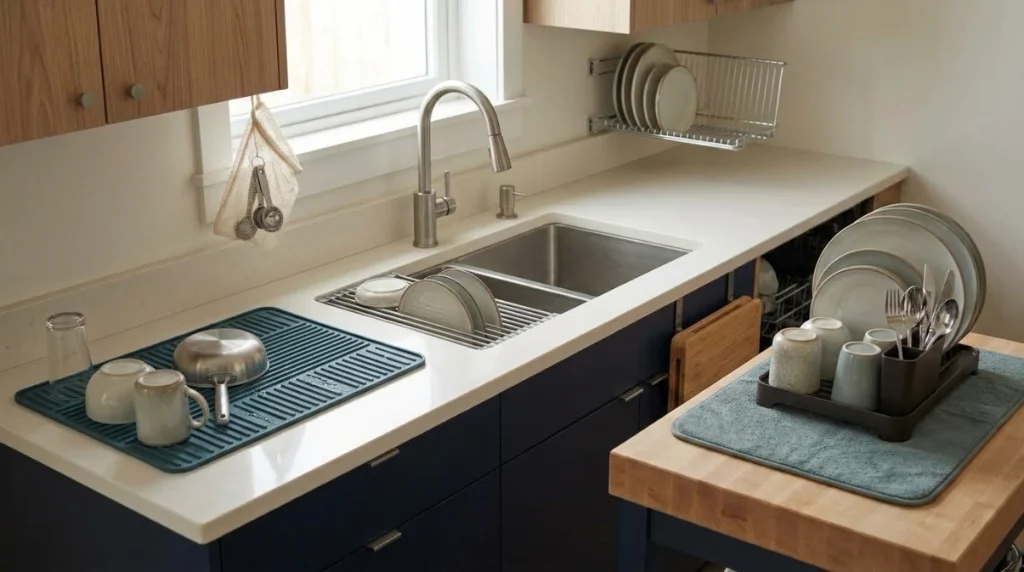
If you’re ready to replace a bulky countertop rack, these three options solve different problems without forcing everyone into the same setup.
🏆 Best No-Rack Option
OXO Good Grips Large Silicone Drying Mat
★★★★½ 4.7/5
The 16.9 × 12.5-inch silicone mat has raised ribs, is dishwasher-safe, and rolls or hangs for storage. I would pick this when easy cleanup matters more than keeping plates upright.
🚰 Best for Small Kitchens
Surpahs Over-the-Sink Roll-Up Dish Drying Rack
★★★★½ 4.6/5
The large version measures about 20.5 × 13.1 inches and rolls away after use. I like the direct-to-sink drainage concept when preserving counter space is the main goal.
🍽️ Best Hybrid Setup
Umbra UDry Dish Drying Rack with Mat
★★★★☆ 4.4/5
UDry combines a removable dish holder with a 24 × 18-inch microfiber mat that folds for storage. I would choose it when a flat mat alone feels too unstructured for plates and cutlery.
Frequently Asked Questions
Can I dry dishes on a towel instead of a dish rack?
Yes. A clean dish towel or disposable paper towel can work for small loads, especially when dishes are spaced apart and allowed to air-dry. Replace or wash reusable towels regularly, and avoid leaving a damp towel sitting on the counter between washing sessions.
Is it okay to put wet dishes directly on the counter?
I would avoid placing wet dishes directly on most countertops. Water can spread under cups and bowls, while hard surfaces may scratch delicate dishes. A clean silicone mat, absorbent mat, or other washable barrier makes drainage and cleanup easier.
What is the cheapest alternative to a dish rack?
A clean kitchen towel is usually the lowest-cost option if you already own one. For frequent hand washing, a basic drying mat may be more convenient because it creates a dedicated drying area and can be stored after use.
What is the best dish rack alternative for pots and pans?
A large silicone drying mat works well for pots, pans, mixing bowls, and awkward cookware because it provides a broad flat surface. A sturdy roll-up sink rack can also work, but check its size and intended load before placing heavy cookware on it.
Can I leave dishes in the dishwasher to air-dry?
Yes, if the dishes are dishwasher-safe and your appliance instructions allow it. Opening the door after the cycle can improve ventilation on many machines, but follow the manufacturer’s directions because drying systems and safety recommendations vary by model.
Final Takeaway
You do not need a traditional countertop dish rack to keep dishes organized while they dry. A silicone mat, roll-up sink rack, clean towel, dishwasher, or wall-mounted system may fit your kitchen better.
I would start by identifying the problem you want to solve. Choose direct-to-sink drainage for wet counters, foldable options for small spaces, and larger washable surfaces for pans and cookware.
Whatever method you choose, keep it simple: wash the drying surface, avoid trapped water, let dishes dry completely, and put everything away once it is ready.