
What Should I Put Under a Dish Rack? Best Options for a Dry Counter

Quick Answer
Put a waterproof, easy-to-clean surface under a dish rack. A sloped drain board is my first choice because it sends water toward the sink, while a silicone drying mat works well when you need a flexible alternative. If your rack already has an effective built-in tray, you may not need anything extra. Correct placement matters too, so see how to properly use a dish rack.
Best things to put under a dish rack
- Drain board: Best when you want water directed back into the sink.
- Silicone drying mat: Waterproof, washable, and easy to store.
- Microfiber drying mat: Absorbs drips but needs regular washing and thorough drying.
- Waterproof tray: Useful when your rack has no drainboard or drainage spout.
- Nothing extra: Fine when the rack already has a well-designed self-draining tray.
What I would avoid
- Avoid cardboard, paper liners, or a permanently damp kitchen towel beneath the rack.
Water under a dish rack looks like a small problem until the counter stays damp every day. I prefer treating the area under the rack as part of the drying system, not just empty counter space.
The right surface catches drips, protects the countertop, and stays easy to clean. This guide explains which option works best for different kitchens and which materials I would skip.
What Is the Best Thing to Put Under a Dish Rack?
A sloped drain board is usually the best choice because it catches water and directs it toward the sink. A silicone drying mat is my second choice when direct drainage is not practical.
A dish rack itself is simply a raised holder that separates washed dishes while they drain and air-dry. You can read more about what a dish rack is used for if you are setting up a drying area from scratch.
The surface underneath has a different job. It needs to manage the water that passes through the rack.
- Choose a drain board when the rack sits directly beside the sink.
- Choose silicone when you want waterproof protection without a bulky tray.
- Choose microfiber when storage space matters and you can wash the mat regularly.
- Use the built-in tray when your rack already drains cleanly without leaking.
My practical rule is simple. If water reaches the counter after a normal load of dishes, the current setup needs better protection.
Dish Rack Mat vs. Drain Board: Which Is Better?
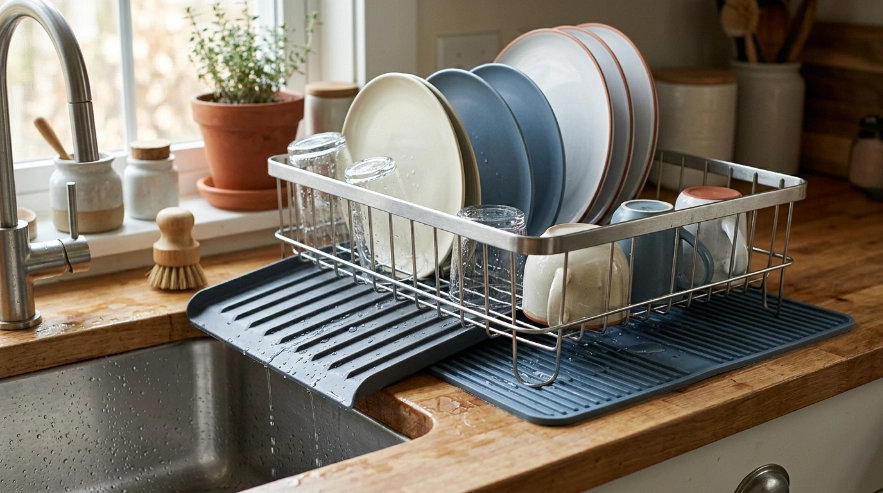
A drain board controls water better, while a drying mat is easier to store. Your best choice depends on whether you want water to drain away or be temporarily caught underneath the rack.
| Option | How It Handles Water | Cleaning | Best For | Main Drawback |
|---|---|---|---|---|
| Sloped drain board | Directs water toward the sink | Usually rinse or wash | Daily dish washing | Requires correct sink-side positioning |
| Silicone drying mat | Contains drips on a waterproof surface | Easy to rinse; many are dishwasher-safe | Small and medium kitchens | Water still needs to be emptied or wiped away |
| Microfiber mat | Absorbs dripping water | Usually machine washable | Occasional washing and tight storage | Can remain damp if overloaded |
| Waterproof tray | Collects water in one contained area | Must be emptied and washed | Racks without drainboards | Standing water can collect |
| Kitchen towel | Absorbs a limited amount | Needs frequent laundering | Temporary use | Can stay damp beneath the rack |
Should I Put a Silicone Mat Under My Dish Rack?
Yes, a silicone drying mat is one of the safest general-purpose choices. It creates a waterproof barrier between dripping dishes and your counter.
I especially like silicone beneath racks that have open wire bottoms but no proper drainboard. Raised ribs are helpful because the rack does not sit completely flat against trapped water.
- Waterproof: Water cannot soak through the material into the counter.
- Easy to wash: You can usually rinse away soap residue and mineral deposits quickly.
- Reusable: A good mat can remain part of your daily dishwashing setup.
- Easy to store: Flexible models can roll or lie flat inside a cabinet.
- Counter protection: Silicone also creates a barrier between rack feet and the work surface.
The OXO Large Silicone Drying Mat, for example, measures 16.9 by 12.5 inches and uses raised ribs. That size works beneath many compact racks, though you should measure your rack before buying.
Can I Put a Microfiber Drying Mat Under a Dish Rack?
Yes, but microfiber works best when you can remove, wash, and dry it regularly. It absorbs dripping water rather than sending the water toward the sink.
That makes microfiber useful in apartments and small kitchens. You can fold the mat away once the dishes and mat are completely dry.
The downside appears after large loads. An absorbent mat can eventually become saturated if a rack releases more water than the fabric can handle.
- Use a mat wider than the rack’s footprint.
- Do not leave a soaked mat pressed against the counter.
- Wash it according to the manufacturer’s instructions.
- Let both sides dry fully before putting it away.
Airflow also affects how quickly dishes dry. Our guide to organizing dishes in a dish rack explains how plate spacing, bowl angles, and cup placement affect drainage.
When Should I Use a Drain Board Under a Dish Rack?
Use a drain board when your dish rack sits beside the sink and releases a steady amount of water. This is the setup I prefer for frequent hand washing.
A good board has a slight slope or drainage lip. Instead of storing water underneath the rack, it guides the drips back toward the basin.
- Measure the rack’s width and depth.
- Choose a board large enough to catch drips from every side.
- Place its drainage edge toward the sink.
- Check that the counter is level enough for the intended flow.
- Clean the board whenever residue starts appearing.
Rubbermaid’s Universal Drain Board is one example of this design. The manufacturer lists it at about 17.5 by 13.18 inches and gives it a sloped, over-sink drainage lip.
If you are still deciding whether a permanent rack deserves counter space, see whether you really need a dish rack first.
Do I Need Anything Under a Dish Rack With a Drain Tray?
Not necessarily. If the rack already has a tray that catches every drip and empties toward the sink, adding another layer may only make cleaning harder.
Run a normal load through the rack before buying anything. Then check the front, sides, rack feet, and countertop underneath.
- No water escapes: Keep using the built-in system.
- Small drips escape: A thin silicone mat may solve the problem.
- Water pools underneath: Reposition or replace the drain tray.
- The tray overflows: Empty it more often or switch to direct sink drainage.
I would rather fix the drainage path than stack several absorbent layers beneath the rack. Simpler setups are easier to inspect and clean.
What Should I Put Under a Dish Rack on a Wood Counter?
Use a non-absorbent waterproof barrier on wood. I would choose a silicone mat or drain board instead of letting a wet rack sit directly on butcher block or another wood surface.
The important goal is moisture control. The U.S. Environmental Protection Agency emphasizes controlling moisture and drying wet materials as part of preventing mold problems in the home through its mold and moisture guidance.
- Use a mat or tray that extends beyond every rack foot.
- Wipe escaped water promptly.
- Lift the rack occasionally and inspect underneath it.
- Do not leave a soaked cloth mat on wood.
- Follow the countertop manufacturer’s care instructions.
The same cautious approach makes sense around laminate seams and other areas where persistent water can become troublesome.
Is It Okay to Put a Towel Under a Dish Rack?
A clean towel can work temporarily, but I would not choose it as a permanent under-rack surface. Towels absorb water instead of controlling where that water goes.
Once a towel becomes wet underneath a loaded rack, airflow around the damp fabric can be limited. You also have to lift the rack whenever the towel needs replacing.
The CDC recommends allowing cleaned items to air-dry thoroughly in its home cleaning and disinfecting guidance. For an everyday drying station, I prefer a surface that remains easy to rinse, inspect, and dry.
If a towel is all you have today, use a clean one and replace it once it becomes wet. Do not treat the same damp towel as a permanent rack liner.
What Should You Never Put Under a Dish Rack?
Avoid materials that absorb water without drying quickly or that deteriorate when repeatedly wet. They make moisture harder to notice and cleaning more difficult.
- Cardboard: It absorbs water and loses its shape.
- Paper towels as a permanent liner: They become soggy and need constant replacement.
- Decorative paper shelf liner: Unless specifically waterproof, it is poorly suited to regular dripping water.
- Thick rugs: They trap more material beneath the rack than necessary.
- Dirty or damp kitchen towels: They should not become permanent drying surfaces.
The FDA also recommends cleaning dishes, utensils, cutting boards, and countertops with hot, soapy water as part of its safe food handling guidance. Keeping the area beneath your rack simple makes routine counter cleaning much easier.
How Do I Keep the Area Under My Dish Rack Dry?

Good drainage matters more than absorption alone. Set up the rack so water either reaches the sink or remains on a removable waterproof surface you can empty and clean.
- Shake off excess rinse water. Let large droplets fall into the sink before loading each item.
- Keep dishes separated. Crowded items hold more water and take longer to dry.
- Point the drainage system correctly. A spout facing away from the sink defeats its purpose.
- Empty standing water. Do not let an under-rack tray remain full between loads.
- Clean the base regularly. Soap film and mineral residue are easier to remove early.
- Let the setup dry. Once dishes are put away, give the rack and its base some open-air drying time.
You can also review the benefits of using a dish rack to see why drainage and organization matter as much as capacity.
Which Under-Dish-Rack Setup Is Best for Your Kitchen?
Match the base to your sink position, counter material, and dish volume. There is no need to buy the most complicated option.
- Busy family kitchen: Use a sloped drain board that sends water into the sink.
- Apartment kitchen: Try a compact silicone mat that rolls or stores flat.
- Occasional hand washing: A washable microfiber mat may be enough.
- Wood countertop: Use a waterproof silicone mat or rigid tray.
- Rack with excellent built-in drainage: Add nothing unless water still reaches the counter.
As of 2026, I still prefer uncomplicated systems. The easier a surface is to remove and clean, the more likely it is to stay part of a tidy daily routine.
Dish Rack Mats and Drain Boards I Would Consider
If you are ready to improve the area under your rack, these are three practical styles I would consider first.
Best Overall
OXO Good Grips Large Silicone Drying Mat
★★★★☆
OXO lists this silicone mat at 16.9 × 12.5 × 0.25 inches, with raised ribs and dishwasher-safe construction. I like this option under a smaller rack because it creates a waterproof, flexible base without taking over the whole counter.
Best for Direct Drainage
Rubbermaid Universal Drain Board
★★★★☆
Rubbermaid lists this board at roughly 17.5 × 13.18 inches. Its sloped design and over-sink lip make it the option I would choose when the main goal is moving drips away instead of absorbing them.
Best All-in-One Alternative
Umbra UDry Dish Drying Rack with Mat
★★★★☆
The UDry combines a removable rack with a microfiber mat measuring about 24 × 18 inches. I would consider it when you want the rack and absorbent base designed as one system that can fold away after use.
Frequently Asked Questions
Do you need a mat under a dish drying rack?
No. You do not need a mat if your dish rack already has a drain tray that catches water effectively. Add a silicone or microfiber mat when drips escape the rack, the rack scratches the counter, or you want an extra removable layer beneath it.
Is silicone or microfiber better under a dish rack?
Silicone is better when waterproof protection and easy rinsing are the priorities. Microfiber is better when you want an absorbent surface that folds away easily, but the fabric needs regular washing and enough time to dry completely between uses.
How do I stop water from pooling under my dish rack?
Use a sloped drain board or correctly positioned drainage spout that leads toward the sink. Also avoid overcrowding the rack, empty collection trays regularly, and check whether the counter or tray position prevents water from flowing in the intended direction.
Can I put a dish rack directly on a countertop?
Yes, if the rack has an effective built-in drain tray and the countertop can tolerate occasional moisture. I would still inspect underneath it regularly. On wood or around vulnerable seams, a waterproof mat or drain board provides an extra layer of protection.
How often should I clean the mat under my dish rack?
Clean it whenever you see residue, discoloration, food debris, standing water, or odors. A heavily used mat will need attention more often than one used occasionally. Always follow the manufacturer’s washing instructions and let the mat dry thoroughly afterward.
Final Takeaway: What Should You Put Under a Dish Rack?
For most kitchens, put a sloped drain board or washable silicone drying mat under your dish rack. Both protect the counter without relying on a permanently damp absorbent layer.
Choose a drain board when your rack sits close enough to send water directly into the sink. Choose silicone when you need a flexible waterproof surface, and use microfiber when compact storage matters more than direct drainage.
If your rack already keeps every drop off the counter, do not add another product simply because you think you are supposed to. The best setup is the one that keeps water controlled, dishes drying freely, and the entire sink area easy to clean.