
How Do I Keep the Area Under My Dish Rack Dry and Clean?

Quick Answer
To keep the area under your dish rack dry, give dripping water somewhere to go. Use a draining tray, silicone drying mat, or absorbent mat, then empty or dry it after each dish-washing session. Don’t leave trapped water sitting under the rack, since ongoing moisture can encourage mold growth; the CDC’s mold guidance recommends fixing moisture problems instead of only cleaning the visible result.
My Simple Routine
- Catch the drips: Put a drainboard or drying mat under the entire rack.
- Guide water away: Point a sloped drainboard toward the sink whenever possible.
- Wipe puddles: Don’t let standing water remain after the dishes are dry.
- Lift the rack: Clean underneath instead of wiping only around the edges.
- Dry the mat: Hang absorbent mats between uses so both sides can dry.
If Water Still Collects
- Check whether the rack, tray, faucet, or nearby sink edge is sending water outside the protected area.
I used to think the occasional puddle under a dish rack was unavoidable. I would wipe the visible water and leave the rack sitting in the same spot.
The problem was underneath it. Once I started lifting the rack, drying the surface, and controlling where the water drained, the whole area became easier to maintain.
Why Does Water Keep Collecting Under My Dish Rack?
Water usually collects under a dish rack because drips have no clear drainage path. A flat tray can catch water but still leave it sitting beneath the rack.
There can also be more than one water source. I check these first:
- Wet dishes: Bowls, cups, and utensils continue dripping after washing.
- Flat drainboards: Water collects instead of flowing toward the sink.
- Small mats: Drips land beyond the mat’s edges.
- Faucet splashes: Water can reach behind or beside the rack.
- Overloaded racks: Large pans may drip outside the tray.
- Trapped moisture: Water stays between the mat and countertop.
I learned to dry the counter first, then watch where new water appeared. That simple check often shows the real problem within one washing session.
What Should I Put Under a Dish Rack?
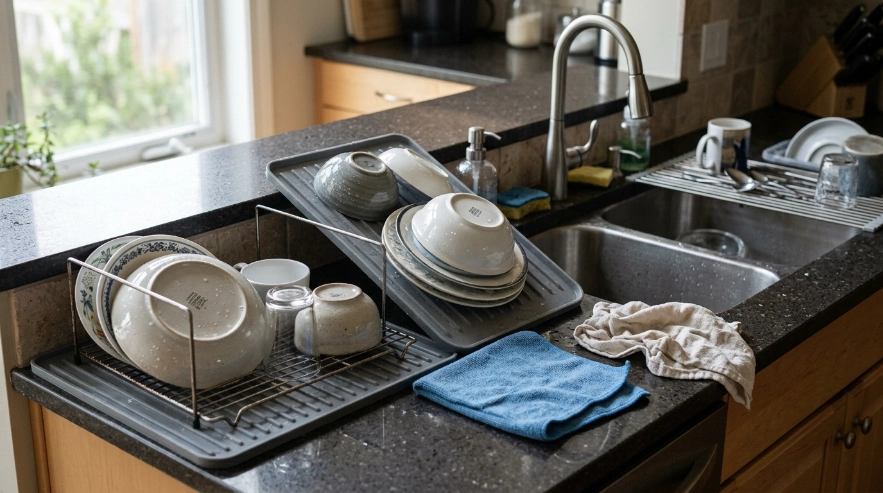
The best material under a dish rack depends on how much water you normally deal with. I prefer something that either drains water into the sink or can be cleaned and dried easily.
A permanent kitchen towel is my least favorite solution. It works for a quick spill, but a damp towel trapped under a rack can stay wet for too long.
| Option | How It Handles Water | Best For | Main Drawback |
|---|---|---|---|
| Sloped drainboard | Channels drips toward the sink | Heavy daily dish washing | Needs the right angle and placement |
| Silicone drying mat | Catches water on a washable surface | Easy cleaning and reuse | Water must still be emptied or dried |
| Microfiber drying mat | Absorbs dripping water | Small kitchens and light loads | Must be washed and fully dried |
| Over-sink rack | Lets water fall directly into the sink | Limited counter space | Must fit your sink correctly |
| Dish towel | Absorbs a small amount of water | Temporary use | Can remain damp underneath |
Is a Silicone Mat Good Under a Dish Rack?
Yes. A silicone mat works well when you want a non-absorbent surface that you can rinse, wipe, or wash.
I like ribbed silicone because the raised surface helps keep the rack from sitting directly in collected water. The important part is still removing that water rather than letting it remain all day.
Is an Absorbent Dish Mat Better?
An absorbent mat can be better for light dripping because it keeps small puddles from spreading across the counter. It also works well when a drainboard cannot point toward the sink.
The tradeoff is drying time. I wouldn’t leave a wet microfiber mat trapped beneath a loaded rack for days.
How Do I Keep the Counter Under My Dish Rack Dry?
The most reliable method is to control the water before it reaches the counter. I use a five-step routine instead of chasing puddles later.
- Start with a completely dry counter. Lift the rack and wipe the entire area, including the back edge near the wall.
- Place a mat or drainboard under the full footprint. Make sure cups and pans cannot drip beyond its edges.
- Point drainage toward the sink. A tray that drains backward creates another puddle.
- Empty standing water after the dishes dry. Don’t wait until the next washing session.
- Lift everything regularly. Wipe the counter and let both the mat and rack dry before putting them back.
The biggest improvement for me came from step five. The top of a counter can look dry while a thin film of water remains underneath a mat.
Should My Dish Rack Drain Into the Sink?
If your layout allows it, yes. Direct drainage reduces the amount of water you need to absorb or wipe manually.
A drain spout or sloped tray should reach the sink without creating a gap. Test it by pouring a small amount of clean water into the tray and watching the path.
Can I Put My Dish Rack Directly on the Counter?
You can if the rack has a built-in drainboard that contains the water. I still check underneath because splashes and overflow can escape the tray.
I would avoid placing a bare wire rack directly on a countertop when dishes drip freely through it. That setup gives the water nowhere to go.
How Often Should I Clean Under My Dish Rack?
I do a quick moisture check each day and a more complete clean about once a week. Busy kitchens may need it more often.
My routine is simple:
- After washing dishes: Empty obvious standing water.
- Daily: Check the front, sides, and back for puddles.
- Every few days: Hang an absorbent mat until fully dry.
- Weekly: Remove the rack and wash the protected surface.
- As needed: Clean mineral deposits, food residue, or visible grime.
The USDA recommends cleaning kitchen sinks with warm, soapy water and drying or sanitizing as appropriate. You can read its kitchen sink cleaning guidance for more detail.
How Do I Stop Mold or Mildew Under a Dish Rack?
The main goal is moisture control. Cleaning a dark mark without fixing the wet conditions means the same problem may return.
The EPA’s indoor air quality guidance emphasizes controlling indoor moisture. The CDC likewise recommends cleaning mold and addressing the moisture problem that allowed it to grow.
What I Do When I Find a Musty Smell
A musty smell makes me remove the entire rack immediately. I don’t just spray cleaner around the visible edges.
- Move dishes away from the cleaning area.
- Remove the rack, mat, and drainboard.
- Wash hard surfaces with appropriate household cleaner or soap and water.
- Rinse when the cleaner requires rinsing.
- Dry the counter completely.
- Wash and dry the rack or mat separately.
- Correct the drainage problem before replacing everything.
If you use bleach, follow the product directions and never mix it with ammonia or other household cleaners. The CDC’s mold cleanup guidance specifically warns against mixing cleaning products.
Does Countertop Material Change What I Should Do?
Yes. The basic rule stays the same, but the safest cleaner depends on your countertop material.
- Laminate: Keep water away from seams and exposed edges.
- Wood or butcher block: Wipe water promptly and avoid leaving a wet mat in place.
- Natural stone: Use cleaners suitable for the specific stone and sealer.
- Quartz: Follow the countertop maker’s cleaner recommendations.
- Stainless steel: Wipe standing water and dry to reduce spotting.
I don’t assume one cleaning solution is safe for every surface. The countertop manufacturer’s instructions take priority when chemicals or stains are involved.
What Mistakes Keep the Area Under a Dish Rack Wet?
Most recurring puddles come from setup problems rather than the rack itself. These are the mistakes I check first.
- Using a mat that’s too small: Large pans drip beyond the protected area.
- Never lifting the rack: Hidden water remains trapped underneath.
- Leaving the same towel down: It absorbs water but never gets a chance to dry.
- Ignoring the drainboard angle: Water pools instead of reaching the sink.
- Overloading the rack: Dishes extend beyond the tray and drip onto the counter.
- Ignoring sink splashes: The dish rack gets blamed for water coming from the faucet.
I also check nearby cookware for hidden moisture. Water left around kitchen storage can cause trouble elsewhere, especially with iron cookware; my guide to why cast iron skillets rust explains why keeping metal cookware dry matters.
Should I Use a Dish Rack, Drying Mat, or Over-Sink Rack?
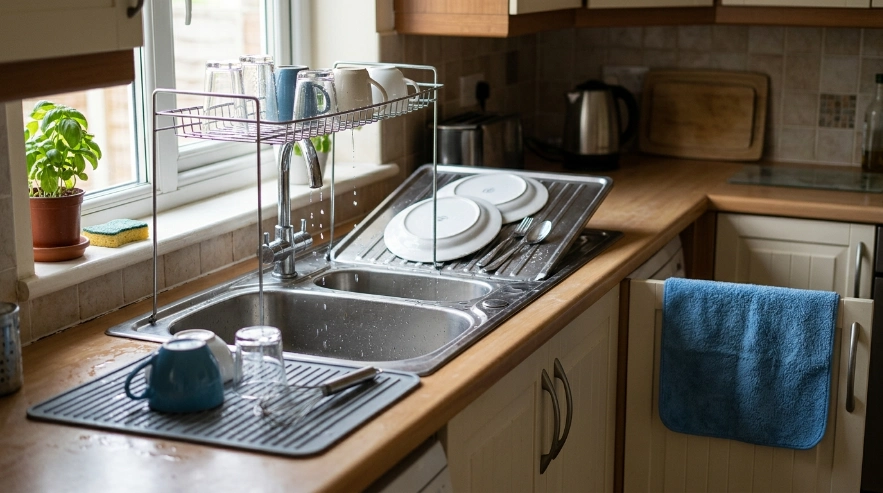
I choose based on where I want the water to end up. If possible, I prefer sending it straight back into the sink.
Here’s the quick decision:
- Choose a drainboard when you have counter space beside the sink.
- Choose silicone when you want a washable, non-absorbent surface.
- Choose microfiber when light absorption and easy storage matter most.
- Choose an over-sink rack when you want direct drainage and less wet counter space.
As of 2026, there are good options for each setup. I care more about drainage and easy cleaning than extra rack features.
Dish-Drying Products I’d Consider
If you’re trying to stop the puddle instead of wiping it forever, these are three practical setups I’d consider.
🏆 Best Simple Mat
OXO Good Grips Large Silicone Drying Mat
★★★★☆
The 16.9 × 12.5-inch silicone mat uses raised ribs to keep drying items above collected water, and it’s dishwasher safe. I like this style when I want something I can rinse clean rather than an absorbent mat that needs drying time.
💧 Best All-in-One
Umbra UDry Dish Drying Rack with Mat
★★★★☆
UDry combines a removable dish rack with an absorbent microfiber drying mat. The mat is machine washable, so I’d pick this for a small counter where I want the rack and water-catching surface to work as one unit.
🚰 Best for Direct Drainage
OXO Good Grips Over-the-Sink Aluminum Dish Rack
★★★★★
Its extendable arms let the rack sit over different sink widths, so dripping water can fall into the sink instead of sitting on the counter. This is the setup I’d favor when keeping the counter dry matters more than maximizing sink access.
Frequently Asked Questions
What can I put under my dish rack to absorb water?
A microfiber drying mat can absorb normal drips from hand-washed dishes. Make sure the mat extends beneath the entire rack, then wash and fully dry it regularly so moisture doesn’t stay trapped between the mat and countertop.
Can I put a towel under my dish rack?
Yes, but I treat a towel as a temporary solution. Replace it when it becomes wet and let it dry completely before reuse. Leaving the same damp towel underneath the rack can keep the countertop wet longer than you realize.
Why does my dish rack smell bad?
A bad smell often means moisture, food residue, or grime has remained in the rack, tray, or mat. Remove every piece, clean it according to its material, wash the counter underneath, and let everything dry fully before reassembling the area.
How do I keep water from getting behind my dish rack?
Move the rack far enough from the backsplash to wipe behind it, and check the direction of faucet splashes. A larger drying mat or drainboard can also catch droplets that currently land beyond the rack’s existing tray.
Is standing water under a dish rack a problem?
Yes. Standing water can stain some surfaces, create odors, leave mineral deposits, and maintain the damp conditions that mold needs. Wipe or drain collected water instead of treating the underside of the rack as permanent water storage.
My Final Takeaway
If you’re wondering how to keep the area under your dish rack dry, don’t focus only on wiping. Give the water a controlled place to drain, collect, or absorb first.
My preferred setup is simple: a rack with good drainage, a washable surface underneath, and enough room to lift everything for cleaning. That combination removes most of the frustration.
Check underneath regularly. A thirty-second wipe after the dishes are put away is much easier than dealing with trapped grime, odors, or mold later.
