
What to Do With an Old Dish Rack? 11 Practical Ideas

Quick Answer
An old dish rack does not automatically belong in the trash. If it is sturdy, you can clean it, repurpose it for storage, donate it, sell it, or recycle its materials; if rust, cracks, loose parts, or sharp edges make it unreliable, use this guide to know when to replace a dish rack instead.
What to do first
- Check its condition: Look for rust, cracks, bent supports, loose joints, peeling coatings, and sharp edges.
- Clean it thoroughly: Remove grease, mineral deposits, soap film, and trapped debris before deciding its next use.
- Reuse it elsewhere: A sturdy rack can organize lids, cutting boards, mail, craft supplies, or garden items.
- Offer it locally: Clean racks in good condition may still be useful to another household.
- Recycle by material: Check local rules before placing metal or plastic components in a recycling program.
- Replace unsafe racks: Retire anything unstable, badly corroded, cracked, or difficult to keep clean.
My simple rule
- Reuse it only when it remains stable, smooth, washable, and suitable for its new job.
I hate throwing away a kitchen item just because it no longer looks perfect beside the sink. An old dish rack often has plenty of useful life left somewhere else.
The key is separating harmless wear from damage that makes the rack difficult or unsafe to use. Here is how I make that decision and the reuse ideas I would try first.
What Counts as an Old Dish Rack?
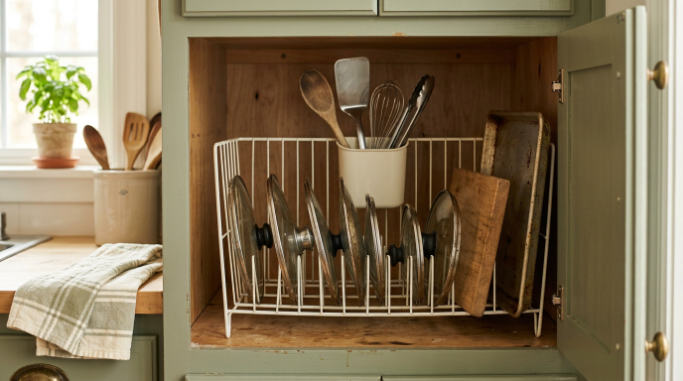
An old dish rack is a drying rack you no longer want to use for its original sink-side job because of age, wear, changed kitchen needs, or a replacement purchase. Old does not necessarily mean unusable.
Simple definition: A reusable old dish rack is still structurally sound and cleanable, even if it no longer works well as your everyday drying setup.
As of 2026, I would think about reuse before disposal whenever the rack is still functional. That keeps a useful object in service and saves you from buying another organizer for a different job.
Should You Keep, Donate, Recycle, or Throw Away an Old Dish Rack?
Start with its physical condition. A rack that looks dated but remains strong deserves a different future from one with exposed sharp metal or broken supports.
| Condition | Stability | Best Next Step | Where I Would Use It |
|---|---|---|---|
| Clean with light cosmetic wear | Good | Keep or donate | Kitchen or household storage |
| Stained but washable | Good | Repurpose | Garage, office, craft area |
| Small isolated rust spots | Check carefully | Non-food reuse or material recycling | Utility storage |
| Bent or loose supports | Poor | Recycle when accepted | Avoid load-bearing reuse |
| Cracked plastic or sharp exposed metal | Unsafe | Retire it | None |
If the rack still handles weight without wobbling, I look for a reuse project first. Cosmetic discoloration matters much less when the rack will hold pot lids in a cabinet.
What Can You Do With an Old Dish Rack?
A sturdy rack can organize much more than wet plates. Its slots, rails, compartments, and raised frame already solve several storage problems.
These are the ideas I find most practical because they require little or no modification.
1. Turn It Into a Pot-Lid Organizer
Dish-rack slots are almost made for saucepan and skillet lids. Place the clean rack inside a deep cabinet or pantry and slide one lid into each section.
- Best for: Wire and rigid plastic racks.
- Main benefit: You can grab one lid without lifting an entire stack.
- Check first: Make sure the rack does not scratch cabinet shelves.
2. Store Cutting Boards and Baking Sheets
A plate rack can separate cutting boards, serving trays, baking sheets, and lightweight muffin pans. Vertical storage also makes each piece easier to see.
I especially like this idea for racks that are still straight but have lost their matching drain tray.
3. Organize Food-Container Lids
Food-storage lids become messy because flat pieces slide into each other. Dish-rack slots give them permanent divisions.
- Group small lids together.
- Keep large container lids in another section.
- Place the matching containers beside the rack.
- Remove lids that no longer have a container.
4. Make a Mail and Paper Organizer
A clean old rack can become a simple desktop sorter. Use the plate slots for incoming mail, bills, notebooks, folders, or documents that need attention.
Move the utensil cup to the side for pens and markers if it detaches.
5. Create a Craft-Supply Station
Craft rooms are another good destination for a rack that no longer looks nice enough for the kitchen. The dividers can separate paper, cutting mats, stencils, or small canvases.
- Utensil holder: Brushes, scissors, rulers, and markers.
- Plate slots: Cardstock, palettes, stencils, and notebooks.
- Lower tray: Beads, clips, glue sticks, or scraps.
6. Use It to Organize Garden Supplies
A corrosion-resistant rack can hold small empty pots, plant labels, gloves, seed packets, and hand tools in a sheltered potting area. I would keep badly rusted racks away from this job because outdoor moisture can accelerate deterioration.
7. Organize Cabinet Plates Instead of Drying Them
If you dislike the rack on your countertop, move it into a cabinet. A compact rack can keep plates upright and easier to reach.
This works best when the slots fit your dishes without forcing or rubbing their edges.
8. Use It for Pan and Bakeware Storage
Heavy cookware needs a strong organizer, so test the rack before loading it. A rigid rack can work well for lightweight pans, cooling racks, silicone baking mats, and shallow trays.
A weak folding rack is better reserved for lighter objects.
Can You Repair or Repurpose a Rusty Dish Rack?
Sometimes, but I would judge the rack by structure rather than appearance. Light surface rust is different from corrosion that has thinned, flaked, or weakened the metal.
If rust is the reason you are replacing yours, my guide to dish rack materials that resist rust explains the advantages of stainless steel, aluminum, silicone, and plastic.
- Keep evaluating: Tiny isolated spots on otherwise solid metal.
- Move to non-food storage: A rack that remains sturdy but has cosmetic deterioration.
- Retire it: Deep corrosion, flaking material, rough edges, broken welds, or serious instability.
I would not spend hours restoring a cheap rack whose structure is already failing. At that point, recycling the usable material makes more sense.
Can You Donate or Sell an Old Dish Rack?
Yes, if it is clean, complete, stable, and still something another person could use. The EPA’s reduce, reuse, and donation guidance encourages giving usable goods another life instead of automatically discarding them.
Goodwill accepts many household goods, but individual donation centers set their own policies. Check locally before making a special trip.
- Wash and dry the rack completely.
- Include the drain tray and utensil holder when available.
- Do not donate a rack with sharp edges or unstable joints.
- Photograph the rack clearly if you plan to sell or give it away online.
- Describe rust, stains, missing pieces, or other flaws accurately.
A local Habitat for Humanity ReStore may also accept certain household goods, although acceptance varies by location. Contact the store first.
Can an Old Dish Rack Be Recycled?
It depends on the material and your local program. A metal rack may need to go to a scrap-metal or drop-off facility instead of your household recycling cart.
Mixed-material racks are trickier because plastic feet, rubber coatings, trays, and stainless or steel frames may need separating.
- Identify the material. Check labels, packaging, or the manufacturer’s specifications if you still have them.
- Remove detachable pieces. Separate trays, rubber feet, utensil cups, and other easy-to-remove components.
- Check local rules. Recycling programs differ considerably by municipality.
- Find a drop-off point. The Earth911 recycling search can help locate nearby options in the United States.
- Do not guess. When your local program does not accept the item, putting it in the recycling bin can create more sorting problems.
The EPA also recommends checking local recycling requirements because accepted materials and collection methods vary. That matters especially with bulky or mixed-material household products.
What If You Still Need Somewhere to Dry Dishes?
You do not have to buy another full-size rack immediately. A drying mat, over-sink rack, roll-up rack, or simple raised setup may suit your kitchen better.
My guide to practical alternatives to a dish rack compares the easiest choices when you want less counter clutter.
- Silicone drying mat: Good for small loads and easy storage.
- Microfiber mat: Useful when you can hang it to dry afterward.
- Over-sink rack: Sends dripping water directly into the basin.
- Roll-up rack: Useful when permanent counter space is limited.
- Cooling rack over a tray: A workable no-buy temporary solution.
If you enjoy DIY projects, you can also make your own dish rack and size it around your actual sink area. That can be useful when standard racks never seem to fit.
When Is It Better to Replace the Rack?
Replace it when cleaning and repurposing no longer solve the underlying problem. Structural damage is the clearest cutoff.
- Sharp edges: Exposed wire or cracked plastic can scratch hands and dishes.
- Loose joints: A rack that shifts under normal weight is no longer dependable.
- Deep corrosion: Flaking or weakened metal is more than a cosmetic issue.
- Cracked supports: Broken plate slots can let dishes tip unexpectedly.
- Persistent buildup: Replace components you can no longer clean adequately.
- Poor fit: A rack that constantly blocks your sink may simply be wrong for the space.
When replacement makes sense, compare drainage, footprint, material, and storage before focusing on accessories. My 2026 dish drying rack comparison covers those differences in more detail.
Replacement Dish Racks I Would Consider
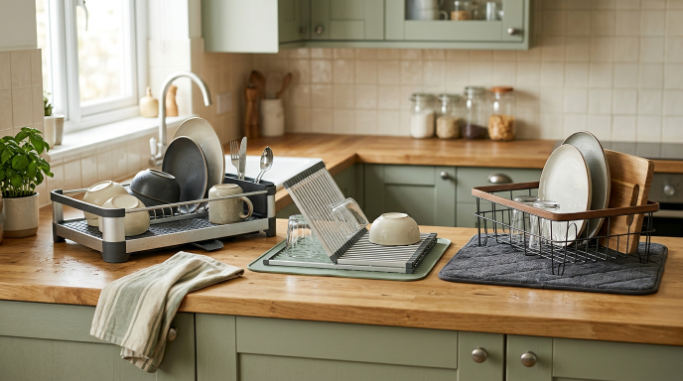
If your old rack is beyond useful reuse, I would choose the replacement around the problem that made you dislike the old one.
🏆 Best Overall
Joseph Joseph Extend Expandable Dish Rack
★★★★☆
Its expandable platform and adjustable drainage make it flexible for changing dish loads. I like this approach when a fixed-size rack feels either too large or too cramped depending on the day.
📦 Best for Small Kitchens
OXO Good Grips Aluminum Fold Flat Dish Rack
★★★★☆
The aluminum frame folds down when you want your work surface back. I would pick this style when the biggest complaint about the old rack was permanent counter clutter.
🧺 Best Flexible Setup
Umbra UDry Dish Drying Rack with Mat
★★★★☆
UDry combines plate support with a foldable drying mat rather than a bulky permanent tray. I like it for kitchens where the drying area needs to disappear between washing sessions.
Frequently Asked Questions
Can I put an old dish rack in the recycling bin?
Not automatically. Metal, plastic, rubber, and coated components may follow different local recycling rules. Check your municipality first, and consider a scrap-metal or recycling drop-off location for a metal rack rather than placing a bulky item in curbside recycling without approval.
What can I make from an old dish rack?
A sturdy old dish rack can become a pot-lid holder, cutting-board organizer, baking-sheet divider, mail sorter, craft station, food-container-lid organizer, or light-duty garden organizer. Choose a use that matches the rack’s strength and keep damaged or rusty surfaces away from tasks where they could cause injury.
Should I donate a rusty dish rack?
I would not donate a badly rusted or structurally weakened rack. Donation makes more sense when the rack is clean, stable, complete, and genuinely usable by another person. Minor cosmetic wear may be acceptable, but always check the receiving organization’s rules before dropping it off.
Is it worth fixing an old dish rack?
It can be worth cleaning or repairing a high-quality rack when the frame remains solid and replacement parts are simple. I would replace or recycle a rack with serious corrosion, cracked supports, sharp exposed material, or loose joints because those problems affect basic stability.
What is the easiest way to reuse a dish rack?
The easiest reuse is usually cabinet organization because it requires no cutting or modification. Clean and dry the rack, place it inside a cabinet or pantry, and use the existing plate dividers to separate pot lids, cutting boards, trays, baking sheets, or storage-container lids.
Give the Old Rack One More Look Before Tossing It
When I look at an old dish rack, I ask one question first: is the structure still useful? If the answer is yes, the rack can probably organize something else in the kitchen, office, craft room, pantry, or garage.
If the answer is no, do not force another use just to avoid throwing it away. Donate only functional items, recycle materials where local programs accept them, and replace racks that have become unstable or unsafe.
That simple check can turn yesterday’s sink clutter into useful storage—or help you retire it responsibly when its job is finally finished.