
How to Use a Push-Down Vegetable Dicer Safely

Quick Answer
To use a push-down vegetable dicer safely, place it on a stable, dry surface, secure the correct blade insert, and cut vegetables into pieces that fit the grid. Keep your fingers away from the blades, press the pusher straight down as instructed by the manufacturer, and never clear, remove, or wash the blade grid carelessly.
A push-down vegetable dicer can make meal preparation faster by cutting suitable vegetables into relatively uniform pieces. Its exposed cutting grid, however, requires careful handling during preparation, operation, cleaning, and storage.
The safest technique is to let the pusher do the cutting rather than using your fingers to guide food through the blades. Always follow the instructions supplied with your particular model because locking mechanisms, blade removal, and cleaning methods can differ.
1. Prepare the Dicer Before Using It
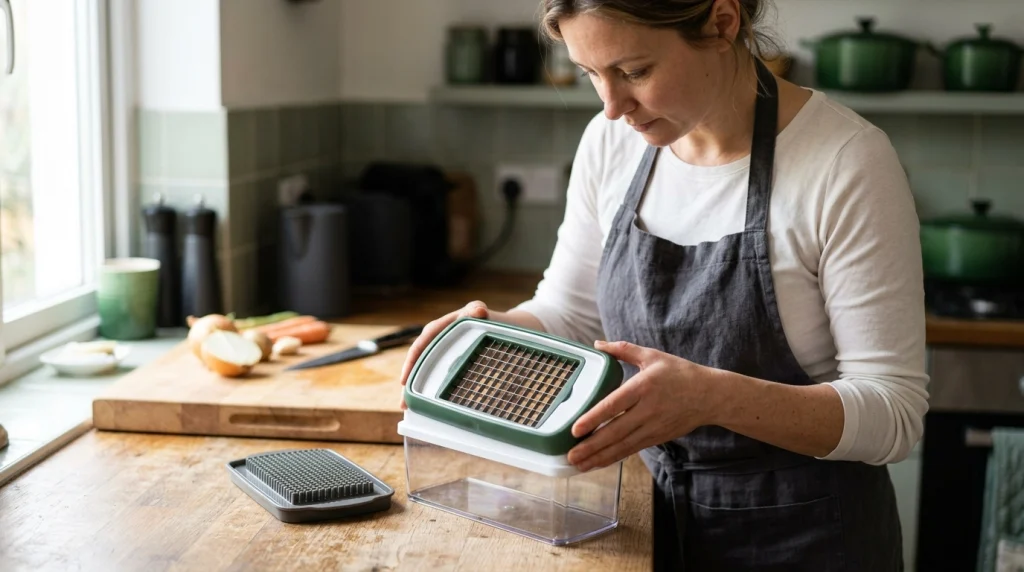
Before adding vegetables, check that the dicer is clean, dry where necessary, and correctly assembled. A loose insert, damaged component, or unstable base can make pressing more difficult and increase the chance of slipping.
- Choose a stable work surface. Place the dicer on a flat, dry countertop, with enough space to press the lid without knocking into nearby utensils.
- Check the container and base. Make sure the collection container is properly positioned and the lid, pusher, and frame fit together as intended.
- Inspect the blade insert. Confirm that the correct grid is installed and secured according to the manufacturer’s instructions. Do not use a loose, bent, cracked, or visibly damaged component.
- Locate the intended pressing area. Identify where your hands should rest on the pusher or handle. If the model includes a finger guard, use it as directed.
Do not assume every insert fits every dicer, or that every component is dishwasher-safe. If the assembly or locking mechanism is unclear, check the model’s manual before proceeding.
2. Prepare Vegetables to Fit the Blade Grid
Vegetables should fit within the cutting area without requiring you to force them into place. Oversized pieces can resist the pusher, sit unevenly on the grid, or make the lid difficult to close.
Wash the vegetables first, remove unwanted stems or damaged portions, and peel them when the recipe requires it. Cut large vegetables into smaller sections suited to the dimensions of the selected grid.
- Onions: Peel and divide large onions into sections that fit the cutting area. Keep each section stable when positioning it.
- Potatoes: Cut large potatoes into appropriately sized pieces and remove any parts you would not normally eat.
- Carrots: Trim the ends and divide thick carrots into shorter, manageable sections that fit the grid.
- Cucumbers: Cut long cucumbers into sections that fit inside the pusher area without extending beyond the blades.
- Bell peppers: Remove the stem, seeds, and tough inner membranes, then cut the remaining flesh into suitable sections.
These are general preparation examples, not a guarantee that every vegetable is suitable for every dicer. Check the manufacturer’s guidance for hard, fibrous, unusually large, or soft produce.
Safety Tip
If a vegetable does not fit easily, stop and cut it into smaller pieces using a suitable knife and cutting board. Never compensate for an oversized piece by leaning harder on a misaligned lid.
3. Follow These Steps to Dice Vegetables Safely
Once the dicer is assembled and the vegetables are ready, use a controlled sequence. Keep your hands away from the cutting grid throughout the process.
Step 1: Position the Vegetable Correctly
Open the pusher or lid as instructed and place one suitable vegetable section over the cutting grid. Position it fully within the intended cutting area, using a stable orientation that matches the design of the tool.
Do not hold the vegetable near the blade edges while closing the lid. If it shifts or cannot sit correctly, lift it away from the cutting area and reposition it safely.
Step 2: Keep Your Fingers Clear
Move your hands to the designated handles or pressing surfaces before closing the pusher. Never place fingertips on the cutting grid, underneath the lid, or in the space where the pusher meets the blades.
If your dicer includes a food holder, guard, or locking feature, use it as described in the manual. Do not bypass a safety feature to make an awkward piece of produce fit.
Step 3: Press Down in a Controlled Motion
Close the pusher and apply pressure through its intended handle or pressing surface. Follow the manufacturer’s specified motion rather than striking the lid, twisting it, or pushing from an angle.
Some manual dicers are designed for a firm, continuous downward press, while other mechanisms may require a different technique. Use only the method specified for your model.
Step 4: Check the Result Before Reloading
Lift the pusher only after the cutting motion is complete and the mechanism is in a safe position. Check whether the vegetable has passed through the grid and whether the collection container has room for another portion.
If pieces remain caught, do not reach underneath the grid or push them through with your fingertips. Stop using the dicer and follow the manufacturer’s instructions for clearing the blockage.
Step 5: Repeat Without Forcing the Tool
Continue with suitably sized vegetable pieces while keeping the work surface steady and your hands on the designated pressing area. Empty the container before it becomes overfilled or interferes with the cutting process.
If the pusher suddenly becomes difficult to operate, stop. Check for an oversized piece, an obstruction, incorrect assembly, or a full container before attempting another cut.
4. Which Vegetables Should You Avoid Forcing Through a Dicer?
A push-down dicer is designed for particular foods and cutting conditions. If a vegetable is too hard, too large, too soft, or unsuitable for the installed grid, forcing it can damage the tool or cause an unexpected movement.
- Oversized vegetables: Cut them into smaller sections before loading the dicer.
- Very hard produce: Check the manufacturer’s permitted foods and limits before attempting to dice unusually hard vegetables.
- Soft or overripe produce: Use a more suitable cutting method if the vegetable collapses instead of passing cleanly through the grid.
- Stringy produce: Fibres may become trapped between the blades. Prepare it differently or use another suitable utensil if the manual does not recommend dicing it.
- Frozen produce: Do not assume a manual dicer can handle frozen food. Follow the product instructions and use an appropriate alternative when necessary.
Never use the handle as a lever to force a stubborn vegetable through the blades. Resistance is a reason to stop and investigate, not to increase pressure blindly.
5. How to Clear a Jam Without Injuring Your Fingers
If vegetable pieces become stuck, stop pressing and keep your fingers away from the blade grid. A jam can tempt you to push food through from the underside, but this places your fingertips close to sharp edges.
- Stop applying pressure and open the pusher only when it is safe to do so.
- Check whether the collection container is full or the vegetable section is too large.
- Consult the manual for the approved way to remove the pusher, release the insert, or clear trapped food.
- Use a supplied cleaning tool or another manufacturer-approved method, keeping your hands clear of the blades.
- Reassemble the dicer correctly and confirm that all parts are secure before using it again.
Do not pry at the grid with a knife, force a stuck insert out of its frame, or use a damaged dicer. If the blockage cannot be removed safely using the approved procedure, stop and contact the manufacturer for guidance.
6. Clean the Dicer Without Touching the Sharp Edges
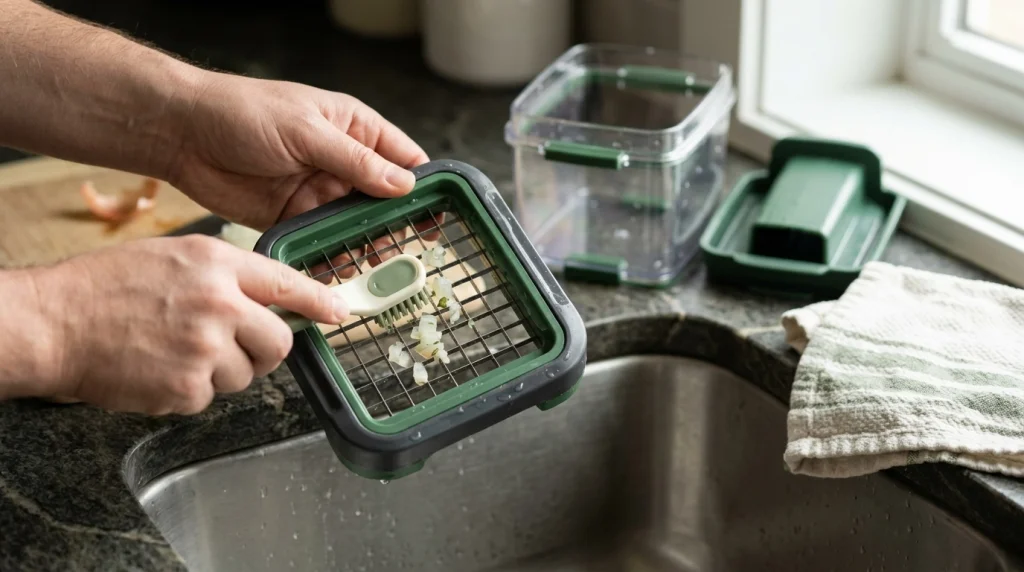
Cleaning requires as much care as cutting because food residue can hide the blade edges. Do not reach into a container of soapy water where the blades are difficult to see, and never assume a blade insert is safe to handle just because it has been removed from the dicer.
- Disassemble carefully. Follow the manufacturer’s removal procedure, gripping designated handles or safe frame areas rather than the cutting edges.
- Remove loose food residue. Use the supplied scraper or cleaning brush if available and approved for the particular component.
- Wash according to the manual. Use the specified water temperature and detergent, keeping fingers away from exposed blades. Do not use a method that the manufacturer prohibits.
- Rinse thoroughly. Remove detergent and food debris without placing your fingertips across the grid.
- Dry and inspect the parts. Check for remaining residue, corrosion, cracks, or damaged cutting edges before storage.
Do not assume the entire dicer is dishwasher-safe. Some models allow selected removable components to be washed in a dishwasher, while others require hand-washing or have restrictions on particular parts.
For more detailed maintenance guidance, see the existing site guide on kitchen preparation and care only if it directs readers to a relevant published cleaning article. Do not substitute an unrelated page for model-specific cleaning instructions.
Warning
Never test a blade’s sharpness with your fingers or wipe directly across its cutting edge with a cloth. Use the manufacturer’s recommended cleaning method and keep the blade directed away from your hands.
7. Store the Dicer Safely After Use
After cleaning, make sure the components are dry as directed and reassemble or store them according to the product instructions. Keep exposed blade inserts covered or secured in their designated storage position.
- Keep the dicer and removable blades out of children’s reach.
- Do not leave loose blade inserts in a sink, drawer, or utensil container where someone may reach for them unexpectedly.
- Store accessories in their intended holders or protective covers.
- Replace damaged parts only with compatible components approved for the model.
- Keep the manual available so you can check assembly, cleaning, and storage procedures later.
Good storage prevents accidental contact when you are not preparing food and helps protect the cutting components from damage.
8. Common Mistakes That Make Vegetable Dicing Less Safe
Most avoidable problems begin when the tool is used outside its intended operating method. Check these common mistakes before your next preparation session.
- Pressing before checking assembly: Confirm the insert and pusher are properly secured first.
- Using vegetables that are too large: Prepare smaller sections instead of forcing the lid down.
- Placing fingers near the grid: Keep hands on designated handles and use supplied guards as directed.
- Continuing when the pusher sticks: Stop and investigate the obstruction rather than applying extra force.
- Clearing food with a fingertip: Use the approved clearing method and suitable cleaning tools.
- Cleaning without checking the manual: Confirm how removable blades should be handled and which parts can be immersed or placed in a dishwasher.
- Leaving blades exposed in storage: Use the intended protective cover or storage arrangement.
For broader prevention advice, the Occupational Safety and Health Administration’s kitchen-equipment guidance discusses safe handling and storage practices for sharp kitchen utensils. Although it is written for food-service settings, the basic principle of keeping hands clear of cutting edges is relevant at home too.
Frequently Asked Questions
Can I press a vegetable dicer with both hands?
Use both hands only if the design and manufacturer’s instructions permit it, and place them on the designated pressing surfaces. Never position your fingers near the blade grid or use your body weight in a way that makes the tool unstable.
What should I do if the dicer will not cut a vegetable?
Stop pressing and check the vegetable size, grid alignment, assembly, and collection-container capacity. If the food is unsuitable or the blockage cannot be cleared using the approved procedure, use another appropriate cutting method.
Is it safe to remove the blade insert after chopping?
It can be removed when the manufacturer’s instructions allow it and the specified removal procedure is followed. Handle the frame or designated tabs rather than the sharp cutting edges, and keep the insert away from children.
Can I put a push-down vegetable dicer in the dishwasher?
Only if the instructions for your specific model permit dishwasher cleaning of the relevant components. Check whether the blade insert, lid, container, and other removable parts have different cleaning requirements.
How can I prevent vegetables from getting stuck in the grid?
Prepare pieces that fit the grid, position them correctly, and avoid overfilling the collection container. If food still gets trapped, stop and use the approved clearing procedure instead of pushing it through with your fingers.
Should children use a push-down vegetable dicer?
Because these tools contain exposed sharp blades, keep them out of children’s reach when not in use. Do not allow a child to operate one independently; follow the manufacturer’s age guidance and provide appropriate adult supervision whenever use is permitted.
Using a push-down vegetable dicer safely comes down to correct assembly, properly sized vegetables, controlled downward pressure, and careful blade handling. Stop whenever the tool resists, clear blockages using the approved method, and follow the manufacturer’s cleaning and storage instructions after every use.
