Push-Down Chopper: How to Get Uniform Cuts

Quick Answer
To get uniform cuts with a push-down vegetable chopper, select the correct dicing grid, cut oversized vegetables into manageable pieces, center each piece over the blades, and press the lid down firmly and evenly. Consistent preparation matters because the grid controls the cut size, while the vegetable’s shape, firmness, and position affect how cleanly it passes through.
A push-down vegetable chopper can produce evenly sized vegetable pieces with less repetitive knife work, provided the food fits the cutting grid and the mechanism is assembled correctly. The key is to prepare each vegetable for the grid rather than expecting the chopper to correct every irregular shape automatically.
Uniform cuts are useful for soups, salads, stir-fries, and meal preparation because similarly sized pieces are easier to portion and tend to cook more consistently. However, a grid produces a defined cut size only when the food passes through it cleanly.
How Does a Push-Down Chopper Make Uniform Cuts?
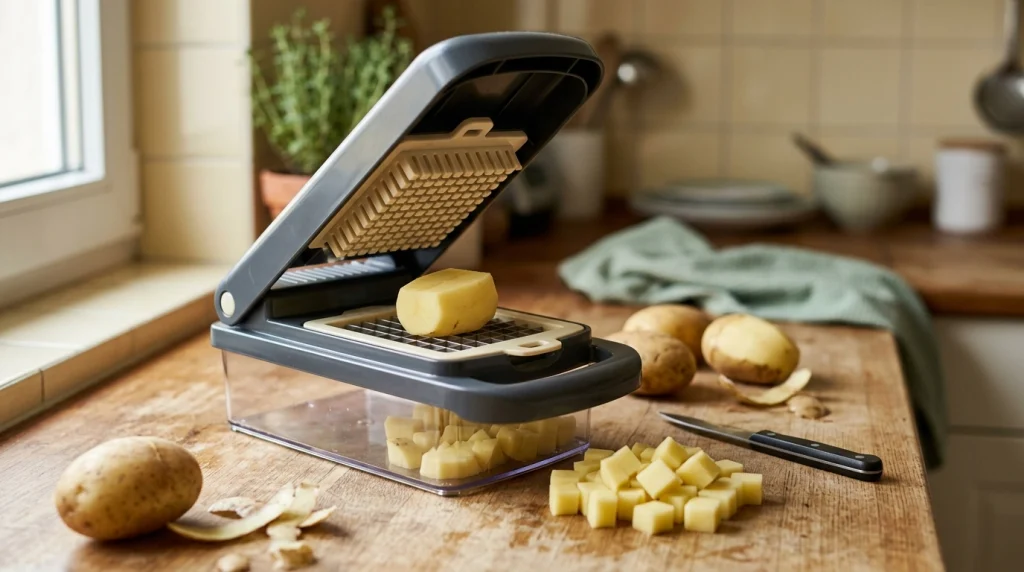
A push-down chopper uses a fixed arrangement of intersecting blades to divide food as the lid or pusher forces it through the grid. Unlike a pull-cord chopper, which rotates blades inside a bowl and relies on repeated chopping, a grid-style chopper is designed to create more consistent shapes in a single pressing action.
The size of the openings determines the approximate dimensions of the resulting dice. For example, a manufacturer may supply separate grids for 6 mm and 12 mm dice; these sizes are examples, not universal specifications for every chopper.
Three factors determine the quality of the result:
- Grid size: The blade opening establishes the intended cut dimensions.
- Food preparation: A suitable starting shape helps the vegetable contact the grid properly.
- Pressing action: A stable base and a complete, even press help the food pass through the blades.
The important distinction is that a grid controls the intended cut, but it cannot guarantee identical pieces from every irregular vegetable. A crooked starting piece, a loose blade insert, or food that resists cutting can leave uneven fragments.
How to Get Even Cuts Step by Step
Follow this sequence when preparing vegetables for a push-down chopper. Always check the instructions for your particular model before selecting a blade or processing a firm ingredient.
- Choose the appropriate grid. Fit the small or large dicing blade according to the size required by your recipe. Confirm that the insert is designed for your chopper and is securely seated.
- Wash and prepare the vegetables. Remove unwanted peel, stems, and damaged sections. Cut large vegetables into halves, quarters, or smaller slabs that fit comfortably over the grid.
- Make the starting pieces manageable. Aim for pieces that can sit securely within the cutting area without extending awkwardly beyond its edges. If the vegetable is round, a suitable flat face can make positioning easier.
- Position the food over the grid. Center each piece so the cutting area is covered appropriately. Avoid placing a narrow edge or an unstable corner against the blades.
- Stabilize the chopper. Place the container and base on a flat, stable surface. Ensure the lid, grid, and collection container are correctly aligned before applying pressure.
- Press down firmly and evenly. Use the intended lid or pusher, keeping your fingers away from the cutting surfaces. Complete the pressing motion without twisting or forcing a jammed mechanism.
- Inspect the result. Check whether the pieces have passed fully through the grid. Separate any unusually large pieces for further preparation rather than repeatedly forcing them through the blades.
Consistency comes from repeating the same preparation and pressing method for each batch. You do not need to make every starting piece identical, but it should fit the grid in a stable, workable position.
Tip
Prepare several similarly sized vegetable sections before chopping. This makes positioning more repeatable and helps you spot oversized pieces before they obstruct the grid.
Which Vegetables Give the Most Consistent Results?
Firm vegetables that can be cut into manageable sections are generally easier to process through a push-down dicing grid than delicate or unusually hard ingredients. The exact suitability depends on the blade design and the manufacturer’s instructions.
- Onions: Peel and divide them into sections that fit the grid. Position a stable section over the blades rather than trying to press an oversized whole onion through.
- Potatoes: Cut large potatoes into manageable slabs or chunks. Use the grid size appropriate for the recipe and avoid forcing pieces that meet strong resistance.
- Carrots: Use the chopper only if its instructions permit the carrot’s firmness and size. Shorter, manageable sections are easier to position than long pieces.
- Bell peppers: Remove the stem, seeds, and unsuitable inner sections, then cut the flesh into pieces that sit properly on the grid.
- Cucumbers: These may work with a compatible grid, but their high moisture content and softer texture can affect how cleanly they separate.
Very soft tomatoes, leafy greens, overripe produce, and exceptionally hard vegetables may not produce neat dice in every model. A dicing grid is not a universal solution for every food texture.
For example, if a recipe calls for small potato cubes, a suitable fine grid and manageable potato sections are more likely to deliver consistent pieces than an oversized potato pressed against a small cutting area.
Why Are the Cuts Uneven?
If a push-down chopper produces a mixture of large pieces, small fragments, and crushed edges, check the preparation and assembly before assuming that the blade is defective.
| Problem | Possible reason | What to check |
|---|---|---|
| Large and small pieces mixed together | Irregular starting shapes or incomplete cutting | Prepare manageable pieces and inspect the grid. |
| Crushed or ragged edges | Soft produce, unsuitable ingredients, or a cutting problem | Check food suitability and blade condition. |
| Food gets stuck | Oversized pieces or residue around the blades | Stop, disassemble safely, and clean according to the manual. |
| Lid is difficult to press | Misaligned insert or food that resists the grid | Check assembly and reduce the food size if permitted. |
| Results change between batches | Different food sizes, textures, or positioning | Use a repeatable preparation method. |
The table provides diagnostic starting points, not proof of a particular fault. Several issues can produce similar results, so change one preparation variable at a time when it is safe to do so.
Does pressing harder improve uniformity?
Firm, even pressure can help suitable vegetables pass through a correctly assembled grid. However, increasing force is not a reliable fix for a jam, an incorrectly fitted blade, or an ingredient the manufacturer does not permit.
If the lid stops unexpectedly, do not force it down with your body weight or strike it. Stop using the chopper, keep your hands clear of the blades, and follow the manual’s instructions for removing the obstruction.
Could the blade grid be the problem?
Yes. A loose, incorrectly fitted, bent, or damaged grid can interfere with clean cutting. Inspect the insert for visible damage and verify that it locks into the intended position before use.
If a correctly assembled, undamaged chopper continues to cut poorly with suitable vegetables, consult the manufacturer about maintenance or replacement parts rather than attempting to reshape or sharpen the grid yourself.
How to Choose the Right Cut Size for a Recipe
Uniformity does not mean every recipe needs the smallest possible dice. Choose the grid based on the intended texture, cooking method, and appearance of the finished dish.
- Small dice: Useful when you want smaller vegetable pieces for fillings, finely chopped mixtures, or dishes where the ingredients should blend into the overall texture.
- Large dice: Useful when you want more noticeable pieces in salads, stews, or other dishes that benefit from a chunkier texture.
- Slices or strips: Require the appropriate slicing or julienne attachment if your chopper includes one. A dicing grid will not automatically produce these shapes.
Check the actual grid dimensions in the product manual rather than relying on labels such as “small” and “large.” Those labels are relative to the particular model.
Also consider the cooking method. Smaller pieces generally expose more surface area relative to their volume and may cook faster than larger pieces. Uniform cuts help reduce differences within a batch, but cooking time still depends on the vegetable, the recipe, and the cooking conditions.
Mistakes to Avoid When Using a Push-Down Chopper
Several common shortcuts can reduce cutting quality or create unnecessary risk.
- Using whole oversized vegetables: Large pieces may not sit securely or fit through the grid. Divide them before chopping.
- Choosing the wrong attachment: A slicing blade, shredding blade, and dicing grid serve different purposes. Match the attachment to the required cut.
- Ignoring assembly: A blade that is not seated correctly may prevent the lid from moving as intended.
- Processing unsuitable food: Frozen, exceptionally hard, or otherwise prohibited ingredients can damage some choppers. Follow the model-specific instructions.
- Using fingers to clear a blockage: The blades can cause serious cuts. Stop and use the approved disassembly and cleaning method instead.
- Ignoring a damaged grid: Cracked, bent, or loose components should not be used until the problem is addressed.
Warning
Never reach into an assembled chopper to push food through or remove stuck pieces. Follow the manufacturer’s instructions for disassembly, and use a cleaning tool rather than your fingers around sharp blades.
How to Maintain Consistent Cutting Performance
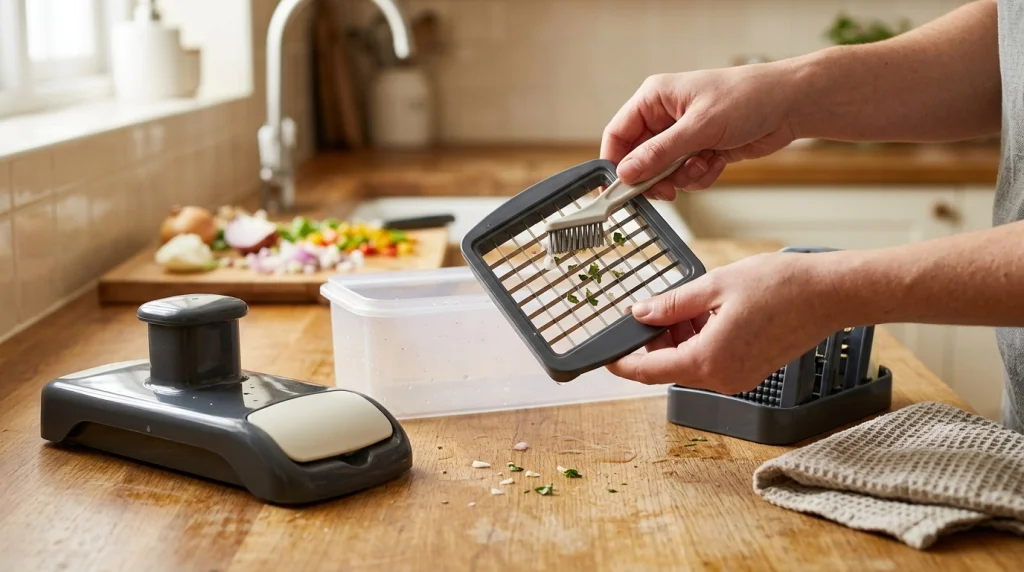
Food residue can obstruct the grid, while damage or poor assembly can affect cutting performance. Clean the chopper after use and inspect its parts before the next preparation session.
- Disassemble the chopper according to its instructions.
- Remove food residue using the supplied cleaning tool or another method approved by the manufacturer.
- Wash removable parts according to their stated care requirements. Do not assume every component is dishwasher-safe.
- Inspect the cutting grid, lid, and locking points for damage or looseness.
- Dry and store the components as directed, keeping exposed blades protected from accidental contact.
Do not test blade sharpness with your fingers or attempt to straighten damaged cutting elements. If the grid is visibly damaged or the lid no longer locks securely, stop using the tool until it has been repaired or replaced appropriately.
For a practical reference, the Nuovva vegetable chopper user manual describes grid assembly, pre-cutting larger ingredients, safe handling, and troubleshooting. Its instructions apply to that product range, so follow your own model’s manual when the details differ.
Frequently Asked Questions
Do all push-down vegetable choppers produce the same cut size?
No. Cut size depends on the installed grid and the design of the chopper. Check the model’s documented blade dimensions before preparing ingredients for a recipe.
Should vegetables be cut before putting them in a chopper?
Often, yes. Large vegetables should be divided into manageable pieces that fit securely over the grid. Follow the manufacturer’s instructions for the specific ingredient and attachment.
Why does my chopper leave some vegetables partly cut?
Possible causes include oversized pieces, unsuitable food texture, a misaligned grid, residue, or damaged blades. Check the assembly and ingredient preparation before considering repairs.
Can a push-down chopper cut hard vegetables such as carrots?
Some models can process carrots when the pieces fit the grid and the manufacturer permits their use. Cut manageable sections first, and never force the lid if the vegetable resists cutting.
Does a smaller grid always produce better results?
No. A smaller grid produces smaller intended pieces, but it is not automatically better for every recipe or ingredient. Choose a size that suits the desired texture and the chopper’s capabilities.
How can I safely remove vegetables stuck in the blade grid?
Stop using the chopper and follow its disassembly instructions before clearing the obstruction. Keep fingers away from the cutting edges and use the supplied cleaning tool or another manufacturer-approved method.
Conclusion
Uniform cuts with a push-down vegetable chopper start with the correct grid, manageable vegetable pieces, secure assembly, and a firm, even pressing motion. The blade grid establishes the intended size, but food shape and texture influence how cleanly each piece passes through.
If your results are uneven, check preparation, positioning, and assembly before applying more pressure. Never force a jam or reach around exposed blades. With a repeatable preparation method and proper maintenance, a suitable push-down chopper can make everyday vegetable preparation more consistent and predictable.