
How to Use a Manual Vegetable Chopper Safely

Quick Answer
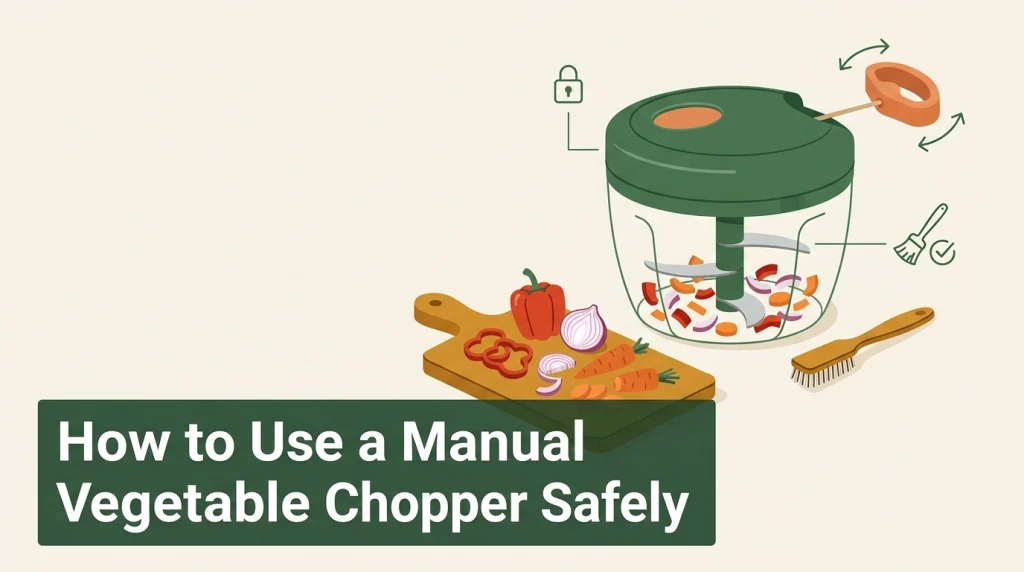
To use a manual vegetable chopper, wash and cut your vegetables into manageable pieces, assemble the blade correctly, and place the ingredients in the chopping container. Secure the lid, then pull the cord or press the chopping mechanism until you reach your preferred texture. Remove the blades carefully, empty the container, and clean the parts according to the manufacturer’s instructions. Never put your fingers near exposed blades.
A manual vegetable chopper can make preparing onions, carrots, peppers, garlic, and other ingredients easier. However, the correct technique depends on the type of chopper you own.
Pull-cord models rotate blades inside a bowl. Push-down choppers use repeated downward pressure, while hinged grid-style choppers cut vegetables through a fixed blade grid. Learning the correct method helps you achieve consistent results without putting unnecessary strain on the tool.
Step 1: Identify Your Manual Vegetable Chopper
Before adding ingredients, identify how your chopper operates. Using the wrong technique can damage the mechanism or produce uneven pieces.
| Chopper Type | How It Works | Best Approach |
|---|---|---|
| Pull-cord | Pulling a handle spins internal blades. | Use controlled pulls and check the texture. |
| Push-down | Pressing the handle activates a chopping mechanism. | Press vertically with controlled movements. |
| Hinged grid | A lid pushes food through a fixed cutting grid. | Position food correctly and close the lid firmly. |
The instructions below focus primarily on the common pull-cord design. Separate directions for push-down and grid choppers appear later.
Step 2: Prepare Your Vegetables Before Chopping
Proper preparation helps the blades move freely and makes the finished pieces more consistent.
- Wash your hands and produce. Rinse vegetables under running water before peeling or cutting. Do not use soap or household detergent on produce.
- Remove unwanted parts. Discard tough stems, damaged areas, seeds when appropriate, and any inedible portions.
- Cut large ingredients into smaller chunks. Quarter an onion or divide a large carrot into pieces that fit comfortably around the blades.
- Keep pieces reasonably similar in size. This helps prevent some ingredients from becoming finely minced while others remain too large.
- Drain excess washing water. Very wet vegetables can produce an unexpectedly watery mixture, particularly when chopped finely.
The FDA’s produce safety guidance recommends washing fresh produce before preparing it, even when you intend to peel it.
Tip
For your first attempt, use a small batch of onion or bell pepper. These ingredients let you observe how each pull changes the texture without placing excessive resistance on the mechanism.
Step 3: Assemble the Chopper Correctly
For a typical pull-cord chopper, place the empty container on a stable, dry countertop. Check that the bowl, blade assembly, central shaft, and lid are clean and undamaged.
- Remove the blade guard if your model has one.
- Hold the blade assembly by its designated plastic shaft or handle.
- Position the assembly on the central support inside the bowl.
- Confirm that it sits properly and can operate without obstruction.
- Keep the lid off until the ingredients have been added.
Some choppers have additional scrapers or differently shaped connectors. Follow your specific model’s assembly instructions instead of forcing parts together.
Check for cracks, loose blade attachments, frayed pull cords, or damaged handles. Do not use a chopper with visibly damaged working parts.
Step 4: Add the Vegetables Without Overfilling
Place the prepared vegetables around the blade assembly, leaving enough space for the blades and food to move.
A common mistake is filling the bowl to the rim. Overloading can prevent proper circulation, cause uneven chopping, and make the handle harder to operate.
Follow the maximum-fill indication or manufacturer’s recommended capacity. If your model has no visible fill line, start with a modest quantity rather than assuming that the entire bowl can be packed with vegetables.
For example, instead of forcing a large onion and several carrots into a small chopper simultaneously, process the onion first and handle the carrots in a separate batch.
After loading the bowl, position the lid securely. Check that its drive connector engages with the blade assembly and that the lid sits correctly before operating the mechanism.
Step 5: Pull the Cord to Chop the Vegetables
Place one hand firmly on top of the closed lid to stabilize the chopper. With the other hand, pull the handle smoothly in the direction specified by the manufacturer, allowing the cord to retract before repeating.
- Start with a few controlled pulls.
- Allow the pull cord to return naturally between movements.
- Stop and inspect the chopped vegetables.
- Secure the lid again if further chopping is needed.
- Repeat gradually until you achieve the desired texture.
Each pull rotates the internal cutting blades. More pulls generally create smaller pieces, although the result also depends on the vegetable, starting size, blade design, and quantity.
Manufacturer guidance for the Kuhn Rikon Pull Chop, for example, describes using just a few pulls for coarser pieces and approximately 20 pulls for a finer result. This is a model-specific illustration, not a universal rule for every manual chopper.
Do not yank the handle forcefully or pull beyond its designed travel. If resistance increases suddenly, stop rather than applying additional force.
How Do You Control the Chopping Size?
The easiest method is to stop frequently and inspect the ingredients instead of relying on a fixed number of pulls.
- Coarse chopping: Stop while individual pieces remain visibly chunky. Useful for some salsas and rustic mixtures.
- Medium chopping: Continue until pieces are smaller but still have distinct edges. Suitable for many sautéed vegetable mixtures.
- Fine chopping: Use additional pulls when preparing minced onions, garlic mixtures, or finely chopped vegetables.
Manual rotating blades do not necessarily create identical cubes. If a recipe requires uniform dice for presentation or even roasting, a knife or appropriate grid-style cutter may be more suitable.
How to Use Push-Down and Grid-Style Vegetable Choppers
Not every manual chopper uses a pull cord. The correct action changes with the mechanism.
Push-Down Chopper
Place prepared vegetables in the designated chopping area and fit the cover as directed. Keep the container stable and press the handle downward repeatedly, allowing it to return between presses.
Stop occasionally to check the texture. Do not press harder if food becomes jammed; open and clear the tool safely according to the manual.
Hinged Grid-Style Chopper
Open the chopper, place a suitably sized piece of vegetable over the blade grid, and position the cut face as the manual specifies.
Close the lid with firm, controlled pressure so the vegetable passes through the grid into the collection container. Remove remaining food using the supplied cleaning tool rather than your fingertips.
These choppers are often helpful when a recipe calls for regularly shaped pieces. However, the grid must be suitable for the vegetable’s firmness and size.
Which Vegetables Work Best in a Manual Chopper?
Manual choppers commonly handle onions, peppers, garlic, mushrooms, herbs, and suitably prepared carrots. The ideal ingredient depends on blade strength and the operating mechanism.
| Ingredient | Preparation | What to Watch |
|---|---|---|
| Onions | Peel and quarter. | Too many pulls can create a very fine, moist mixture. |
| Bell peppers | Remove stem and seeds; cut into chunks. | Check frequently for the desired texture. |
| Carrots | Cut into small, manageable pieces. | Hard pieces may exceed the tool’s capacity. |
| Garlic | Peel the cloves. | Very small amounts may collect near the sides. |
| Tomatoes | Core and cut if necessary. | Soft tomatoes can become watery quickly. |
| Fresh herbs | Remove tough stems and dry the leaves. | Small quantities may need a compatible scraper accessory. |
A useful distinction is whether you need a fine mixture or evenly sized individual pieces. Choose the chopping method based on the finished dish, not simply the number of ingredients you want to process.
For recipes where consistent vegetable size affects cooking, see our guide to more even cooking.
Common Manual Vegetable Chopper Problems and Fixes
Most chopping difficulties can be traced to preparation, filling, assembly, or an unsuitable ingredient.
The Cord Is Difficult to Pull
Stop immediately. Check whether the container is overloaded, the blade is obstructed, or a piece of vegetable is too large.
Remove the lid and blade safely before clearing an obstruction. If the cord remains difficult to operate with the container empty, consult the manufacturer’s instructions and stop using a damaged mechanism.
Vegetables Are Chopped Unevenly
Try smaller batches and more consistent starting pieces. Large chunks mixed with tiny pieces can produce different textures during the same chopping cycle.
Avoid adding too much at once. Some ingredients may also stick to the sides instead of circulating around the blades.
Vegetables Become Mushy
Reduce the number of pulls or presses. Soft, high-moisture ingredients can lose their chunky texture faster than firmer vegetables.
For a fresh salsa, stop early and inspect the mixture. You can always chop further, but you cannot restore a finely chopped tomato to firm cubes.
The Blade Does Not Rotate
Check the blade assembly and lid connector after removing the ingredients safely. The mechanism may not be properly engaged.
Do not operate a visibly damaged or loose blade assembly. Never attempt to inspect the moving mechanism with your fingers while pulling the cord.
How to Clean a Manual Vegetable Chopper Safely
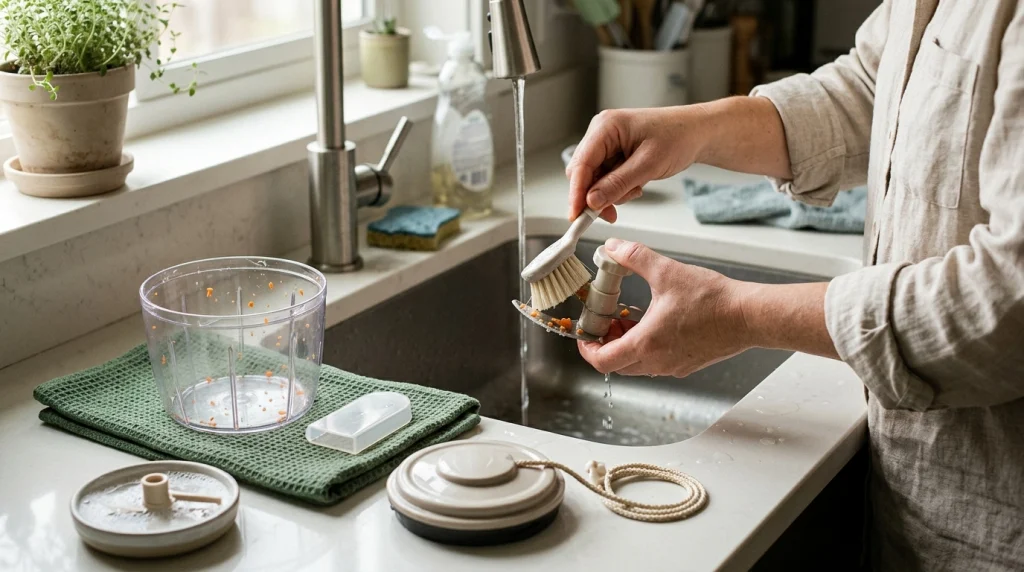
Clean the chopper after use, before food residue dries around the blades and container walls. The exact cleaning instructions depend on the model.
- Open the chopper. Set the lid aside and carefully lift the blade assembly by its designated shaft.
- Empty the bowl. Transfer the chopped vegetables into a clean dish or storage container.
- Wash removable food-contact parts. Use warm water and dishwashing detergent according to the product instructions.
- Clean the blades carefully. Use an appropriate soft brush rather than wiping across sharp edges with bare fingers.
- Clean the lid. For a pull-cord lid, avoid submerging the mechanism unless the manufacturer explicitly permits it.
- Rinse and dry. Allow the approved washable parts to dry thoroughly before storage.
- Store the blades safely. Use the protective cover when supplied and keep the tool away from children.
Dishwasher compatibility is model-specific. Some choppers have dishwasher-safe containers, while others require hand-washing throughout. Never assume every component can go into the dishwasher.
Warning
Never reach into the container to remove food while exposed blades are installed. Remove the blade assembly carefully first. Keep sharp attachments out of loose dishwater where someone could accidentally grab them.
For additional kitchen hygiene and cutting-tool precautions, review our essential cooking skills guide.
Mistakes to Avoid When Using a Manual Chopper
A few simple habits can make the chopper easier to operate and reduce avoidable problems.
- Overfilling: Use smaller batches to leave room for food movement.
- Forcing the handle: Stop when resistance is unusual instead of applying more strength.
- Adding oversized vegetables: Cut hard or large ingredients into smaller pieces first.
- Ignoring the lid connection: Make sure the mechanism is engaged before operating.
- Overprocessing: Inspect soft vegetables frequently to prevent an unwanted purée-like texture.
- Using unsuitable foods: Avoid bones, frozen-solid items, and other ingredients not approved for your model.
- Incorrect washing: Follow the instructions for the lid, cord mechanism, and blade assembly separately.
Using a suitable tool is also part of good food preparation. Our guide to common cooking mistakes explains other practical ways to improve kitchen workflow.
Related Product
Manual Pull-Cord Vegetable Chopper
A pull-cord chopper can be a practical option for preparing small batches of chopped vegetables without electricity. Compare capacity, blade protection, and cleaning instructions before selecting one.
As an Amazon Associate, we earn from qualifying purchases.
Frequently Asked Questions
1. Can I use a manual vegetable chopper without electricity?
Yes. Manual choppers operate through hand-powered mechanisms such as pull cords, pressing handles, or hinged cutting grids. They do not need an electrical outlet or batteries.
2. Can I chop onions and garlic together?
Yes, provided both ingredients are suitable for your chopper and the container is not overloaded. Cut large onion pieces first, then add peeled garlic. Check the texture regularly because garlic pieces may become fine more quickly.
3. Can a manual chopper cut raw potatoes?
Some sturdy choppers can handle small pieces of raw potato, but others cannot. Raw potatoes are relatively firm, so check the manufacturer’s approved ingredients and size recommendations. Never force a chopper through resistant food.
4. Can I chop cooked vegetables in a manual chopper?
Yes, if the model permits them. Allow hot vegetables to cool sufficiently for the container’s temperature rating. Soft cooked vegetables can become mashed quickly, so begin with very limited chopping.
5. Can I use a manual chopper to make vegetable purée?
Some rotating-blade models can create a very fine mixture, but the texture depends on the ingredient and chopper design. A manual chopper may not produce the same smooth consistency as a blender or dedicated puréeing appliance.
6. How should I store a manual vegetable chopper?
Clean and dry all components thoroughly. Fit the blade guard if supplied, protect the cutting edges, and store the chopper in a dry location away from children. Avoid storing exposed blades loosely among everyday utensils.
Final Thoughts
Using a manual vegetable chopper becomes straightforward once you understand its operating mechanism. Prepare the vegetables, assemble the tool correctly, work in manageable batches, and inspect the texture as you go.
For consistent everyday results, avoid overfilling, never force a jammed mechanism, and clean sharp components carefully after each use. Always follow the instructions supplied with your particular chopper.
