
How to Store Cooked Rice (Fridge and Freezer Method)

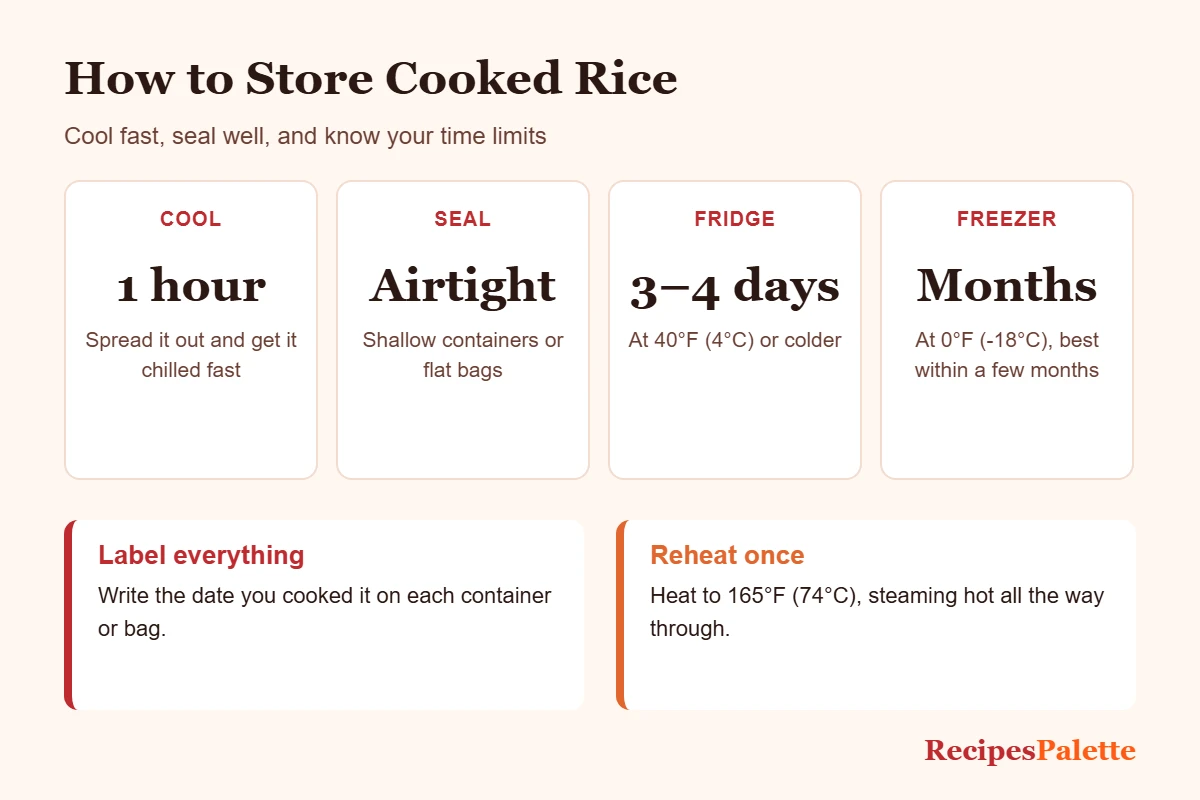
To store cooked rice, cool it quickly, seal it in shallow airtight containers, and get it into the fridge within 1 hour of cooking (2 hours at the most). It keeps 3 to 4 days in the fridge at 40°F (4°C) or colder. For longer storage, freeze it in flat bags or containers, where it stays safe for months and keeps its best texture for a few months.
Rice is one of the easiest foods to cook in bulk, and one of the easiest to store badly. This guide walks through the full method, from the pot to the fridge or freezer, plus the best containers, how to portion for meal prep, and how to bring stored rice back to a soft, fluffy texture.
Why Cooked Rice Needs Careful Storage
Raw rice often carries spores of Bacillus cereus, a bacterium that lives in soil. The spores survive cooking. If cooked rice stays warm for too long, the spores germinate, the bacteria multiply, and some strains produce a toxin that heat cannot destroy. That is why rice that sat out overnight is not made safe by reheating.
The good news is that the fix is simple: cool rice quickly and keep it cold. Bacteria grow fastest between 40°F and 140°F (4°C and 60°C), so the whole storage method is about getting rice through that range as fast as possible and keeping it below it. For the details on room-temperature limits, see how long cooked rice can sit out.
Step 1: Cool the Rice Quickly
Do not leave rice in the pot or rice cooker to cool down slowly. Instead:
- Move it out of the cooking pot as soon as it has finished resting. Pots hold heat for a long time.
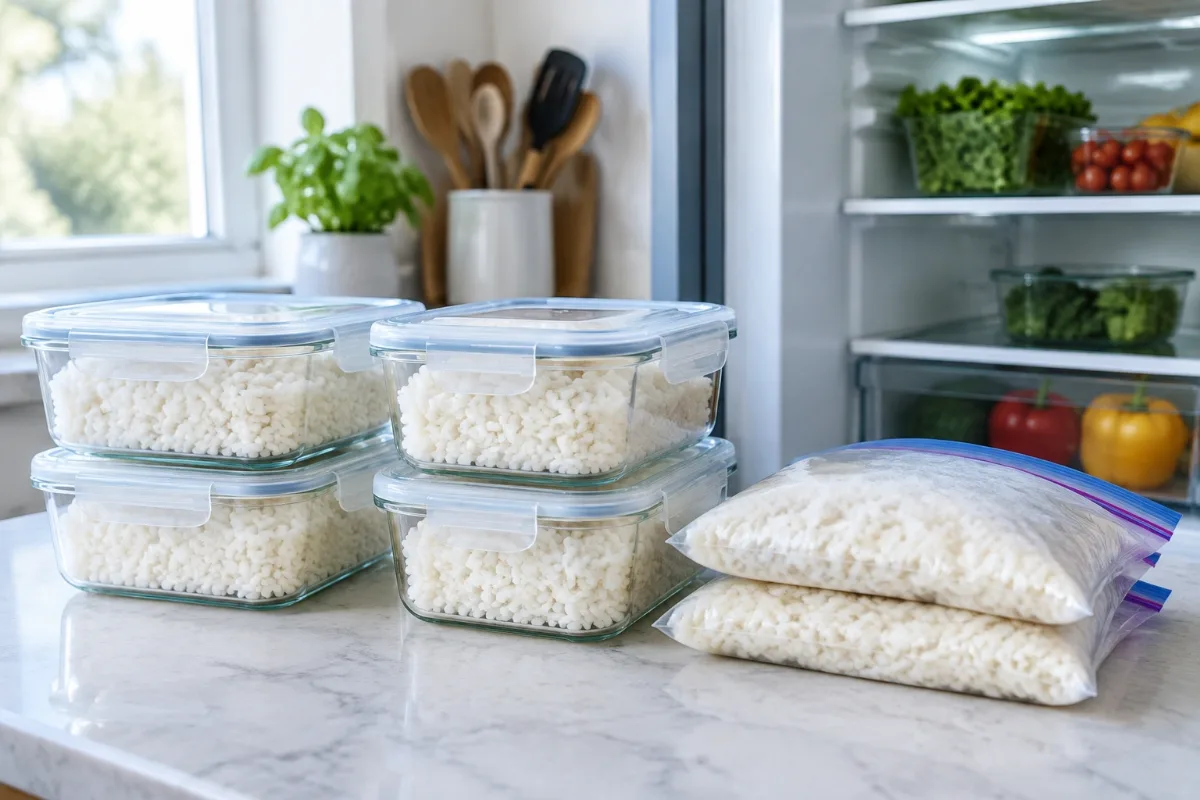
- Spread it out on a clean baking sheet or plate, or divide it into shallow containers with a layer no deeper than about 2 inches (5 cm).
- Let the heavy steam escape for 5 to 15 minutes, then cover. This keeps condensation from making the rice wet.
- Refrigerate within 1 hour if you can, and never later than 2 hours after cooking (1 hour if your kitchen is above 90°F / 32°C).
You do not need to wait until the rice reaches room temperature. Warm rice can go straight into the fridge. Our guide on putting hot rice in the fridge explains faster cooling tricks for big batches, like ice baths and metal trays.
Step 2: Choose the Right Container
The container matters more than most people think. A good one seals tightly, so the rice does not dry out or absorb fridge smells, and it is shallow, so the rice chills quickly.
| Container | Best for | Pros | Cons |
|---|---|---|---|
| Glass containers with locking lids | Fridge, meal prep | Airtight, microwave-safe, do not stain or hold smells | Heavy, can crack with sudden temperature changes |
| BPA-free plastic containers | Fridge, packed lunches | Light, cheap, stackable | Can stain and hold odors over time |
| Zip-top freezer bags | Freezer | Freeze flat, thaw fast, save space | Single use unless washed carefully |
| Silicone bags or trays | Freezer, single portions | Reusable, easy to pop out portions | Cost more up front |
| Rice cooker inner pot | Not recommended | None for storage | Cools slowly, can scratch, ties up your cooker |
| Plate covered with plastic wrap | Short term only | Quick | Not airtight, rice dries out |
Whatever you use, fill containers in portions you will use in one meal. That way you only take out and reheat what you need, instead of warming and re-chilling the same batch over and over.
Step 3: Store It in the Fridge
Put the containers on a shelf where cold air can circulate, not crammed against the back wall or stacked on other warm containers. Once they are fully chilled, you can stack them.
- Temperature: Keep the fridge at 40°F (4°C) or colder. A cheap fridge thermometer is worth having, because many home fridges run warmer than their dial suggests.
- Location: The main shelves are better than the door, which warms up every time you open the fridge.
- Raw foods: Keep rice above raw meat, poultry and seafood, never below it, so nothing can drip onto it.
- Labels: Write the cooking date on each container with a marker or a strip of masking tape.
Refrigerated cooked rice keeps 3 to 4 days, based on USDA guidance for cooked leftovers. The UK’s NHS is stricter and advises eating it within 24 hours. If you are feeding young children, older adults, someone pregnant or anyone with a weakened immune system, the shorter window is the safer option. For a full breakdown by rice type, see how long cooked rice lasts in the fridge.
Step 4: Freeze Rice for Longer Storage
If you will not eat the rice within a few days, freeze it. Rice freezes surprisingly well, and frozen rice is one of the most useful things to have on hand for quick meals.
- Cool it first. Follow Step 1, then chill the rice in the fridge before freezing if you can. Putting a big warm container in a packed freezer can partly thaw the food around it.
- Portion it. One to two cups per bag or container is a handy size for one or two people.
- Freeze it flat. Spread the rice in a zip-top bag, press out as much air as possible, seal, and lay it flat on a tray. Flat bags freeze fast, stack neatly and thaw quickly.
- Label it. Write the type of rice and the date.
Food kept frozen at 0°F (-18°C) stays safe indefinitely, according to the USDA, but quality slowly drops. For the best texture, use frozen rice within a few months. Rice that has been frozen for a long time can become dry or pick up freezer burn, which is not a safety issue but does affect taste.
Storage Times at a Glance
| Where | Plain white or brown rice | Fried rice or rice with meat, egg or seafood |
|---|---|---|
| Room temperature | Up to 2 hours (1 hour above 90°F / 32°C) | Up to 2 hours (1 hour above 90°F / 32°C) |
| Rice cooker on Keep Warm | A few hours, for quality | Not recommended |
| Fridge at 40°F (4°C) | 3 to 4 days | 3 to 4 days, or the shortest limit of any ingredient |
| Freezer at 0°F (-18°C) | Safe indefinitely, best within a few months | Safe indefinitely, best within a couple of months |
Storing Rice From a Rice Cooker
Most rice cookers switch to Keep Warm when the rice is done. Keep Warm holds rice hot enough to stay out of the danger zone, so it is fine for serving over the next few hours. It is not a storage method, though. After several hours the rice dries out, yellows and can pick up a stale smell, and if the cooker is switched off or the power cuts out, the rice cools slowly inside the pot.
If you are not going to eat the rice within a few hours, take it out of the cooker and follow the steps above. If you are still learning your cooker, our guide on how to use a rice cooker covers the Keep Warm setting in more detail.
Meal Prep Tips for Rice
- Cook it slightly firm. Rice you plan to store and reheat holds up better if it is cooked with a little less water than usual, because it softens again when reheated with a splash of water.
- Store rice and wet toppings separately. Sauces, curries and stir-fries make rice soggy over a few days. Pack them in a separate container or compartment.
- Do a fridge batch and a freezer batch. Keep what you will eat in the next three days in the fridge and freeze the rest straight away, instead of freezing leftovers on day four.
- Plan a fried rice night. Day-old, chilled rice makes better fried rice than fresh rice, because the grains are drier and firmer. Just make sure it was stored properly.
How to Reheat Stored Rice
Whatever method you use, reheat rice until it is steaming hot all the way through, 165°F (74°C), and only reheat it once.
- Microwave: Put the rice in a microwave-safe bowl, add about 1 tablespoon of water per cup, cover loosely, and heat for 1 to 2 minutes per cup, stirring halfway.
- Stovetop: Add the rice to a pan with a splash of water or broth, cover, and heat over medium-low for a few minutes, stirring now and then.
- From frozen: Microwave the rice straight from frozen in a covered bowl, breaking it up as it softens. There is no need to thaw it first. If you do thaw it, do it in the fridge, not on the counter.
- Steamer basket: Steam rice over simmering water for a few minutes for the softest result.
Properly chilled rice can also be eaten cold in salads and bowls. See can you eat cold rice for when that is safe.
Signs Stored Rice Should Be Thrown Out
- It has been in the fridge for more than 4 days.
- It sat out at room temperature for more than 2 hours before being refrigerated.
- It smells sour or off, feels slimy, or shows any mold.
- It has already been reheated once.
Remember that rice can be unsafe even when it looks and smells normal. When in doubt, throw it out.
Common Storage Mistakes
- Leaving rice in the pot or cooker overnight to cool.
- Storing a deep, full pot of rice in the fridge.
- Using containers without lids, which dries rice out.
- Reheating a whole container, eating part of it, and putting the rest back in the fridge.
- Thawing frozen rice on the counter.
- Forgetting to label, then guessing how old the rice is.
Frequently Asked Questions
What is the best way to store cooked rice?
Cool it quickly, divide it into shallow airtight containers, and refrigerate within 1 hour. Eat it within 3 to 4 days, or freeze it in flat bags for longer storage.
Should cooked rice be stored in glass or plastic?
Both work if the container seals well. Glass does not stain or hold smells and can go straight into the microwave. Plastic is lighter and better for packed lunches.
Can you store cooked rice in a zip-top bag?
Yes. Zip-top bags are ideal for the freezer, because you can press out the air and freeze the rice flat. In the fridge, rigid containers protect the rice better.
Can you store rice with sauce or curry on it?
You can, but it will get soft over a few days, and it takes on the shorter shelf life of whatever is mixed in. Storing rice and sauce separately gives better texture.
How do you keep stored rice from drying out?
Use airtight containers, do not leave rice uncovered in the fridge, and add a splash of water when reheating.
Can you refreeze rice after thawing?
It is best not to. Each thaw and reheat cycle gives bacteria more time in the danger zone and hurts texture. Freeze rice in single portions so you only thaw what you need.
The Bottom Line
Storing cooked rice safely comes down to three habits: cool it fast, seal it well, and respect the time limits. Get it into the fridge within an hour, eat it within 3 to 4 days, freeze anything you will not use in time, and reheat only once until it is steaming hot. Do that, and a big pot of rice becomes a week of easy meals instead of a food safety risk.
Sources: USDA Food Safety and Inspection Service guidance on leftovers and on freezing and food safety; NHS guidance on reheating rice. This article is general food safety information, not medical advice.