Sheet Pan Sizes Explained (Half, Quarter, Full)

A half sheet pan is about 18 by 13 inches, and it is the size most home bakers and cooks use every day. Sheet pans come in standard sizes that started in commercial kitchens: full, half, quarter and eighth. Each one is roughly half the size of the one before it. Knowing these sizes helps you buy pans that fit your oven, follow recipes correctly and store everything neatly.
This guide covers the standard sheet pan sizes, what fits in a home oven, the difference between sheet pans and cookie sheets, and what to look for when buying one.
Standard Sheet Pan Sizes
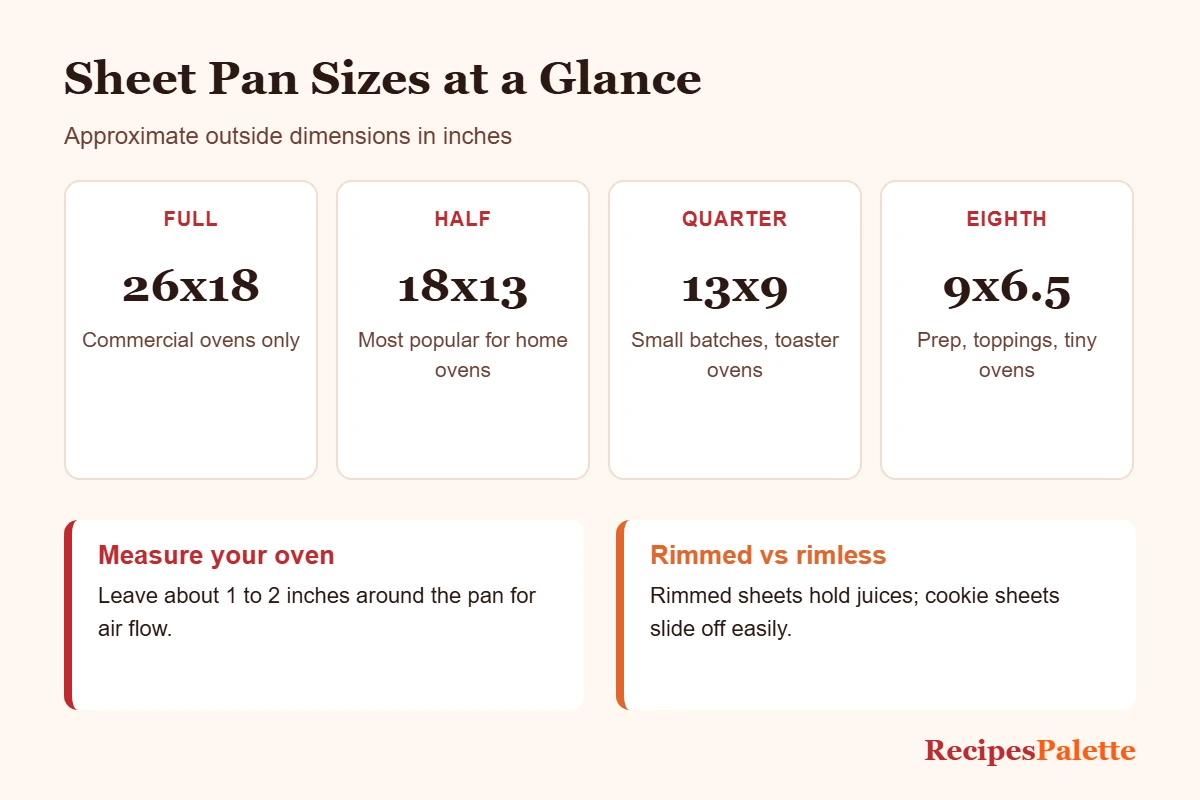
Sheet pan sizes are based on the full sheet pan used in restaurant and bakery ovens. Measurements vary slightly between brands, and some list outside dimensions while others list the inside cooking surface, so expect differences of up to half an inch.
| Size | Approximate outside dimensions | Typical uses |
|---|---|---|
| Full sheet pan | 26 x 18 inches | Commercial ovens, large bakery batches |
| Two-thirds sheet pan | About 21 x 15 inches | Larger home ovens, big sheet pan dinners |
| Half sheet pan | 18 x 13 inches | Cookies, roasted vegetables, sheet pan dinners, sheet cakes |
| Quarter sheet pan | 13 x 9 inches | Small batches, toaster ovens, prep and resting meat |
| Eighth sheet pan | About 9 x 6.5 inches | Toasting nuts, holding prepped ingredients, very small ovens |
Most sheet pans have a rim about 1 inch high, which keeps juices, oil and batter from running off.
How Big Is a Half Sheet Pan?
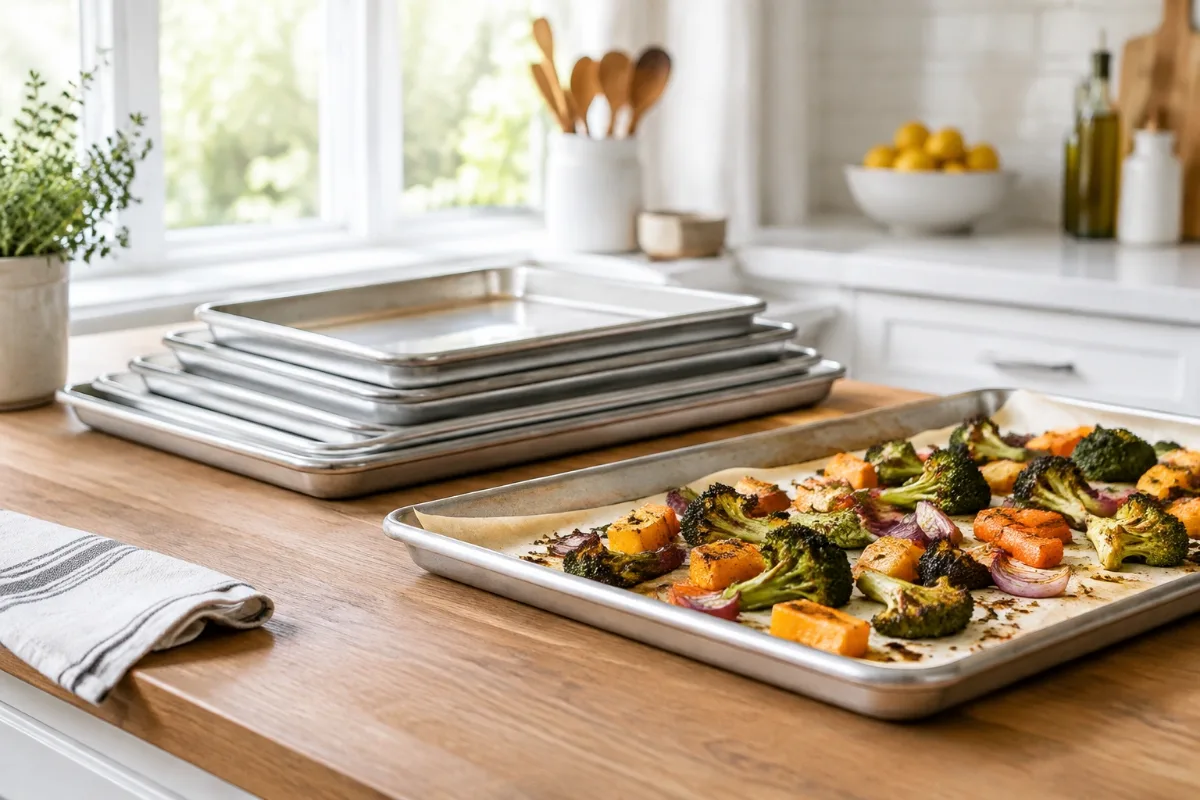
A half sheet pan measures about 18 x 13 x 1 inches. The usable flat area inside is a little smaller, often around 16.5 x 11.5 inches, because of the sloped rim and rolled edges.
The half sheet is the workhorse of home kitchens for good reason:
- It fits on the racks of nearly all standard 30-inch home ovens.
- It holds a full batch of a dozen cookies, a whole sheet pan dinner for four, or a tray of roasted vegetables without crowding.
- It is the size most sheet cake and sheet pan recipes are written for.
- Cooling racks and silicone baking mats are widely sold to fit it.
If you only buy one size, make it a half sheet. If you buy two, add a quarter sheet for small jobs.
Will a Full Sheet Pan Fit in a Home Oven?
Usually not. A full sheet pan is 26 inches wide, while most home oven interiors are around 24 inches wide or less, and the door needs to close with room for air to circulate. Full sheets are designed for commercial ovens.
Before buying any large pan, measure the inside of your oven from side to side and front to back. Leave at least 1 to 2 inches of space around the pan so hot air can flow and food cooks evenly. A pan that touches the oven walls can cause uneven browning and may not slide out easily.
Quarter and Eighth Sheet Pans
Small sheet pans are more useful than they look.
- Quarter sheet (13 x 9 inches): Great for one or two people, toaster ovens and countertop ovens, toasting nuts, baking a few cookies, or roasting a single chicken breast. It also works as a tray for prepped ingredients and for resting meat.
- Eighth sheet (about 9 x 6.5 inches): Handy for holding chopped vegetables while you cook, melting butter, or baking a tiny batch in a small air fryer oven.
Small pans also nest inside larger ones, so they take up little extra storage space.
Sheet Pan vs Cookie Sheet vs Jelly Roll Pan
These names are often mixed up, but they describe different pans.
- Sheet pan (rimmed baking sheet): Has a rim about 1 inch high on all four sides. It is the most versatile choice for roasting, baking and anything that might release liquid.
- Cookie sheet: Flat with no rim, or a raised lip on one or two short sides for gripping. Cookies slide off easily and hot air reaches them from all sides, but it is not suitable for juicy foods.
- Jelly roll pan: A smaller rimmed pan, often about 15 x 10 inches, used for sponge cakes that are rolled up. It sits between a quarter and a half sheet in size.
When a recipe says “baking sheet,” a rimmed half sheet pan is almost always the right choice.
What Material Is Best?
Aluminum
Aluminum is the most common material for sheet pans. It heats quickly and evenly, does not rust, and is light to handle. Heavy-gauge aluminum pans resist warping better than thin ones. Natural aluminum can discolor over time and is usually best hand washed.
Aluminized steel
Steel coated with aluminum is heavier and stiffer than plain aluminum. Many models have a nonstick or silicone coating.
Stainless steel
Stainless steel sheet pans are durable and often dishwasher safe, but stainless conducts heat less evenly than aluminum, so baked goods may brown in spots.
Nonstick-coated pans
Coated pans release food easily but scratch with metal utensils and should not be used at very high heat. Dark coatings also brown baked goods faster, so you may need to lower the oven temperature by about 25°F or check early.
For a deeper look at materials, see our guide to pan materials compared.
How to Choose a Sheet Pan
- Check the size against your oven. Measure first, especially for wall ovens and countertop ovens.
- Look for a heavy gauge. Thicker metal is less likely to warp and pop at high heat.
- Choose rolled or reinforced rims. A wire-reinforced rim adds strength and makes the pan easier to grip with oven mitts.
- Prefer light-colored metal for baking. Light pans brown cookies more gently than dark ones.
- Consider accessories. A cooling rack that fits inside the pan is useful for roasting, crisping and glazing.
- Buy at least two. Two half sheets let you bake one batch while the next one is being prepared, or roast a main dish and a side at the same time.
Why Sheet Pans Warp and How to Prevent It
A sheet pan that suddenly pops or twists in the oven is warping. This happens when the metal heats unevenly, for example when only part of the pan is covered with food, or when a hot pan is rinsed with cold water.
- Spread food across the whole pan rather than bunching it in one corner.
- Avoid preheating an empty thin pan at very high heat.
- Let the pan cool before washing.
- Choose thicker pans with reinforced rims if warping is a frequent problem.
Most pans flatten again as they cool, but repeated warping can leave a permanent wobble.
How to Clean and Care for Sheet Pans
- Line pans with parchment paper or a silicone mat for sticky foods to make cleanup easier.
- Soak baked-on grease in warm, soapy water, then scrub with a nonabrasive sponge.
- For brown stains on aluminum, a paste of baking soda and a little water can help. Avoid harsh oven cleaners on bakeware.
- Check the label before using the dishwasher. Dishwasher detergent can dull and darken natural aluminum.
- Dry pans completely before stacking them.
Best Uses for Each Sheet Pan Size
Half sheet pan
- Sheet pan dinners such as chicken thighs with potatoes and green beans
- A dozen cookies or a batch of biscuits
- Roasted vegetables for four
- Thin sheet cakes, bar cookies and focaccia
- Catching drips under a pie or casserole dish
Quarter sheet pan
- Toasting nuts, seeds and breadcrumbs
- Roasting a single portion of fish or chicken
- Holding breaded cutlets while you cook
- Resting cooked meat on a small rack
- Baking in a toaster oven or countertop oven
Two-thirds sheet pan
If your oven is wide enough, a two-thirds sheet gives about a third more space than a half sheet. It is handy for holiday roasting and large batches of vegetables, but check your oven width before buying.
Sheet Pan Accessories Worth Having
- Wire cooling rack: A rack that fits inside a half sheet lets air circulate around food for crisp bacon, oven fries and roasted chicken. It also works for cooling cookies and glazing cakes.
- Silicone baking mat: A reusable nonstick liner for cookies, candy and roasted vegetables. Choose one sized for your pan.
- Parchment paper: Precut half sheet parchment saves time and keeps pans clean.
- Sheet pan lid: Some pans have fitted lids for storing and transporting bars and cakes.
Tips for Better Sheet Pan Cooking
- Do not crowd the pan. Leave space between pieces of food so moisture can escape and food browns rather than steams. Use two pans if needed.
- Cut food evenly. Similar-sized pieces cook at the same rate.
- Stagger cooking times. For sheet pan dinners, start dense vegetables like potatoes first and add quick-cooking items like green beans or fish later.
- Use the right rack position. The middle rack gives even baking. The upper rack browns tops faster; the lower rack crisps bottoms.
- Rotate pans halfway. Most ovens have hot spots. Turning the pan and swapping racks gives more even results when baking two pans at once.
- Preheat the pan for crisp results. For potatoes and vegetables, heating the empty pan in the oven for a few minutes before adding oiled food helps the bottoms brown.
How to Store Sheet Pans
Sheet pans take up a lot of space. Store them vertically in a cabinet with a tray divider, in a deep drawer, or on a shelf with the largest pan on the bottom. Placing a sheet of parchment or a thin towel between stacked pans helps protect nonstick coatings from scratches.
Frequently Asked Questions
What size is a standard baking sheet?
Most recipes that call for a standard baking sheet mean a half sheet pan, about 18 x 13 inches.
Is a 9 x 13 pan the same as a quarter sheet pan?
They are similar in footprint, but a 9 x 13 baking dish has tall sides of about 2 inches, while a quarter sheet pan has a low rim of about 1 inch. Use the deeper dish for casseroles and cakes.
What size sheet pan fits in a toaster oven?
Many toaster ovens fit a quarter sheet pan or smaller. Measure the inside of your toaster oven before buying.
Can I use a half sheet pan for a sheet cake?
Yes. Half sheet cakes are a common size for parties. Make sure the recipe is sized for an 18 x 13 pan, or adjust the batter amount.
The Bottom Line
A half sheet pan is about 18 x 13 inches and is the best all-purpose size for home ovens. Full sheets are for commercial ovens, while quarter and eighth sheets are great for small batches and prep. Measure your oven, choose a heavy-gauge rimmed pan, and keep at least two half sheets on hand for everyday baking and roasting.