
Are Wooden Dish Racks Good? An Honest, Experience-Based Guide

Quick Answer
Yes, wooden dish racks are excellent if you prioritize aesthetics and sustainability, but they require more care than stainless steel. They are naturally antibacterial and gentle on glassware, but you need to dry them properly to avoid mold. For the best balance of form and function, a well-made bamboo or teak rack is my top choice, provided you’re willing to maintain it. Learn more about sustainable kitchen choices on the EPA’s guide to recycling and materials.
Why Choose a Wooden Dish Rack?
- Eco-Friendly: Made from renewable resources like bamboo, a highly sustainable material.
- Aesthetic Appeal: Adds a warm, natural look to your kitchen that metal simply can’t replicate.
- Gentle on Dishes: Won’t scratch your fine china, crystal, or non-stick pans.
- Naturally Antibacterial: Certain woods like bamboo and teak have natural antimicrobial properties.
Key Maintenance Tips
- Ensure the rack is in a well-ventilated area to speed up drying.
- Occasionally treat the wood with food-grade mineral oil to prevent cracking and water damage.
I’ve tested my fair share of dish racks over the years, from sleek stainless steel to collapsible silicone models. But a few years ago, I switched to a wooden dish rack, and I haven’t looked back. It wasn’t just about the look—though it does look great—it was about the functionality and feel. This guide dives into why a wooden dish rack might be the perfect addition to your kitchen, and what you need to know before buying one.
What Are the Main Benefits of a Wooden Dish Rack?
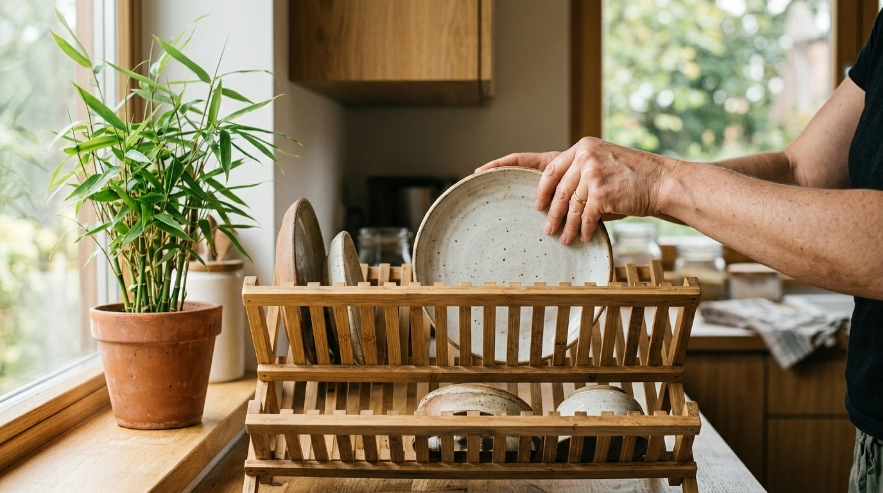
Wooden dish racks bring a unique set of advantages to the table.
They are a fantastic choice for eco-conscious consumers. Bamboo, in particular, is a fast-growing grass that regenerates quickly, making it a highly sustainable material.
Let’s be honest, a wooden rack just looks better. It adds a touch of warmth and sophistication to any kitchen, whether modern or rustic.
Are They Really Gentle on Dishes?
Absolutely. This is one of the main reasons I made the switch.
Wood is much softer than metal. You’ll never have to worry about it chipping your wine glasses or scratching your expensive non-stick pans.
I can’t tell you how many times my old metal rack left tiny scuffs on my favorite mugs. The wood is silent, soft, and safe.
What Are the Downsides of Wooden Dish Racks?
It’s not all perfect. Wood requires a bit of attention.
The biggest concern is moisture. If you constantly leave wet dishes on the rack without proper air circulation, you can run into problems with mold or mildew.
Another potential downside is the weight. Some solid teak or oak racks can be quite heavy compared to their metal or plastic counterparts.
Do Wooden Dish Racks Get Moldy?
They can, but it’s entirely preventable.
Mold thrives in dark, damp, and poorly ventilated areas. As long as you place your rack in a spot with good airflow and let it dry out completely between uses, you’re in the clear.
I always make sure to shake off excess water from my dishes before placing them in the rack. It’s a small step that makes a huge difference.
Wooden vs. Stainless Steel: Which Is Better?
This is the classic kitchen debate. To help you decide, I’ve broken down the key differences in the table below.
| Feature | Wooden Dish Rack | Stainless Steel Dish Rack |
|---|---|---|
| Durability | Lasts 5-10 years with proper care | Can last a lifetime |
| Maintenance | Regular oiling and thorough drying needed | Low maintenance; just wipe clean |
| Aesthetics | Warm, natural, fits many styles | Modern, sleek, industrial look |
| Price | $20 – $100+ depending on wood | $15 – $200+ for premium brands |
As you can see, the choice often comes down to lifestyle. I love the look and feel of wood, but I also appreciate the low-maintenance nature of steel.
How to Choose the Best Wooden Dish Rack for Your Kitchen
Finding the right one is about more than just picking the prettiest model. Here’s what I look for.
First, consider the type of wood. Bamboo is the most common and is incredibly eco-friendly. Teak is another excellent choice because it’s naturally water-resistant and dense.
Next, think about the size and design. Do you need a compact rack for a small apartment, or a large, multi-tiered one for a busy family kitchen?
What Are the Best Types of Wood for a Dish Rack?
Not all woods are created equal when it comes to wet environments. Here’s a quick breakdown:
- Bamboo: Sustainable, lightweight, and sturdy. It’s a top pick for its eco-credentials and price point.
- Teak: A hardwood with natural oils that resist water and rot, making it incredibly durable. It’s more expensive but can last for decades.
- Acacia: A beautiful, dense hardwood that is very durable and water-resistant when properly sealed.
- Oak: A classic, strong wood, but it can be heavy and is more susceptible to water damage if not maintained well.
Is a Bamboo Dish Rack a Good Choice?
Yes, it’s the choice I recommend for most people. Bamboo is a fantastic material for kitchen accessories.
It’s incredibly strong and durable, yet lightweight. Its natural resistance to water and bacteria is a huge plus.
As of 2026, bamboo remains one of the most sustainable materials you can use in your home. I’ve had my bamboo rack for three years now, and with a little care, it looks as good as new.
Step-by-Step Guide: How to Care for Your Wooden Dish Rack
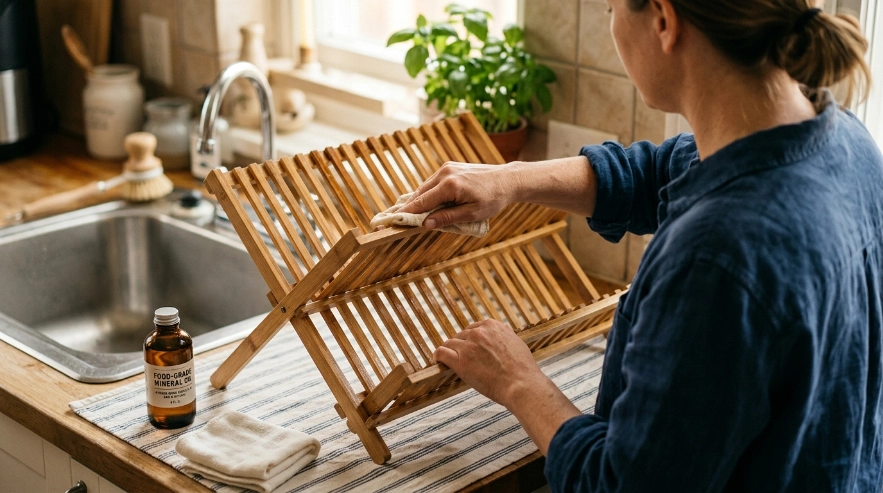
Proper maintenance is the secret to a long-lasting wooden rack. It’s not hard, but it is important.
Here’s the simple routine I follow.
- Shake off excess water: Before placing dishes in the rack, give them a good shake to remove most of the water.
- Air dry the rack itself: After the dishes are put away, leave the rack empty in a well-ventilated spot to dry completely.
- Clean regularly: Wash the rack with mild soap and warm water. Use a sponge, never a harsh scrubber. Dry it thoroughly after cleaning.
- Oil it periodically: Every 2-3 months, apply a food-grade mineral oil to the wood to seal it and prevent cracking. Let it soak in and wipe off the excess.
What Do the Experts Say About Wooden Dish Racks?
While I rely on my own experience, expert consensus supports many of these points. The USDA Forest Service has documented the natural durability of certain hardwoods like teak in wet conditions. Furthermore, a study on material properties from the National Institute of Standards and Technology (NIST) often highlights the structural integrity of bamboo.
In essence, the science backs up what I’ve found in my own kitchen: a quality wooden rack is a viable, long-lasting, and beautiful tool.
Are Wooden Dish Racks Worth the Investment?
For me, absolutely. But I have to be honest about what you’re signing up for.
If you’re looking for a “set it and forget it” solution, a wooden rack might not be your best bet. But if you appreciate the beauty of natural materials and are willing to put in a few minutes of care a month, you’ll be richly rewarded.
I love the feel of the wood under my hands and the classic, uncluttered look it brings to my countertop. It feels more like a piece of furniture than a utilitarian tool.
Can You Use a Wooden Dish Rack for Plastic and Glass?
Yes, and it’s actually one of the best uses for it.
Because the wood is so gentle, it is perfect for all dish types. You don’t have to worry about unsightly scuffs on your plastic containers or tiny chips on your delicate glass stems.
I used to dread washing my good wine glasses with my old metal rack. Now, it’s not a concern.
Product Recommendation Cards
If you’re ready to pick one, here’s what I’d actually recommend based on my experience.
🏆 BEST OVERALL
Owl’s Break Bamboo Dish Rack
★★★★☆
Large capacity with a built-in utensil holder and drainage spout. I love that it’s expandable to fit different sink sizes, and the bamboo feels rock solid.
💰 BEST BUDGET
Simple Modern Bamboo Dish Rack
★★★★☆
A compact, no-frills rack that’s perfect for smaller kitchens. It’s lightweight, affordable, and does the job well. I keep one in my camper van, and it’s held up great.
🚛 BEST FOR LARGE FAMILIES
Teak Kapur Large Capacity Rack
★★★★★
A premium, large teak wood rack with a dedicated cup rack and drip tray. It’s an investment, but the natural teak oils make it incredibly water-resistant. It’s the one I use daily at home.
Frequently Asked Questions About Wooden Dish Racks
Are bamboo dish racks antibacterial?
Yes, bamboo has natural antimicrobial properties that help prevent bacteria from growing on its surface. This makes it a hygienic choice for a dish drying rack, though it shouldn’t replace regular cleaning.
How do you clean a wooden dish rack?
Wash it with a soft sponge, warm water, and a mild dish soap. Rinse thoroughly and allow it to air dry completely in a well-ventilated area. Avoid harsh cleaners and abrasive scrubbers.
Can a wooden dish rack go in the dishwasher?
No, never. The high heat and harsh detergents will warp the wood, strip its natural oils, and cause it to crack or split. Always hand wash your wooden dish rack.
How long do wooden dish racks last?
With proper care, a high-quality wooden dish rack can last anywhere from 5 to 10 years. Teak and bamboo racks tend to have the longest lifespans due to their natural resistance to moisture.
What is the most durable wood for a dish rack?
Teak is widely considered the most durable and water-resistant wood, thanks to its high oil content and tight grain. It’s a premium choice that stands up to moisture better than almost any other wood.
The Final Verdict: Making the Right Choice for Your Kitchen
So, are wooden dish racks good? The answer is a resounding yes, but with a few important caveats.
They are beautiful, sustainable, and gentle on your dishes. They can transform a mundane kitchen chore into a slightly more pleasant experience.
If you’re willing to embrace a little bit of maintenance—drying the rack and oiling it now and then—a wooden dish rack is a fantastic choice. It’s an heirloom-quality item in a world of disposable plastic.
My advice? Start with a bamboo rack. It’s the perfect balance of price, performance, and sustainability. You’ll see what all the fuss is about.