
JASIWAY Dish Drying Rack in Sink: Honest 2026 Review

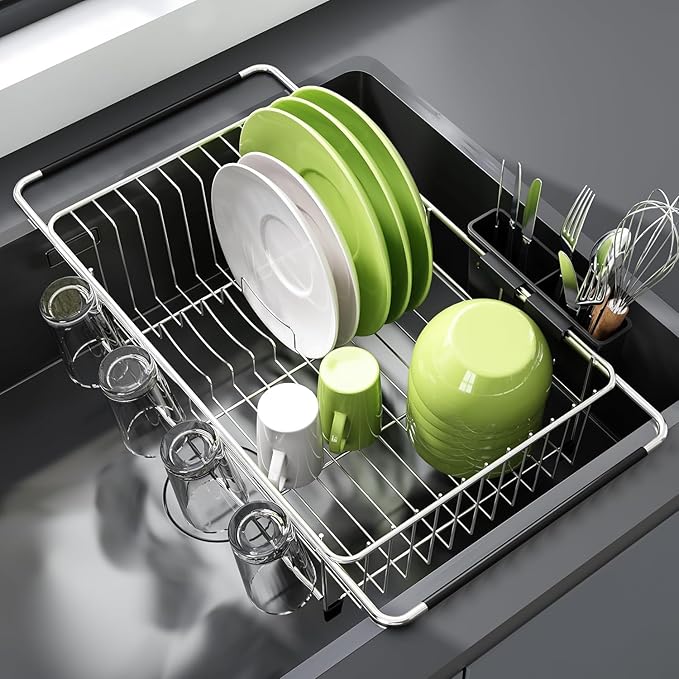
The JASIWAY Dish Drying Rack in Sink is built for small kitchens where a full countertop rack feels like too much. Its expandable stainless-steel frame can sit in or span a sink, so wet dishes drain where the water already belongs.
My overall take is simple: the design makes sense for one or two people, light daily loads, and tight counters. It is less convincing for big cookware or a family-sized dinner cleanup.
Quick Verdict
| Overall: 4.4/5 | Performance: 4.3/5 |
| Value: 4.5/5 | Design: 4.4/5 |
| ✅ Best For: Small kitchens, apartments, and light hand-washing | |
| ❌ Not Ideal For: Large families or frequent big-pot loads | |
| Price: Usually around $24–$28 on recent listings | |
| Check Price on Amazon | |
First Look at the JASIWAY Rack
The rack arrives as a compact stainless-steel frame rather than a bulky countertop station. Current listing data describes it as expandable from about 15.5 to 22.8 inches, with a depth near 10.4 inches, so the first thing to check is your sink width.
The removable utensil holder adds organization without making the rack much larger. It is listed as tool-free to set up, and there is no large draining tray because water falls into the sink.
How It Handles Everyday Dish Loads
Small dinner load: This is where the JASIWAY design makes the most sense. The rack is listed to hold about eight plates, so a few dinner plates, bowls, glasses, and utensils can fit without turning the sink area into a puzzle. The open wire frame also gives water a clear path down.
Mixed plates and bowls: Bowls need more thought than plates. If deep bowls lean together, airflow drops fast. Load plates first and angle bowls around them. That matches the basic rule in this guide on how to organize dishes in a dish rack: drainage and airflow matter more than cramming in one extra item.
Large pan or pot: A frying pan can sit across the rack, but it uses a lot of the available drying area. Large cookware often works better as a second load rather than sharing space with glasses and plates.
Cutlery load: The utensil holder is handy for forks, spoons, and small tools. It works better when utensils are spread out. Spoons can nest, and long tools may interfere with nearby dishes.
Cups and mugs: The current product title mentions a cup holder, which helps keep cups away from the main plate area. Heavier mugs still need sensible placement so one side does not become overloaded.
Overnight drying: The big advantage is drainage. With the rack sitting over or inside the sink, there is no large tray waiting to collect a shallow pool of water. With good spacing, the open layout should dry cleanly overnight with less standing water.
What Daily Use Feels Like
The routine is easy to understand. Wash, rinse, place dishes in the rack, and let the sink catch the runoff. There is no drainboard to empty, which removes one small kitchen chore. For a tiny counter, that is a real quality-of-life win.
The tradeoff is sink access. If the rack sits across the basin, you give up part of the sink while dishes dry. It is fairly light, but shifting it while loaded is awkward.
Build Quality and Stability
The product is listed as stainless steel with a rust-resistant finish. Joints and welds still deserve routine drying and cleaning.
| Part | What to Expect |
| Main frame | Stainless steel, expandable |
| Utensil holder | Removable, compact |
| Footprint | About 15.5 x 10.4 in closed |
Because the rack expands, stability depends on how well its ends rest on the sink edges. Measure first. A good fit should feel secure; a marginal fit can make any over-sink rack feel less confidence-inspiring.
Drainage Without a Drip Tray
This design avoids the usual tray problem by putting the rack over the sink. Water drops straight into the basin instead of running toward a spout or sitting under dishes. That reduces hidden water pooling under a tray.
There can still be light dripping sounds as dishes drain, but the mess stays where it should. If you sometimes use the rack on a counter, add a suitable surface underneath; this guide to what to put under a dish rack covers practical options.
Cleaning the Rack Is Simple
The open wire frame is easier to reach than a deep molded drainboard. A quick wipe with warm soapy water should handle normal water spots and residue. The utensil holder needs more attention because residue collects in small corners.
| Area | Care |
| Steel frame | Wipe and dry weekly |
| Utensil holder | Wash more often |
| Joints | Check for residue |
I could not confirm from the available listing data that the removable parts are dishwasher-safe, so hand washing is the safer choice. In hard-water areas, regular drying also helps limit mineral marks.
JASIWAY Dish Rack Pros and Cons
The strengths are mostly about space and drainage. The weaknesses come from the same compact footprint.
| ✅ Pros | ❌ Cons |
|
|
JASIWAY vs OXO Foldaway
The JASIWAY is a sink-first design. The OXO Good Grips Foldaway Dish Rack is a larger countertop model with a drain spout and a plate rack that folds down for cookware. OXO costs more but offers more flexibility.
OXO Good Grips Foldaway Dish Rack
| Feature | JASIWAY | OXO Foldaway |
| Capacity | Compact, about 8 plates | Larger mixed loads |
| Drainage | Direct to sink | Drain spout |
| Cleaning | Simple wire frame | More parts |
| Value | Lower price | Higher price |
| Best feature | Expandable fit | Fold-down plate rack |
If you want more context before choosing a style, the guide to different types of dish racks explains how in-sink, over-sink, foldable, and countertop designs compare.
Who Should Buy the JASIWAY?
Buy This If:
You have a small kitchen.
You usually wash light loads.
You want water draining into the sink.
Avoid This If:
You wash large pots every night.
You need the whole sink free.
You want family-size drying capacity.
How Durable Is It Long Term?
Stainless steel is a sensible material for wet kitchen use, but “rustproof” should never mean “maintenance-free.” Keep the frame clean, remove mineral buildup, and dry joints when you notice standing moisture. Focus especially on welds and contact points.
The expandable mechanism is another area to keep clean. Grit or mineral buildup can make sliding parts feel rough over time. Lifespan will depend heavily on cleaning and moisture exposure.
Does It Really Save Space?
Yes, if your counter is the problem. The rack uses the sink as its drainage zone and expands only when needed. That can beat a full-size countertop rack for space.
The catch is that saved counter space becomes occupied sink space. For a studio, apartment, or one-basin setup, that trade can still be worth it. For a large household, a bigger permanent rack may be easier. The broader 2026 dish rack buying guide is useful if capacity matters more than compactness.
JASIWAY Dish Rack FAQ
These are the practical questions that matter most before putting an expandable rack across your sink.
Will the JASIWAY dish rack fit my sink?
Measure the sink opening before buying. The rack is listed as expanding from about 15.5 to 22.8 inches, so the resting edges need solid support within that span.
How many plates does it hold?
Current listing data describes capacity for about eight plates. Bowls, cups, and cookware reduce the usable plate space once you mix a full load.
Does this dish rack rust?
It is sold as stainless steel and rust-resistant. Still, keep joints clean and dry when possible because repeated moisture and mineral deposits can affect metal surfaces over time.
Can I put pots and pans on it?
Small cookware can work, but big pans quickly take over the rack. Keep heavy items low and stable, and avoid balancing them near glasses or mugs.
How often should I clean it?
A weekly wipe is a good baseline for frequent use. Clean sooner if you see food residue, mineral spots, odor, or buildup in the utensil holder.
Final Verdict on the JASIWAY
The JASIWAY Dish Drying Rack in Sink is a smart match for a small kitchen where counter space matters more than maximum drying capacity. Its best features are the expandable sink fit, simple stainless-steel frame, and direct drainage.
The limits are just as clear. Large cookware eats up space fast, and using the rack means giving up part of the sink while dishes dry. At a typical mid-$20s price, I think it offers good value for one or two people who hand-wash modest loads and want a cleaner, less cluttered counter.