
What Pots and Pans Do You Really Need? Starter Kitchen List

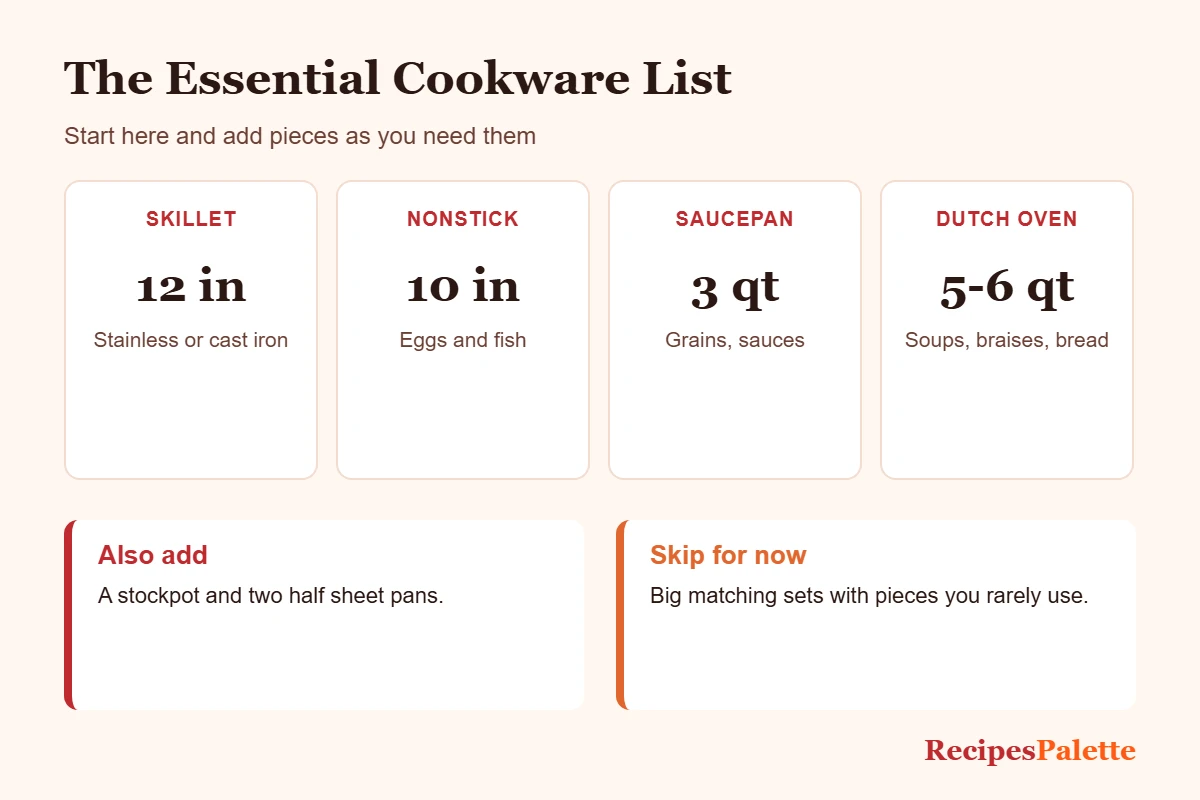
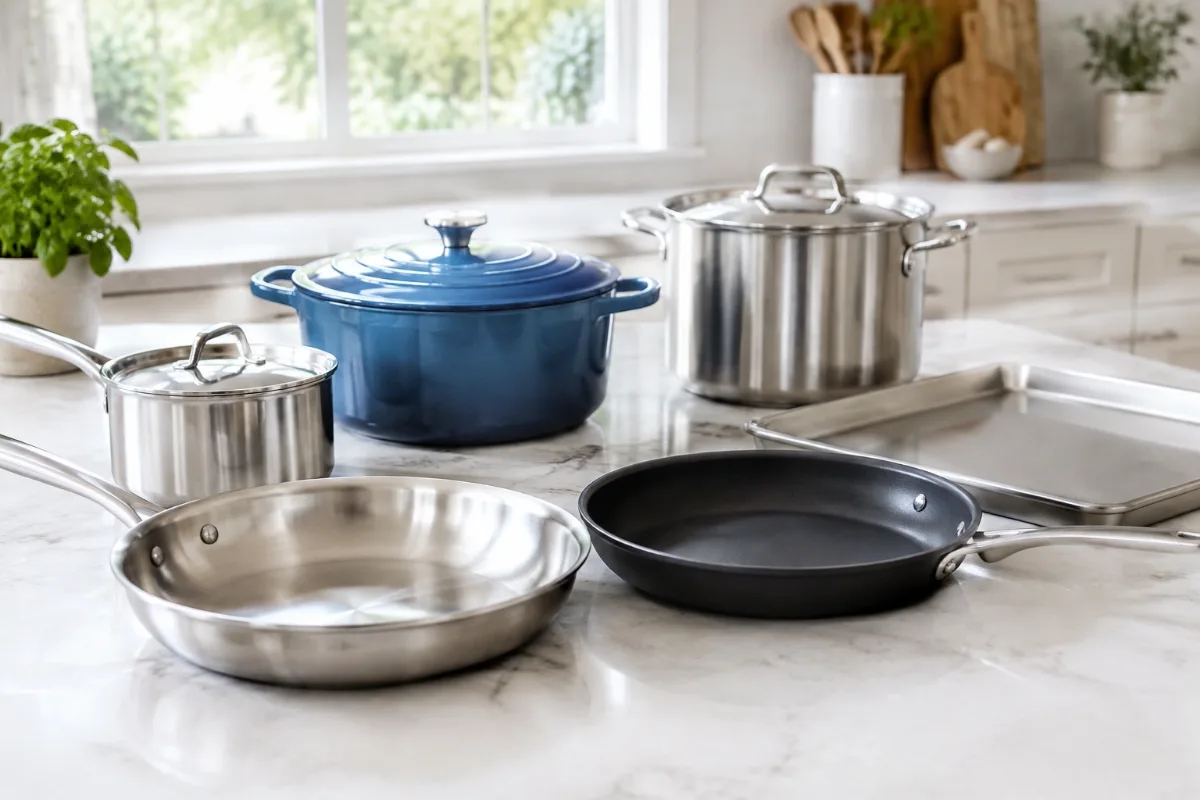
Most home cooks only need about seven core pieces of cookware: a large skillet, a nonstick pan, a saucepan, a Dutch oven, a stockpot and a couple of sheet pans. These cover nearly every everyday recipe, from eggs and stir-fries to soups, pasta, braises and roasted vegetables. Buying these pieces one by one in the right materials usually gives better results than a large matching set.
Here is a practical starter list, what each piece does, the best material for each, and what you can skip.
The 7 Essential Pots and Pans
1. A 10- or 12-inch skillet (stainless steel or cast iron)
This is the pan you will use most. A 12-inch skillet fits enough chicken thighs or vegetables for a family without crowding. Choose clad stainless steel for searing and pan sauces, or cast iron for high-heat searing and baking. Our guide on what to look for in stainless steel cookware can help you choose.
2. An 8- to 10-inch nonstick skillet
For eggs, pancakes, fish and other delicate foods. Nonstick coatings wear out over time, so a mid-priced pan is fine. If you prefer ceramic nonstick, see how to use and care for ceramic pans.
3. A 2- to 3-quart saucepan with lid
For rice, oatmeal, sauces, boiling eggs and reheating soup. A clad stainless saucepan with a heavy base heats evenly and does not scorch easily.
4. A 5- to 6-quart Dutch oven
An enameled cast iron Dutch oven handles soups, stews, chili, braises, deep frying and bread. It goes from the stovetop to the oven and keeps food warm at the table.
5. An 8- to 12-quart stockpot
For pasta, stock, corn on the cob, large batches of soup and canning. Stainless steel with a thick base is a durable, affordable choice.
6. A 3- to 4-quart sauté pan (optional but useful)
A sauté pan has straight, taller sides and a lid. It is great for shallow frying, braising chicken, and one-pan pasta dishes.
7. Two half sheet pans
Rimmed half sheet pans are essential for roasting vegetables, sheet pan dinners and cookies. Learn more in our guide to sheet pan sizes.
Best Material for Each Job
| Piece | Best material | Why |
|---|---|---|
| Main skillet | Clad stainless or cast iron | High heat, durable, oven safe |
| Egg pan | Nonstick or ceramic nonstick | Easy release, easy cleanup |
| Saucepan | Clad stainless | Even heat, non-reactive |
| Dutch oven | Enameled cast iron | Holds heat, no seasoning needed |
| Stockpot | Stainless with thick base | Light enough to lift when full, durable |
| Sheet pans | Heavy aluminum | Even browning, light, rust-free |
For a deeper look at materials, see our guide to pan materials compared.
Should You Buy a Cookware Set?
Sets can be good value if most of the pieces match what you will use. The downsides are that sets often include several small saucepans and pans you rarely touch, and everything is the same material, even though different jobs suit different materials.
A good approach is to buy a small set or individual pieces in clad stainless steel for your saucepan, skillet and stockpot, then add a nonstick pan, a Dutch oven and sheet pans separately. This is similar to how professional cooks choose cookware, as we explain in what pans professional chefs use.
Nice-to-Have Extras
Once you have the basics, add these as your cooking grows:
- Carbon steel or cast iron skillet: If your main skillet is stainless, a cast iron pan adds high-heat searing and baking.
- Grill pan or griddle: For indoor grilling and pancakes for a crowd.
- Wok: For stir-fries and fried rice.
- Small 1-quart saucepan: For melting butter, heating milk and small sauces.
- Roasting pan with rack: For whole chickens and roasts.
- Slow cooker: For hands-off cooking. See Crock-Pot sizes explained to pick a size.
Cookware Needs by Household Size
| Household | Skillet | Saucepan | Dutch oven |
|---|---|---|---|
| 1 to 2 people | 10 inch | 2 quart | 3.5 to 5 quart |
| 3 to 4 people | 12 inch | 3 quart | 5 to 6 quart |
| 5 or more | 12 inch plus a second skillet | 3 to 4 quart | 7 quart or larger |
Do You Need Special Pans for Your Stove?
- Gas: Works with all cookware.
- Electric coil and smooth glass-top: Choose pans with flat, smooth bottoms for good contact. Lift heavy cast iron rather than sliding it on glass.
- Induction: Needs magnetic cookware, such as most stainless steel, cast iron and carbon steel, or pans with an induction base. Learn more in what cookware works on induction.
Don’t Forget the Utensils
The right utensils help pans last. Keep wooden and silicone tools for nonstick and enameled cookware, and metal for stainless and cast iron. Our guide to wooden and silicone cooking utensils explains the options.
What You Can Skip
Many kitchen stores sell cookware you may never need. Unless you cook these foods often, you can skip:
- Several tiny saucepans: One small and one medium saucepan are usually enough.
- Specialty pans: Crepe pans, paella pans and egg poachers are fun but not essential.
- Large matching sets: Ten- or fifteen-piece sets often count lids and utensils as pieces.
- Very cheap nonstick sets: Thin pans warp and lose their coating quickly.
- Multiple Dutch ovens: One good 5- to 6-quart pot covers most needs.
Budget Plan: How to Build Your Kitchen
Step 1: The basics
Start with a 12-inch skillet, a nonstick pan, a 3-quart saucepan and one half sheet pan. These handle most weeknight meals.
Step 2: Add capacity
Add a Dutch oven for soups and braises, a stockpot for pasta, and a second sheet pan.
Step 3: Specialize
Add a cast iron or carbon steel pan, a wok, a sauté pan or a slow cooker, depending on what you like to cook.
Spending more on pans you use daily, such as your main skillet and saucepan, and less on pans used occasionally, gives the best value.
What to Look for in Any Pot or Pan
- Heavy, flat base: Heats evenly and does not warp.
- Comfortable, secure handle: Riveted handles are sturdy. Check that the handle feels balanced.
- Tight-fitting lid: Important for saucepans, sauté pans and Dutch ovens.
- Oven-safe rating: Lets you finish dishes in the oven.
- Stove compatibility: Especially if you have induction.
- Easy care: Consider whether you want dishwasher-safe pieces.
How to Care for Your Cookware So It Lasts
- Let pans cool before washing to prevent warping.
- Use soft utensils on nonstick and enameled pieces.
- Dry cast iron and carbon steel immediately and oil them lightly.
- Store pans with protectors between them when stacking.
- Follow each maker’s care guide for the dishwasher and oven limits.
Frequently Asked Questions
What is the most versatile pan?
A 12-inch clad stainless steel or cast iron skillet. It can sear, sauté, shallow fry, roast and bake.
How many pots and pans does a beginner need?
About five to seven: a skillet, a nonstick pan, a saucepan, a Dutch oven, a stockpot and one or two sheet pans.
Is it better to buy cookware individually or as a set?
Buying individually lets you choose the best material for each job. A small, well-chosen set can be good value if you will use every piece.
What cookware should I avoid as a beginner?
Very cheap, thin pans that warp and heat unevenly, and large sets packed with pieces you will rarely use.
What size skillet is most useful?
A 12-inch skillet is the most versatile for families. A 10-inch skillet suits one or two people.
Do I need a Dutch oven if I have a stockpot?
They do different jobs. A Dutch oven holds heat and goes in the oven for braises and bread, while a stockpot is light and tall for boiling and stocks.
Is nonstick or stainless better for beginners?
Having one of each is best: nonstick for eggs and delicate foods, stainless for searing and sauces.
How long should good cookware last?
Stainless steel, cast iron and carbon steel can last for decades. Nonstick pans usually need replacing after a few years.
The Bottom Line
You do not need a huge set to cook well. A large skillet, a nonstick pan, a saucepan, a Dutch oven, a stockpot and two sheet pans will handle almost every recipe. Choose the right material for each piece, add extras as you need them, and look after your cookware so it lasts for years.