
What to Look for in Stainless Steel Cookware (Clad, 18/10, Thickness)

Good stainless steel cookware is fully clad (layers of stainless steel and aluminum or copper bonded all the way up the sides), has an 18/10 stainless steel cooking surface, a magnetic exterior if you cook on induction, a solid weight with a flat base, securely riveted handles and well-fitting lids. Check that it is oven-safe to a high temperature, and buy the pieces you will actually use rather than the biggest set.

Stainless steel cookware can last for decades, so it pays to choose well. But product listings are full of terms like tri-ply, 5-ply, 18/10 and encapsulated base that are not always explained. This guide explains what each one means, what really matters, and what to skip.
1. Construction: Clad vs Disc-Bottom
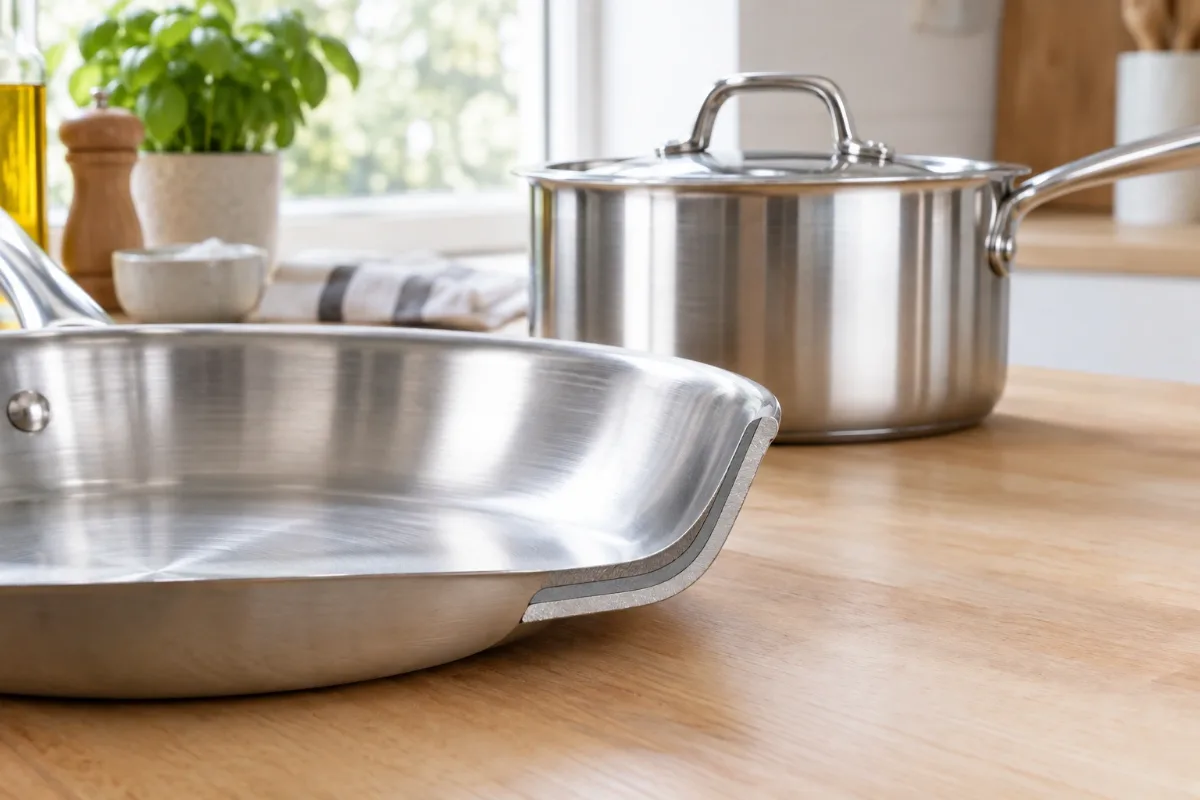
Stainless steel on its own is a poor heat conductor. Good cookware pairs it with aluminum or copper, which spread heat quickly and evenly. There are two ways to do this:
| Fully clad (tri-ply, 5-ply) | Disc-bottom (encapsulated base) | |
|---|---|---|
| Where the conductive layer is | Bonded through the base and up the sides | Only in a thick disc on the bottom |
| Heat on the sides | Even | Sides heat less evenly |
| Best for | Sautéing, searing, pan sauces | Boiling, soups, stock, pasta |
| Price | Higher | Lower |
For skillets and sauté pans, fully clad is worth it. For stockpots and pasta pots, a good disc-bottom pot works fine and saves money.
2. Tri-Ply vs 5-Ply
- Tri-ply (3-ply): stainless steel, aluminum core, stainless steel. The classic, excellent for most cooks.
- 5-ply and more: extra layers that can make heating gentler and more even and the pan feel more solid. Not automatically better; thickness and quality of the layers matter more than the number.
- Copper core: a copper layer inside for very responsive heating, at a higher price.
3. The Steel Grade: 18/10 vs 18/8 vs 18/0
The numbers describe the percentage of chromium and nickel in the steel.
- 18/10 and 18/8: about 18% chromium with 10% or 8% nickel. Shiny, very corrosion-resistant and non-reactive. Ideal for the cooking surface.
- 18/0: little or no nickel. Magnetic, so it is often used as the outside layer for induction compatibility. A good option for people with a nickel allergy.
A common high-quality combination is an 18/10 interior with an 18/0 (magnetic) exterior.
4. Induction Compatibility
If you have or might buy an induction cooktop, make sure the exterior is magnetic. Look for “induction compatible” in the listing, or bring a magnet when shopping: if it sticks firmly to the base, it works. See does stainless steel work on induction.
5. Weight and Thickness
- A good pan feels solid but not exhausting to lift. Very thin, light pans heat unevenly and warp.
- The base should be perfectly flat. Set the pan on a flat counter and check that it does not rock.
- Thicker walls hold heat better for searing; very heavy pans can be hard to toss and handle.
6. Handles, Lids and Rims
- Handles: Riveted handles are the most secure. Check that they feel comfortable and balanced. Stainless handles stay cooler on the stove than the pan body, but get very hot in the oven.
- Lids: Snug-fitting stainless lids are the most durable and oven-safe. Glass lids let you see the food but have lower oven limits.
- Rims: Flared or rolled rims make pouring cleaner.
- Measurement marks: Etched marks inside saucepans and stockpots are a handy extra.
7. Oven and Dishwasher Safety
Good stainless cookware is usually oven-safe to 500°F (260°C) or higher, and often broiler-safe. Most is dishwasher-safe, though hand washing keeps the finish brighter. For one example, see All-Clad on induction.
8. Warranty and Where It Is Made
A long or lifetime warranty is a good sign that a brand expects its cookware to last. Country of origin matters to some buyers; many good brands manufacture in Asia, while a few clad lines are made in the US or Europe. For a mid-range example, see is Cuisinart a good cookware brand.
Which Pieces Do You Really Need?
- 10 to 12-inch skillet (fry pan): everyday searing and sautéing.
- 3-quart sauté pan with lid: straight sides for sauces, braises and shallow frying.
- 2 to 3-quart saucepan with lid: rice, grains, sauces, reheating.
- 6 to 8-quart stockpot: pasta, soups and stock.
Pair these with a nonstick pan for eggs and a cast iron skillet for very high heat. See best pan materials compared.
How to Cook Rice in a Stainless Steel Pot
Stainless steel saucepans are great for rice. Use a heavy, clad or disc-bottom pot, rinse the rice, bring it to a boil with the right amount of water and salt, then cover and simmer on the lowest heat. Rest it 10 minutes off the heat before fluffing; the rest helps the rice release from the bottom. See our rice to water ratio chart for amounts.
Red Flags to Avoid
- Very thin, lightweight pans with no listed construction
- “Stainless” with no grade or layer information
- Handles attached with weak spot welds or loose screws
- Warped or uneven bases
- Big bargain sets padded with tiny pans and utensils you will not use
How to Cook With Stainless Steel Without Sticking
Stainless steel has no nonstick coating, so technique matters. Food sticks when it hits a pan that is too cold or when it is moved too soon. These steps make a big difference.
- Preheat the empty pan. Heat it over medium for two to three minutes. A common test is to flick in a few drops of water: if they bead up and glide around the pan instead of sizzling away, it is ready.
- Add oil, then food. Add oil once the pan is hot and let it shimmer before adding food.
- Pat food dry. Moisture on meat or vegetables cools the pan and causes steaming and sticking.
- Do not move it too early. Proteins like chicken and fish stick at first, then release naturally once a crust forms. If it does not lift easily, give it another minute.
- Deglaze the browned bits. The browned bits left in the pan are full of flavor. Add a splash of broth, wine or water and scrape them up to make a quick pan sauce.
Medium heat is enough for most cooking. Clad stainless spreads heat well, so very high heat is rarely needed and can cause discoloration.
How to Clean and Care for Stainless Steel
- Let the pan cool first. Pouring cold water into a very hot pan can warp it over time.
- Soak stuck-on food. Fill the pan with warm soapy water for 15 to 30 minutes, or simmer a little water in it, then scrub.
- Use a stainless steel cleanser for stains. Powder cleansers made for stainless steel (such as oxalic-acid cleaners) remove rainbow heat tint and burnt spots. Use a soft sponge and rinse well.
- Remove white spots with vinegar. Chalky white marks are usually minerals from water. Wipe them with diluted white vinegar, then wash and dry.
- Dry right away. Drying with a towel prevents water spots and keeps the pan looking new.
- Check the dishwasher rules. Many fully clad pans are dishwasher safe, but hand washing keeps the finish brighter. Some makers recommend hand washing only.
Budget vs Mid-Range vs Premium: What You Get
| Price tier | Typical build | Good for |
|---|---|---|
| Budget | Disc-bottom or thin tri-ply; lighter weight; may have plastic handles | Boiling pasta, soups, occasional cooking |
| Mid-range | Fully clad tri-ply; riveted steel handles; oven safe to high temperatures | Everyday searing, sautéing and sauces; best value for most homes |
| Premium | Tri-ply, 5-ply or copper core; thicker walls; tighter finishing and longer warranties | Frequent cooks who want very even heat and long-term durability |
For most home cooks, a well-made fully clad tri-ply skillet and saucepan offer most of the benefits of premium cookware for much less money. Spend more on the pieces you use every day, like a 10- or 12-inch skillet, and save on pieces mostly used for boiling water, like a stockpot.
Stainless Steel vs Nonstick vs Cast Iron
| Feature | Stainless steel | Nonstick | Cast iron |
|---|---|---|---|
| Best for | Searing, sauces, everyday cooking | Eggs, pancakes, delicate fish | High-heat searing, baking, frying |
| Food release | Needs preheating and oil | Very easy | Good once seasoned |
| Max heat | High; often oven safe to 500°F or more | Lower; check the rating | Very high |
| Acidic foods | Fine | Fine | Can strip seasoning (bare iron) |
| Upkeep | Dishwasher safe in many cases | Hand wash; replace when worn | Hand wash, dry and oil |
| Lifespan | Decades with care | A few years for most coatings | Decades with care |
Many kitchens do best with a mix: stainless steel for most cooking, one nonstick skillet for eggs, and a cast iron pan for searing and baking.
Frequently Asked Questions
Is stainless steel cookware good?
Yes. It is durable, non-reactive, oven-safe and lasts for decades. Its main drawback is that food sticks if you do not preheat and use enough fat.
Is 18/10 better than 18/8?
They are very similar. 18/10 has slightly more nickel, which adds shine and corrosion resistance. Either is a good cooking surface.
Is 5-ply better than 3-ply?
Not always. A well-made tri-ply pan can perform as well as many 5-ply pans. Overall thickness and quality matter more than layer count.
How do I keep food from sticking to stainless steel?
Preheat the pan on medium for a minute or two, add oil, wait until it shimmers, then add food. Let food release naturally before flipping.
Is stainless steel cookware safe?
Yes. It is one of the most stable cookware materials. See what is the safest cookware.
Is stainless steel cookware nonreactive?
Yes. Stainless steel does not react with acidic foods like tomatoes, wine or vinegar, so it is a good choice for sauces.
Do you need to season stainless steel pans?
No. Stainless steel does not need seasoning like cast iron. Preheating and using enough oil prevent most sticking.
Why does my stainless pan have rainbow stains?
That is heat tint, a harmless discoloration from high heat. A stainless steel cleanser or a little diluted vinegar usually removes it.
The Bottom Line
Look for fully clad construction, an 18/10 cooking surface, a magnetic exterior for induction, a solid flat base, secure handles and snug lids. Buy a few versatile pieces instead of a giant set, and good stainless steel cookware will serve you for decades.