
What Dish Rack Is Best? How to Choose the Right One in 2026

Quick Answer
For most kitchens, the best dish rack is a stable, rust-resistant model with good airflow, a drainboard that directs water toward the sink, and separate storage for utensils. My best all-around style is a foldable aluminum or stainless-steel rack because it combines durability with easy cleaning while supporting the clean kitchen habits recommended by USDA food-safety guidance.
What I look for first
- Rust resistance: Aluminum and quality stainless-steel designs handle daily moisture better than exposed basic steel.
- Active drainage: A sloped tray or movable spout keeps dishes from sitting above pooled water.
- Enough airflow: Plates, bowls, and cups should remain separated so water can evaporate.
- Stable storage: Good plate slots and non-slip feet reduce tipping and chipped dishes.
- Easy cleaning: Removable utensil cups and drainboards are much easier to maintain.
My quick picks
- OXO Aluminum Fold Flat for everyday flexibility, Joseph Joseph Extend Steel for changing loads, and simplehuman Steel Frame for premium drainage.
If you wash even a few items by hand each day, the dish rack affects more than counter appearance. A poorly designed rack leaves puddles, crowds glasses together, and turns cleanup into another chore.
I judge a rack by one simple question: where does the water go? If the answer is directly toward the sink while dishes stay separated and secure, the design is already doing most of its job well.
What dish rack is best for most kitchens?
For most homes, a rust-resistant countertop rack with a drainboard is the safest all-around choice. It works beside almost any sink and gives plates, bowls, mugs, and utensils enough room to air-dry.
A dish rack is a structured holder that keeps washed kitchenware separated while excess water drains and evaporates. The best models manage dishes and water at the same time.
- Choose aluminum if low weight and corrosion resistance matter most.
- Choose stainless steel if you want a sturdy rack that looks good left on the counter.
- Choose an expandable rack if your washing load changes throughout the week.
- Choose an over-sink rack when counter space is extremely limited.
- Choose two tiers when vertical space is plentiful but counter width is not.
There is no single rack that wins for every kitchen. Sink location, available counter space, family size, and the dishes you wash matter more than trendy features.
Which dish rack material is best?
Aluminum and stainless steel are my preferred materials for regular use. Both provide a more rigid structure than lightweight plastic, while good designs tolerate years of wet dishes.
The material still needs proper care. Even a premium rack can collect mineral deposits, soap residue, or grime when water sits on it repeatedly.
| Material | Main Advantage | Main Drawback | Best For |
|---|---|---|---|
| Aluminum | Lightweight and naturally corrosion resistant | Often costs more than basic coated racks | Everyday countertop use |
| Stainless steel | Rigid, durable, and attractive | Water spots can remain visible | Heavy daily use |
| Coated steel | Affordable and widely available | Damaged coating may expose metal underneath | Budget kitchens |
| Plastic | Light and easy to rinse | Can feel less stable with heavy cookware | Light dishes and occasional use |
| Bamboo | Warm, furniture-like appearance | Needs thorough drying and careful maintenance | Style-focused kitchens |
What size dish rack should I buy?

Measure the usable countertop before buying. Don’t judge a rack only by the space beside your sink because drain spouts, utensil cups, cabinet edges, and faucets can reduce the usable area.
I prefer to map the footprint with a sheet of paper or masking tape first. That makes an oversized rack obvious before money is spent.
- Measure the available width between the sink and any wall or appliance.
- Measure front-to-back depth without blocking drawers or cabinet doors.
- Check the sink direction so a drain spout can actually reach the basin.
- Estimate a normal load instead of sizing for the rare holiday dinner.
- Check vertical clearance before choosing a two-tier design.
A compact rack is often better than a huge rack that permanently consumes prep space. Expandable and folding designs solve this problem particularly well.
Is a two-tier dish rack better than a one-tier rack?
A two-tier rack is better when you need capacity without using more countertop width. A one-tier rack is usually easier to load, clean, and fit under cabinets.
- Two tiers: Better for families, small counters, plates, bowls, and frequent washing.
- One tier: Better for oversized cookware, simple cleaning, and low cabinets.
- Expandable one tier: A useful middle ground when loads vary.
Stability matters more as a rack gets taller. I would rather have a lower rack with secure feet than a narrow tower that flexes when heavy bowls reach the top shelf.
Over-the-sink vs. countertop dish rack: which is better?
Countertop racks are more versatile, while over-the-sink racks save the most counter space. Your sink dimensions usually decide the winner.
| Feature | Countertop Rack | Over-the-Sink Rack |
|---|---|---|
| Counter space | Uses counter area | Keeps counter clearer |
| Drainage | Needs tray or spout | Water falls directly into sink |
| Fit | Works with most sinks | Measurements are critical |
| Large cookware | Usually easier to accommodate | May obstruct sink access |
If your kitchen has one small sink, be careful with a large over-sink rack. Saving countertop space means little if you can no longer wash a stockpot comfortably.
What dish rack features actually matter?
Good drainage, stability, airflow, and cleanability matter more than accessory count. A dozen holders can’t rescue a rack that constantly leaves water underneath it.
- Sloped drainboard: Moves water away instead of letting it pool.
- Movable drain spout: Helps when the rack must sit beside rather than directly against the sink.
- Removable utensil holder: Makes cleaning easier and frees space when unnecessary.
- Non-slip feet: Keep the rack stable on wet countertops.
- Protected plate supports: Reduce sliding, scratching, and chipping.
- Wide spacing: Improves airflow between bowls and glasses.
- Folding or expandable sections: Give you capacity only when you need it.
How do I keep a dish rack clean and rust-free?
Empty and clean the rack before residue becomes visible. Standing water, food particles, soap film, and mineral deposits make a rack harder to maintain over time.
For cleaners used around food-preparation areas, the EPA Safer Choice program is a useful place to learn about products made with ingredients that meet its safer-chemistry criteria.
- Empty the drip tray instead of allowing water to remain for days.
- Rinse removable cups and trays with warm water.
- Use a soft cloth or non-abrasive sponge on coated and stainless surfaces.
- Follow the manufacturer’s cleaning instructions before using bleach or aggressive chemicals.
- Dry metal components after deep cleaning.
- Clean corners, drain openings, and underneath removable pieces.
Simplehuman, for example, advises gentle cleaning for its stainless components and warns against abrasive steel wool. That is a good reminder that more aggressive scrubbing isn’t always better.
Is air-drying dishes on a rack hygienic?
Yes, clean dishes can air-dry effectively on a clean rack with good airflow. The bigger problem is usually a dirty rack, crowded dishes, or a tray where old water remains trapped.
If sanitizing performance is a priority, NSF explains its residential dishwasher sanitizing certification. A dish rack dries items after washing; it does not create a sanitizing cycle by itself.
- Wash dishes thoroughly before placing them on the rack.
- Avoid stacking wet bowls tightly together.
- Keep utensil compartments clean.
- Let items dry fully before storing them in closed cabinets.
Which dish racks are worth considering in 2026?
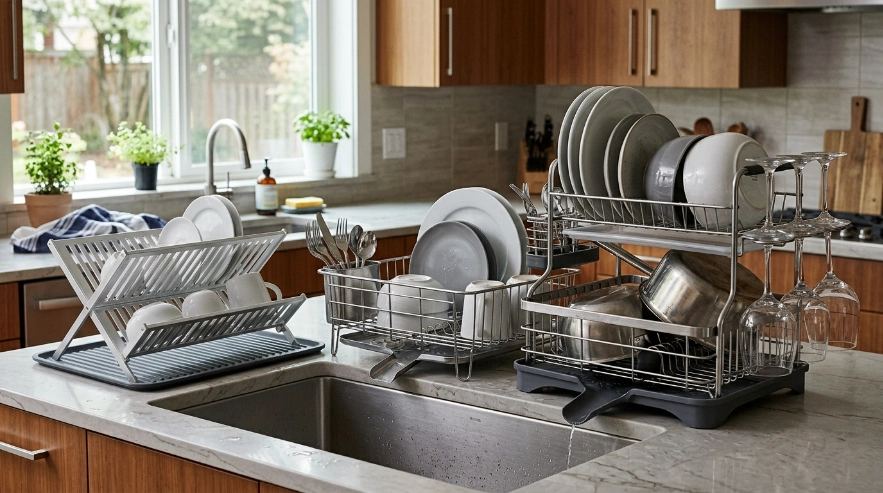
Three current designs stand out for different needs. I would choose between them based on space and drainage rather than choosing the fanciest-looking rack.
| Dish Rack | Key Specification | Drainage | Best For |
|---|---|---|---|
| OXO Good Grips Aluminum Fold Flat | 16.4 × 14.6 inches; rustproof aluminum; folds flat | Built-in ridged drainboard | Flexible everyday use |
| Joseph Joseph Extend Steel | About 12¼ inches deep closed and 20¼ inches expanded | Spout adjusts to three positions | Changing load sizes |
| simplehuman Steel Frame Dishrack | Large-capacity design; holds up to four extra-large wine glasses | Swivel spout drains into sink | Premium drainage and entertaining |
If you’re ready to pick one, these are the three designs I’d put at the top of the shortlist:
🏆 BEST OVERALL
OXO Good Grips Aluminum Fold Flat Dish Rack
★★★★☆
Its rustproof aluminum frame measures 16.4 × 14.6 inches and folds flat when you want the counter back. I like this design for a typical kitchen because it handles regular loads without forcing you to dedicate permanent space to a bulky rack.
↔️ BEST EXPANDABLE
Joseph Joseph Extend Stainless-Steel Dish Drainer
★★★★☆
The sliding design expands its drying depth from about 12¼ to 20¼ inches and includes a three-position drain spout. I prefer this approach when weekday loads are small but weekend cooking creates twice as many dishes.
✨ BEST PREMIUM
simplehuman Steel Frame Dishrack
★★★★★
A swivel drain spout directs water toward the sink, while the standard model includes space for up to four extra-large wine glasses. I would choose it for a kitchen where the rack stays visible every day and drainage quality matters more than keeping the price low.
Frequently Asked Questions
What is the most durable type of dish rack?
Quality stainless-steel and aluminum dish racks are strong choices for durability. Aluminum has excellent natural corrosion resistance, while stainless-steel racks feel rigid and substantial. Construction quality and proper cleaning matter as much as the material name.
Is stainless steel or aluminum better for a dish rack?
Aluminum is usually lighter and naturally resistant to rust, making it useful for folding racks. Stainless steel feels heavier and more rigid. I would choose aluminum for portability and stainless steel for a permanent countertop setup.
Are expensive dish racks worth it?
They can be if the extra money buys better drainage, sturdier construction, replaceable components, or a footprint that fits your kitchen better. Paying more only for appearance is less useful than paying for a rack that prevents puddles and fits your normal dish load.
Should a dish rack drain directly into the sink?
Direct drainage is convenient because water doesn’t have to remain in a tray until you empty it. A rack with a sloped board or adjustable spout is especially useful when you wash dishes several times per day.
How often should I clean my dish drying rack?
Clean visible spills and trapped food immediately, then give the rack a regular deeper clean based on how often you use it. If you notice slime, odor, mineral buildup, or standing water, it needs attention sooner.
Final Takeaway: So, what dish rack is best?
The best dish rack is the one that fits your counter, drains water reliably, stays stable, and is simple enough to clean regularly. For most kitchens, I would start with a rust-resistant aluminum or stainless-steel countertop model rather than choosing based on capacity alone.
For a versatile everyday setup, the OXO fold-flat design makes the most sense to me. Choose Joseph Joseph when expandable capacity matters, or simplehuman when you want a heavier premium rack with sophisticated drainage.
Measure your counter first. Once the dimensions are right, drainage and easy cleaning should decide the winner.