
Are Dish Drying Racks Sanitary? How to Keep Yours Clean

Quick Answer
Yes, dish drying racks can be sanitary when clean dishes drain freely, air circulates around them, and the rack does not hold dirty standing water. Air drying is also consistent with FDA Food Code drying guidance, which calls for cleaned and sanitized utensils to air-dry or adequately drain in food-service settings.
What keeps a dish rack sanitary?
- Free drainage: Water should run away instead of collecting beneath plates and cups.
- Good airflow: Space around dishes helps surfaces dry instead of remaining damp.
- Regular cleaning: Soap residue, grease, food particles, and slimy buildup should never accumulate.
- Clean surroundings: Keep the rack away from raw-food splashes and heavily contaminated sink areas.
- Dry components: Drainboards, mats, utensil cups, and trays should dry between uses whenever possible.
Check yours today
- Lift the rack and inspect the tray, corners, feet, utensil holder, and drain channel for trapped water or residue.
A dish rack looks simple, but it sits in one of the wettest parts of the kitchen. That naturally raises the question: are dish drying racks sanitary, or are we putting freshly washed dishes onto another dirty surface?
I look at the issue less as “rack versus no rack” and more as moisture control. A rack that drains and dries can work well, while a neglected rack sitting in cloudy water needs attention.
Are Dish Drying Racks Sanitary?
A dish drying rack is generally a sanitary way to dry properly washed dishes when the rack itself is clean, well drained, and allowed to dry. The rack does not sanitize a dirty plate, but it can provide a clean place for water to drain and evaporate.
Air drying has one important advantage: you do not have to rub each clean surface with another object. That reduces one opportunity for a used kitchen towel to transfer residue back onto a plate or glass.
Definition: A sanitary dish rack is a rack maintained so it is visibly clean, free of food residue and persistent standing water, able to drain effectively, and protected from obvious sources of contamination.
The standard is not “sterile.” Normal home kitchens are not sterile environments.
The goal is to wash dishes properly, keep their drying area clean, and avoid giving moisture and leftover food debris a chance to collect.
What Makes a Dish Rack Unsanitary?
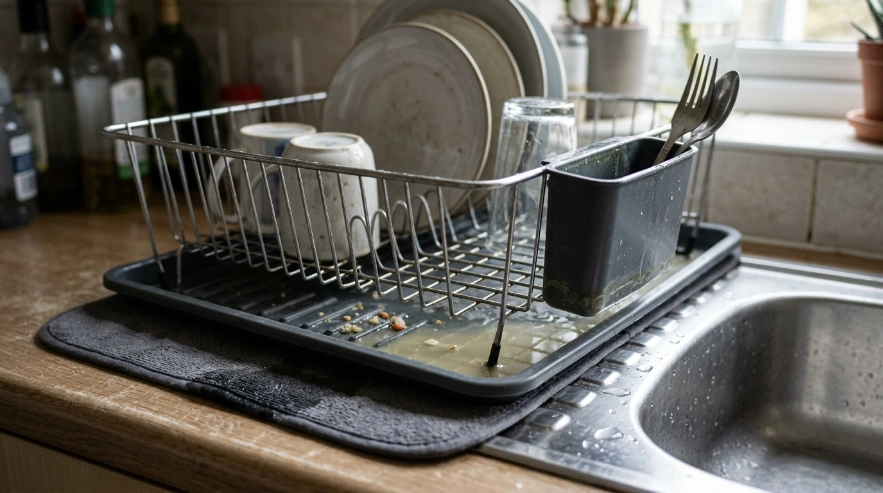
Persistent moisture and leftover organic residue are the main warning signs. The rack becomes a hygiene problem when dirty water, grease, food particles, or slimy buildup remain around clean dishes.
These problems often appear slowly, especially underneath a rack where they are easy to miss.
- Standing water: A drain tray that stays full keeps the area damp for longer.
- Food residue: Crumbs, sauces, grease, and other debris can collect in corners and utensil cups.
- Slime or film: A slippery coating means the rack needs immediate cleaning.
- Visible growth: Dark, pink, green, or fuzzy patches should never be ignored.
- Bad odors: A sour or musty smell usually means something underneath the rack needs cleaning.
- Dirty drying mats: Absorbent mats can remain wet underneath even when their top surface feels dry.
- Sink splash: Water from washing raw meat containers or other dirty items can reach nearby clean dishes.
The sink deserves special attention because it handles dirty cookware, food residue, and raw ingredients. USDA food-safety guidance recommends cleaning sinks and kitchen surfaces with hot, soapy water and sanitizing when appropriate.
You can read more about creating a safer workspace in our kitchen safety guide for home cooks.
Is Air Drying More Sanitary Than Towel Drying?
Air drying is an excellent choice because clean dishes can dry without repeated handling. A clean towel can also be used at home, but problems arise when the same damp towel has already touched hands, counters, spills, or dirty cookware.
The FDA Food Code specifically requires air drying or adequate draining after cleaning and sanitizing in food establishments. Home kitchens are not governed exactly like restaurants, but the principle is useful.
| Drying Method | How Moisture Is Removed | Hygiene Consideration | Best Practice |
|---|---|---|---|
| Dish rack | Natural drainage and evaporation | Low handling, but rack and tray must stay clean | Choose open airflow and direct drainage |
| Kitchen towel | Water is physically absorbed | A reused damp towel can transfer contamination | Use a fresh, clean, dry towel |
| NSF-certified dishwasher sanitize cycle | Machine washing, hot rinse, then drying | NSF/ANSI 184 requires a 150°F final rinse and a 5-log bacterial reduction on the sanitizing cycle | Use the designated sanitizing cycle on a certified machine |
NSF explains that an NSF/ANSI 184 residential dishwasher must achieve at least a 99.999% bacterial reduction during its certified sanitizing cycle. That performance applies to the sanitizing cycle, not every ordinary dishwasher setting.
If you’re deciding which cookware belongs in the machine, our guide to putting frying pans in the dishwasher covers the material differences.
How Often Should You Clean a Dish Drying Rack?
There is no single federal cleaning schedule for a dish rack in a private home. I prefer a condition-based routine rather than waiting for a fixed date while visible buildup develops.
For a heavily used rack, a weekly thorough wash is a practical starting point. High-moisture parts may need attention much more often.
- After each dish session: Empty obvious standing water and remove food particles.
- Daily when needed: Rinse or wipe a drainboard that develops soap residue or cloudy water.
- About weekly: Wash the rack, tray, utensil cup, drain spout, and removable components during regular use.
- Immediately: Clean after raw-food splash, visible slime, odor, staining, or suspicious growth.
- Before storage: Wash and completely dry folding racks or mats before putting them in a cabinet.
My simplest rule is visual: if I would not comfortably place the clean side of a drinking glass on that surface, I clean the rack first. The underside matters as much as the top.
How Do You Clean and Sanitize a Dish Rack?
Start by cleaning with dish soap and water, because sanitizing works better after visible soil has been removed. CDC guidance also distinguishes cleaning from sanitizing: cleaning removes dirt and reduces germs, while sanitizing reduces germs remaining after cleaning.
Always check your rack manufacturer’s care instructions first. Coatings, wood components, plastics, and drainage assemblies can have different cleaning limits.
- Remove all dishes. Put away dry dishes before cleaning the rack.
- Disassemble removable parts. Take out the tray, utensil cup, drain spout, silicone pieces, and other detachable components.
- Discard standing water. Empty the tray into the sink and rinse away loose debris.
- Wash with warm soapy water. Use a non-abrasive brush, sponge, or cloth to reach joints and corners.
- Pay attention to hidden areas. Clean underneath rubber feet, around drain channels, and inside utensil holders.
- Rinse thoroughly. Remove loosened debris and soap residue.
- Sanitize when needed. If contamination is a concern, use a sanitizer appropriate for the rack material and follow its label exactly.
- Air-dry completely. Let components dry before reassembling the rack.
Do not assume that stronger chemicals automatically mean a cleaner kitchen. USDA guidance recommends checking that sanitizing products are suitable for the surface and following the manufacturer’s directions.
The same care principle applies to cookware. For example, cleaning stainless steel cookware correctly removes residue without unnecessarily damaging its surface.
Should you use bleach on a dish rack?
Only use a bleach solution when it is suitable for the rack material and the product directions support that use. Never mix bleach with ammonia, vinegar, or other household cleaners.
For routine cleaning, soap and water may be all a rack needs. Save sanitizing for situations where additional germ reduction is appropriate.
Which Dish Rack Materials Are Easiest to Keep Clean?
Smooth, nonporous materials and simple open designs are usually easiest to maintain. The number of seams, grooves, cups, and concealed drainage channels can matter as much as the material itself.
- Stainless steel: Durable and nonporous, although joints and trays still require cleaning.
- Aluminum: Lightweight and resistant to rust, depending on its construction and finish.
- Plastic: Nonporous and easy to wash, but deep molded grooves may trap water.
- Silicone: Flexible and washable, but flat mats need enough ventilation underneath to dry.
- Bamboo or wood: Attractive and functional, but complete drying is important because the material can hold moisture differently from metal or plastic.
I give drainage design more weight than appearance. A beautiful rack that leaves half a cup of water trapped underneath every night creates extra maintenance.
Where Should You Place a Dish Rack?
Place the rack close enough to the sink for easy drainage but away from obvious splash contamination. Clean dishes should not sit where dirty sink water repeatedly lands on them.
The FDA Food Code’s commercial storage guidance says cleaned equipment and utensils should be protected from splash, dust, and other contamination. That is a sensible principle for home kitchens too.
- Keep the rack on a clean section of countertop.
- Aim its drain spout directly into the sink when the design allows it.
- Avoid positioning clean dishes beside raw meat preparation.
- Leave enough room around the rack for air circulation.
- Do not allow a dish towel, sponge, or dirty cleaning cloth to rest against clean dishes.
If dishwasher cleaning is part of your routine, remember that not every kitchen item handles those cycles equally. Our rice cooker pot dishwasher-safety guide shows why manufacturer instructions still matter.
How Can You Tell When a Dish Rack Needs Replacing?
Replace a rack when damage prevents proper cleaning, drainage, or safe support of dishes. Age alone is less important than its physical condition.
- Permanent cracks hold grime where a brush cannot reach.
- Broken drain components leave persistent standing water.
- Peeling or badly damaged finishes expose deteriorating surfaces.
- Severe corrosion cannot be cleaned back to a sound surface.
- Warped supports no longer hold plates and glasses securely.
A removable dirty tray usually needs cleaning, not replacement. Structural deterioration is different.
Dish Rack Hygiene Mistakes I Would Avoid
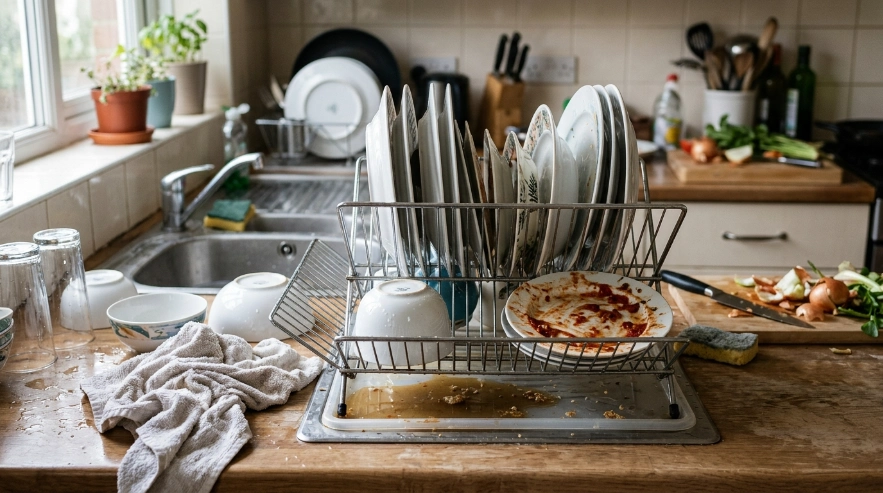
The worst habits usually involve leaving water and residue undisturbed. Small changes are enough to make daily drying easier to manage.
- Putting visibly dirty dishes into the rack to “finish drying.”
- Letting drain water sit for several days.
- Cleaning only the metal wires while ignoring the tray underneath.
- Using the same wet towel for hands, counters, and clean dishes.
- Placing clean glasses directly beside raw-food preparation.
- Stacking dishes so tightly that trapped surfaces remain wet.
- Putting a washed rack away before every part has dried.
As of 2026, the FDA’s 2022 Food Code remains its most recent full Food Code edition. Its emphasis on air drying, clean storage, and protection from contamination supports the same basic habits I use when evaluating a home drying setup.
If you’re replacing a rack because drainage or cleaning is frustrating, these are the two designs I’d consider first:
🏆 Best for Simple Drainage
OXO Good Grips Aluminum Fold Flat Dish Rack
★★★★☆
OXO uses a rustproof aluminum frame, removable utensil cup, raised drainboard ridges, and a fold-flat design. I like the uncomplicated layout because fewer concealed areas make visual inspection and routine cleaning easier.
💧 Best Drainage System
simplehuman Steel Frame Dishrack
★★★★☆
The simplehuman design uses a swivel spout to direct water toward the sink and a tray designed to move water toward its drain. I would choose it for a busy kitchen where reducing countertop puddles matters more than keeping the rack compact.
Frequently Asked Questions
Can bacteria grow on a dish drying rack?
Yes. A neglected rack can collect moisture, grease, food particles, and other residue that support microbial growth. Keep the rack clean, empty standing water, and allow the rack and tray to dry instead of remaining continuously wet.
Is it hygienic to leave dishes in a drying rack overnight?
Clean dishes can normally remain in a clean drying rack while they finish air-drying. Keep the area protected from dirty sink splash, pets, food preparation, and other obvious contamination, then store the dishes once dry.
Are drying mats sanitary?
Drying mats can be sanitary when they are washed regularly and dried completely between uses. Problems develop when an absorbent mat stays damp underneath, develops odors, or collects food residue while appearing clean from above.
Should a dish rack drain directly into the sink?
Direct drainage is useful because it reduces standing water around the rack. It is not mandatory, but a sloped tray or drain spout makes moisture easier to control and can reduce how often you need to empty puddled water manually.
Do I need to sanitize my dish rack every day?
Usually not. Routine cleaning with soap and water is suitable for normal maintenance, while sanitizing may be useful after contamination or when the rack requires additional germ reduction. Always use sanitizers according to their labels and material compatibility instructions.
The Bottom Line
Dish drying racks are sanitary when you treat the rack as part of the dishwashing system rather than permanent countertop furniture. Clean dishes need a clean, draining, well-ventilated place to dry.
Check the tray, drain, corners, utensil cup, and underside regularly. If water disappears quickly and the rack stays clean between loads, air drying is one of the simplest ways to finish washing dishes without unnecessary handling.
