What Cookware Works on Induction? A Simple Guide (With the Magnet Test)

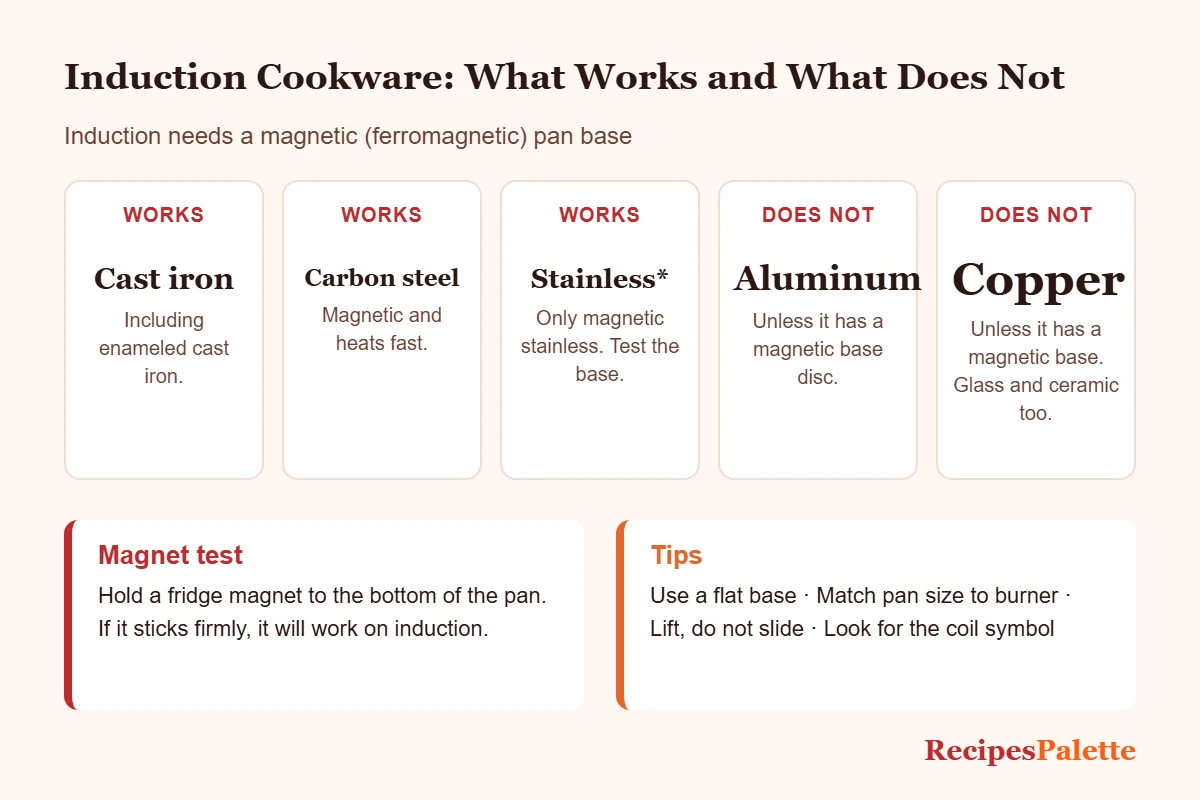
Induction cooktops need cookware with a magnetic base. Cast iron, enameled cast iron, carbon steel and magnetic stainless steel work. Pure aluminum, copper, glass and most ceramic do not, unless they have a magnetic plate on the bottom. The quickest test: if a magnet sticks firmly to the bottom of the pan, it works on induction.
How Induction Cooking Works
An induction cooktop makes a magnetic field under the glass surface. A pan with a magnetic base picks up that field and heats up itself, so the cooktop stays relatively cool. If the pan is not magnetic, nothing heats. That is why cookware material matters more with induction than with gas or electric.
Cookware Materials: Induction Compatibility
| Material | Works on induction? | Notes |
|---|---|---|
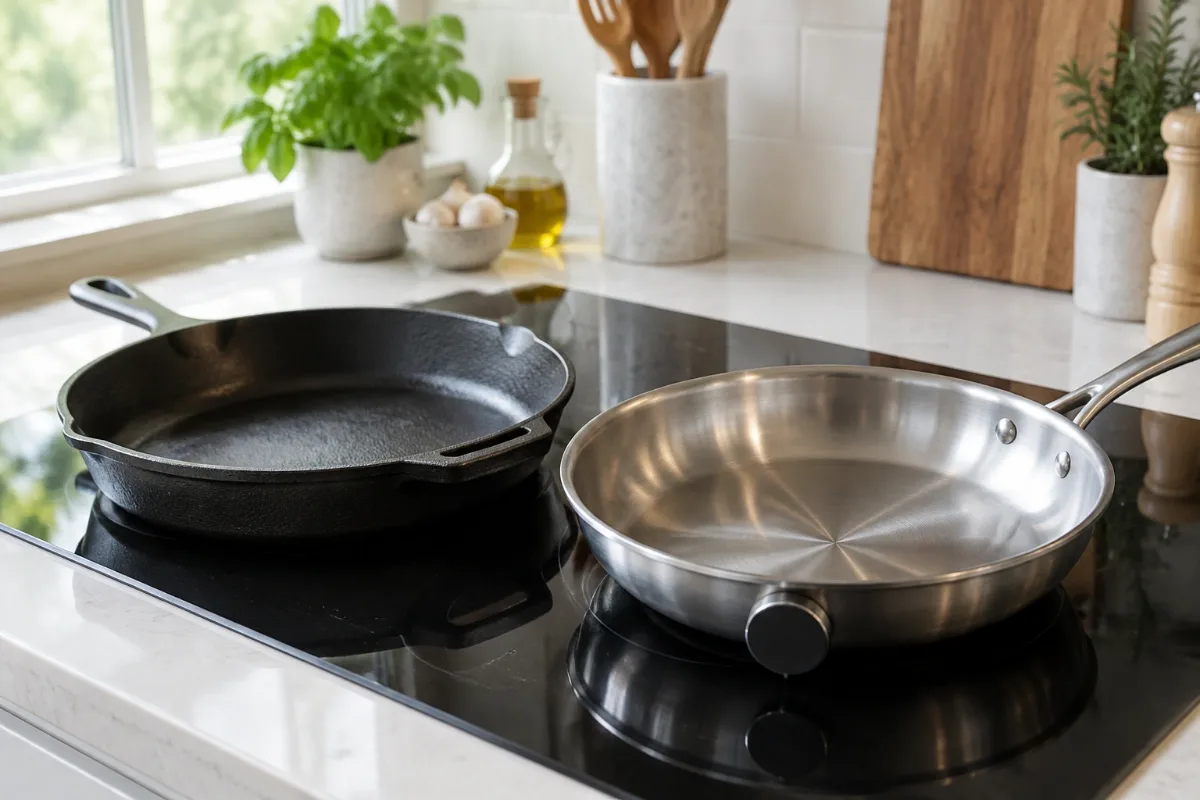
| Cast iron | Yes | Heats evenly, holds heat. Heavy, so lift it carefully to protect the glass. |
| Enameled cast iron | Yes | Check the base is smooth, not rough. |
| Carbon steel | Yes | Heats up fast, light for its size. |
| Magnetic stainless steel (e.g. 18/0 or clad with a magnetic layer) | Yes | Not all stainless is magnetic. Test it. |
| Standard 18/10 stainless | Sometimes | Only if the base has a magnetic layer. |
| Aluminum | No | Unless it has a magnetic disc in the base. |
| Copper | No | Unless it has a magnetic base. |
| Glass and ceramic | No | Unless it has a magnetic base. |
How to Test Your Pans
- Take a magnet (a fridge magnet works).
- Hold it against the outside bottom of the pan.
- If it sticks firmly, the pan will work. If it sticks weakly or not at all, it may heat poorly or not at all.
You can also look for the coil-shaped induction symbol on the bottom or the box, or the words “induction compatible.” If a pan with that symbol is also labeled oven-safe, that is a separate feature. “Induction ready” does not tell you the temperature limit.
Tips for Using Cookware on Induction
- Flat base. A warped or rounded base heats unevenly and may hum.
- Match the pan to the burner. The pan base should cover most of the cooking zone.
- Lift, do not slide. Rough bases can scratch the glass surface.
- Expect some noise. A faint buzz or hum is normal with some layered pans.
- Use medium heat first. Induction heats fast and can scorch food on high.
Which Pans Are Worth Buying?
If you are shopping, cast iron and clad stainless steel are long-lasting options. Our related guides include the best cast iron skillet for induction and the best induction frying pan sets.
Frequently Asked Questions
Does stainless steel work on induction?
Only magnetic stainless works. Many clad stainless pans have a magnetic outer layer. Use the magnet test.
Does cast iron work on induction?
Yes. Cast iron is magnetic and works very well, but lift it rather than slide it to avoid scratching the glass.
Do I need special pans for an induction cooktop?
You need pans with a magnetic base. Many pans you already own may work, so test them first.
Can I use an induction pan on a gas stove?
Yes. Induction-compatible cookware works on gas, electric and induction cooktops.
Why does my induction pan make noise?
A faint hum or click is normal with layered or lightweight pans. A loud buzz can mean the pan base is warped or the pan is too small for the burner.
Sources
General guidance based on cookware manufacturer documentation and induction cooktop manuals. Check your own cooktop’s manual for pan size limits.
Last reviewed: November 2026