What Is the Safest Cookware? A Plain-English Guide to Non-Toxic Pans

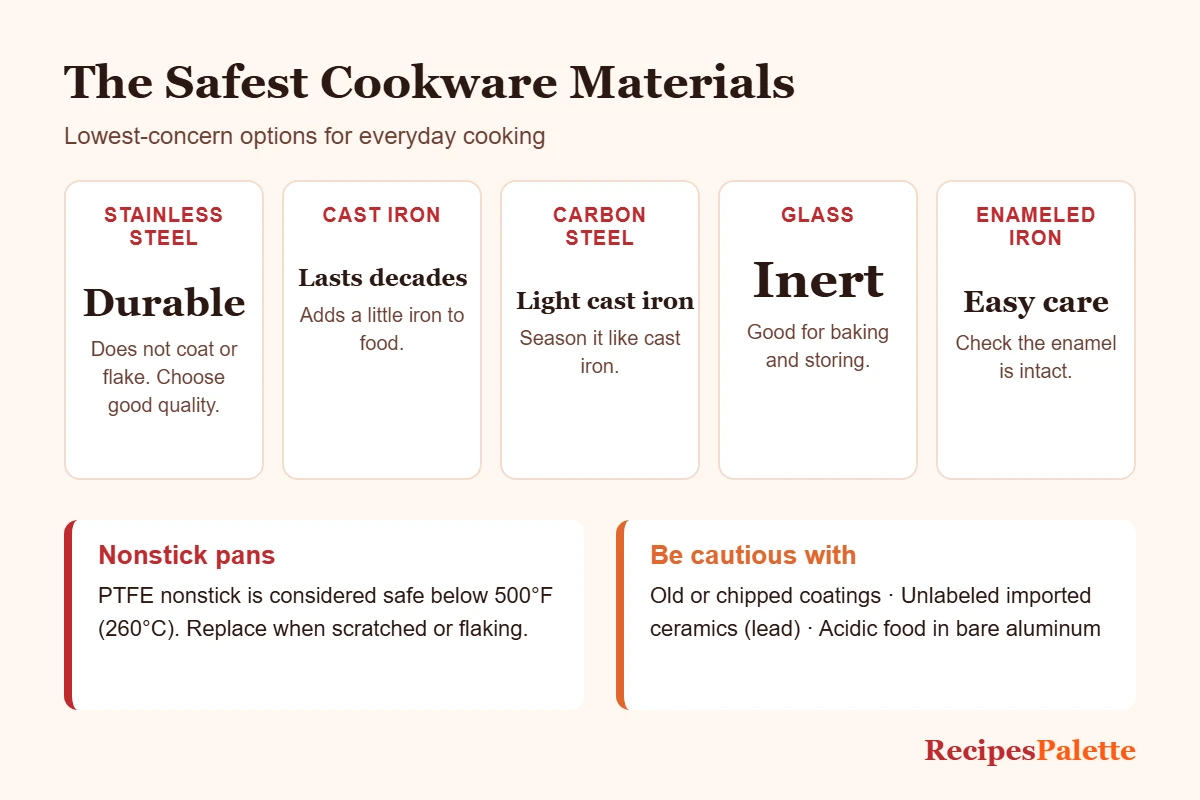
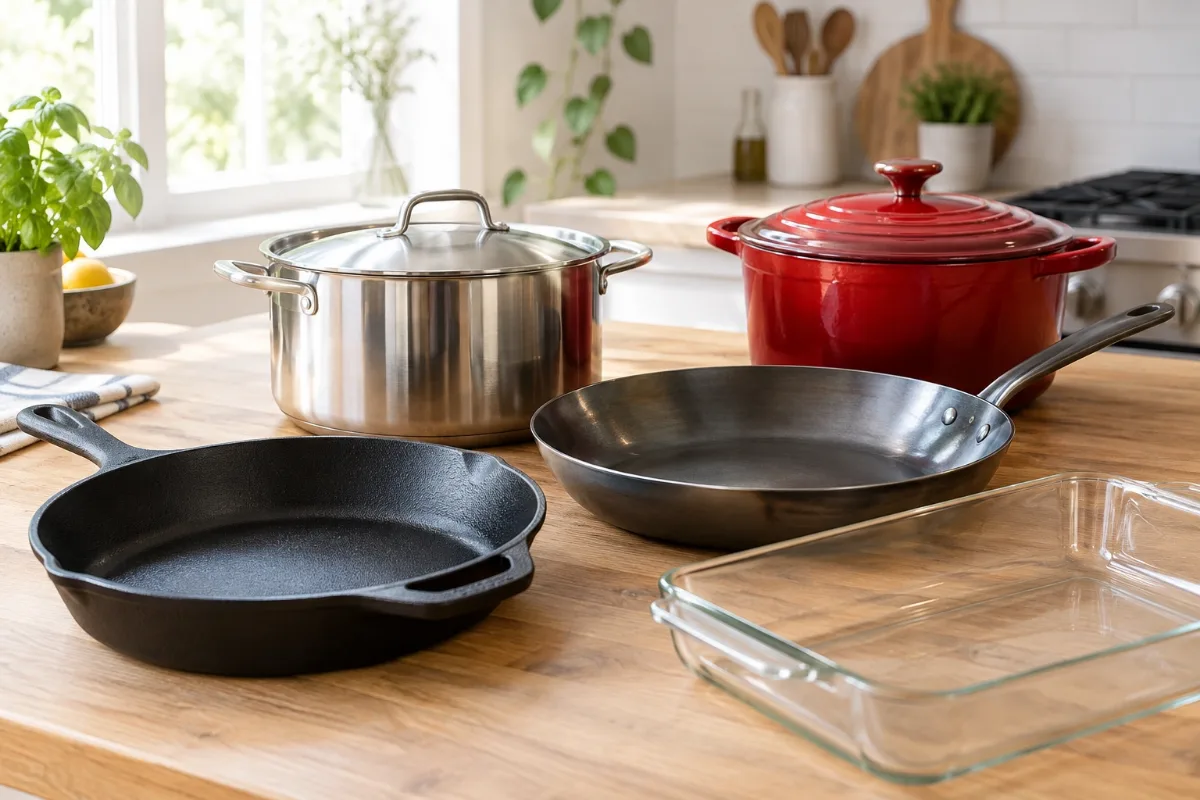
The safest everyday cookware is stainless steel, cast iron, carbon steel, glass and enameled cast iron. These materials are durable, do not rely on a coating and have long safety records. Nonstick and ceramic-coated pans can be used safely if you follow temperature limits and replace them when the coating wears out.
Cookware Materials Compared
| Material | Pros | Things to know |
|---|---|---|
| Stainless steel | Durable, non-reactive, dishwasher-safe, oven-safe | Food can stick without oil. People with a nickel allergy may react to 18/10. |
| Cast iron | Lasts generations, great heat retention, adds iron | Heavy, needs seasoning, acidic foods can strip seasoning |
| Carbon steel | Light, heats fast, pro kitchen staple | Needs seasoning, can rust |
| Enameled cast iron | No seasoning, easy to clean | Enamel can chip. Avoid damaged pieces. |
| Glass | Does not react with food | Breaks with thermal shock, not for high stovetop heat |
| Nonstick (PTFE) | Easy release, low-fat cooking | Keep heat under 500°F (260°C). Replace when scratched. |
| Ceramic-coated nonstick | PTFE-free, easy release | Coating wears faster, usually 1 to 3 years |
| Bare aluminum | Light, cheap | Reacts with acidic foods. Hard-anodized is sealed and more stable. |
About Nonstick: Is It Safe?
PFOA, the chemical once used to make nonstick coatings, was phased out of US production by 2015. Modern PTFE pans are considered safe for normal use. The main concern is overheating. Above about 500°F (260°C) the coating can break down and release fumes that are harmful to pet birds and can cause flu-like symptoms in people. Do not preheat an empty nonstick pan on high, use medium heat and replace the pan if the coating flakes or is badly scratched. Concerns about “forever chemicals” (PFAS) are a main reason some people choose other materials. Related reading: are nonstick pans bad for you?
About Ceramic Cookware
There are two types. Solid ceramic or stoneware is made of fired clay and is very stable. Ceramic-coated pans have a mineral-based coating on metal. The coating is PTFE-free, but it generally loses its nonstick ability sooner. For imported or decorative ceramic, check that it is labeled lead-free and food-safe.
How to Choose Safe Cookware
- Match the material to how you cook. Sear and roast: stainless, cast iron or carbon steel. Eggs and fish: a good nonstick or a well-seasoned pan.
- Buy from brands that publish material information. Look for details on coatings and certifications.
- Replace damaged cookware. Flaking coatings, deep scratches and chipped enamel are signs to retire it.
- Use the right utensils. Wood and silicone protect coatings.
- Do not overheat. Medium heat is enough for most cooking.
For Dutch ovens, see our non-toxic Dutch oven guide. For induction users, check what cookware works on induction.
Frequently Asked Questions
What is the healthiest cookware to cook with?
Stainless steel, cast iron, carbon steel, glass and enameled cast iron are the lowest-concern choices for everyday cooking.
Is stainless steel cookware safe?
Yes for most people. Tiny amounts of nickel and chromium can leach, mainly with acidic food and new pans. If you have a nickel allergy, look for nickel-free (18/0) options.
Is cast iron safe?
Yes. It adds a small amount of dietary iron, which is helpful for most people but may matter if you have hemochromatosis.
Are nonstick pans safe?
Generally yes if used under 500°F (260°C) and replaced when damaged.
Is aluminum cookware safe?
Anodized or coated aluminum is stable. Bare aluminum can react with acidic foods, so it is better for baking than for tomato sauce.
Sources
Information based on guidance from the US FDA (food-contact materials), the US EPA on PFOA phase-out, and published guidance on nonstick cookware temperatures. This is general information, not medical advice.
Last reviewed: November 2026