
How to Tell If Rice Is Bad: Signs for Cooked and Uncooked Rice

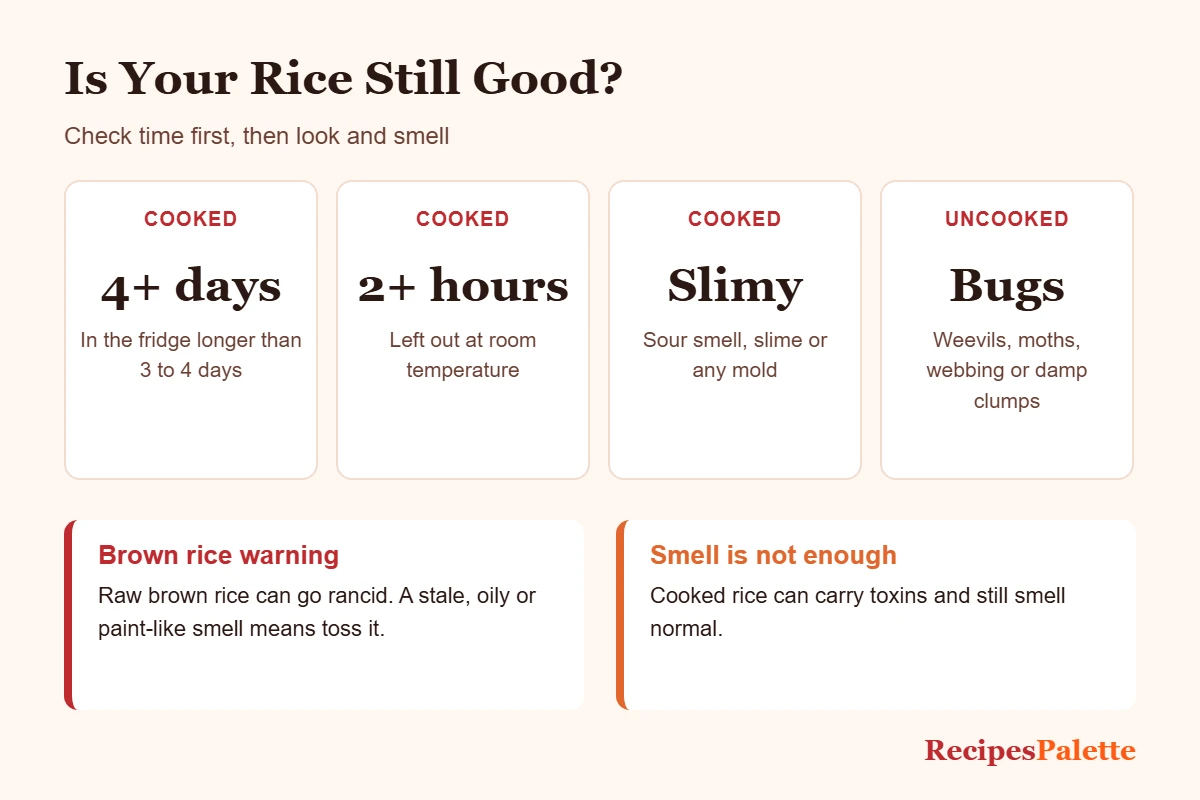
Cooked rice has gone bad if it has been in the fridge for more than 3 to 4 days, sat out at room temperature for more than 2 hours, smells sour, feels slimy, or shows any mold. Uncooked rice has gone bad if it has bugs, webbing, damp clumps or mold, and raw brown rice is past its best when it smells stale, oily or rancid. Time and storage matter more than looks: cooked rice can be unsafe even when it seems perfectly normal.
Rice is a pantry staple and a fridge regular, so knowing when to keep it and when to throw it out saves money and helps you avoid a nasty bout of food poisoning. Below are the signs to look for in cooked rice and in dry, uncooked rice, why rice is a special case, and how to store it so it lasts.
Signs Cooked Rice Has Gone Bad
1. It has been in the fridge too long
Cooked rice keeps about 3 to 4 days in the fridge at 40°F (4°C) or colder, based on USDA guidance for leftovers. After that, throw it out, even if nothing seems wrong. If you are not sure when it was cooked, treat it as too old. The UK’s NHS recommends an even shorter window of 24 hours. See how long cooked rice lasts in the fridge for times by rice type.
2. It sat out for more than 2 hours
Rice left at room temperature for more than 2 hours (or 1 hour above 90°F / 32°C) should be discarded. This includes rice left on the stove or in a switched-off rice cooker overnight. Reheating will not make it safe, for reasons explained below. Our guide on how long cooked rice can sit out covers this in detail.
3. It smells sour or unusual
Fresh cooked rice smells mild, slightly sweet or nutty. A sour, fermented, musty or otherwise unpleasant smell is a clear sign of spoilage.
4. The texture is slimy or gooey
Cooked rice should be soft or firm, not slimy. A slick, sticky film on the grains, or a gluey texture that was not there when it was fresh, means bacteria have been at work.
5. You can see mold or discoloration
Green, black, gray, pink or white fuzzy spots mean the whole container should go. Do not scoop out the moldy part and eat the rest, since mold roots and bacteria can spread through soft foods like rice.
6. It is hard, dry and crusty
Rice that has dried into hard, crunchy clumps has usually been stored uncovered or for too long. Dry rice is not automatically unsafe, but if it is also old, throw it away. If it is within the safe window, a splash of water when reheating can bring it back.
Why Rice Can Be Unsafe Even When It Looks Fine
Raw rice often contains spores of Bacillus cereus, a bacterium found in soil. The spores survive cooking. If cooked rice stays warm, they germinate and multiply, and some strains produce a toxin that causes vomiting within a few hours. That toxin is heat-stable, so microwaving, frying or boiling the rice again does not destroy it.
Here is the important part: rice with enough toxin to make you sick can look, smell and taste completely normal. That is why the time and temperature rules come first. Smell, slime and mold tell you when rice has clearly spoiled, but a normal-looking bowl is not proof that it is safe.
Signs Uncooked Rice Has Gone Bad
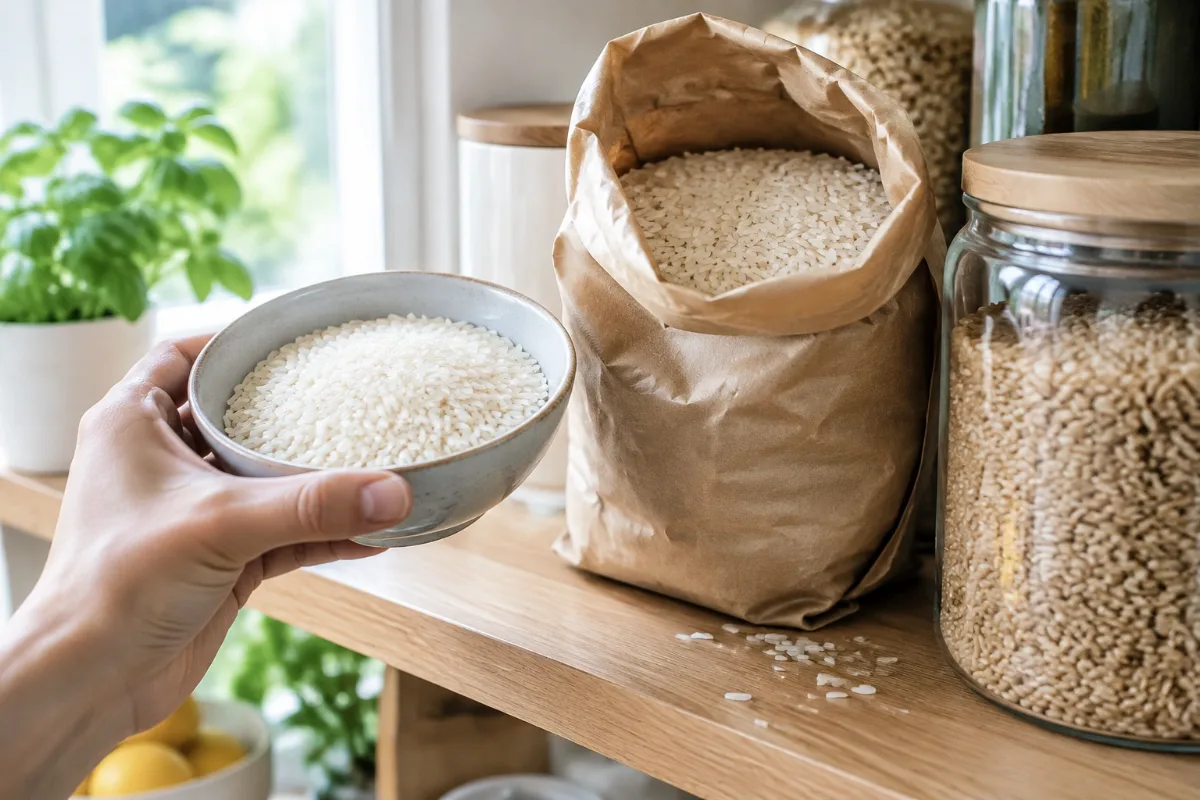
Dry white rice keeps for a very long time when stored well, but it can still go bad. Brown rice has a much shorter shelf life because of the natural oils in its bran.
Bugs, larvae or webbing
Rice weevils (tiny brown beetles with a long snout), pantry moths and their larvae are common in grains. Look for live or dead insects, small holes in grains, fine powder at the bottom of the bag, or silky webbing that makes grains stick together. If you see any of these, throw out the rice and check nearby dry goods too.
Moisture, clumps or mold
Dry rice should pour freely. Damp, clumped grains or any visible mold mean water got in, and the rice should be discarded.
Rancid, stale or oily smell (brown rice)
Brown rice contains oils that slowly turn rancid. Rancid brown rice smells stale, sharp, oily or a bit like old paint, and it may taste bitter. It will not usually make you sick, but it tastes unpleasant. Brown rice is at its best for about 6 months in the pantry and longer in the fridge or freezer.
Discoloration or odd odors
Yellowed or darkened grains, or a chemical or musty smell, are signs the rice is old or was stored near something strong-smelling. When in doubt, replace it.
For full shelf-life details, see does uncooked rice go bad.
Quick Reference: Keep or Toss?
| What you notice | Cooked rice | Uncooked rice |
|---|---|---|
| Older than the safe window | Toss (over 3–4 days in fridge) | Check quality; white rice often still fine |
| Left out over 2 hours | Toss | Not an issue for dry rice |
| Sour or musty smell | Toss | Toss |
| Slimy texture | Toss | Not applicable |
| Visible mold | Toss the whole container | Toss the whole bag |
| Bugs or webbing | Not applicable | Toss and check other pantry items |
| Rancid or oily smell | Toss | Toss (common in old brown rice) |
| Dry or hard grains, within safe time | Keep; reheat with a splash of water | Keep |
What Happens If You Eat Bad Rice?
Food poisoning from B. cereus usually shows up in one of two ways. The vomiting type starts quickly, often within 30 minutes to 6 hours. The diarrheal type usually starts within 6 to 15 hours. Symptoms often pass within about 24 hours.
Drink plenty of fluids and rest. Contact a doctor if symptoms are severe, last more than a day or two, or if you see signs of dehydration such as dizziness, very dark urine or not urinating. Young children, older adults, pregnant people and anyone with a weakened immune system should get medical advice sooner.
How to Keep Rice From Going Bad
For cooked rice
- Cool it quickly: take it out of the pot and spread it in shallow containers.
- Refrigerate within 1 hour if possible, and never later than 2 hours.
- Use airtight containers and label the date.
- Eat within 3 to 4 days, or freeze it.
- Reheat only once, until steaming hot (165°F / 74°C).
Our step-by-step guides on how to store cooked rice and putting hot rice in the fridge walk through each step.
For uncooked rice
- Move rice from paper or thin plastic bags into airtight glass, metal or thick plastic containers.
- Store it in a cool, dry, dark place away from the stove and dishwasher.
- Keep brown rice in the fridge or freezer if you will not use it within a few months.
- Freezing new bags of rice for a few days before storing is an old trick some cooks use to deal with any insect eggs.
- Use older rice first, and do not mix old and new rice in the same container.
Frequently Asked Questions
What does bad cooked rice smell like?
Spoiled cooked rice usually smells sour, fermented or musty. But do not rely on smell alone, since rice can carry toxins without smelling off.
Can you get sick from rice that smells fine?
Yes. If rice was left warm for too long, the toxin can form without changing the smell or taste. That is why the time rules matter most.
Is rice bad if it is hard?
Not necessarily. Hard, dry rice has usually lost moisture in the fridge. If it is within 3 to 4 days and was stored correctly, reheat it with a little water.
Does uncooked white rice expire?
White rice has a very long shelf life when stored dry and airtight. The date on the bag is usually about quality. Check for bugs, moisture and odd smells before using old rice.
How can I tell if brown rice is rancid?
Smell it. Rancid brown rice has a stale, sharp or oily smell, sometimes compared to old paint or crayons, and a bitter taste when cooked.
Can I eat rice that was left out overnight if I reheat it?
No. Reheating does not destroy the heat-stable toxin that can form in rice left at room temperature. Throw it out.
The Bottom Line
For cooked rice, check the clock first: more than 3 to 4 days in the fridge or more than 2 hours at room temperature means it goes in the trash, no matter how it looks. After that, a sour smell, slime or mold are clear signs of spoilage. For uncooked rice, watch for bugs, moisture, mold and, in brown rice, a rancid smell. Store rice well and you will rarely have to make the call.
Sources: USDA Food Safety and Inspection Service guidance on leftovers and food safety; NHS guidance on reheating rice. This article is general food safety information, not medical advice.