
Do You Need to Rinse Brown Rice Before Cooking?

You do not strictly need to rinse brown rice, but it is a good idea. A quick 30 to 60 second rinse under cold water removes dust, bits of husk and other debris from milling and packaging, washes off loose surface starch, and slightly lowers the amount of arsenic in the rice. Unlike enriched white rice, brown rice is not usually coated with added vitamins, so rinsing it does not wash away much nutrition.
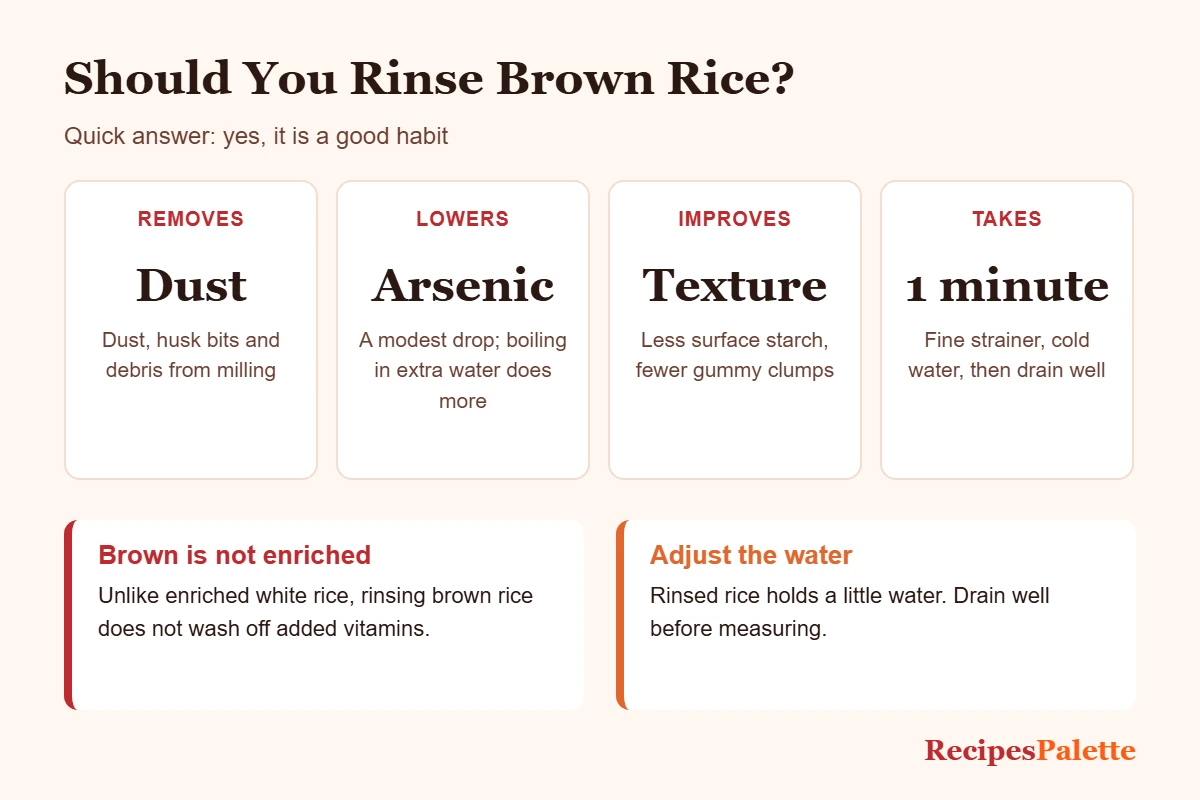
Some packages say to rinse, some say not to, and recipes disagree. This guide explains what rinsing actually does for brown rice, when it matters most, how to do it properly, and how it fits with soaking and other ways to cook brown rice.
Why People Rinse Rice
Rinsing rice before cooking is standard practice in many cuisines, especially across Asia. It does a few things:
- Cleans the grains. Rice is a farm product. Even well-processed rice can carry dust, small stones, husk fragments or bits of packaging.
- Removes loose starch. Milling and handling create starch powder on the surface of the grains. In the pot, that starch thickens the cooking water and can make rice gummy or clumpy.
- Reduces some contaminants. Rice absorbs more arsenic from soil and water than many other grains, and some of it can be washed or cooked out.
Is Brown Rice Different From White Rice?
Yes, in two ways that matter here.
It has less surface starch. Brown rice still has its bran layer, which covers the starchy center. So rinsing brown rice will not change the texture as dramatically as rinsing white jasmine or sushi rice. The rinse water will turn only slightly cloudy.
It is usually not enriched. In the US, a lot of white rice is enriched, meaning vitamins and iron are sprayed onto the grains after milling. Rinsing enriched rice washes some of those nutrients away, which is why some white rice packages say not to rinse. Brown rice keeps its natural nutrients inside the bran and germ, so rinsing does not remove much.
Does Rinsing Brown Rice Reduce Arsenic?
Rice tends to absorb inorganic arsenic from soil and water, and brown rice usually has more than white rice because arsenic concentrates in the bran. This is not a reason to avoid brown rice, but it is a reason to vary your grains and cook rice smartly.
Research by the US Food and Drug Administration found that rinsing alone has only a small effect on arsenic. A much bigger reduction comes from cooking rice in plenty of water and draining off the excess, like pasta. The FDA reported that this method can cut inorganic arsenic in brown rice by roughly 40 to 60 percent. The tradeoff is that some water-soluble nutrients are drained away too.
So if arsenic is your main concern, rinse the rice and then use the pasta method described below. For a balanced everyday approach, rinsing and eating a variety of grains (such as oats, quinoa, barley and farro) is a sensible habit, especially for young children.
How to Rinse Brown Rice Properly
- Measure the rice first. Measure it dry, so your water ratio stays accurate.
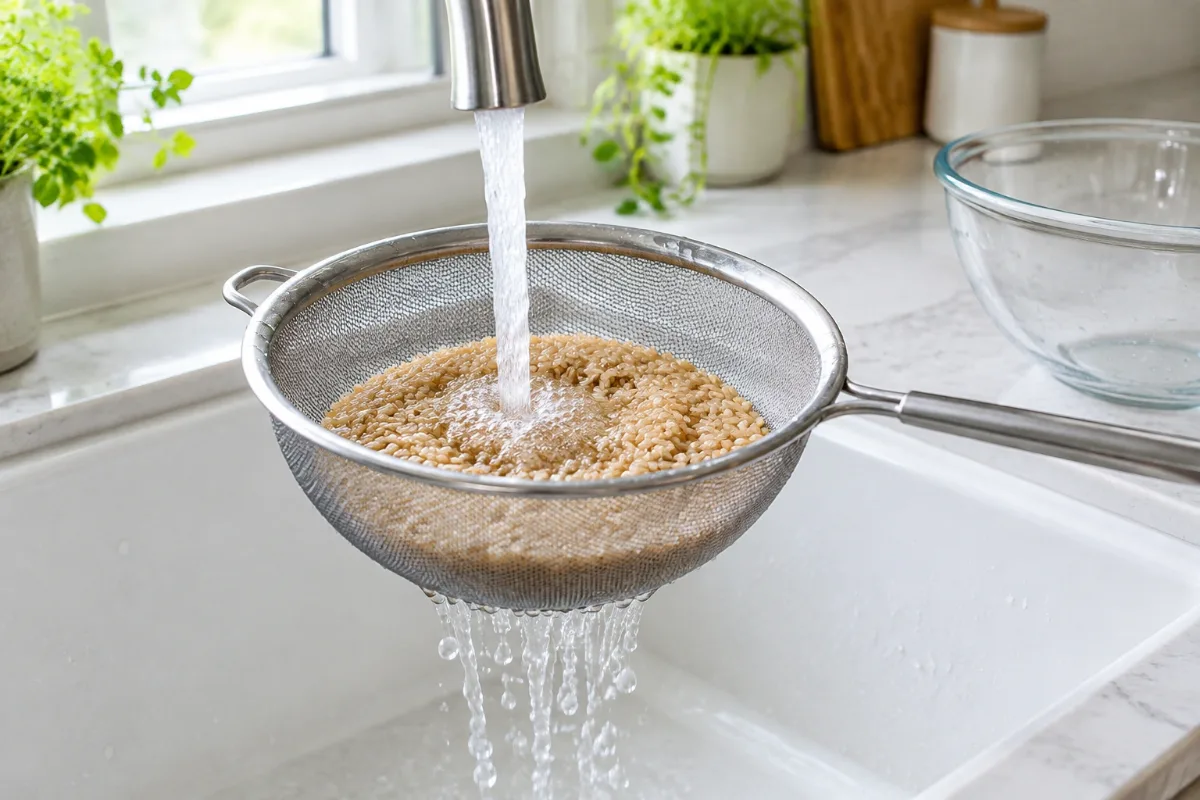
- Use a fine-mesh strainer. Brown rice grains can slip through a colander’s holes. A fine-mesh sieve works best.
- Rinse under cold water for 30 to 60 seconds. Move the grains around with your fingers so all of them get washed.
- Or rinse in a bowl. Cover the rice with cold water, swirl with your hand, pour off the cloudy water, and repeat 2 or 3 times.
- Pick out anything odd. Look for small stones, discolored grains or husks while you rinse.
- Drain well. Let the rice sit in the strainer for a minute and shake off excess water. Wet rice brings extra water into the pot.
With brown rice, you do not need to keep rinsing until the water runs completely clear. A light cloudiness is normal.
Rinsing vs Soaking Brown Rice
Rinsing and soaking are often confused, but they do different jobs.
| Rinsing | Soaking | |
|---|---|---|
| Time | 30–60 seconds | 30 minutes to several hours |
| Main purpose | Clean grains, remove loose starch | Soften the bran for faster, more even cooking |
| Effect on cooking time | None | Shortens it by about 5–10 minutes |
| Water adjustment | Drain well; usually no change | Use 2–4 tablespoons less water per cup |
| Needed? | Recommended | Optional |
You can do both: rinse first, then soak in fresh water, then drain and cook.
When You Might Skip Rinsing
- The package says not to. Some parboiled or specially processed brown rice products are designed to be cooked straight from the bag. Follow the label.
- You are making a creamy dish. For rice pudding or a risotto-style dish, you may want to keep the surface starch.
- You are toasting the rice first. Pilaf recipes often call for toasting dry rice in oil. If you rinse, dry it well on a towel before toasting.
- Instant or quick-cooking brown rice. These are precooked and dried, and are usually not rinsed.
Does Rinsing Change the Water Ratio?
Slightly. Rinsed rice holds a little water on its surface, so if you do not drain it well, your rice may come out a bit softer. Most cooks do not change the ratio, as long as the rice is well drained. If rinsed brown rice is consistently too soft for you, reduce the water by 1 to 2 tablespoons per cup.
For full ratios and cooking times, see how to cook brown rice on the stove and how to cook brown basmati and jasmine rice.
The Pasta Method for Brown Rice
If you want the lowest arsenic levels and very separate grains, try cooking brown rice like pasta:
- Rinse 1 cup of brown rice.
- Bring about 10 to 12 cups of water to a boil and add a pinch of salt.
- Add the rice and boil uncovered for about 30 minutes, until tender.
- Drain well, return the rice to the pot, cover, and let it steam off the heat for 10 minutes.
- Fluff and serve.
Rinsing Brown Rice for a Rice Cooker
Rinsing is especially helpful in a rice cooker, because excess starch can foam up and push water out of the steam vent. Some rice cookers come with an inner pot you can rinse rice in directly. If you do this, be gentle so you do not scratch a non-stick coating, and always drain well before adding the measured water.
Our guides on how to cook brown rice in a rice cooker and how to use a rice cooker cover the rest of the process.
Frequently Asked Questions
What happens if you do not rinse brown rice?
Usually nothing bad. The rice may be slightly stickier and you will not remove surface dust or a little of the arsenic, but it will still cook and taste fine.
Does rinsing brown rice remove nutrients?
Very little. Brown rice is not usually enriched, so its nutrients are inside the grain, not sprayed on the surface. Cooking in excess water and draining it removes more nutrients than rinsing does.
How many times should you rinse brown rice?
One good rinse of 30 to 60 seconds, or 2 to 3 changes of water in a bowl, is enough.
Should you rinse brown rice in hot or cold water?
Cold water. Warm or hot water can start to soften the surface of the grains before cooking.
Do you rinse brown rice before or after soaking?
Before. Rinse it, then soak it in fresh water, then drain and cook.
Does rinsing brown rice make it less sticky?
A little. Because brown rice has less loose starch than white rice, the difference is smaller, but rinsing still helps the grains stay separate.
The Bottom Line
Rinsing brown rice is not required, but it is a quick, worthwhile habit. It cleans the grains, removes a little loose starch, and slightly reduces arsenic, without washing away much nutrition. Rinse for 30 to 60 seconds in a fine-mesh strainer, drain well, and cook as usual. If you want to cut arsenic further, cook it in plenty of water and drain it like pasta.
Sources: US Food and Drug Administration research on arsenic in rice and rice products. This article is general cooking information, not medical or nutrition advice.