
Is Cuisinart a Good Cookware Brand? Lines, Materials and Value

Yes, Cuisinart is a good cookware brand for most home cooks, especially for the price. It offers a wide range of stainless steel and nonstick pots and pans at mid-range prices, and its tri-ply clad stainless steel lines are widely seen as one of the better values in that category. It is not a premium brand like the top clad makers, most of its cookware is made in Asia, and quality varies between lines, so it pays to know which line you are buying.
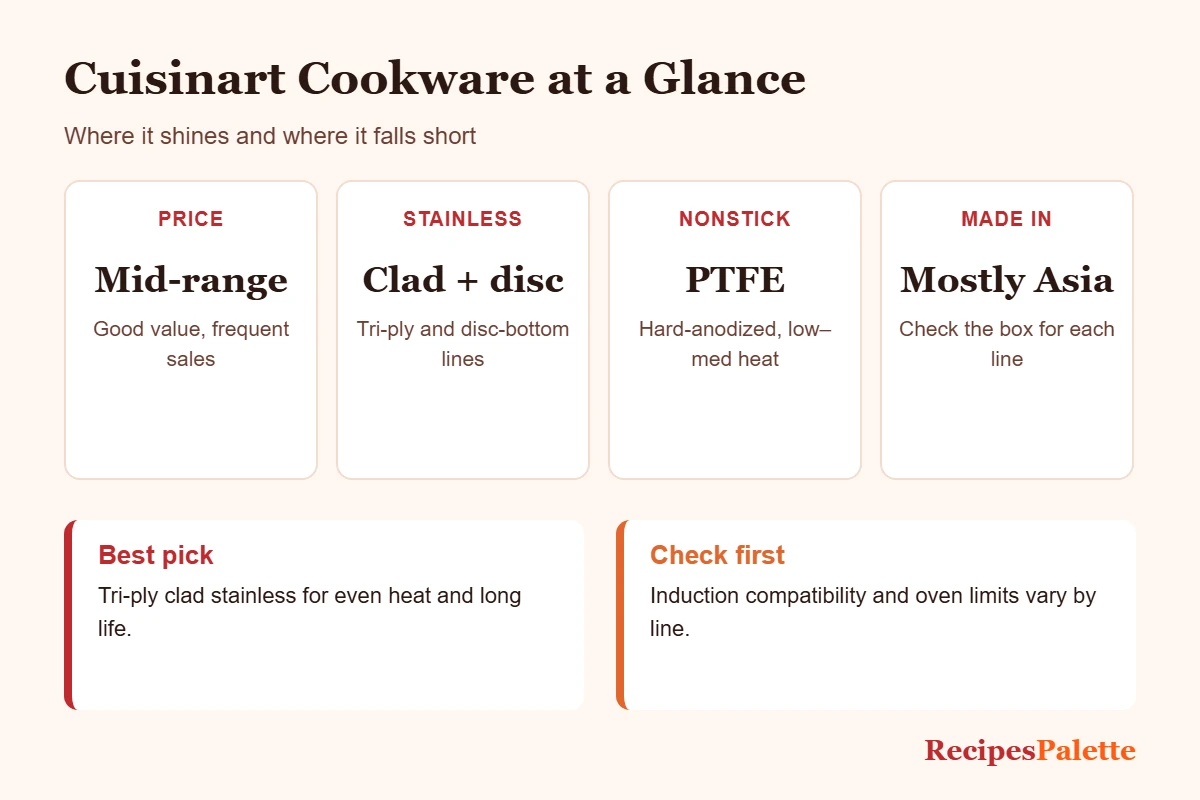
Cuisinart is best known for its food processors and small appliances, but it also sells a huge range of cookware. This guide explains what the brand is, how its main cookware types compare, whether it is safe and induction-friendly, and who it is (and is not) a good fit for. We have not tested Cuisinart products ourselves; this is an overview based on the brand’s published product information and the materials used.
What Is Cuisinart?
Cuisinart is an American kitchen brand founded in 1971. It became famous in the 1970s for bringing the food processor to home kitchens. Since 1989 it has been owned by Conair. Today the brand sells food processors, blenders, coffee makers, toaster ovens, grills, knives, bakeware and cookware.
Because it covers so many products, Cuisinart is a household name, and its cookware is easy to find in department stores, big-box stores and online.
Cuisinart Cookware Types
Cuisinart sells many collections, and names change over time, but most fall into a few material groups.
| Type | How it is built | Strengths | Watch out for |
|---|---|---|---|
| Tri-ply clad stainless (such as MultiClad Pro) | Stainless steel inside and out with an aluminum core all the way up the sides | Even heating, durable, oven-safe, many are induction-ready | Food sticks unless preheated with oil |
| Disc-bottom stainless (such as Chef’s Classic stainless) | Stainless body with an aluminum disc bonded to the base | Lower price, good for boiling and simmering | Sides heat less evenly than full clad |
| Hard-anodized nonstick | Hard-anodized aluminum body with a PTFE nonstick coating | Easy release, quick heating | Low to medium heat only; coating wears over time |
| Ceramic nonstick lines | Aluminum body with a ceramic-based coating | PTFE-free option | Coating usually wears faster than PTFE |
| Cast iron and enameled cast iron | Cast iron, some with enamel coating | Great heat retention for braising | Heavy; enamel can chip |
For a deeper comparison of these materials, see best pan materials compared.
Is Cuisinart Stainless Steel Cookware Good?
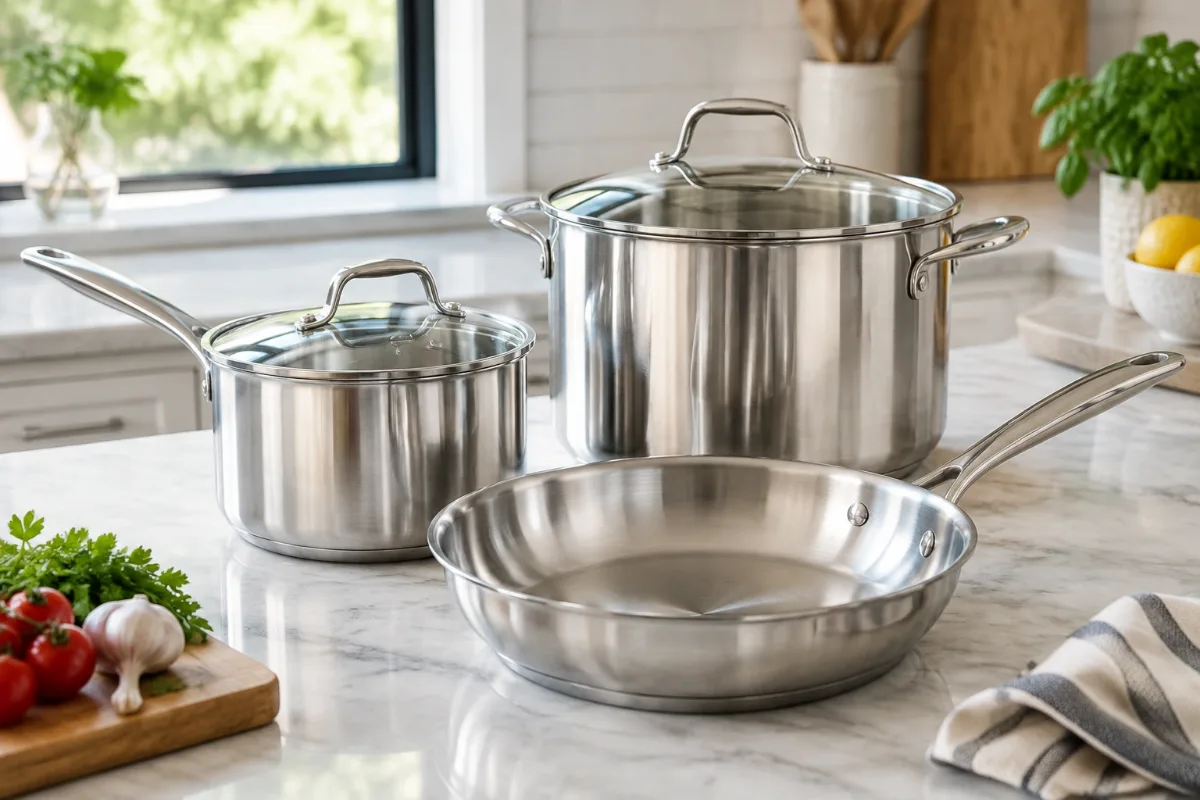
For the price, generally yes. The clad tri-ply lines are the strongest part of Cuisinart’s range. Full cladding means the aluminum core runs up the walls, so heat spreads more evenly than in cheaper disc-bottom pans. They are oven-safe, handle high heat, and can last many years with basic care.
Compared with premium clad brands, the main differences tend to be thinner metal in some pieces, handle design and finish, and where the cookware is made. For many home cooks, those differences matter less than the large price gap.
The disc-bottom stainless lines are cheaper and fine for soups, pasta and simmering, but they are less ideal for searing and sautéing, because the sides of the pan do not heat as evenly as the base.
Is Cuisinart Stainless Steel Non-Toxic?
Stainless steel is one of the most stable cookware materials. It does not have a coating to wear off, and it does not react significantly with most foods. Cooking surfaces are usually 18/10 stainless steel, which contains chromium and nickel. People with a nickel allergy may want to discuss it with their doctor, but for most people stainless steel is considered a safe, non-toxic choice. See what is the safest cookware for more.
Is Cuisinart Nonstick Cookware Safe?
Cuisinart’s traditional nonstick lines use PTFE coatings made without PFOA, like most modern nonstick cookware. PTFE nonstick is considered safe for normal cooking, but it should be used on low to medium heat, never heated empty on high, and replaced when the coating is scratched or flaking. If you prefer to avoid PTFE altogether, look at Cuisinart’s ceramic nonstick lines or switch to stainless steel or cast iron. For a broader view, see are all non-stick frying pans bad for you.
Where Is Cuisinart Cookware Made?
Most Cuisinart cookware is manufactured in Asia, largely in China, and designed by the brand in the US. Country of origin can vary by line and over time, so the packaging or product listing is the best place to check a specific item.
Does Cuisinart Cookware Work on Induction?
Many Cuisinart stainless steel lines are induction-compatible because they have a magnetic stainless exterior or base. Hard-anodized aluminum lines generally do not work on induction unless they include a magnetic base plate. Look for “induction” in the product description, or use the magnet test: if a fridge magnet sticks firmly to the bottom, it will work. Our guide on whether stainless steel works on induction explains why.
Cuisinart Pros and Cons
Pros
- Good value, especially the tri-ply clad stainless lines.
- Very wide range of pieces, sets and price points.
- Easy to find in stores and online, and often on sale.
- Stainless lines are oven-safe and durable.
- Many lines include a limited lifetime warranty (check the terms for your product).
Cons
- Quality and thickness vary between lines, and similar-looking sets can perform differently.
- Most production is overseas, which matters to some buyers.
- Nonstick lines wear out like any nonstick cookware.
- Some handles and lids are less refined than premium brands.
Who Should Buy Cuisinart Cookware?
| Cuisinart is a good fit if… | Look elsewhere if… |
|---|---|
| You want clad stainless steel without premium prices | You want US-made or heirloom-level cookware |
| You are buying your first full cookware set | You only cook on high-heat cast iron or carbon steel |
| You like being able to add matching pieces later | You need every piece to be induction-ready (check each line) |
| You cook often but are not a professional chef | You want a PTFE-free set and plan to cook at high heat |
Tips for Buying Cuisinart Cookware
- Read the construction details. “Tri-ply” or “clad” with an aluminum core up the sides is better for even heating than a disc base.
- Check induction and oven limits for the exact line, especially for nonstick pieces and glass lids.
- Do not overbuy. Large sets often include pieces you will rarely use. A skillet, saucepan, sauté pan and stockpot cover most needs.
- Mix materials. Many cooks pair a stainless set with one nonstick pan for eggs and a cast iron skillet for searing.
How to Care for Cuisinart Cookware
- Stainless steel: preheat the pan, then add oil, before adding food to reduce sticking. Clean stuck-on bits by simmering water in the pan, and use a stainless steel cleaner for discoloration.
- Nonstick: use low to medium heat, avoid cooking sprays and metal utensils, and hand wash to extend the coating’s life.
- All pans: let them cool before washing to prevent warping.
Frequently Asked Questions
Is Cuisinart a good brand for cookware?
For most home cooks, yes. It offers solid quality for the price, especially in its tri-ply stainless steel lines.
Are Cuisinart pots and pans good for everyday cooking?
Yes. The stainless steel lines handle everyday sautéing, boiling and oven use well, and the nonstick lines are convenient for eggs and delicate foods.
Is Cuisinart cookware made in the USA?
Mostly no. Cuisinart is a US brand, but most of its cookware is made in Asia. Check the packaging for a specific product.
Is Cuisinart stainless steel cookware safe?
Yes. Stainless steel is a stable, non-reactive material that is considered safe for everyday cooking.
Can Cuisinart pans go in the oven?
Most stainless steel pieces are oven-safe to high temperatures. Nonstick pieces and glass lids have lower limits, so check the instructions for your line.
What is a Cuisinart?
The name is often used to mean a food processor, because Cuisinart made food processors popular in home kitchens. The brand now makes a wide range of appliances and cookware.
The Bottom Line
Cuisinart is a reliable, good-value cookware brand. Its tri-ply clad stainless steel lines are the standout choice, its nonstick lines are convenient but wear out like any nonstick, and most of its cookware is made overseas. Check each line’s construction, induction compatibility and oven limits before you buy, and Cuisinart can be a solid, affordable foundation for a home kitchen.