
How to Make Brown Rice Taste Good: 12 Easy Ways

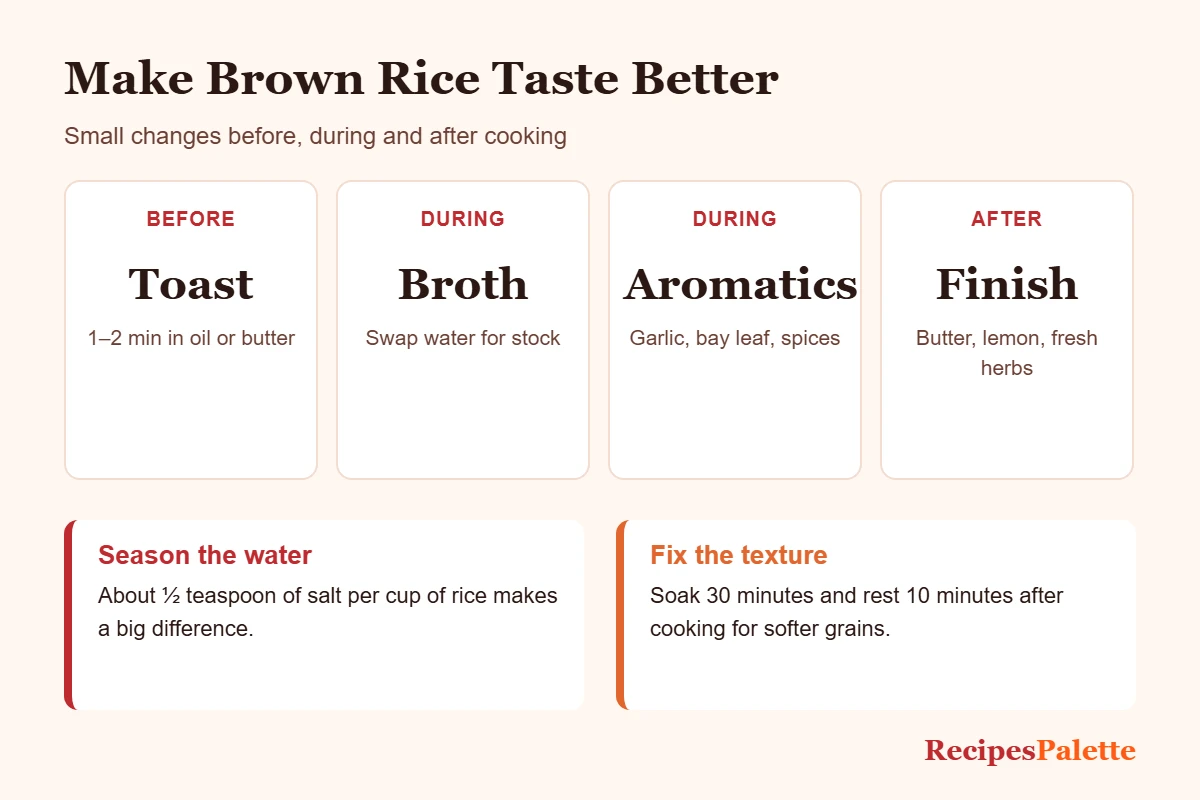
To make brown rice taste good, season the cooking water with salt, toast the grains in a little oil or butter before adding liquid, cook it in broth instead of water, and finish it with fat, acid and fresh herbs. Soaking the rice for 30 minutes and letting it rest for 10 minutes after cooking also makes it softer and less chewy, which is often the real reason people do not enjoy it.
Brown rice has a reputation for being bland, dense or “too healthy.” In reality, it has a lovely nutty flavor when it is cooked well and seasoned properly. Here are 12 simple ways to make it taste better, from small tweaks to the cooking method to quick flavor add-ins.
What Does Brown Rice Taste Like?
Brown rice keeps its bran and germ, so it tastes nuttier and earthier than white rice, with a slightly chewy texture. Some people describe it as toasty or a little sweet. Brown basmati and brown jasmine are more aromatic, while short-grain brown rice is softer and a bit sticky.
When brown rice tastes flat, it is usually because it was cooked in plain, unsalted water. When it tastes unpleasant, it is often undercooked (hard and chalky in the center) or made from old rice whose natural oils have started to go stale. Fixing those two problems gets you most of the way.
Start With Good Technique
1. Rinse the rice
A quick rinse removes dust and loose starch so the grains cook up cleaner and less gummy. See do you need to rinse brown rice for how to do it.
2. Soak it for softer grains
Soaking brown rice in cold water for 30 minutes to a few hours softens the bran, so the grains cook more evenly and feel less chewy. Drain well and reduce the cooking water by 2 to 4 tablespoons per cup.
3. Use the right amount of water and time
Undercooked brown rice is one of the main reasons people dislike it. Long-grain brown rice usually needs about 2 cups of water per cup of rice and 40 to 45 minutes of simmering, followed by a 10-minute rest. Our rice to water ratio chart and guide to cooking brown rice on the stove have the details.
4. Always salt the water
Salt is the single easiest upgrade. Add about ½ teaspoon of fine salt per cup of uncooked rice to the cooking water. Seasoning the rice as it cooks tastes very different from sprinkling salt on at the end.
Add Flavor While It Cooks
5. Toast the grains first
Heat 1 to 2 teaspoons of oil or butter in the pot, add the drained rice and stir for 1 to 2 minutes until it smells nutty, then add the liquid. Toasting deepens the natural nutty flavor and helps keep the grains separate.
6. Cook it in broth
Replace some or all of the water with chicken, beef, mushroom or vegetable broth. If your broth is salted, reduce or skip the added salt. A mix of half broth and half water is a good starting point.
7. Add aromatics to the pot
Before adding the rice, sauté a little minced onion, shallot, garlic or ginger in the oil. Or drop whole aromatics into the cooking liquid:
- A bay leaf and a few black peppercorns
- 2 or 3 green cardamom pods and a small cinnamon stick (great with brown basmati)
- A strip of lemon peel
- A stalk of lemongrass or a few slices of ginger (great with brown jasmine)
- A spoonful of tomato paste for a Mexican-style rice
Remove whole spices before serving.
8. Try coconut milk
For brown jasmine rice, replace about a third of the water with canned coconut milk and add a pinch of salt. It becomes rich, slightly sweet and wonderful with curries and grilled fish.
Finish It Well
9. Stir in fat
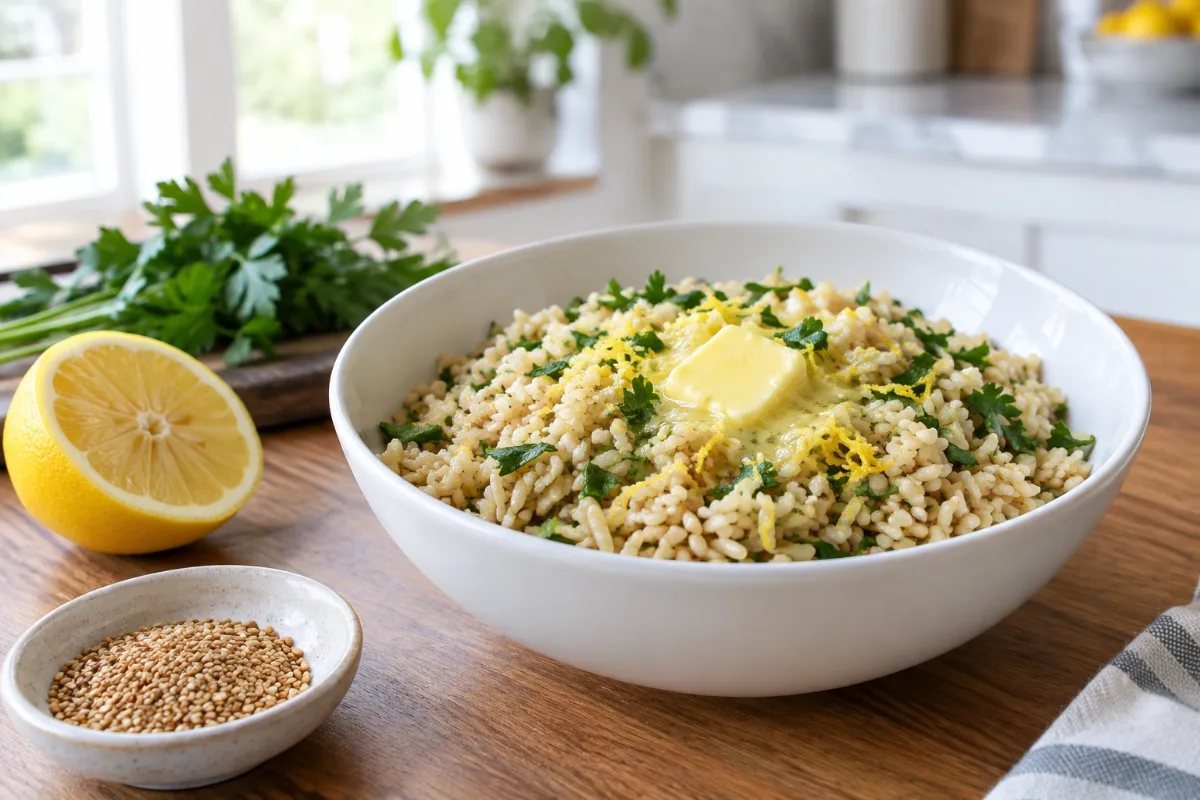
A small pat of butter, a drizzle of good olive oil, a little toasted sesame oil or a spoonful of ghee stirred into hot rice adds richness and carries flavor. Even a teaspoon makes a difference.
10. Add acid
A squeeze of lemon or lime juice, a splash of rice vinegar, or a little lemon zest brightens brown rice and balances its earthiness. Add it just before serving.
11. Fold in fresh herbs and crunch
Chopped parsley, cilantro, dill, basil or scallions make brown rice taste fresh. For crunch, add toasted nuts (almonds, pine nuts, cashews), toasted sesame seeds or crispy fried shallots.
12. Use a sauce or seasoning blend
A spoonful of soy sauce or tamari, a little miso butter, pesto, chimichurri, salsa verde or furikake can turn plain brown rice into a side dish people actually ask for.
Flavor Combinations to Try
| Style | Cook with | Finish with | Serve with |
|---|---|---|---|
| Lemon herb | Chicken broth, bay leaf | Butter, lemon zest, parsley | Fish, roast chicken |
| Garlic butter | Water, sautéed garlic | Butter, black pepper, chives | Steak, shrimp |
| Coconut lime | Coconut milk and water | Lime juice, cilantro | Curries, grilled fish |
| Spiced pilaf | Broth, cardamom, cinnamon | Toasted almonds, raisins | Lamb, chickpea stew |
| Mexican-style | Broth, tomato paste, onion, cumin | Cilantro, lime | Tacos, burrito bowls |
| Sesame ginger | Water, ginger slices | Sesame oil, soy sauce, scallions | Stir-fries, salmon |
| Mushroom | Mushroom broth, sautéed mushrooms | Butter, thyme, Parmesan | Pork chops, roast vegetables |
Using a Rice Cooker
All of these ideas work in a rice cooker. Toast the rice in a pan first if you like, then add it to the cooker with broth, salt and whole spices, and use the Brown Rice setting. Stir in fat, acid and herbs after cooking. See how to cook brown rice in a rice cooker for ratios.
Fixes for Common Brown Rice Complaints
| Complaint | Likely cause | Fix |
|---|---|---|
| Bland | No salt, plain water | Salt the water, use broth, finish with butter and lemon |
| Too chewy or hard | Undercooked or not rested | Soak first, add a little more water, rest 10 minutes |
| Mushy | Too much water or stirred while cooking | Use less water or try the pasta method |
| Bitter or stale taste | Old, rancid rice | Buy fresh rice and store brown rice in the fridge or freezer |
| Dry leftovers | Moisture lost in the fridge | Reheat with a splash of water, covered |
For variety-specific tips, see how to cook brown basmati and jasmine rice.
Frequently Asked Questions
Why does my brown rice taste bad?
It is usually unsalted, undercooked, or made from old rice that has gone stale. Salt the water, cook it fully and rest it, and store brown rice in a cool place or the fridge.
How do you make brown rice taste like white rice?
It will never be identical, but short-grain or brown jasmine rice, soaking, a little extra water and a pat of butter all bring it closer to the softer texture of white rice.
What can I add to brown rice for flavor?
Broth, garlic, onion, bay leaf, spices, coconut milk, butter, lemon, herbs, nuts, soy sauce and pesto all work well.
Is brown rice better with butter or oil?
Both work. Butter adds richness and works with most savory dishes; olive oil and sesame oil suit Mediterranean and Asian flavors.
Can I season brown rice after cooking?
Yes, but it will taste better if you salt the cooking water too. Season the water, then adjust with salt, fat and acid at the end.
The Bottom Line
Good brown rice starts with good technique: rinse, consider soaking, salt the water and cook it fully. Then build flavor with toasting, broth and aromatics, and finish with fat, acid and fresh herbs. With a few of these tricks, brown rice goes from a chore to a side dish you will actually look forward to.