
Can You Use Induction Cookware on a Gas or Electric Stove?

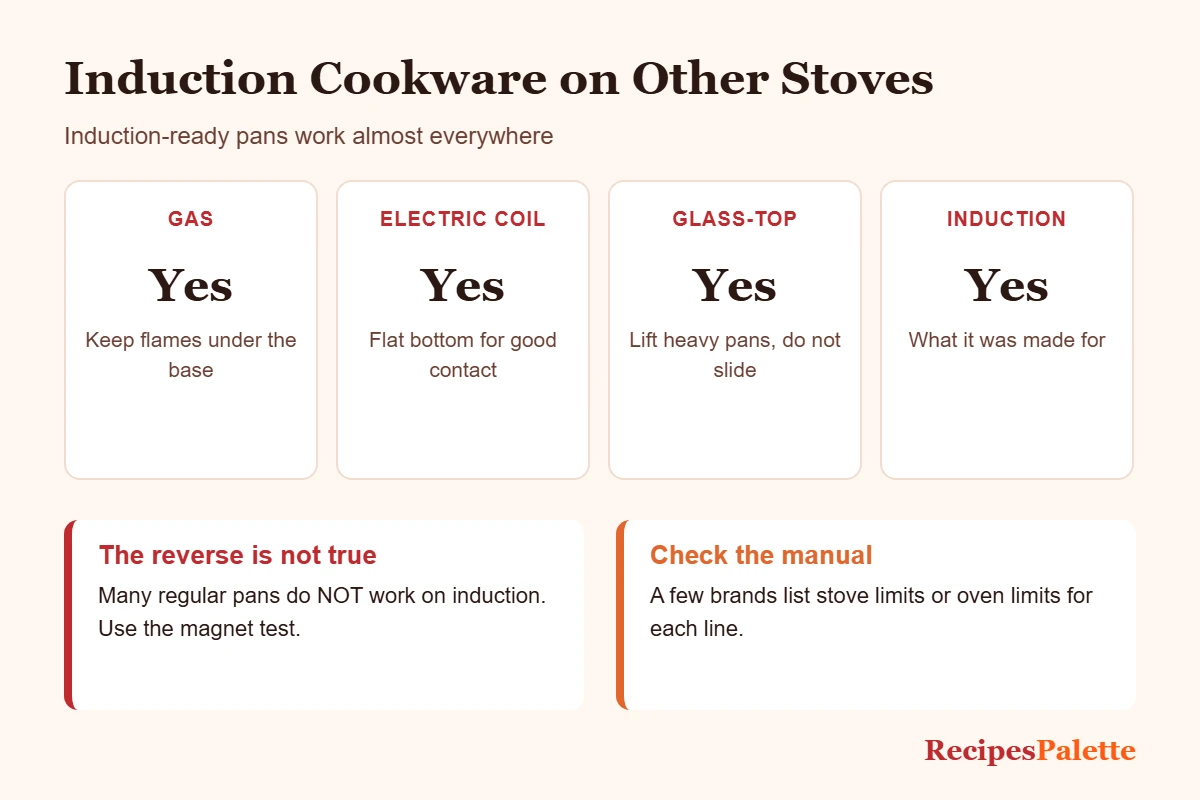
Yes. Induction cookware works on gas stoves, electric coil stoves and glass-top (radiant) electric stoves. Induction-ready pans simply have a magnetic base, and that base heats from a flame or an electric element just like any other metal pan. The only things to watch are keeping gas flames under the base of the pan, making sure the bottom is flat for electric stoves, and following any heat or care limits in the manufacturer’s instructions.
This is a common question when people move house, buy a portable induction burner, or want to buy cookware that will work on any stove they might have in the future. The good news is that induction cookware is the most flexible kind you can buy. The opposite is not always true, though, so it helps to understand how it all works.
What Makes Cookware “Induction-Ready”?
An induction cooktop heats pans with a magnetic field, so it only works with cookware that has a magnetic (ferromagnetic) base. That includes:
- Cast iron and enameled cast iron
- Carbon steel
- Magnetic stainless steel, such as 18/0
- Clad stainless steel with a magnetic outer layer
- Aluminum, copper or nonstick pans with a magnetic steel plate bonded to the bottom
None of these features stops a pan from working on gas or electric. A magnetic base is still just metal, and metal heats from flames and hot elements. For a full list, see what cookware works on induction.
Using Induction Cookware on a Gas Stove
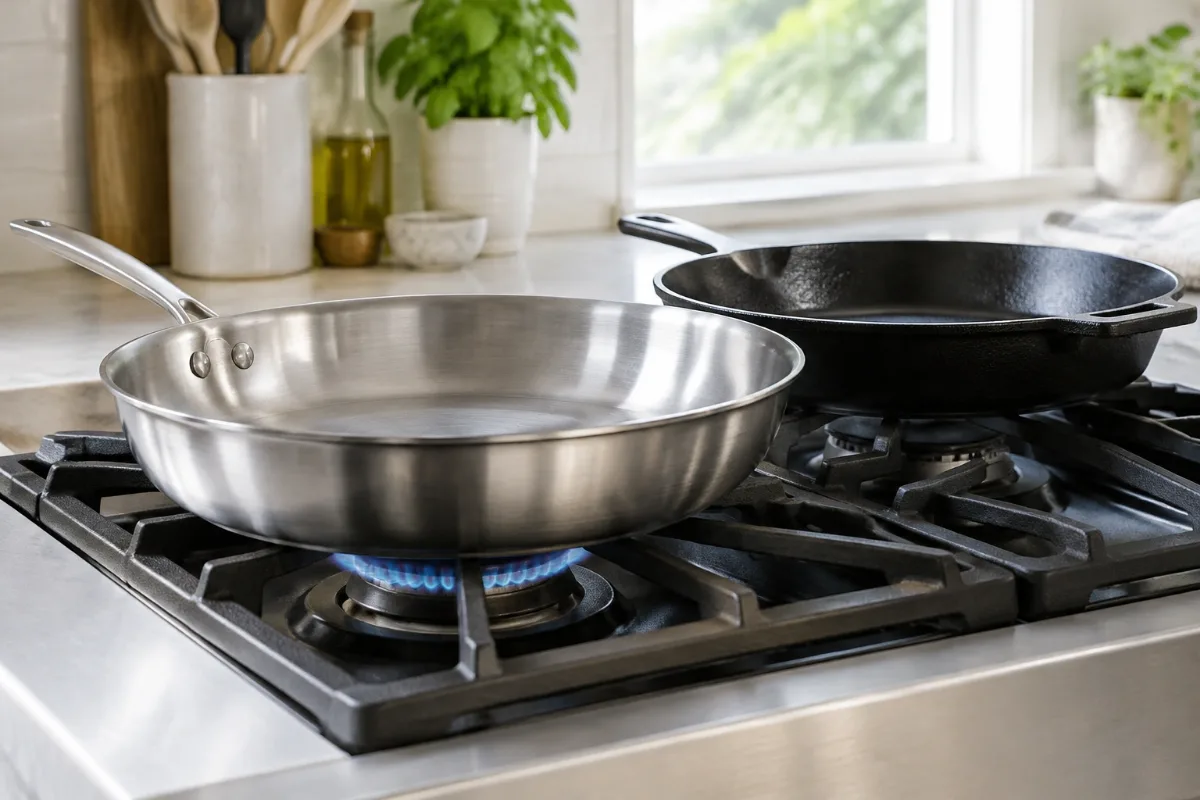
Induction cookware works well on gas. Cast iron, carbon steel and clad stainless steel are classic gas-stove pans anyway. A few tips:
- Keep the flame under the pan. Flames that lick up the sides waste energy, overheat handles and can discolor the outside of stainless pans. Match the burner and flame size to the base.
- Watch pans with a bonded base plate. Aluminum or nonstick pans with a steel disc on the bottom work on gas, but high flames around the edges can discolor the exterior. Medium heat is usually plenty.
- Expect some discoloration. Stainless steel can develop a bluish or rainbow tint from high heat. It is cosmetic and usually comes off with a stainless steel cleaner or a little vinegar.
- Nonstick still needs low to medium heat. An induction-ready base does not change the heat limits of a nonstick coating.
Using Induction Cookware on an Electric Coil Stove
Coil burners heat pans by direct contact, so the most important thing is a flat bottom. Most induction cookware is designed with a flat, thick base, because induction also needs good contact, so it usually works very well on coil stoves.
- Choose a burner close to the size of the pan.
- Preheat gradually; heavy pans like cast iron take a few minutes to heat evenly.
- Avoid warping by not putting a hot pan into cold water.
Using Induction Cookware on a Glass-Top Electric Stove
Glass-top (radiant or “ceramic”) electric stoves have heating elements under a smooth glass surface. Induction cookware works on them too, and their flat bases are a good match.
- Lift, do not slide. Heavy cast iron and pans with rough bottoms can scratch glass. Lift them on and off.
- Keep the base clean. Food or grease stuck to the bottom of the pan can burn onto the glass.
- Check for flatness. A warped base will spin or rock and heat unevenly.
Note that a glass-top electric stove is not the same as an induction cooktop, even though they look similar. A radiant glass-top stove glows red when it is on and heats any pan; an induction cooktop does not glow and only heats magnetic pans.
Can Regular Cookware Be Used on Induction?
This is where people get caught out. Cookware that works on gas or electric does not automatically work on induction. Plain aluminum, copper, glass, ceramic and many single-layer 18/10 stainless steel pans will not heat on an induction cooktop.
| Cookware | Gas | Electric coil | Glass-top electric | Induction |
|---|---|---|---|---|
| Cast iron | Yes | Yes | Yes (lift, do not slide) | Yes |
| Carbon steel | Yes | Yes | Yes | Yes |
| Clad stainless with magnetic exterior | Yes | Yes | Yes | Yes |
| Single-layer 18/10 stainless | Yes | Yes | Yes | Usually no |
| Aluminum or nonstick, no steel plate | Yes | Yes | Yes | No |
| Aluminum or nonstick with steel base plate | Yes | Yes | Yes | Yes |
| Copper | Yes | Yes | Yes | Usually no |
| Glass or stoneware (stovetop-rated) | Some | Some | Some | No |
The quickest test is a fridge magnet: if it sticks firmly to the bottom, the pan will work on induction. See does stainless steel work on induction for details.
Why Buying Induction-Ready Cookware Makes Sense
- It works everywhere. If you rent, move often, or might switch to induction later, induction-ready pans keep your options open.
- It suits portable burners. Plug-in induction hobs are popular for small kitchens, dorms and outdoor cooking.
- Flat, heavy bases cook better. Induction-ready pans tend to have thicker, flatter bottoms that heat more evenly on every stove.
For a broader comparison of materials, see best pan materials compared.
Are There Any Downsides?
- Weight. Some induction-ready pans, especially cast iron and thick clad steel, are heavier than basic aluminum pans.
- Cost. Pans with a bonded magnetic base can cost a bit more than plain aluminum.
- Discoloration on gas. Steel exteriors may tint with high flames, though this does not affect cooking.
- Uneven heating with base plates. Pans with a small magnetic disc may heat less evenly at the edges on induction, though this is less noticeable on gas or electric.
Frequently Asked Questions
Will induction pans damage a gas stove?
No. Induction-ready cookware is just metal cookware with a magnetic base. It works on gas like any other pan.
Can I use induction cookware on an electric stove?
Yes, on both coil and glass-top electric stoves. A flat base gives the best contact.
Does induction-ready mean oven-safe?
Not necessarily. Oven safety depends on the handles, lids and coatings, not the base. Check the manufacturer’s oven temperature limit.
Can I use cast iron on a glass-top stove?
Yes, but lift it rather than sliding it, and keep the bottom clean. See can cast iron skillets be used on induction cooktops for more cast iron tips.
Is induction cookware worth buying if I have a gas stove?
Yes, if you want flexibility. It works on gas now and will still work if you switch to induction later.
The Bottom Line
Induction cookware works on gas, electric coil and glass-top electric stoves. Keep gas flames under the base, use a flat-bottomed pan on electric, and follow the usual heat limits for any nonstick coating. Because it works on every stove, induction-ready cookware is the safest choice if you are not sure what kind of stove you will have in the future.