
Are Crock-Pots Dishwasher Safe?

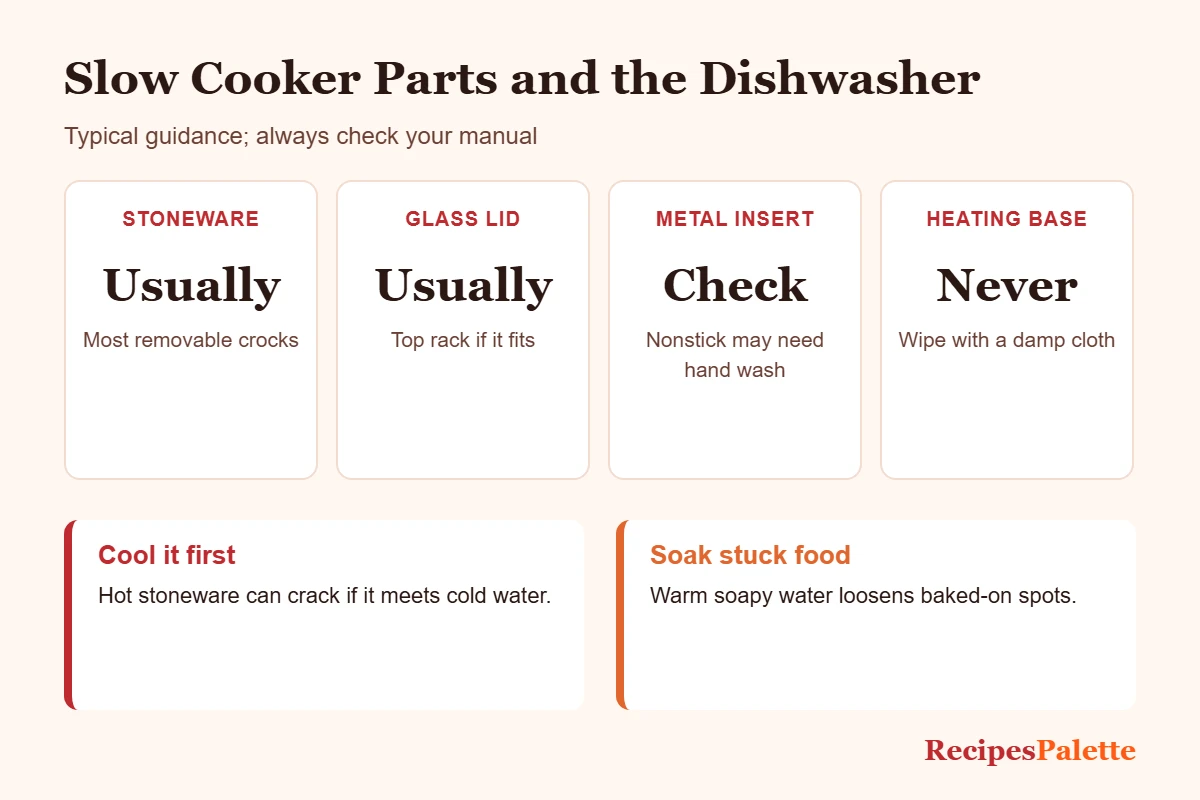
Yes, for most Crock-Pot and slow cooker models, the removable stoneware insert and the glass lid are dishwasher safe. The heating base, which holds the electrical parts, is never dishwasher safe and should never be put in water. Some inserts with nonstick coatings, and some older or special models, have different rules, so the manual for your model is the final word.
Here is a breakdown of each part, how to wash them safely, and how to remove stubborn stains from a slow cooker.
Which Slow Cooker Parts Can Go in the Dishwasher?
| Part | Dishwasher safe? | Notes |
|---|---|---|
| Stoneware insert (crock) | Usually yes | Let it cool first. Place it securely so it does not knock against other dishes. |
| Glass lid | Usually yes | Top or bottom rack depending on size. Lids with rubber seals may need hand washing. |
| Nonstick or metal insert | Check the manual | Many makers suggest hand washing to protect the coating. |
| Locking lid with gasket | Check the manual | Remove the gasket if possible and wash it separately. |
| Heating base | Never | Contains electrical parts. Wipe with a damp cloth only. |
| Temperature probe | Usually not | Wipe the probe clean. Never submerge the connector. |
If you have lost the manual, look up your model number, usually on a sticker under the base, on the manufacturer’s website.
Why the Base Must Never Get Wet
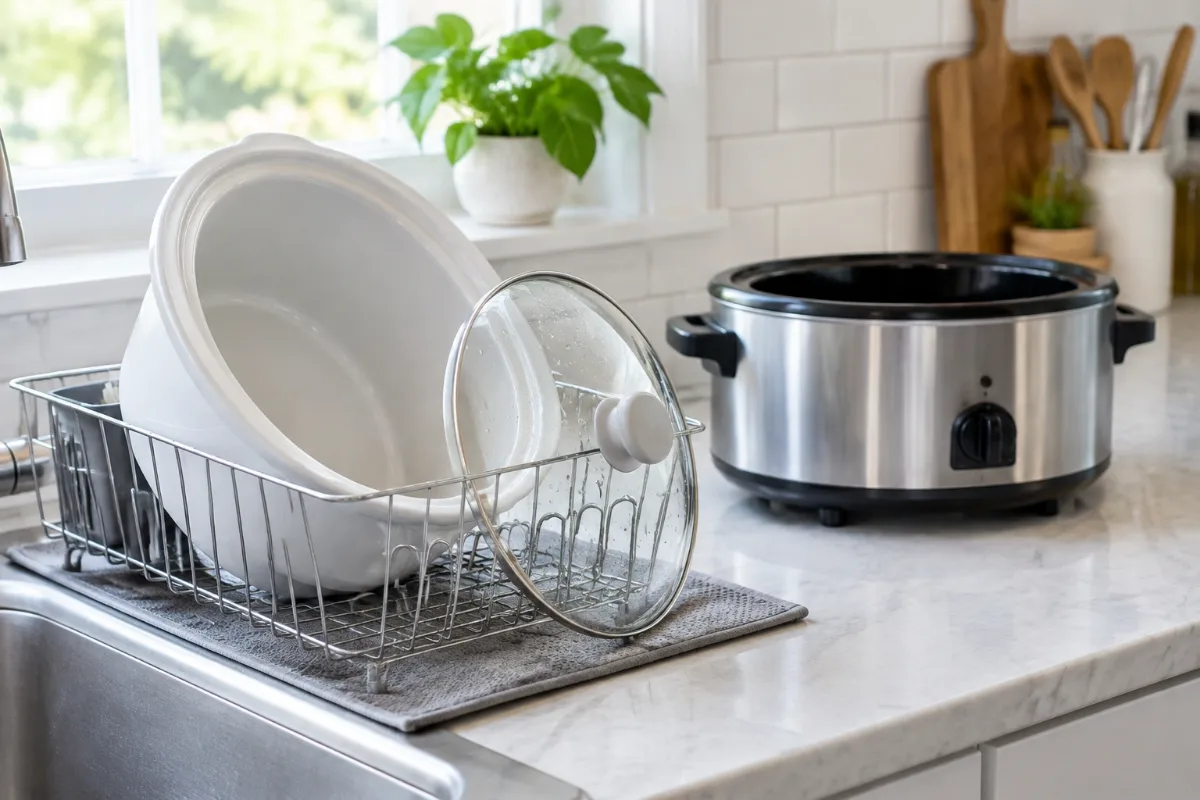
The base contains the heating element, wiring and controls. Putting it in the dishwasher or submerging it in the sink can damage the electrical parts and create a shock or fire risk. Even if it seems to work afterward, moisture inside can cause problems later.
To clean the base safely:
- Unplug it and let it cool completely.
- Wipe the inside and outside with a soft cloth dampened with warm, soapy water.
- Wipe again with a cloth dampened with plain water, then dry it well.
- For spills on the inside surface, use a paste of baking soda and water on a soft cloth. Avoid scouring pads.
Protecting the Stoneware From Cracks
Stoneware is strong, but it does not like sudden temperature changes. Thermal shock is the most common reason crocks crack.
- Let the insert cool before washing, especially before using cold water.
- Do not put a cold insert straight from the refrigerator into a hot base. Let it warm up a little or start on Low.
- Do not pour cold liquid into a hot crock.
- Place the crock on a towel or trivet, not on a cold, wet countertop, when it is hot.
- Check for hairline cracks or chips from time to time. A cracked insert should be replaced.
How to Hand Wash a Slow Cooker Insert
Even if the insert is dishwasher safe, hand washing is often quicker for a large crock that fills half the dishwasher.
- Scrape out leftover food with a silicone or wooden spatula.
- Fill the crock with warm water and a few drops of dish soap. Let it soak for 15 to 30 minutes.
- Scrub with a nonabrasive sponge or nylon brush.
- Rinse and dry well before putting it back in the base.
Avoid steel wool and abrasive powders, which can scratch the glaze. Scratched glaze stains more easily over time.
How to Remove Stubborn Stains and Residue
Baking soda and vinegar soak
Fill the crock with water to just above the stain line. Add about 1/2 cup of baking soda and 1/2 cup of white vinegar, place the lid on and set the slow cooker on Low for one to two hours. Let it cool, then scrub and rinse.
Baking soda paste
Mix baking soda with a little water to make a paste. Spread it on the stain, leave it for 15 minutes, then scrub gently.
White mineral rings
Chalky white rings are often mineral deposits from hard water. Wipe them with white vinegar or soak the crock in a mix of warm water and vinegar.
Preventing Messes in the First Place
- Grease the crock. A light coat of oil helps for sticky foods like oatmeal, casseroles and cheesy dips.
- Do not overfill. Keep the crock half to two-thirds full to reduce boil-overs and baked-on rings. See our guide to Crock-Pot sizes for picking the right size.
- Use slow cooker liners if you like. Liners made for slow cookers make cleanup very easy. Follow the package instructions.
- Clean soon after cooking. Food is easier to remove before it dries, once the crock has cooled enough to handle.
Cleaning Other Slow Cooker Styles
Multicookers with slow cook functions
Electric pressure cookers and multicookers usually have a stainless steel or nonstick inner pot. Stainless steel pots are often dishwasher safe, while the lid, sealing ring and base have their own care instructions. Remove the sealing ring and wash it separately to prevent odors.
Casserole-style slow cookers
These wide, shallow crocks often have a stoneware dish and a glass lid. Care is similar to standard crocks, but the wide shape may not fit in every dishwasher.
Triple crock buffet servers
The small crocks are often dishwasher safe, but the metal base, like any slow cooker base, must only be wiped.
New to slow cooking? Read our guide on what a Crock-Pot is, and see how they compare in Dutch ovens vs Crock-Pots.
Dishwasher Tips for Slow Cooker Parts
If your manual says the crock and lid are dishwasher safe, these tips help protect them:
- Scrape first. Remove leftover food before loading. Large food bits can redeposit on other dishes.
- Load it securely. Place the crock on the bottom rack where it will not rock or knock against glasses or other ceramics.
- Do not block the spray arms. A big crock can stop water from reaching the top rack. Check that the arms spin freely.
- Use a normal cycle. Very hot sanitizing cycles are usually fine for stoneware, but avoid putting a still-warm crock into a cold rinse.
- Dry it well. Make sure the crock is dry inside and out before placing it back in the base.
How to Deep Clean a Slow Cooker
Every few months, or after a messy recipe, give the whole slow cooker a deeper clean.
- Insert: Run the baking soda and vinegar soak described above to lift stains and odors.
- Lid: Wash in hot soapy water. If the lid has a rubber seal or vent, remove and clean those parts if the design allows.
- Base: Unplug it and wipe the inside walls and bottom with a damp, soapy cloth, then a clean damp cloth. Use a cotton swab for crevices around the controls.
- Exterior: Wipe fingerprints and splatters. For stainless steel exteriors, wipe with the grain using a soft cloth.
- Cord: Check the power cord for damage. Stop using the slow cooker if the cord is frayed or the plug is damaged.
How to Remove Odors
Strong flavors such as garlic, curry and onion can leave a smell in stoneware, especially on unglazed bottoms or rims. To remove odors:
- Soak the crock in warm water with a few tablespoons of baking soda for an hour.
- Rinse with a mix of water and white vinegar.
- Let the crock air dry completely in a well-ventilated spot.
When to Replace a Slow Cooker Insert
Look for a replacement crock if you notice any of these signs:
- Visible cracks, including fine hairline cracks
- Chips in the glaze on the cooking surface
- Crazing (a web of fine cracks in the glaze) that keeps getting worse
- Liquid seeping through the crock or pooling in the base
Many manufacturers sell replacement inserts and lids for popular models. Search by your model number to find the right fit.
Safe Food Storage in the Crock
It can be tempting to put the whole crock of leftovers in the refrigerator. The stoneware holds heat for a long time, so food cools slowly. Food safety guidance is to move leftovers into shallow containers and refrigerate them within 2 hours. Reheat leftovers on the stove or in the microwave until steaming hot, not in the slow cooker on Low.
Frequently Asked Questions
Can I put my Crock-Pot lid in the dishwasher?
Most glass Crock-Pot lids are dishwasher safe. Lids with rubber gaskets, locking clips or built-in electronics may need hand washing. Check your manual.
Why is my slow cooker insert cracking?
Usually because of sudden temperature changes, such as adding cold water to a hot crock, or a drop or knock. Replace a cracked insert rather than continuing to use it.
Can I soak the whole slow cooker in the sink?
No. Only the removable insert and lid can be soaked. The base must stay dry.
Is it OK to leave food to soak in the crock overnight?
You can soak an empty, scraped crock in soapy water overnight. Do not leave cooked food sitting in the crock at room temperature.
Are Crock-Pot lids oven safe?
Many glass lids are not oven safe, or only to a low temperature. Check your manual before putting any lid in the oven.
Can you use dish soap on stoneware?
Yes. Mild dish soap and warm water are the best everyday cleaners for stoneware.
How do I clean a slow cooker with a nonstick insert?
Wash it by hand with a soft sponge and mild soap unless the manual says it is dishwasher safe. Avoid metal utensils and abrasive pads.
What causes white film inside my crock?
It is usually mineral buildup from hard water. A soak with white vinegar and water removes it.
The Bottom Line
On most Crock-Pots and slow cookers, the removable stoneware insert and glass lid can go in the dishwasher, but the heating base never can. Let the crock cool before washing, avoid abrasive scrubbers, and use a baking soda and vinegar soak for stubborn stains. When in doubt, check your model’s manual.