
What Is a Crock-Pot? Is It the Same as a Slow Cooker?

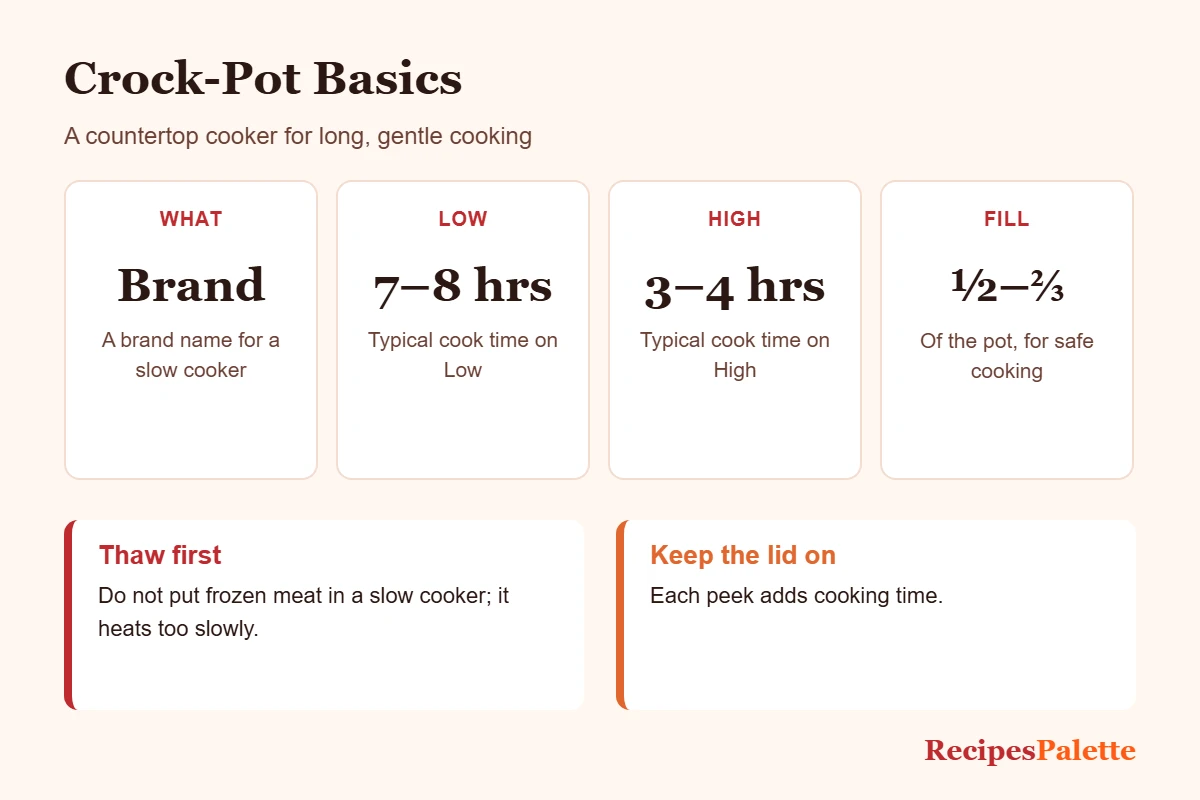
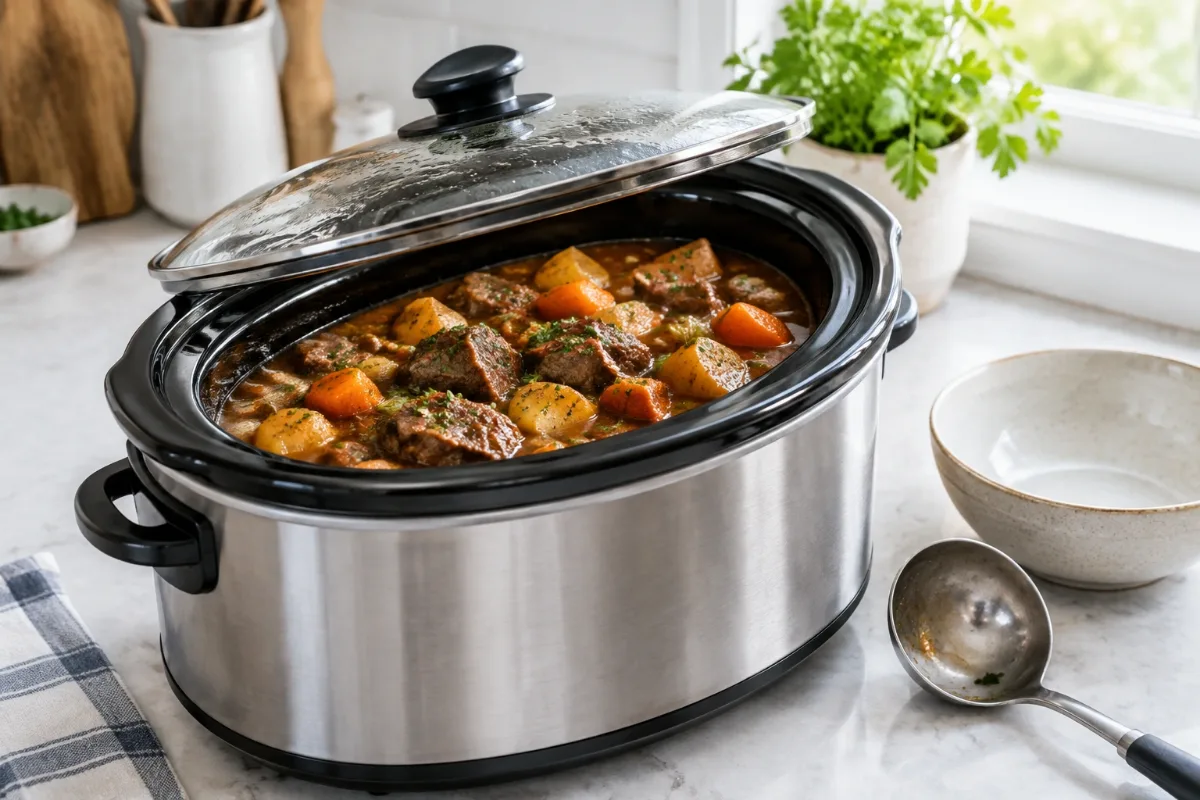
A Crock-Pot is a brand of slow cooker, an electric countertop appliance that cooks food slowly at low, steady temperatures for several hours. All Crock-Pots are slow cookers, but not all slow cookers are Crock-Pots; the brand name became so popular that many people use “crock pot” for any slow cooker. A slow cooker has a heating base, a removable stoneware or ceramic insert, and a lid, and it usually offers Low, High and Warm settings.
Slow cookers are loved for hands-off meals: put in the ingredients in the morning and come home to dinner. Here is how they work, how they compare with other appliances, how to use one safely and what they cook best.
Crock-Pot vs Slow Cooker: Is There a Difference?
In everyday use, no. “Crock-Pot” is a trademark for a line of slow cookers that was introduced in the early 1970s and became a household name. Other brands make slow cookers that work the same way. When a recipe says “crock pot,” any slow cooker of a suitable size will do.
The main differences between models are size, shape, features (timers, auto-warm, locking lids) and how hot each setting runs. Newer cookers often run a bit hotter than older ones, so recipes may finish sooner than expected.
How Does a Slow Cooker Work?
- Heating element: In the base, wrapping around the sides and sometimes the bottom of the insert.
- Stoneware insert: A heavy ceramic pot that heats slowly and evenly and holds heat well.
- Lid: Traps steam and heat, so very little liquid evaporates.
On both Low and High, the food eventually reaches a gentle simmer. The difference is how long it takes to get there. High reaches simmering temperature faster, so cooking time is roughly half of Low.
| Setting | Typical time | Best for |
|---|---|---|
| Low | 7–8 hours (or more) | Tough cuts of meat, all-day cooking, deepest flavor |
| High | 3–4 hours | Soups, chili and stews when you are short on time |
| Warm | Holding only | Keeping cooked food hot for serving; not for cooking |
Slow Cooker vs Instant Pot vs Dutch Oven
| Slow cooker | Electric pressure cooker | Dutch oven | |
|---|---|---|---|
| Speed | Slow (hours) | Fast (minutes under pressure) | Medium (oven or stove) |
| Hands-off | Very | Mostly | Needs a stove or oven |
| Browning | Usually no (unless a sear insert) | Yes, sauté function | Yes, excellent |
| Energy use | Low | Low | Higher if using the oven |
| Best for | All-day stews, pulled meats, chili | Quick beans, stews, rice | Braises, bread, soups, searing then braising |
Many multi-cookers can slow cook as well as pressure cook. For more on how Dutch ovens compare, see are Dutch ovens the same as Crock-Pots.
How to Use a Crock-Pot
- Prep ingredients. Cut vegetables and meat into even pieces. Thaw any frozen meat or poultry first.
- Brown meat (optional). Browning meat in a skillet before adding it gives deeper flavor.
- Layer. Put dense root vegetables on the bottom and sides, where it is hottest, and meat on top.
- Add liquid. Slow cookers lose little liquid, so you usually need less than in a stovetop recipe.
- Fill properly. Keep the cooker half to two-thirds full.
- Cover and cook. Choose Low or High and keep the lid on.
- Check doneness. Use a food thermometer: poultry 165°F (74°C), ground meat 160°F (71°C), whole cuts of beef and pork at least 145°F (63°C), though tough cuts are usually cooked much further until tender.
- Serve or hold. Switch to Warm for serving, and refrigerate leftovers within 2 hours.
Not sure which size to buy? See Crock-Pot sizes explained.
Slow Cooker Safety Tips
- Do not use frozen meat. It can stay in the danger zone (40°F to 140°F) too long.
- Do not lift the lid often. Each peek can add 15 to 20 minutes to the cooking time.
- Boil dried kidney beans first. Raw red kidney beans contain a natural toxin that is destroyed by boiling for at least 10 minutes, but not by slow cooking at low temperatures.
- Do not reheat leftovers in the slow cooker. Reheat on the stove or in the microwave to 165°F (74°C), then use the slow cooker on Warm if you like.
- If the power goes out while you are away, discard the food, because you cannot know how long it sat at unsafe temperatures.
- Do not put the hot stoneware on a cold or wet surface or in cold water, which can crack it.
What to Cook in a Crock-Pot
- Beef stew, pot roast and chili
- Pulled pork, pulled chicken and carnitas
- Soups, bone broth and bean dishes (with soaked and boiled kidney beans)
- Curries and braised chicken thighs
- Oatmeal, applesauce and dips like queso
Tender, fatty cuts that need long cooking (chuck roast, pork shoulder, chicken thighs) do best. Lean cuts like chicken breast can dry out if cooked too long.
A Short History of the Crock-Pot
The slow cooker grew out of a bean cooker. In the 1930s and 1940s, inventor Irving Naxon developed an electric pot for cooking beans slowly, and it was later sold as the Naxon Beanery. In 1970 the Rival Manufacturing Company bought the design, and in 1971 it was relaunched as the Crock-Pot.
The timing was good. More households had two working adults, and the idea of starting dinner in the morning and coming home to a hot meal caught on fast. The name became so well known that many people now call any slow cooker a crock pot. The brand has changed owners over the years, but it is still one of the best-known slow cooker names today.
Types of Slow Cookers
- Manual slow cookers: A simple dial with Low, High and Warm. Affordable and easy to use, but you need to switch them to Warm yourself when cooking is done.
- Programmable slow cookers: Let you set a cooking time, after which the cooker switches to Warm automatically. Useful if you are away longer than the recipe needs.
- Slow cookers with a temperature probe: Some models have a probe that goes into the meat and switches to Warm when it reaches a set temperature.
- Casserole-style cookers: A wide, shallow shape for lasagna, casseroles and dishes you want to serve straight from the pot.
- Multicookers: Electric pressure cookers and other multicookers often include a slow cook function. Results can differ from a traditional stoneware slow cooker, so recipes may need adjusting.
Common Slow Cooker Mistakes
- Adding too much liquid. Very little liquid evaporates with the lid on. Recipes adapted from the stovetop often need less liquid.
- Lifting the lid too often. Each time the lid comes off, heat escapes and the cooking time gets longer.
- Adding dairy too early. Milk, cream and cheese can curdle during long cooking. Stir them in during the last 30 minutes.
- Cooking delicate vegetables all day. Peas, spinach and zucchini turn mushy. Add them near the end.
- Using frozen meat. Frozen meat can stay in the unsafe temperature range for too long. Thaw it in the refrigerator first.
- Filling it too much or too little. Aim for half to two-thirds full for even, safe cooking.
How to Clean a Crock-Pot
- Unplug the cooker and let the stoneware cool before washing. Sudden temperature changes, like cold water in a hot crock, can crack it.
- Remove the stoneware insert and lid. Many are dishwasher safe, but check your manual.
- For stuck-on food, fill the insert with warm water and a little dish soap and let it soak. A paste of baking soda and water helps with stubborn spots.
- Use a nonabrasive sponge. Steel wool can scratch the glaze.
- Never put the heating base in water. Wipe it with a damp cloth once it is cool and dry it well.
Slow cooker liners can make cleanup easier, but they are optional. If you use them, choose ones made for slow cookers and follow the package instructions.
Easy Recipes for Your First Crock-Pot Meal
If you are new to slow cooking, start with forgiving recipes that are hard to overcook.
- Beef chili: Brown ground beef with onion, then add beans, crushed tomatoes and chili spices. Cook on Low for 6 to 8 hours.
- Pulled pork: Rub a pork shoulder with salt, paprika and brown sugar, add a little broth, and cook on Low until it shreds easily with a fork. Toss with barbecue sauce.
- Chicken tortilla soup: Add chicken thighs, salsa, broth, black beans and corn. Shred the chicken at the end and top with lime and tortilla strips.
- Vegetable lentil soup: Combine dried lentils, carrots, celery, onion, garlic, canned tomatoes and broth. Cook until the lentils are soft.
- Overnight oats: Steel-cut oats with milk or water on Low make a warm breakfast. Grease the crock first to prevent sticking.
Cut vegetables into even pieces and put dense root vegetables at the bottom, where the heat is strongest. Meat goes on top. Always check meat with a thermometer before serving.
Frequently Asked Questions
Is a Crock-Pot the same as a slow cooker?
Yes, functionally. Crock-Pot is a brand name for a slow cooker.
Can I leave a Crock-Pot on while I am at work?
Slow cookers are designed to cook unattended. Place it on a heat-safe surface away from walls and anything flammable, and follow the manufacturer’s safety instructions.
What does the Warm setting do?
It keeps cooked food hot for serving. It is not meant for cooking or for reheating cold food.
Can you put a Crock-Pot insert in the oven?
Many stoneware inserts are oven-safe, but limits vary and lids often are not. Check your manual.
Is 4 hours on High the same as 8 hours on Low?
Roughly, for most recipes. Low gives more tender results for tough cuts of meat.
Do you need to add liquid to a Crock-Pot?
Most recipes need some liquid to create steam and prevent scorching. Follow the recipe and your manual, and remember that little liquid evaporates.
Can you cook raw meat in a Crock-Pot?
Yes. Slow cookers are designed to cook raw meat. Thaw it first and check with a thermometer that it reaches a safe temperature.
Should I brown meat before slow cooking?
It is optional but adds flavor and color. Browning in a skillet first gives stews and roasts a deeper, richer taste.
The Bottom Line
A Crock-Pot is simply a well-known brand of slow cooker. Any slow cooker uses gentle, steady heat in a stoneware pot to turn tough cuts, beans and vegetables into tender, hands-off meals. Thaw meat first, fill it half to two-thirds full, keep the lid on, and use a thermometer to check that food is done.