Are T-fal Pans Safe?

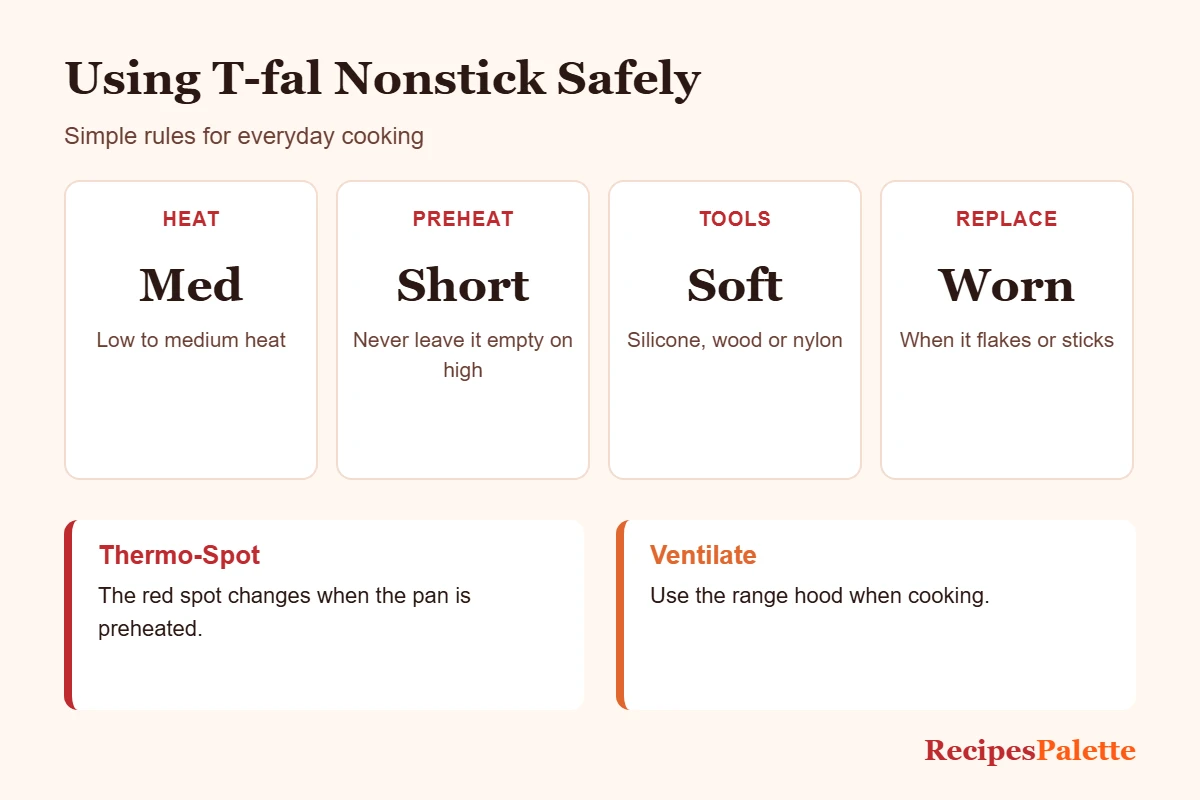
T-fal nonstick pans are considered safe for everyday cooking when used as directed: on low to medium heat, never left empty on a hot burner, with soft utensils, and replaced when the coating is worn. Most T-fal nonstick pans use a PTFE-based coating, and the brand states its products are made without PFOA, lead and cadmium. T-fal also sells ceramic and stainless steel lines for cooks who prefer other materials.
Here is what T-fal pans are made of, what PTFE and PFOA mean, how to use nonstick safely, and when it is time to replace a pan.
Who Makes T-fal?
T-fal is the North American name for Tefal, a French cookware brand that helped bring nonstick frying pans to home kitchens in the 1950s and 1960s. Tefal is part of Groupe SEB, a large French housewares company. Today the brand sells nonstick, hard-anodized, ceramic and stainless steel cookware, along with small appliances. Many T-fal pans are made in France, while other lines are made in China and other countries, depending on the product.
What Is T-fal Nonstick Made Of?
Most T-fal nonstick pans use a coating based on PTFE (polytetrafluoroethylene), the same type of material often called Teflon. PTFE is very slippery and stable at normal cooking temperatures, which is why it releases eggs and pancakes so easily. The coating is applied over an aluminum or hard-anodized aluminum body. Some lines add mineral or titanium particles to the coating for durability.
T-fal also offers ceramic nonstick lines, which use a silica-based coating instead of PTFE, and uncoated stainless steel lines.
PTFE vs PFOA: What Is the Difference?
- PTFE is the nonstick coating itself.
- PFOA is a chemical that was once used in making PTFE. It has been phased out in cookware manufacturing in the US and many other countries. T-fal says its products are made without PFOA.
Both belong to a large group of chemicals called PFAS. If you prefer to avoid PFAS-based coatings entirely, choose T-fal’s ceramic or stainless steel lines, or cookware made from cast iron, carbon steel or stainless steel. Our article on whether frying pans are still made with Teflon explains the background.
Is PTFE Nonstick Safe to Cook With?
PTFE coatings are stable at normal cooking temperatures. The main safety concern is overheating. At very high temperatures, often cited as above about 500°F (260°C), PTFE coatings can begin to break down and release fumes. These fumes can cause temporary flu-like symptoms in people and are especially dangerous to pet birds.
Normal cooking on low to medium heat stays well below that range. Problems usually happen when an empty pan is left on high heat. Simple habits avoid this:
- Never preheat an empty nonstick pan on high.
- Cook on low to medium heat.
- Do not use nonstick under the broiler or for hard searing.
- Use the range hood or open a window when cooking.
- Keep pet birds out of the kitchen.
What Is the T-fal Thermo-Spot?
Many T-fal pans have a Thermo-Spot heat indicator, a red pattern in the center of the pan. When the pan reaches a good preheating temperature for cooking, the pattern changes, typically turning solid red. It helps you avoid adding food too early or overheating the pan. Add oil and food once the spot shows the pan is ready, and keep the burner at medium or below.
Are T-fal Pans Oven Safe?
Many T-fal pans are oven safe to a set temperature, often around 350°F to 400°F for nonstick pans, while stainless steel lines go higher. Glass lids and handles may have lower limits. Check the care guide for your exact line. Our guides on whether Tefal pans can go in the oven and nonstick pans in the oven have more detail.
Are T-fal Pans Dishwasher Safe?
Many T-fal lines are labeled dishwasher safe, but hand washing helps the nonstick coating last longer. Hard-anodized exteriors can dull in the dishwasher. See can Tefal frying pans go in the dishwasher for more.
How to Use T-fal Nonstick Safely
- Wash before first use. Remove labels and wash with warm soapy water.
- Preheat briefly on medium. Watch the Thermo-Spot if your pan has one.
- Add a little oil or butter. Avoid aerosol sprays that leave residue.
- Use soft utensils. Silicone, wood or nylon protect the coating.
- Let it cool before washing. Avoid sudden temperature changes.
- Store with care. Stack with protectors or hang pans.
When to Replace a T-fal Pan
Replace a nonstick pan when you see:
- Flaking or peeling coating
- Deep scratches exposing the metal
- Food sticking across the surface even with oil
- A warped base
With regular use and good care, many nonstick pans last several years. Heavy daily use, high heat and metal utensils shorten that.
T-fal Product Lines at a Glance
| Line type | Surface | Best for |
|---|---|---|
| Classic nonstick | PTFE-based nonstick | Eggs, pancakes, everyday cooking |
| Hard-anodized nonstick | PTFE-based over hard-anodized aluminum | Sturdier everyday cooking |
| Titanium-reinforced | Nonstick with mineral particles | Longer-lasting nonstick |
| Ceramic | Silica-based ceramic coating | Cooks avoiding PTFE |
| Stainless steel | Uncoated stainless | Searing, sauces, high heat |
For a closer look at one popular pan, read our T-fal Ultimate hard-anodized fry pan review.
Nonstick vs Other Materials: Which Is Right for You?
| Material | Pros | Cons |
|---|---|---|
| PTFE nonstick (most T-fal) | Excellent release, easy cleanup, affordable | Low to medium heat only; coating wears out |
| Ceramic nonstick | Made without PTFE; slick when new | Often wears faster than PTFE |
| Stainless steel | Durable, high heat, oven safe | Food sticks without good technique |
| Cast iron and carbon steel | Very durable, naturally nonstick when seasoned | Heavy (cast iron); needs seasoning care |
Many kitchens keep one nonstick pan for eggs and delicate foods, and use stainless steel or cast iron for everything else. For more on safe cookware choices, see what is the safest cookware? and our guide to how long ceramic pans last.
How to Store T-fal Pans
Stacking nonstick pans without protection is one of the main causes of scratches. Hang pans on a rack, store them upright in a pan organizer, or place felt pan protectors or a folded towel between them when stacking. Store lids separately so their rims do not rub the coating.
Myths and Facts About Nonstick Pans
| Claim | What to know |
|---|---|
| “Nonstick pans release fumes at any temperature.” | Concerns are linked to overheating, especially empty pans on high heat. Normal low to medium cooking stays well below that range. |
| “PFOA-free means PFAS-free.” | Not necessarily. PTFE is itself part of the PFAS family. Choose ceramic or uncoated pans if you want to avoid PFAS-based coatings. |
| “You never need oil with nonstick.” | A little oil or butter helps browning and protects the coating. |
| “Nonstick lasts forever.” | Coatings wear out. Replace pans that flake, peel or stick everywhere. |
Best Uses for a T-fal Nonstick Pan
- Scrambled and fried eggs, omelets
- Pancakes, crepes and French toast
- Delicate fish fillets
- Reheating rice and leftovers on low heat
- Quesadillas and grilled cheese
Save hard searing, broiling and very high-heat stir-frying for stainless steel, carbon steel or cast iron.
Frequently Asked Questions
Do T-fal pans contain Teflon?
Most T-fal nonstick pans use a PTFE-based coating, which is the same type of material as Teflon. T-fal states its products are made without PFOA.
Is it safe to use a scratched T-fal pan?
Minor surface marks are usually cosmetic. Replace the pan if the coating is flaking or peeling.
What temperature is too hot for a T-fal pan?
Avoid high heat and empty preheating. Keep to low or medium heat on the stove and stay within the oven limit in the care guide.
Are T-fal ceramic pans PTFE-free?
T-fal’s ceramic lines use a ceramic coating rather than PTFE. Check the product details for each line.
Is the T-fal Thermo-Spot safe?
Yes. It is a heat indicator built into the pan to help you preheat correctly.
The Bottom Line
T-fal pans are considered safe for everyday cooking when used on low to medium heat, never overheated empty, used with soft utensils and replaced when worn. Most T-fal nonstick uses a PTFE-based coating made without PFOA. If you prefer to avoid PTFE, choose T-fal’s ceramic or stainless lines, or cast iron and carbon steel.