
How Long Do Ceramic Pans Last?

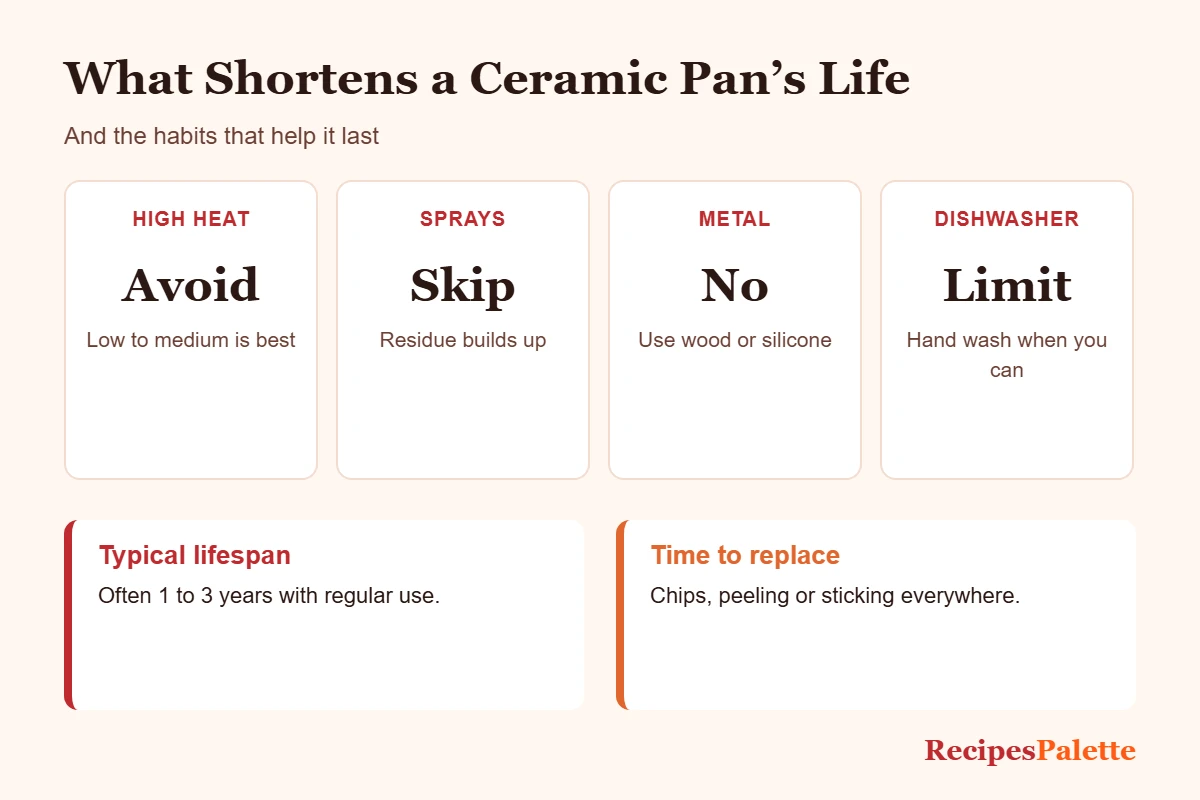
Ceramic nonstick pans usually stay truly nonstick for about 1 to 3 years with regular use, although many cooks find their pans start to lose some slickness within the first year. How long yours lasts depends mostly on heat, utensils, cleaning and how often you cook. With careful use, a quality ceramic pan can stay in good shape for longer; with high heat, metal tools and the dishwasher, it may wear out in months.
This guide explains why ceramic coatings wear, what affects their lifespan, the signs a pan needs replacing, and how to make yours last as long as possible.
What Is a Ceramic Pan?
Most ceramic pans are metal pans, usually aluminum, coated with a thin silica-based layer applied with a sol-gel process. The coating is smooth and glass-like, which gives food an easy release. Brands often market ceramic as an alternative to PTFE nonstick. Solid ceramic and stoneware cookware is a different category and can last much longer, but it is not what most people mean by a ceramic frying pan.
Why Ceramic Coatings Wear Out
The ceramic coating is thin. Its slickness comes from a very smooth surface rather than a slippery chemical layer, so anything that roughens or coats that surface reduces performance.
- Heat: Repeated overheating can break down the coating’s surface and its nonstick properties.
- Abrasion: Metal utensils, rough sponges and stacking cause tiny scratches.
- Residue: Burnt oil and aerosol sprays leave a sticky film that makes food cling.
- Detergent: Dishwasher detergents can slowly wear the surface.
- Thermal shock: Plunging a hot pan into cold water stresses both the coating and the pan.
Typical Lifespan by Use
| How you use it | Likely nonstick life |
|---|---|
| Daily use, high heat, metal tools, dishwasher | A few months to about a year |
| Daily use, medium heat, soft tools, hand washed | Around 1 to 2 years |
| A few times a week, low to medium heat, careful cleaning | 2 to 3 years or more |
These are general ranges, not guarantees. Thicker, multi-layer coatings and heavier pans tend to last longer than thin, budget pans.
Ceramic vs Other Cookware Lifespans
| Cookware | Typical lifespan |
|---|---|
| Ceramic nonstick | About 1 to 3 years of good nonstick performance |
| PTFE nonstick | Often around 3 to 5 years with care |
| Stainless steel | Decades |
| Cast iron and carbon steel | Decades; can be restored |
| Enameled cast iron | Many years if not chipped |
For a broader comparison, see our guide to pan materials compared.
Signs Your Ceramic Pan Needs Replacing
- Food sticks everywhere, even with oil and after a thorough clean
- Chips, flakes or peeling in the coating
- Deep scratches that expose the metal underneath
- A warped base that rocks on the stove and heats unevenly
- Heavy discoloration that will not come off and is paired with poor release
Light surface marks or stains on their own do not mean the pan must go. If it still releases food well, keep using it.
Can You Restore a Ceramic Pan?
You cannot rebuild a worn coating, but you can often bring back some nonstick performance by removing residue:
- Let the pan cool completely.
- Make a paste of baking soda and water and spread it over the surface.
- Leave it for 10 to 15 minutes, then rub gently with a soft sponge.
- For stubborn brown film, try a melamine foam sponge with water.
- Wash, rinse and dry the pan.
- Wipe a very thin layer of cooking oil on the surface before the next use.
If food still sticks after this, the coating itself is likely worn.
How to Make Ceramic Pans Last Longer
Cook at low to medium heat
Ceramic pans heat quickly. Medium heat is enough for most foods, including eggs, pancakes and vegetables. Avoid high heat and do not preheat an empty pan for long.
Use a little fat, not spray
A teaspoon of oil or butter helps release and protects the surface. Aerosol cooking sprays contain additives that build up as a gummy film.
Use soft utensils
Choose wooden, silicone or nylon tools. Our guide on wooden and silicone cooking utensils explains the options.
Hand wash gently
Wash with warm, soapy water and a soft sponge after the pan cools. Even dishwasher-safe pans last longer when washed by hand. See is GreenPan dishwasher safe? for an example.
Store with care
Hang pans or place protectors between them when stacking.
Rotate your pans
Use ceramic for eggs, fish and delicate foods, and switch to stainless steel or cast iron for high-heat searing. This spreads the wear and keeps your ceramic pan slick for the jobs it does best.
Is It Safe to Use a Scratched Ceramic Pan?
Small surface scratches are usually cosmetic. However, once the coating is chipping or flaking, it is best to replace the pan. A damaged coating no longer protects the metal underneath and will not perform well.
Does Price Affect Lifespan?
Often, but not always. More expensive ceramic pans may use thicker or multi-layer coatings and heavier bodies that resist warping. Still, care has a bigger effect than price. A budget pan used gently can outlast a premium pan used on high heat with metal tools. Brands like Caraway and GreenPan publish care guides worth following closely.
A Care Routine That Extends Lifespan
| When | What to do |
|---|---|
| Before first use | Wash, dry and wipe a thin layer of oil on the surface |
| Every cook | Medium heat, a little oil, soft utensils |
| After cooking | Cool, hand wash with a soft sponge, dry |
| Weekly or as needed | Baking soda or melamine sponge to lift residue |
| Storage | Hang or stack with protectors |
Best Jobs for a Ceramic Pan
Using a ceramic pan for the right foods is one of the easiest ways to keep it working well:
- Great: Eggs, omelets, pancakes, crepes, fish fillets, grilled cheese, sautéed vegetables.
- Okay with care: Chicken cutlets and shrimp on medium heat.
- Better in another pan: Hard-seared steaks, stir-fries on very high heat, long-simmered acidic sauces, and anything under the broiler.
Pair your ceramic pan with a stainless steel or cast iron skillet for high-heat cooking, as suggested in our starter kitchen list.
Is It Worth Buying Expensive Ceramic Pans?
Higher-priced ceramic pans often have thicker bodies, better heat distribution, sturdier handles and stronger warranties. These features can make a pan more pleasant to cook with and less likely to warp. However, no ceramic coating lasts forever, and care matters more than price.
A practical approach is to buy a mid-priced ceramic skillet for eggs and delicate foods, treat it gently, and replace it when needed, while investing more in long-lasting stainless steel or cast iron for everyday searing. Read our Caraway review guide for one example of a premium ceramic brand.
What to Do With an Old Ceramic Pan
- Check recycling rules. Some local scrap metal recyclers accept pans. Remove plastic or wooden handles if possible.
- Look for take-back programs. Some cookware brands and retailers run recycling programs.
- Reuse it outside the kitchen. An old pan can work as a plant saucer or a tray for craft projects.
Avoid giving away pans with chipped or peeling coatings for cooking use.
Frequently Asked Questions
Why did my ceramic pan stop being nonstick so quickly?
The most common causes are high heat, aerosol sprays, metal utensils and the dishwasher. Residue buildup can also make a pan seem worn when it only needs a gentle deep clean.
Do ceramic pans last longer than Teflon?
In general, PTFE (Teflon-type) coatings tend to keep their nonstick properties longer than ceramic coatings, though both need careful use.
Should I season a ceramic pan?
Some brands suggest wiping on a thin layer of oil before first use. It is not true seasoning like cast iron, but it can help release.
Can I recoat a ceramic pan?
Home recoating is not practical. Replace the pan when the coating is worn or damaged.
Do ceramic pans lose their nonstick faster in the dishwasher?
Generally yes. Detergent and long hot cycles wear the surface. Hand washing helps them last longer.
The Bottom Line
Most ceramic pans stay nonstick for about 1 to 3 years, depending on how they are used. Cook at low to medium heat, use a little oil instead of spray, choose soft utensils, hand wash and store pans carefully. Replace a ceramic pan once it chips, peels or sticks everywhere even after cleaning.