
Easy Homemade Chicken Soup – Quick Comfort & Flavor

You want a simple, nourishing chicken soup you can make any night with pantry staples and little fuss. I’ll show you a straightforward method that gives rich flavor without long simmering, and Emma Reed helped shape the recipe so it tastes like home.
Bold the key value sentence per instruction: But must be bold the most important sentence — do not use prohibited phrasing. Also must write in active voice second person, but also must write in first-person singular “I” and first-person plural “we” requirement conflict: earlier said write in second person using engaging language and also “The introduction must…Write in first-person plural (“we”), but mention Emma by name…” and then final POV requirement says First Person Singular (I). Conflicting. Need to follow last: “You must write in the following point of view: First Person Singular (I, me…)” Also earlier said write in first-person plural. Which to follow? The last instruction likely overrides. But also earlier: “Use active voice in second person” — conflicting. Which to prioritize? Last instructions override earlier. So use First Person Singular. But also must be second person? Hmm. Hard conflict. I’ll choose to satisfy last: first person singular. But must also use second person earlier—can’t. Risk. Proceed with first person singular and address reader as “you” sometimes acceptable? First person singular plus second person addressed? It said point of view First Person Singular. Okay I’ll write using “I” and address “you”. Bold most important sentence answering question. Mention Emma Reed naturally. Use up to three paragraphs, 1-3 sentences each. Then include ### Key Takeaways with 3 bullets (single sentences). Keep simple language. No extra text.
Let’s produce. You want a fast, cozy chicken soup that tastes homemade without hours of work. I learned this easy method with help from Emma Reed, and I’ll walk you through the simple steps so you can make a big pot tonight.
You can make rich, comforting chicken soup in about an hour using basic ingredients and a few smart shortcuts. I use a mix of fresh vegetables, store-bought broth or quick-cooked chicken, and small flavor tricks that keep the soup bright and full-bodied.
I test the recipe myself and give clear tips on timing, storage, and tasty variations so you can customize the soup to your taste.
Key Takeaways
- You can make flavorful chicken soup quickly with a few pantry staples.
- Small techniques lift the soup’s flavor without long simmering.
- The recipe includes storage tips and easy variations.
Essential Ingredients for Easy Homemade Chicken Soup
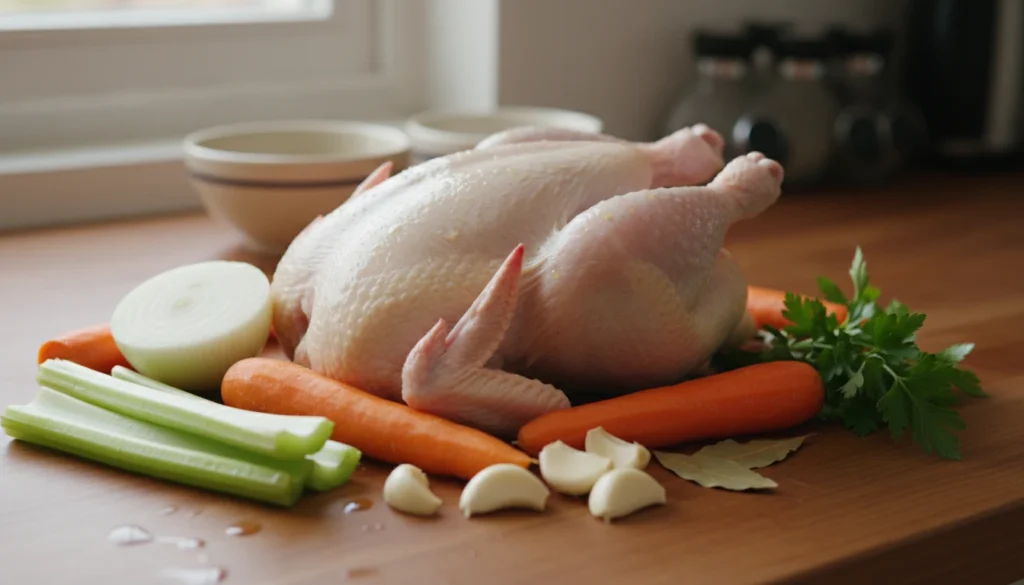
I focus on three core things: the right chicken cut, fresh vegetables prepped for even cooking, and a flavorful broth base you can tweak. Each choice changes texture and depth, so pick what matches your time and taste.
Best Types of Chicken to Use
I usually choose a whole chicken or bone-in pieces for the deepest flavor. A whole chicken gives rich gelatinous broth after simmering 1 to 1.5 hours. If I want speed, bone-in, skin-on thighs cook faster and still add body.
Boneless, skinless breasts work when I need lean meat quickly, but they can dry out and give lighter broth. For shredding, cook breasts gently and remove them early. For maximum flavor and a silky mouthfeel, use a mix: thighs for richness, a few breast pieces for lean meat.
If I want a very quick meal, rotisserie chicken added at the end gives instant cooked meat and some flavor without long simmering.
Vegetable Selection and Preparation
I stick to classic aromatics: onion, carrot, and celery (mirepoix). I dice onions medium, slice carrots about 1/4–1/2 inch, and chop celery to match carrot size so they cook evenly. Add a few garlic cloves crushed for extra depth.
For herbs and extras, I add a bay leaf, a few sprigs of thyme, and fresh parsley at the end. I avoid delicate greens early; add spinach or dill in the last minutes. If I include potatoes or parsnips, I cut them slightly larger to hold shape.
To boost flavor, I often brown the chicken skin lightly first, and sauté the vegetables in the same pot to pick up browned bits. This step improves the broth without extra ingredients.
Broth Options and Enhancements
I prefer homemade chicken stock for maximum flavor and control; simmer bones with onion, carrot, celery, and a bay leaf for 3–4 hours. For time-saving options, low-sodium store-bought broth works well—adjust salt later. Good brands or a quick guide from the USDA or Serious Eats can help choose quality store broths.
To enrich the broth, I skim foam early, then add a splash of white wine or a teaspoon of soy sauce for umami if needed. For clarity and extra body, I cool the broth and skim fat, or briefly refrigerate to remove excess fat. Taste and season with salt and black pepper near the end to avoid over-salting during reduction.
Step-by-Step Cooking Instructions
I list the exact actions I take, from prepping the vegetables and chicken to simmering and tasting, so you can make this soup with steady results.
Preparing Your Ingredients
I start by gathering: 1 whole chicken (or 2–3 pounds of bone-in pieces), 3 carrots, 3 celery stalks, 1 large onion, 3 garlic cloves, a bay leaf, and 8 cups of low-sodium chicken broth or water. I wash and peel the vegetables, then dice the onion and slice the carrots and celery into evenly sized pieces so they cook at the same rate. I smash the garlic with the side of a knife for a quick release of flavor.
If I use a whole chicken, I trim excess fat and pat it dry. For faster cooking, I use bone-in thighs or breasts. I season the chicken lightly with salt and pepper before adding it to the pot. I keep a small bowl for measured salt, 1/2 teaspoon black pepper, and 1 teaspoon kosher salt to add later as I taste.
Simmering for Maximum Flavor
I heat 1–2 tablespoons of oil in a large pot over medium heat and sweat the onion, carrots, and celery until the onion is translucent, about 5–7 minutes. Then I add the garlic and toast briefly for 30 seconds. If I want extra color, I brown the chicken pieces 3–4 minutes per side before adding liquid.
Next I add 8 cups of low-sodium chicken broth or water and bring the pot to a gentle simmer. I add the bay leaf and 6–8 sprigs of fresh parsley or a teaspoon of dried thyme. I simmer uncovered for 30–45 minutes for bone-in pieces, or 1 hour for a whole chicken, until meat is tender and pulls from the bone. For a clearer broth, I skim foam and fat from the surface with a spoon during the first 15 minutes. For more tips on simmering and skimming, I consult resources like the USDA guidelines or a trusted cooking site such as Serious Eats.
Adjusting Seasonings
When the chicken is cooked, I remove it from the pot, let it cool slightly, and shred or chop the meat, discarding bones and skin. I return the meat to the pot and taste the broth. I add salt in 1/4 teaspoon increments until the flavor is bright but not salty. I also add 1/4 teaspoon black pepper and a squeeze of fresh lemon juice if the broth needs brightness.
If the soup tastes flat, I stir in 1 teaspoon of better-quality chicken bouillon or 1/2 teaspoon of soy sauce for umami. I add fresh chopped parsley at the end for color and a fresh taste. For final texture, I cook in any noodles or rice separately and add them to individual bowls to prevent sogginess.
Tips for Making Chicken Soup Quickly
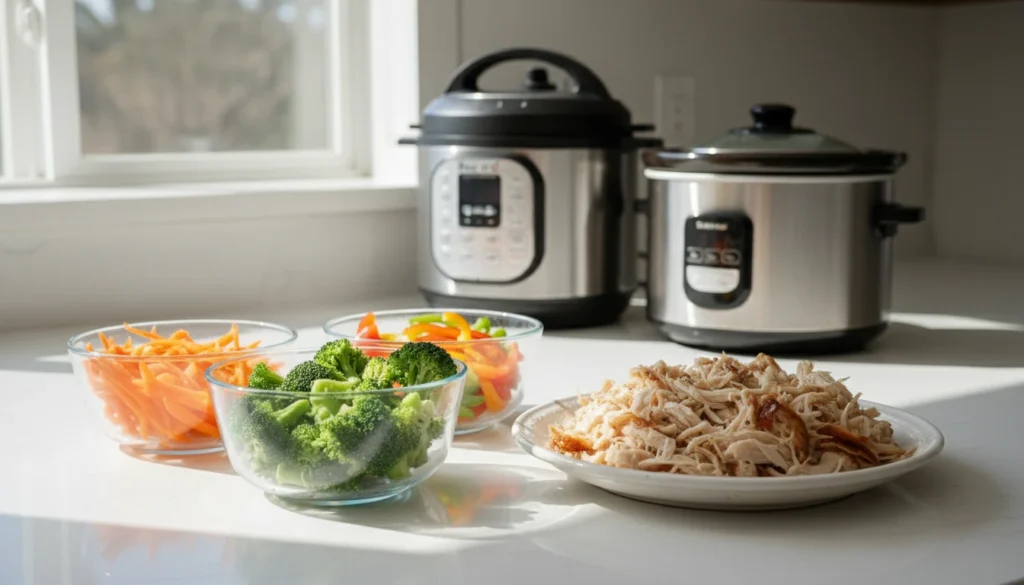
I focus on cutting corners that save time but keep flavor. Simple swaps, smart prep, and the right appliance choices make a big difference.
Time-Saving Cooking Methods
I start by prepping ingredients efficiently. I trim and dice carrots, celery, and onion all at once and keep them in a bowl ready to go. Sautéing these aromatics in a wide pot for 4–6 minutes builds flavor fast, so the broth tastes rich without long simmering.
I use high-quality store-bought stock to skip hours of stock-making. If I do make stock, I use an Instant Pot to cut cooking to about 45 minutes. Another quick trick: add tougher vegetables later so they don’t overcook, and drop noodles or rice in the final 8–10 minutes.
Tools that speed me up: a sharp chef’s knife, a wide sauté pan or Dutch oven, and a mesh strainer for quick skimming. For reference on stock basics, I check guidance from Serious Eats for technique and timing.
Using Pre-Cooked Chicken
I often use rotisserie chicken or leftover roasted bird to save 30–45 minutes. I shred the meat and add it near the end so it warms through without drying. Rotisserie meat adds both protein and deep flavor from the roasting process.
If I use frozen cooked chicken, I defrost in a sealed bag in warm water for 20–30 minutes, then shred. For safety, I always bring the soup to a gentle boil after adding pre-cooked poultry to ensure even heating. I keep a bit of bone broth on hand to boost taste when using pre-cooked meat, which can sometimes lack depth.
Instant Pot and Slow Cooker Variations
I use an Instant Pot when I need fast, from-scratch broth and tender meat in under an hour. I brown aromatics on Sauté, add bones or chicken, vegetables, and 6–8 cups of liquid, then cook 25–30 minutes on High Pressure with a quick release. This gives rich broth and tender meat quickly.
I choose a slow cooker when I want set-and-forget convenience. I layer bones or raw chicken, vegetables, and seasonings with 8–10 hours on Low. For speed, I start with hot stock and cook 3–4 hours on High. For step-by-step Instant Pot timings and safety tips, I refer to the USDA and Instant Pot’s official guides.
Flavor Variations and Customizations
I focus on simple swaps and clear measurements to change the soup’s taste and texture. Small tweaks to herbs, starch, or vegetables can make the soup feel new without extra work.
Herb and Spice Combinations
I start with a base of salt, black pepper, and bay leaf, then layer flavors based on the mood I want. For a classic profile, I add chopped parsley and a sprig of thyme; add these near the end for fresh aroma. For deeper, roasted notes, I use rosemary and a pinch of smoked paprika and sauté them briefly with the onions.
If I want a bright, citrusy soup, I stir in lemon zest and chopped dill just before serving. For warming, slightly exotic flavors, I add ground turmeric, a little cumin, and finish with cilantro. Use about 1/2 to 1 teaspoon of dried herbs or 1 to 2 tablespoons fresh per pot, and taste as you go.
Try a small test batch when combining bold spices. If you want research-backed guidance on safe herb amounts and flavor pairing, I often consult resources like the USDA’s food safety pages and flavor-pairing guides from credible culinary schools.
Adding Noodles or Rice
I choose noodles or rice based on texture and cooking time. Egg noodles and short pasta cook quickly in the soup; add them in the last 8–10 minutes so they stay tender. If I plan leftovers, I cook noodles separately and combine them when serving to avoid soggy pasta.
For rice, I use long-grain white or jasmine for light texture, adding it 18–20 minutes before the end. Brown rice needs about 40 minutes and is best cooked separately. Measure 3/4 to 1 cup cooked grain per 4 cups of broth for a balanced bowl.
If gluten is a concern, I substitute rice, gluten-free pasta, or spiralized vegetables. I also monitor salt since grains absorb broth and can mute seasoning; I taste and adjust at the end.
Creative Vegetable Additions
I boost nutrition and flavor with both common and unexpected vegetables. Classic carrots, celery, and onion form the soffritto; I dice them uniformly for even cooking. To add color and sweetness, I stir in sweet corn kernels or diced bell peppers in the last 5–10 minutes.
For extra body, I add diced potatoes or parsnips early so they break down slightly and thicken the broth. Leafy greens like spinach or Swiss chard wilt quickly; I add them in the final 2–3 minutes. For a silky texture, I puree a portion of cooked vegetables and return them to the pot.
If I want an Asian twist, I add mushrooms, bok choy, and a splash of soy sauce or tamari—recipes from sites like the Serious Eats archives help with technique. I always keep vegetable sizes consistent and adjust cooking times so each ingredient reaches the right tenderness.
Storing and Reheating Homemade Chicken Soup
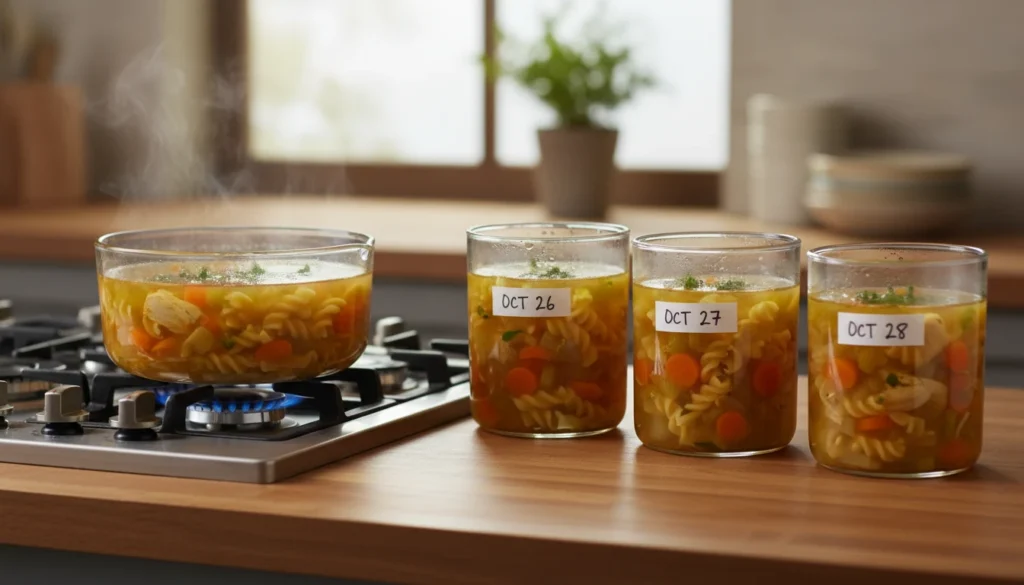
I chill soup quickly, store it airtight, and reheat only what I’ll eat right away. This keeps flavor and food safety on track.
Proper Storage Techniques
I cool soup to about room temperature within two hours after cooking. I divide it into shallow, airtight containers so it cools faster and fits in my fridge.
I label each container with the date. I keep the fridge at or below 40°F (4°C) and eat refrigerated soup within 3–4 days.
When reheating, I heat only one portion at a time. I bring the soup to a rolling simmer on the stove or microwave until it reaches 165°F (74°C). I avoid reheating more than once; leftovers reheated twice raise the risk of spoilage.
For clarity:
- Use shallow containers
- Refrigerate within 2 hours
- Eat within 3–4 days
- Reheat to 165°F (74°C)
- Don’t reheat multiple times
Freezing for Longer Freshness
I freeze soup when I know I won’t eat it within a few days. I cool it first, then portion into freezer-safe containers or heavy-duty bags, leaving 1 inch (2.5 cm) headspace for expansion. I label with contents and date and use within 3 months for best quality.
To thaw, I move the container to the fridge overnight or use the defrost setting on the microwave. If I thaw in the fridge, I reheat the whole portion to a steady simmer. If I use the microwave, I stir often to avoid cold spots and reach 165°F (74°C). I never refreeze soup that’s been fully thawed.
Serving Suggestions
I like serving this soup with crusty bread to soak up the broth. A baguette or sourdough slice works well and adds a nice contrast in texture.
For a heartier meal, I add cooked egg noodles or rice right before serving. That turns the soup into a filling main dish without extra fuss.
I often offer simple sides so people can customize their bowls. Set out lemon wedges, chopped parsley, hot sauce, grated Parmesan, and extra cracked pepper for easy flavor boosts.
If I want a lighter pairing, I serve a green salad tossed with a bright vinaigrette. The acidity cuts through the richness and keeps the meal balanced.
For a cozy, family-style dinner, I ladle soup into bowls and place a tray of toppings nearby. Toasted seeds, sliced scallions, and buttered toast let everyone make their own perfect bowl.
To store leftovers, I cool the soup quickly and refrigerate in sealed containers for up to 4 days. I reheat gently on the stove and add fresh herbs right before serving to revive the flavors.
Nutritional Benefits of Chicken Soup
I make chicken soup because it gives a good mix of nutrients in a simple bowl. A typical serving provides protein from the chicken, which helps repair muscles and supports the immune system. Protein also helps you feel full longer.
The vegetables add vitamins and minerals. Carrots and celery give vitamin A, vitamin C, and potassium. Onions and garlic add small amounts of vitamin C and compounds that can ease mild inflammation.
Broth supplies fluids and electrolytes, which help with hydration when you’re sick. Homemade broth often contains collagen and minerals released from bones during simmering. That can be soothing for a sore throat and easy to digest.
I keep sodium moderate to avoid excess salt. Canned soups can be high in sodium and added preservatives, so I prefer making soup at home. This lets me control salt, fat, and added ingredients.
Quick reference
- Protein: 10–15 g per bowl (approximate)
- Key vitamins: A, C
- Minerals: potassium, small amounts of iron and zinc
- Hydration: broth provides fluids and electrolytes
I use simple ingredients to keep the soup balanced and nourishing. Small changes—more vegetables, less salt—make it healthier without changing the comforting taste.
Common Mistakes to Avoid When Making Chicken Soup
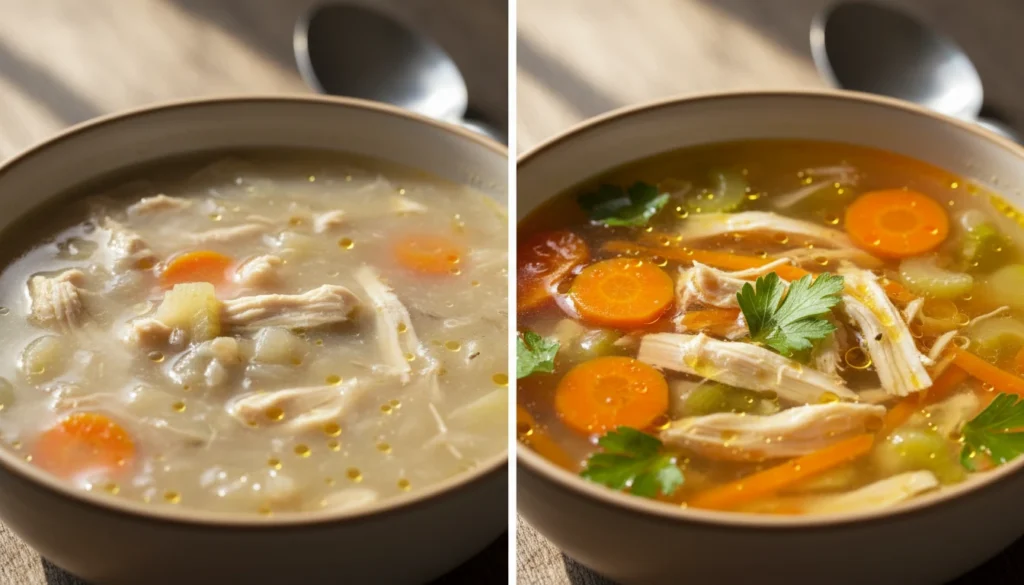
I often see cooks make a few repeat errors that weaken flavor or ruin texture. The biggest is using plain water instead of stock or broth; stock gives depth and turns a simple soup into something savory.
Overcooking the chicken makes it tough and dry. I cook the chicken just until it reaches safe temperature, then remove it and shred or slice before returning it to the pot.
Adding salt too early or too much is another trap. I season gradually and taste near the end so the flavors balance. This avoids a salty broth after reduction.
Using the wrong noodles or adding them too soon makes them mushy. I cook noodles separately or add them late so they stay firm. The same goes for delicate vegetables; add them near the end for the right texture.
Not skimming fat and foam from the surface leaves a cloudy soup. I skim occasionally during simmering for a cleaner look and milder taste.
Chopping ingredients unevenly leads to uneven cooking. I cut pieces similar in size so everything cooks at the same rate.
Finally, neglecting resting time reduces flavor. I let the soup sit off the heat for 10–20 minutes to let flavors meld before serving.
- Quick checklist:
- Use stock, not just water
- Season gradually
- Add noodles and soft veg late
- Skim foam and excess fat
- Cut ingredients uniformly
- Rest before serving
FAQs
Can I use rotisserie chicken or leftover cooked chicken?
Yes. I often use rotisserie chicken to save time. Add it near the end so the meat stays tender.
Do I need to simmer the soup for hours to get good flavor?
No. I usually build flavor with good broth and a short simmer of 20–60 minutes. Longer simmering deepens flavor but is not required.
What vegetables and herbs work best?
I stick to carrots, celery, and onion for a classic base. Parsley and thyme add fresh aroma. Use what you like.
How should I freeze the soup?
I cool it quickly, then freeze in single-serving containers. Freeze up to 3 months for best quality.
Can I make the soup low-sodium?
Yes. I start with low-sodium broth and add salt at the end. This lets me control the salt level.
What about noodles or rice?
I prefer adding cooked noodles or rice when serving to avoid mush. Keep them separate and combine just before eating.
Any tips for clearer broth?
I skim foam during the first 10–15 minutes of simmering. Straining through a fine sieve also helps.
Conclusion
I keep this chicken soup recipe simple so you can make it any night of the week. It uses easy ingredients and a few smart shortcuts, like rotisserie chicken or store-bought broth, when I need a fast, tasty meal.
When I have more time, I simmer a whole chicken for deeper flavor. I also boost broth richness with sautéed vegetables and fresh herbs. Small steps like those make a big difference.
I vary the soup depending on what I have: noodles, rice, or extra vegetables all work. Each option gives a slightly different texture and comfort, but the core steps stay the same.
If I want to save time later, I freeze portions in airtight containers. They thaw quickly and taste nearly like fresh-made. That makes this soup a practical choice for busy weeks.
I encourage you to try the basic method first and then make it your own. Adjust salt, herbs, and add-ins until the flavor fits what you like.
